08-09-2026
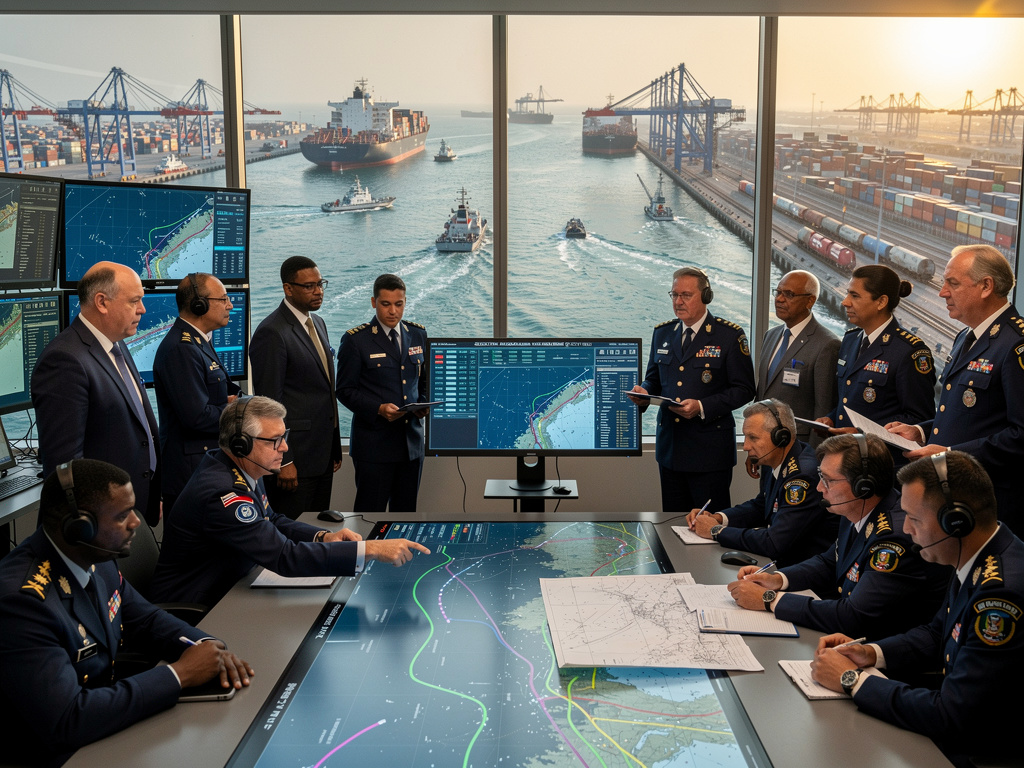
Qatar says that reopening the Strait of Hormuz without conditions is its top priority as diplomatic efforts continue to resolve the more than six-month US-Iran war. Ibrahim Al Hashmi, director of the media department at Qatar’s Foreign Ministry, said Qatar and other mediators are discussing new ideas but warned that the current situation of “no war and no peace” is harmful to the region and its population.
Al Hashmi said Qatar is coordinating closely with partners, including China, to advance diplomatic efforts. Qatar’s Prime Minister and Foreign Minister Sheikh Mohammed bin Abdulrahman bin Jassim Al Thani met Chinese Foreign Minister Wang Yi in Beijing. Their discussions included regional security, stability, the Strait of Hormuz’s closure, bilateral relations and possible solutions to the crisis.
Qatar’s foreign ministry spokesperson emphasized that resolving the crisis requires political will from both Iran and the United States. He said Qatar and other countries in the region strongly support reopening the Strait of Hormuz unconditionally, describing it as a top priority. The waterway is a crucial route for global energy shipments and international navigation.
The article also addresses escalating violence in Yemen. Fighting between forces supporting Saudi Arabia’s internationally recognised government and Houthi rebels intensified the previous week, while the Houthis launched attacks on Saudi territory. Qatar condemned attacks on civilian institutions in Abha, Jizan, Najran and Khamis Mushait. Al Hashmi said the attacks injured many civilians, disrupted shipments in the Red Sea and threatened international navigation. The article therefore presents Qatar’s diplomatic initiatives alongside its condemnation of regional attacks and concerns over the wider impact on shipping and regional stability.
Entities: Qatar, Strait of Hormuz, Iran, United States, Ibrahim Al Hashmi • Tone: analytical • Sentiment: neutral • Intent: inform
08-09-2026
Qatar and the United Arab Emirates have called for stronger, more self-reliant Gulf security arrangements, arguing that US protection remains important but can no longer be the region’s sole guarantee. Speaking separately at the Hili Forum in Abu Dhabi, Qatar’s Foreign Ministry spokesperson Majed Al Ansari and UAE presidential diplomatic adviser Anwar Gargash said Gulf states must improve their collective defenses and develop their own capacity to respond to regional threats, particularly from Iran.
Al Ansari said international forces and a strategic alliance with Washington were necessary but insufficient, emphasizing that “self-sufficiency” was the only way forward. Qatar, which hosts the largest US military base in the Middle East, has denied Tehran’s claim that its attacks during the first phase of the war targeted only US interests, saying Iranian strikes hit civilian and economic targets in Qatar.
Gargash said Gulf countries must eventually rebuild functional relations with Iran because geography makes engagement unavoidable, but warned that restoring trust would be much more difficult. He described Iran’s attacks on neighboring Gulf states as a premeditated violation of international law and called for firm guarantees that such attacks would not recur.
The two countries also aligned in opposing any attempt by one state to control the Strait of Hormuz. Gargash said threats to oil tankers and restrictions on navigation were unacceptable, adding that the UAE was developing eastern ports, pipelines, railways and other alternative export routes so its economy and energy shipments could not be held hostage. Al Ansari similarly linked Gulf security to global energy security, trade and maritime navigation, and urged a stronger Gulf Cooperation Council and a more resilient regional security architecture based on collective security, diplomacy and economic interdependence.
Entities: Qatar, United Arab Emirates (UAE), Iran, United States, Majed Al Ansari • Tone: analytical • Sentiment: negative • Intent: inform
08-09-2026
The National’s editorial argues that the Gulf is entering a more uncertain and complicated regional phase following an Iran war that has lasted seven months. The conflict has exposed the limits of a security model based on American alliances and regional co-operation, particularly after Iranian attacks on all six Gulf states caused deaths, infrastructure damage and disruption to trade through the Strait of Hormuz.
The editorial highlights Tehran’s move to establish a restricted zone around the waterway and threaten sanctions against vessels that enter without Iranian co-ordination. Because the Strait is one of the world’s most important energy chokepoints, its vulnerability has made the Gulf states’ search for alternative arrangements an urgent strategic priority.
The UAE’s response, as described by diplomatic adviser Anwar Gargash, is to pursue strategic autonomy: maintaining the ability to protect its people, sustain economic growth and make independent decisions while preserving important partnerships. Qatar’s Majed Al Ansari identifies the continued state of “no war, no peace” as a major danger and suggests more open borders and stronger supply-chain co-operation as practical steps toward regional resilience.
The editorial concludes that the Gulf’s emerging regional architecture will be defined by fluidity, sustained dialogue and efforts to rebuild trust. Although Iran remains a geographical neighbor and engagement is unavoidable, Iranian missile and drone attacks have destroyed relationships built over decades. The paper argues that a functional relationship with Tehran must eventually be restored, but warns that rebuilding trust will be a far more difficult and lengthy task.
Entities: Hili Forum, Abu Dhabi, The National, United Arab Emirates, Iran • Tone: analytical • Sentiment: negative • Intent: analyze
08-09-2026
The article argues that the Iran war exposed the limits of the Gulf states’ multipolar strategy but did not invalidate it. For years, Gulf countries have sought to preserve the United States as their principal security partner while expanding economic, technological and trade ties with China, India, Europe and the wider Asian region. When the crisis became military, Washington returned decisively to the centre of regional security because of its unmatched combination of military reach, intelligence, early-warning systems, air and naval power, and defence capabilities. However, the conflict did not reverse the Gulf’s economic shift toward Asia. China remains central to energy and trade, India’s importance is increasing, and Europe continues to play a major role in investment, technology, defence and commerce. The article emphasizes that the Gulf became economically multipolar before it became multipolar in security.
The disruption of shipping through the Strait of Hormuz demonstrated both the Gulf’s importance to the global economy and its vulnerability. Strategic significance does not guarantee protection: ports, energy facilities and shipping routes can become targets during conflict, even when a powerful security partner provides deterrence and military support. Consequently, Gulf security should be judged not only by external guarantees but also by the region’s ability to absorb and recover from disruption.
The author also warns that technology will make balancing relationships more difficult. Artificial intelligence, semiconductors, cloud infrastructure, communications systems, satellites and data networks serve both economic and security purposes. US-China competition may force Gulf states to make choices that create long-term dependence on particular technological ecosystems. Diversification alone is therefore insufficient; genuine strategic autonomy means retaining options when partners disagree. The article calls for stronger indigenous and regional capabilities, including air and missile defence, maritime security, resilient infrastructure, secure digital networks, industrial capacity and alternative supply routes. The supplied text ends while beginning a discussion of India’s interests.
Entities: Gulf states, United States, China, India, Europe • Tone: analytical • Sentiment: neutral • Intent: analyze
08-09-2026
The article’s available excerpt reports that Persian Gulf states are responding to a prolonged U.S. war against Iran by strengthening their military defenses and seeking alternatives to the Strait of Hormuz. Officials say the Gulf nations have faced the main consequences of Iran’s retaliatory attacks, creating pressure to reduce their vulnerability and maintain access to trade, energy supplies, and transportation routes if the conflict continues. The headline indicates two central developments: Gulf governments are investing in defensive capabilities, and they are exploring ways to bypass the strategically vital waterway. The Strait of Hormuz is a major maritime chokepoint, so efforts to find alternative routes would reflect concern about possible disruption to shipping and regional economic activity. The excerpt also portrays the war as open-ended, with no clear resolution in sight. This uncertainty appears to be driving Gulf nations to prepare for a sustained conflict rather than relying solely on U.S. protection or on the continued availability of the strait. The material provided does not include the article’s detailed reporting, specific countries involved, defense systems, alternative routes, or officials’ names. Therefore, the summary is limited to the headline, byline, dateline, and opening sentence supplied. The overall framing is factual but carries an urgent undertone: regional governments are adapting to continuing attacks and attempting to reduce the strategic risks posed by both the war and Iran’s ability to threaten the Strait of Hormuz.
Entities: Rachel Chason, Persian Gulf nations, Abu Dhabi, United Arab Emirates, United States • Tone: urgent • Sentiment: negative • Intent: inform