03-09-2026
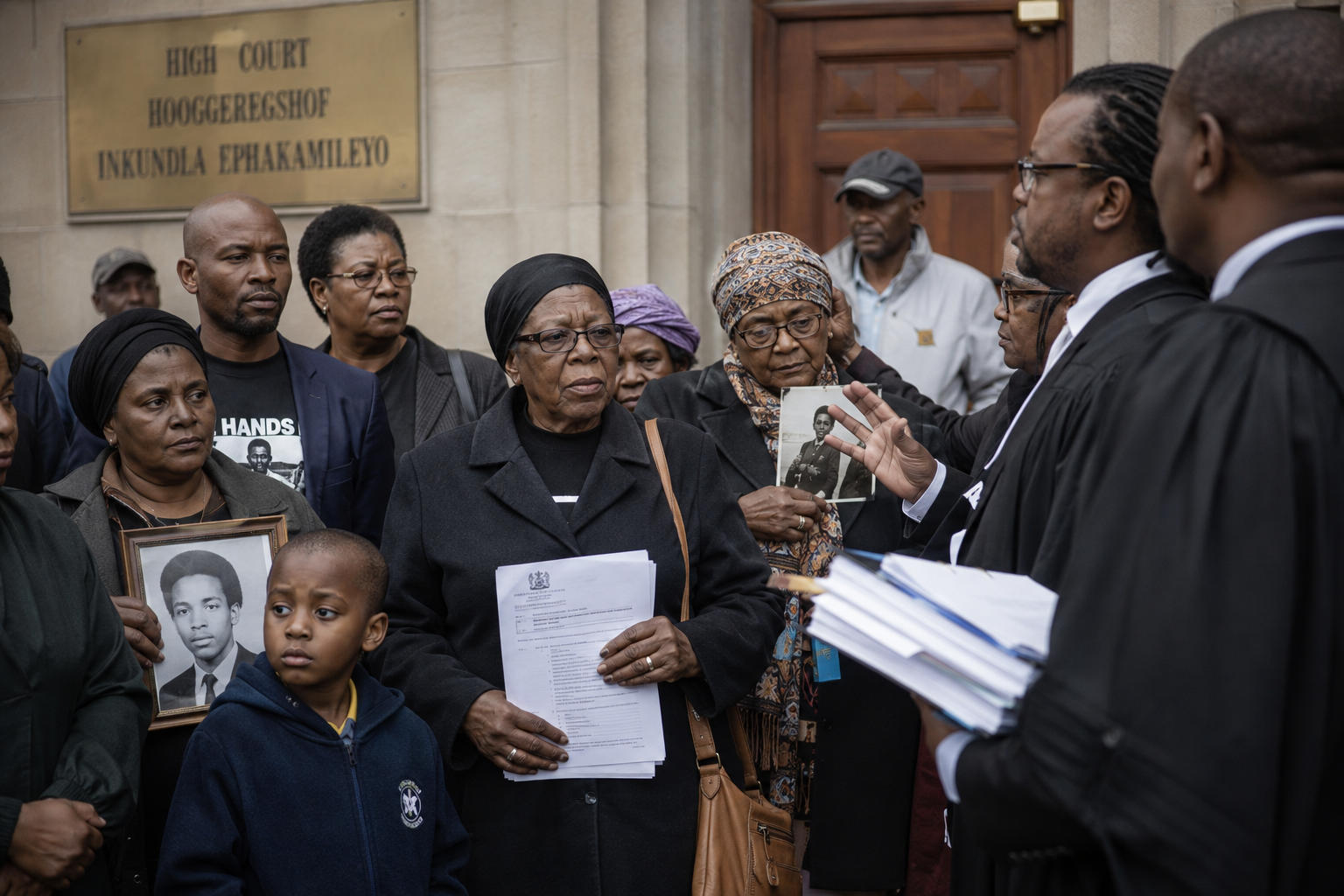
More than six decades after apartheid police killed 69 people and wounded dozens during the 1960 Sharpeville protest, survivors and relatives of those killed are taking legal action against the South African government. Their lawyers want the courts to overturn the Indemnity Act, legislation passed one year after the massacre that has prevented victims and their families from pursuing compensation claims.
The case has two main objectives, according to Charne Tracey of Lawyers for Human Rights. First, the applicants want the Indemnity Act declared unconstitutional. Second, they want the group of survivors and relatives recognized as a legal class so that individuals can pursue damages. The action names the President of South Africa, the Minister of Police, and the Minister of Justice as respondents.
Abram Mofokeng, an 87-year-old survivor, says victims expect the government to honor promises made by Nelson Mandela when he unveiled the Sharpeville memorial after his release from prison. Mofokeng refers to a pledged payment of R120,000 for people affected by the massacre, saying survivors are still waiting for those commitments to be fulfilled.
The massacre remains a defining symbol of apartheid’s brutality and helped expose the system’s violence internationally. For descendants such as Mpai Chabane, the consequences remain personal and intergenerational. Chabane describes the emotional pain of a massacre site associated with bloodshed and recalls growing up without a grandmother. The legal action therefore seeks not only financial compensation but also accountability and recognition for survivors and families who say they have been denied justice for decades.
Entities: Sharpeville massacre, Sharpeville, South Africa, Apartheid police, Abram Mofokeng, Nelson Mandela • Tone: analytical • Sentiment: negative • Intent: inform
03-09-2026
The article reports that victims of the 1960 Sharpeville massacre are suing the South African government in an effort to overturn a law that has prevented them from receiving compensation for 65 years. The massacre is described as one of the defining moments of the anti-apartheid struggle, giving the legal action significance beyond the individual claims of the victims. The lawsuit seeks to remove or invalidate the legal barrier that has blocked compensation, potentially allowing survivors or affected families to pursue financial redress from the state.
The report provides only limited details about the case. It does not identify the victims, specify the court in which the lawsuit was filed, explain the exact provisions of the law, or state how many people are seeking compensation. It also does not describe the government’s response or indicate when the court might rule. Its central focus is the attempt to revisit a longstanding legal restriction connected to a landmark event in South Africa’s history.
By linking the lawsuit to the Sharpeville massacre and the broader anti-apartheid struggle, the article frames the case as both a contemporary legal challenge and part of the country’s continuing effort to address historical injustice. The report was published on 3 September 2026.
Entities: Sharpeville massacre, South African government, Sharpeville, South Africa, victims and survivors, anti-apartheid struggle • Tone: analytical • Sentiment: negative • Intent: inform
03-09-2026
The article reports on a compensation case brought by three survivors and relatives of victims of the Sharpeville massacre, one of the defining atrocities of apartheid-era South Africa. On 21 March 1960, residents of Sharpeville gathered peacefully to protest pass laws that restricted the movement of Black, Indian and Coloured South Africans. Police opened fire outside the township police station, killing at least 91 people and injuring 238.
Abraham Mofokeng, who was 20 at the time, was shot in the foot and back while fleeing. A bullet remains lodged in his spine, and he says that he continues to suffer from poor health and financial hardship. Paulina Mathinye, another claimant, was five when her father, Samson, was killed. His death forced her mother to raise five children alone, and Mathinye later abandoned her education because she could not afford to continue.
The claimants are seeking approximately 500,000 rand each. Their lawyers argue that a 1961 law protecting the apartheid government and its agents from compensation claims is unconstitutional. The law was applied retrospectively to actions taken during the massacre and remains in force.
The case forms part of a broader wave of litigation over apartheid-era crimes. In January 2025, survivors and relatives sued the government for failing to prosecute cases referred by the Truth and Reconciliation Commission. President Cyril Ramaphosa subsequently announced a judicial inquiry into possible political interference.
The article also places the massacre within the wider history of land dispossession, forced removals and economic exclusion. Supporters of the claimants argue that compensation should address not only the shootings but also the continuing social and economic consequences of apartheid. The case reflects growing dissatisfaction with the post-apartheid government’s failure to overcome South Africa’s persistent racial inequality and poverty.
Entities: Sharpeville massacre, Sharpeville, South Africa, Abraham Mofokeng, Paulina Mathinye, Samson Mathinye • Tone: analytical • Sentiment: negative • Intent: inform