03-09-2026
Russian President Vladimir Putin said there is a possible path to peace with Ukraine, but insisted that Moscow and Kyiv must resolve the conflict themselves. Speaking at the Eastern Economic Forum in Vladivostok, Putin argued that Ukraine’s warnings to airlines to avoid Russian airspace amounted to “state terrorism” and said Russia would intensify attacks on Ukraine. His comments come as diplomatic efforts involving the United States, Europe, India and China have stalled over territory, security guarantees and Ukraine’s military alignment.
Ukraine’s Foreign Minister Andrii Sybiha nevertheless said the peace process could enter a new phase of active political and diplomatic engagement. Recent international interventions have included a reported visit to Moscow by CIA Director John Ratcliffe, Indian Prime Minister Narendra Modi’s call for an end to “endless war,” and China’s assertion that dialogue and negotiation are the only viable solution. Ukrainian President Volodymyr Zelenskyy has urged China to play a stronger diplomatic role.
Putin’s relatively positive assessment of peace prospects contrasts with increasingly severe warnings from NATO. Secretary General Mark Rutte said Russia is becoming “increasingly reckless,” citing missiles and drones crossing Europe’s eastern flank and an alleged Russian hybrid attack at Germany’s Leipzig airport. Rutte said NATO would not be divided or deterred from supporting Ukraine.
Zelenskyy recently advised airlines to avoid Russian airspace as Ukraine expands long-range drone operations against Russian energy and military targets. He said the airspace had become unsafe because of the number of drones. Russia has responded by threatening intensified attacks, while Russian forces have also increased missile strikes on Ukrainian cities amid a Ukrainian shortage of air-defense equipment. The developments highlight the continuing tension between diplomatic overtures and military escalation.
Entities: Vladimir Putin, Ukraine, Russia, NATO, Mark Rutte • Tone: analytical • Sentiment: negative • Intent: inform
03-09-2026
Lithuanian Foreign Affairs Minister Kęstutis Budrys has warned that Russia is highly likely to escalate attacks against European Union countries because the bloc’s previous deterrence measures have not been strong enough. His comments followed Germany’s attribution of an alleged plot involving an explosives-laden drone found near a Ukrainian Antonov cargo aircraft at Leipzig/Halle Airport to Russia. The Kremlin has denied responsibility.
Budrys praised German intelligence and security services for quickly preventing the incident and identifying the suspected perpetrator. However, he said the episode was part of a broader pattern of attempted attacks and suspected sabotage across Europe and demonstrated that Russia still views such operations as a relatively inexpensive way to increase social tensions and undermine European support for Ukraine. European Commission President Ursula von der Leyen similarly said incidents of this kind had become the “new normal” and called for faster and more effective EU responses.
Budrys characterized the recent incidents as “kinetic” attacks rather than hybrid operations, which he associated primarily with disinformation and cyberattacks. He called for stronger European counterintelligence and security services, as well as greater political and economic pressure on Moscow.
Germany has responded by closing a Russian consulate in Bonn, ending the contract for the Russian House in Berlin and tightening entry controls for Russian nationals. EU foreign ministers have also supported tougher visa restrictions, including a proposed ban on visas for former and current Russian military personnel. Budrys questioned why large numbers of Russian tourists continue to travel in the EU, noting that more than 477,000 tourist visas were granted to Russian nationals last year.
The EU is also preparing additional sanctions, while Germany has pledged to target Russia’s shadow fleet of tankers used to evade oil sanctions. Budrys said stronger sanctions and deterrence are necessary to show that Europe will not be intimidated or abandon its support for Ukraine.
Entities: Russia, Kęstutis Budrys, Ursula von der Leyen, Kaja Kallas, Johann Wadephul • Tone: urgent • Sentiment: negative • Intent: inform
03-09-2026
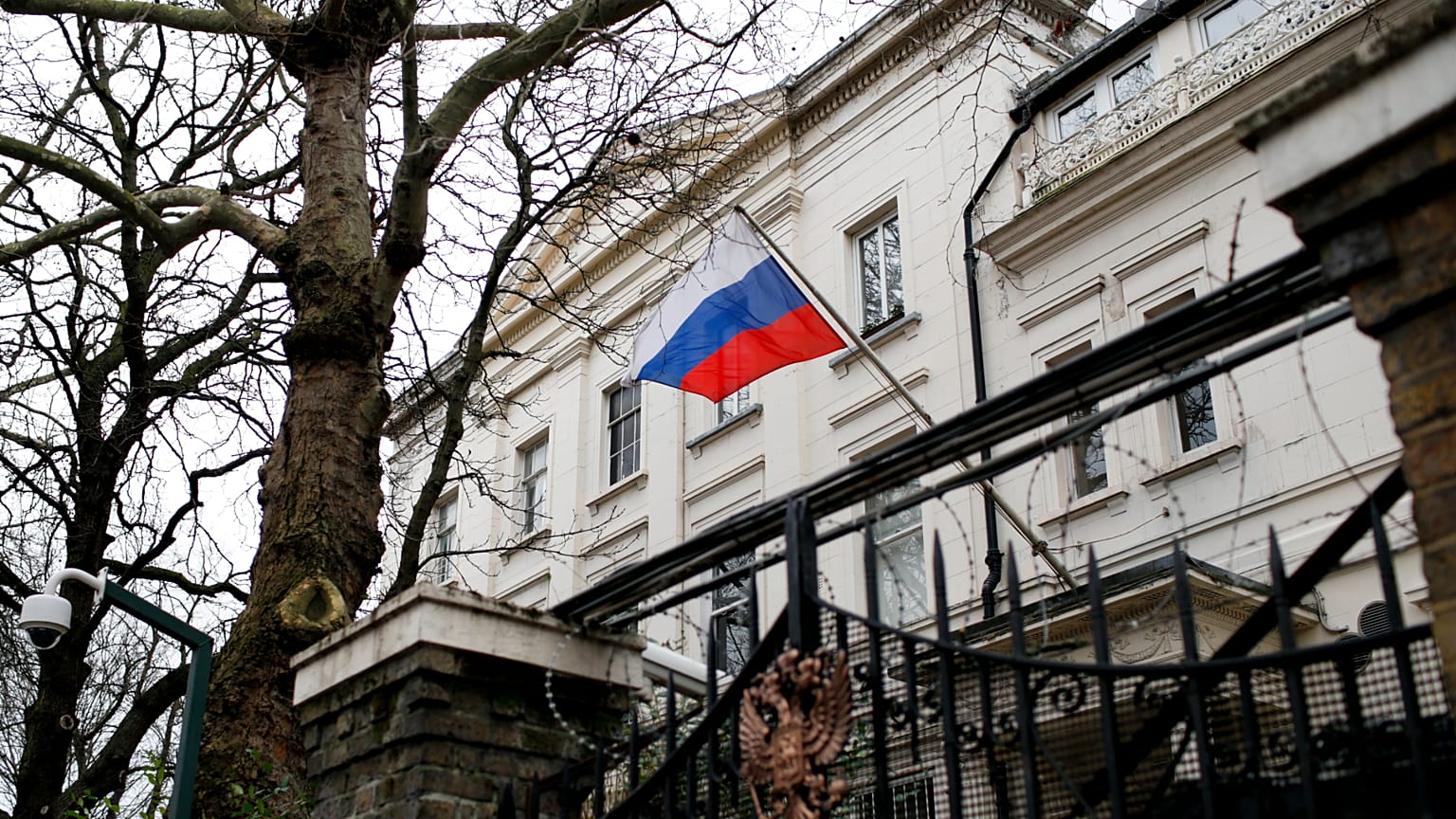
The United Kingdom summoned Russia’s chargé d’affaires to protest what it described as an “egregious and reckless attack” involving an explosive-laden drone at Leipzig/Halle Airport in Germany. The incident occurred during the night of 4–5 August, when police used a robot to defuse a device discovered near a Ukrainian cargo plane. A second drone reportedly carrying traces of explosives was later found near the airport.
The British government said the incident formed part of a broader pattern of Russian efforts to undermine European collective security. The action came amid growing concern in Germany and across Europe about suspicious drone activity near military and industrial sites. Germany has blamed Russia for the Leipzig incident, with its interior minister characterizing it as consistent with Russian “hybrid operations” in Europe. Berlin subsequently announced measures including the closure of Russia’s consulate in Bonn and its cultural centre in the German capital.
Russia has rejected the allegations as “absurd” and “unsubstantiated.” Its embassy in Germany warned that Berlin’s response would have consequences.
The UK’s diplomatic protest followed condemnations from EU officials and several European governments. EU foreign policy chief Kaja Kallas said the incident had the hallmarks of “state-sponsored terrorism” and noted that EU institutions and member states had summoned Russian representatives. European Commission President Ursula von der Leyen called the event a “new escalation,” alleging that Russian operatives had used military-grade material on EU territory. She warned that such incidents were becoming a new normal as Russia intensified destabilizing activities. Poland’s Foreign Minister Radoslaw Sikorski similarly said Europe was no longer in a conventional peacetime environment and that Russia appeared to be conducting a hybrid war against it.
Entities: United Kingdom Foreign Office, Russia, Russian chargé d’affaires, Leipzig/Halle Airport, Germany • Tone: urgent • Sentiment: negative • Intent: inform
03-09-2026
Britain has summoned Russia’s chargé d’affaires in London to protest an attempted drone attack at Leipzig/Halle Airport in Germany last month. The move follows a statement by the German government attributing responsibility for the incident to Russia. A British government spokesperson expressed full solidarity with Germany and described the alleged attack as “egregious and reckless.” The spokesperson said the incident was part of a broader pattern of Russian efforts to undermine the collective security of European countries and weaken the resolve of allies supporting Ukraine. Britain warned that such attempts would be futile and said the Russian diplomat was summoned so the attack could be condemned in the strongest terms.
Russia has rejected the allegations. The Russian embassy in London called Britain’s action part of a “co-ordinated provocation” and described the accusations as unsubstantiated, absurd and fabricated. In comments posted on Telegram, the embassy said the claims had been categorically rejected and warned that any further escalatory measures by Britain or other European states would receive an “adequate and calibrated response.”
The incident has increased diplomatic tensions between Britain, Germany and Russia amid the wider conflict involving Ukraine and continuing accusations of Russian attempts to disrupt European security. The article presents the British and Russian positions without independently verifying responsibility for the airport incident.
Entities: Britain / United Kingdom, Russia, Germany, Leipzig/Halle Airport, Leipzig • Tone: neutral • Sentiment: negative • Intent: inform
03-09-2026
Russia will close Germany’s Goethe-Institut cultural centres in Moscow, St Petersburg and Yekaterinburg, Russian Foreign Minister Sergei Lavrov said on Sept 3, escalating a diplomatic dispute linked to a drone incident at Leipzig Halle Airport. Germany had accused Russia of responsibility for the incident and responded by closing a Russian cultural centre in Berlin and a Russian consulate in Bonn. Russia denies involvement in the drone episode. Russian President Vladimir Putin has accused Germany of planting evidence to implicate Moscow, while German authorities have maintained their allegations.
Lavrov said Germany’s decision to halt the Berlin cultural centre’s operations effectively ended Germany’s cultural presence in Russia. He argued that the Goethe-Institut branches had remained open despite broader tensions between Russia and Western countries over the war in Ukraine and related diplomatic disputes. The institute first opened in Moscow in 1992, shortly after the collapse of the Soviet Union.
The closures represent a further deterioration in relations between Moscow and Berlin, with cultural and diplomatic institutions becoming targets of reciprocal measures. Russia’s Deputy Foreign Minister Alexander Grushko separately said Moscow would retaliate “very soon” for Germany’s closure of the consulate in Bonn. The article notes that Russia previously ordered the closure of Britain’s British Council in 2018 after a diplomatic dispute with London, suggesting that Moscow has used cultural institutions as part of its response to worsening relations with Western governments.
Entities: Russia, Germany, Sergei Lavrov, Goethe-Institut, Moscow • Tone: analytical • Sentiment: negative • Intent: inform
03-09-2026
Nato and the European Union have pledged to increase pressure on Russia following Germany’s accusation that Moscow was responsible for a failed drone attack at Leipzig/Halle airport. European Commission President Ursula von der Leyen described the incident as a “new escalation” on EU territory, while Nato Secretary General Mark Rutte expressed full solidarity with Germany. Russia denies targeting a Ukrainian cargo aircraft with an explosives-laden drone and has rejected Berlin’s allegations as unfounded.
The drone was reportedly defused at the airport, while a second drone may have collided with another cargo plane and a third was discovered days later. German authorities say the devices contained components and explosives linked to previous Russian hybrid operations. Two suspects have reportedly been identified, including individuals with Belarusian, Russian and Latvian connections.
Germany has responded by closing Russia’s consulate in Bonn and the Russian House cultural institution in Berlin. Russia has retaliated by ordering the closure of German Goethe-Institut cultural centres and warning that diplomatic relations could deteriorate further. Berlin is also seeking a coordinated response with allies, including broader EU sanctions and tighter restrictions on Russian visitors.
EU foreign ministers discussed measures against Russia’s “shadow fleet,” stricter visa rules and the possible use of more than €193bn in frozen Russian assets to support Ukraine. Von der Leyen said Europe would increase pressure on Russia’s war finances and provide additional assistance to Ukraine, including funding for PAC-3 air-defence missiles and a proposed Europe-Ukraine missile-defence project.
The Leipzig incident comes amid reports of suspected sabotage in Germany and Poland, including attacks on electricity substations, damage to high-voltage lines and fires at factories producing drones. Authorities are investigating possible foreign-state involvement and domestic extremism. European leaders argue that Russia’s alleged actions represent a widening pattern of dangerous hybrid operations against critical infrastructure and security facilities.
Entities: Russia, Nato, European Union, Germany, Ursula von der Leyen • Tone: urgent • Sentiment: negative • Intent: inform
03-09-2026
Russia plans to close the Goethe-Institut’s branches in Moscow, St. Petersburg and Yekaterinburg, according to Foreign Minister Sergey Lavrov. The announcement is presented as retaliation for Germany’s decision to close the Russian House cultural center in Berlin and the Russian consulate in Bonn after Berlin blamed Moscow for an attempted drone attack at Leipzig/Halle Airport.
Speaking at the Eastern Economic Forum in Vladivostok, Lavrov said the German cultural centers would be shut because Germany had expelled Russia’s cultural center from Berlin. He described the move as marking the end of Germany’s cultural presence in Russia, while also noting that the Goethe-Institut branches had continued operating despite deteriorating relations linked to Russia’s war against Ukraine.
Germany condemned the planned closures. Foreign Minister Johann Wadephul called Russia’s decision unjustified and damaging, emphasizing the Goethe-Institut’s role as a cultural bridge and saying Germany had been willing to preserve it. Wadephul distinguished between relations among the Russian and German peoples, which he said had generally been good, and the actions of Russia’s leadership. He said dialogue would remain possible if Russia ended its war against Ukraine and stopped attacks against Germany and its allies. He also argued that Berlin’s closure of the Russian House had been a response to a clear act of aggression, making Moscow’s retaliation unjustified.
The dispute may escalate further. Russia has reportedly considered closing Germany’s consulate general in St. Petersburg and summoned a German diplomatic official to protest Berlin’s response to the drone incident. Russian President Vladimir Putin has accused Germany of fabricating evidence to implicate Moscow.
The Goethe-Institut operates in about 100 countries, promoting German-language study and knowledge of German culture and society. Its first Russian branch opened in Moscow in 1992, and it is among the last German institutions still active in Russia.
Entities: Goethe-Institut, Sergey Lavrov, Johann Wadephul, Vladimir Putin, Russia • Tone: analytical • Sentiment: negative • Intent: inform
03-09-2026
Moldova is facing growing pressure from Russia as the war in neighboring Ukraine increasingly affects its border and airspace. Stanislav Secrieru, national security advisor to Moldovan President Maia Sandu, said Russian strikes on Ukrainian border infrastructure near Moldova threaten Ukraine’s grain exports and access to European markets. Moldova has become an important transit route for Ukrainian grain traveling by rail toward Romanian ports, and the government has cut rail tariffs to help maintain those exports. Secrieru said Russia is attempting to sever these routes and intimidate Moldova into ending its support for Ukraine.
Moldova reported five Russian drones entering its airspace shortly before Independence Day, while Secrieru said there were 17 airspace violations during August—the highest monthly total since Russia’s full-scale invasion of Ukraine began in 2022. Ukrainian President Volodymyr Zelenskyy visited Chișinău for the celebrations and emphasized the shared threat posed by Russia to Ukraine, Moldova, and Romania.
The article places these developments within a broader Russian campaign involving military pressure, airspace incursions, disinformation, and support for pro-Russian actors. Russia maintains approximately 1,500 troops in Moldova’s breakaway region of Transnistria, which has remained outside central government control since the early 1990s. Analysts argue that Moscow is testing how far it can pressure non-NATO countries without provoking a major Western response.
The situation has also alarmed the Baltic states. Officials in Estonia and Latvia said the immediate risk of invasion remains low but warned that Russian provocations against NATO must be taken seriously. Moldova and Ukraine’s efforts to join the European Union, along with Moldova’s pro-Western political direction, are presented as central reasons for Moscow’s destabilization efforts. The article warns that Moldova could serve as a rehearsal for potential Russian pressure against the Baltic region.
Entities: Moldova, Russia, Ukraine, Maia Sandu, Stanislav Secrieru • Tone: urgent • Sentiment: negative • Intent: warn
03-09-2026
Russia plans to close Germany’s Goethe-Institut facilities and other German cultural centers in Moscow, St. Petersburg and Yekaterinburg, Foreign Minister Sergey Lavrov announced. The move is retaliation for Germany’s decision to close Russia’s consulate in Bonn and the Russian House cultural center in Berlin after an explosive-laden drone was discovered near a Ukrainian aircraft at Leipzig/Halle Airport on Aug. 4. Berlin has blamed Moscow for the incident, while Russian President Vladimir Putin has denied the allegations and claimed that any evidence was planted.
The dispute is part of a broader deterioration in relations between Russia and Germany and reflects Europe’s growing concerns about what officials describe as a Russian “hybrid war.” Western governments accuse Moscow of using sabotage, cyberattacks and disinformation to weaken support for Ukraine and destabilize European countries. Russia rejects those accusations and has in turn accused Western governments of state terrorism.
The article describes several related developments. Britain summoned Russia’s senior diplomat to protest the alleged airport attack. Finland held its largest civil-defense exercise since World War II, including preparations for possible missile strikes from Russia. Norway seized a Russian vessel in Svalbard at Ukraine’s request as part of efforts to enforce a $4.22 billion arbitration award and target Russia’s alleged sanctions-evading shadow fleet. Denmark warned that Russian sabotage of defense-industry companies could be imminent, particularly against firms supplying Ukraine.
Despite the escalating threats, Italy said the airport incident would not deter its assistance to Ukraine and continued to consider sending SAMP/T air-defense systems. The European Union has imposed nearly two dozen sanctions packages against Russia but is struggling to devise additional nonmilitary responses.
Entities: Russia, Germany, Sergey Lavrov, Goethe-Institut, Russian House cultural center • Tone: analytical • Sentiment: negative • Intent: inform