02-09-2026
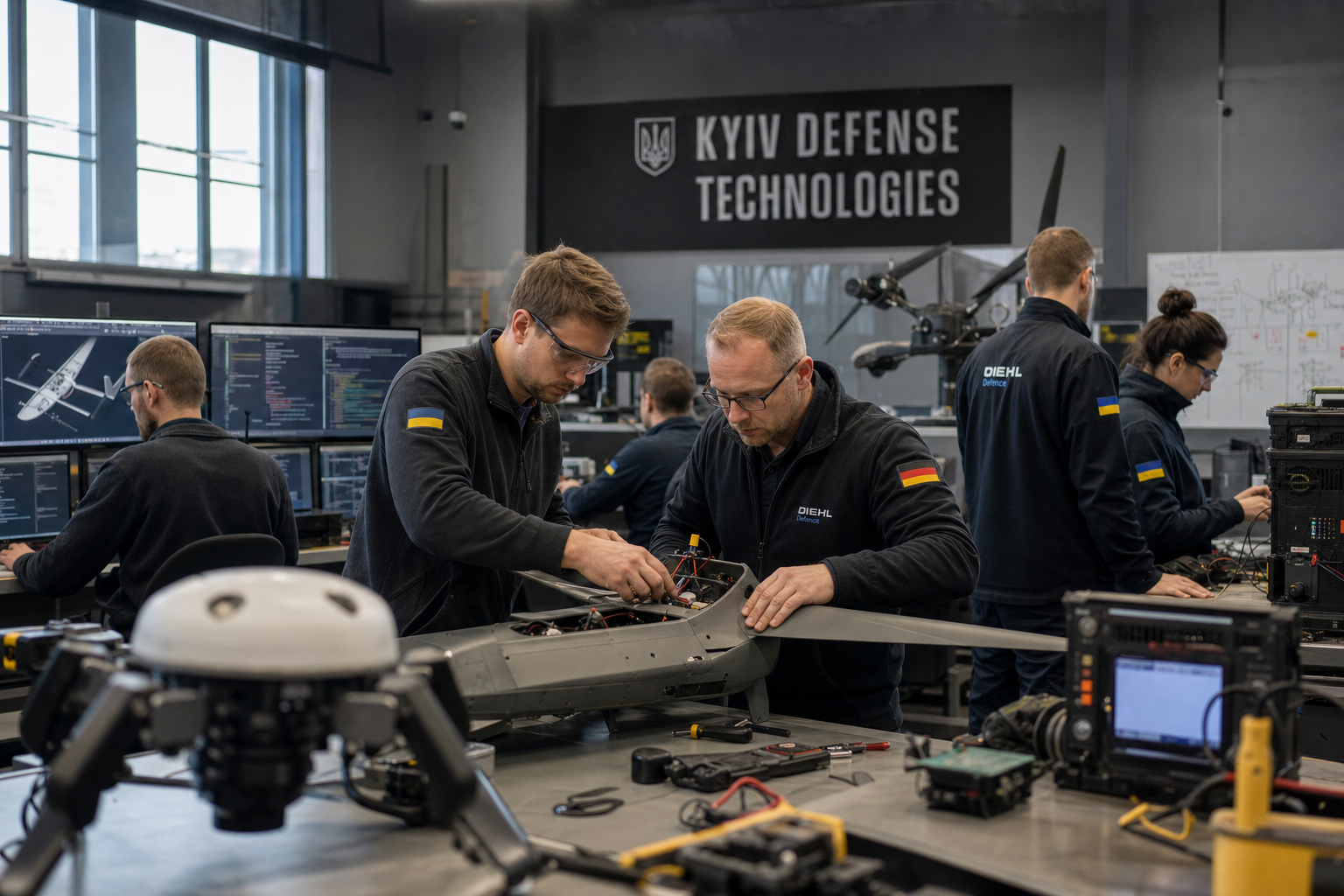
Ukraine is close to finalising a new defence agreement with Germany focused on the joint development and production of drones, missiles and related software, President Volodymyr Zelenskiy said on September 2. The announcement followed a telephone conversation between Zelenskiy and German Chancellor Friedrich Merz, during which they also discussed additional German air-defence assistance and plans for an in-person meeting.
According to Zelenskiy, the agreement was proposed by Ukraine several months earlier. He said the deal would strengthen the defence capabilities of both countries and build on their existing military cooperation. The partnership is expected to cover several types of unmanned systems and associated technologies rather than a single drone model.
Germany is already supporting Ukraine’s drone and air-defence efforts. A multi-million-euro programme is supplying Kyiv with approximately 15,000 Strila interceptor drones, which are designed to counter Shahed-type attack drones. The article also notes that German defence technology company Quantum Systems and Ukrainian manufacturer WIY Drones established Quantum WIY Industries in April. The joint venture aims to expand production of interceptor drones and other air-defence technologies.
In addition, Germany is funding an order for 50,000 Shrike attack drones manufactured by Ukrainian company SkyFall. The purchase is described as one of the largest known drone acquisitions for Ukraine by a Western government. Together, these initiatives indicate a deepening German-Ukrainian defence-industrial relationship, with cooperation extending beyond direct weapons transfers to joint manufacturing, development and software. The precise terms and timeline of the new agreement were not disclosed, but Zelenskiy said the two sides were already completing its text.
Entities: Ukraine, Germany, Kyiv, Volodymyr Zelenskiy, Friedrich Merz • Tone: neutral • Sentiment: neutral • Intent: inform
02-09-2026
The European Union is considering a Ukrainian request worth several billion euros to purchase additional air-defence equipment, including US-made PAC-3 Patriot interceptors, as Russia intensifies missile and aerial attacks. European Commission President Ursula von der Leyen said the funding could be approved as early as next week, although EU member states must first authorize an exception to the Ukraine Support Loan’s rules on non-European defence suppliers.
The loan normally limits non-European sourcing to 35% of a defence product’s value unless no European alternative exists. The proposed derogation would apply specifically to Patriot systems. The exact amount requested has not been disclosed, while discussions are also taking place over whether NATO could contribute part of the payment. Ukrainian media have reported that Kyiv is seeking permission to spend approximately €2 billion on Patriot interceptor missiles.
The central problem is availability rather than financing. Patriot interceptors take substantial time to manufacture, and stocks have been depleted by more than four years of war in Ukraine, as well as by the US-Iran conflict earlier in the year, which led Gulf states to use significant numbers of their own interceptors. Russia has recently launched attacks involving as many as 30 ballistic missiles in one night. Ukrainian President Volodymyr Zelenskyy has said Ukraine would require at least 140 Patriot interceptors to defend against an attack involving around 70 ballistic missiles.
EU officials have urged member states with remaining Patriot stockpiles to share them, but have not yet secured the desired commitments. National representatives are expected to discuss the request on Monday, followed by procurement contracts before funds can be released. Von der Leyen also highlighted Freya, a Ukrainian-led pan-European anti-ballistic missile project, as a possible longer-term response to Europe’s air-defence shortages. Since June, €8.5 billion from the loan has reportedly been allocated to Ukrainian drones and missiles, with some funding also intended for European fighter jets.
Entities: European Union (EU), Ukraine, Russia, PAC-3 Patriot interceptors, European Commission • Tone: analytical • Sentiment: negative • Intent: inform
02-09-2026
Former Ukrainian Defense Minister Mykhailo Fedorov is launching a defense technology startup intended to commercialize Ukraine’s wartime experience for use by Ukraine and its allies. Palantir CEO Alex Karp is expected to serve as the company’s first lead investor, although the amount of his investment and the extent of Palantir’s involvement have not been disclosed.
In a video posted on X, Karp praised the venture and said it could turn Ukraine’s knowledge of modern warfare into products for allied countries. Fedorov’s office said further details, including the company’s name and the technologies it plans to develop, would be announced gradually. Palantir had not immediately commented.
The startup is being formed as Ukraine’s war with Russia has accelerated the development and deployment of drones, artificial intelligence, and battlefield software. Fedorov has long promoted technology as a means of transforming Ukraine’s military and said his team had gained unique practical experience with defense technologies during the full-scale war.
Fedorov, 35, was removed as defense minister by President Volodymyr Zelenskyy in July after only six months in the position, during a major government reshuffle. His dismissal triggered protests in Ukraine. Since leaving government, he has pursued projects focused on Ukraine’s defense sector and courted American investors and technology executives.
He is also seeking U.S. support for a separate defense technology investment fund focused on battlefield robotics, interceptor drones, and AI-enabled missiles, according to the Financial Times. Fedorov has developed relationships with prominent U.S. technology leaders, including Elon Musk, whom he recently described as an important entrepreneur for Ukraine after Starlink prevented Russian forces from using its satellite internet service.
Entities: Mykhailo Fedorov, Alex Karp, Palantir, Ukraine, Russia • Tone: analytical • Sentiment: neutral • Intent: inform