02-09-2026
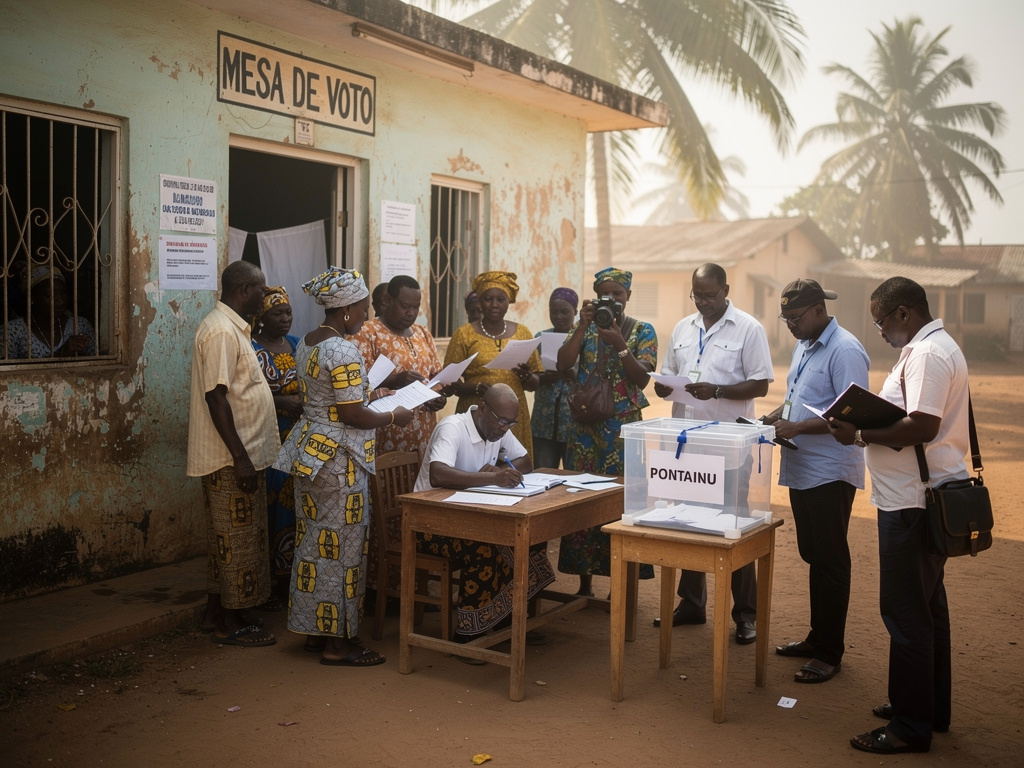
Guinea-Bissau voters approved a referendum that substantially expands presidential authority, according to results announced by the National Electoral Commission. The “yes” campaign received 70 percent of the vote in Sunday’s referendum, although final results must still be confirmed by the Supreme Court. The vote took place less than 10 months after the military seized power and ahead of a presidential election scheduled for December 6, which is intended to restore civilian rule.
The proposed constitutional changes end the previous system in which the prime minister came from the parliamentary majority. They also allow the president to appoint and dismiss the prime minister and government members, as well as dissolve parliament. The military junta says the changes will stabilize Guinea-Bissau’s institutions and prevent the power-sharing disputes that have affected the country’s political system.
The referendum was controversial because it was organized by an unelected transitional government. Opposition groups called for a boycott, citing restrictions on public freedoms, while parts of the political class and civil society strongly rejected the constitutional rewrite. Although the electoral commission described the process as transparent and credible, turnout appeared low and irregular at polling stations visited by AFP, with heavy rain also discouraging participation.
General Horta N’Tam, the transitional president and junta leader, urged young people to vote in large numbers. He is barred from seeking office under the transitional charter. The military took power last November, overthrowing President Umaro Sissoco Embalo shortly after a presidential election and suspending the electoral process. Guinea-Bissau has experienced five coups and several attempted coups since independence, making the referendum part of a broader and fragile transition toward civilian government.
Entities: Guinea-Bissau, National Electoral Commission, Supreme Court of Guinea-Bissau, General Horta N'Tam, Carmen Izaura Lobo • Tone: analytical • Sentiment: negative • Intent: inform
02-09-2026
Guinea-Bissau’s voters have approved a referendum proposing major changes to the country’s constitutional system, including granting the president authority to appoint and dismiss the prime minister and government ministers, dissolve parliament, and reducing the legislature from 102 seats to 65. The referendum took place less than 10 months after the military seized power and three months before presidential and parliamentary elections scheduled for December 6. Transitional authorities describe the reforms as necessary to promote stability and facilitate Guinea-Bissau’s return to civilian rule.
The National Transitional Council and National Electoral Commission declared victory for the “Yes” camp, reporting that 70% of voters supported the proposal and that turnout exceeded 50%. Electoral officials praised the organization, transparency and credibility of the vote. Opposition parties and civil-society groups strongly dispute those claims. They argue that the referendum has no legal basis because it was organized by institutions established after the coup and called for a boycott. PAIGC leader Domingos Simoes Pereira said the military-backed institutions lack a democratic mandate to rewrite the constitution, while presidential challenger Fernando Dias Costa questioned the official turnout figures.
Critics also warn that the proposed constitution would excessively concentrate power in the presidency, reducing the importance of parliamentary elections and weakening checks and balances. Bubacar Ture of the Guinea-Bissau Human Rights League said political parties, civil-society organizations and traditional and religious leaders were not consulted during the drafting process. He also expressed concern that provisions for constitutional oversight had been removed.
The referendum follows a disputed 2025 presidential election in which both Umaro Sissoco Embalo and Fernando Dias Costa claimed victory before the military intervened. The vote is part of a broader regional pattern in which constitutional reforms have been used to strengthen executive authority. Although December’s elections are intended to restore civilian rule, the referendum has intensified concerns about whether Guinea-Bissau’s transition will reinforce democratic institutions or presidential dominance.
Entities: Guinea-Bissau, Guinea-Bissau referendum, proposed constitutional charter, National Transitional Council, National Electoral Commission (NEC) • Tone: analytical • Sentiment: negative • Intent: inform
02-09-2026
Guinea-Bissau voters have approved a new constitution that critics say will weaken democracy by expanding presidential powers and reshaping the country’s political system before elections scheduled for December. Provisional results indicate that about 70% of voters supported the changes in the referendum, while turnout reportedly exceeded 55%, representing an estimated 544,060 people.
The constitutional reforms will reduce parliament from 102 seats to 65 and cut the number of electoral constituencies from 29 to 12. They will also require presidential candidates to have lived continuously in Guinea-Bissau for at least five years before an election. Opponents believe this provision is aimed at diaspora-based politicians who have significant political support abroad.
The referendum takes place amid prolonged political instability. Guinea-Bissau, whose independence from Portugal was recognised in 1974, has experienced at least 10 coup attempts, half of which succeeded. The latest military intervention followed disputed presidential elections in November 2025, when both candidates claimed victory and accused the other side of electoral malpractice. The military then established a transitional ruling council led by Gen Horta Inta-A Na Man, a former chief of general staff.
Na Man said the purpose of the referendum was to ensure that whoever wins the next election can complete their mandate without obstruction. Nelson Moreira, the council’s second vice-president, argued that the previous constitution had contributed to instability.
The leading opposition party, the African Party for the Independence of Guinea and Cape Verde (PAIGC), boycotted the referendum and described it as a democratic farce. Its leader, Domingos Simões Pereira, said the vote represented a continuation of the coup that followed the disputed elections. The article presents the constitutional changes as a potentially stabilising measure according to the transitional authorities, but as a threat to democratic competition according to opponents.
Entities: Guinea-Bissau, Bissau, Gen Horta Inta-A Na Man, Domingos Simões Pereira, Nelson Moreira • Tone: analytical • Sentiment: negative • Intent: inform