02-09-2026
Maltese businessman Yorgen Fenech has been acquitted of orchestrating the 2017 murder of investigative journalist Daphne Caruana Galizia. Fenech, 44, faced charges of complicity in murder and criminal association to commit murder, both of which he denied. A jury cleared him by an 8-1 majority after approximately eight hours of deliberation.
Caruana Galizia was killed by a car bomb near her home in Malta in October 2017. The 53-year-old journalist was internationally known for investigating corruption, money laundering and organised crime through her blog, Running Commentary. She also contributed to the Panama Papers investigation, which exposed offshore financial structures and generated allegations involving senior Maltese officials. Her assassination caused widespread protests and public outrage, amid speculation that influential establishment figures could have been involved.
During the trial, prosecutors argued that Fenech wanted Caruana Galizia killed because she was preparing to publish damaging information about him. Fenech, one of Malta’s wealthiest businessmen and the former owner of a company examined in her reporting, rejected the allegations. He instead suggested that former Prime Minister Joseph Muscat’s chief of staff, Keith Schembri, may have been responsible. Schembri has denied involvement and was never treated as a murder suspect by police. Muscat, who was not linked to the killing, resigned in 2020 amid the political fallout.
Caruana Galizia’s family expressed grief and condemned what they described as continuing institutional failures that had enabled the murder. Two brothers, George and Alfred Degiorgio, received 40-year prison sentences in 2022 for the killing, while Robert Agius and Jamie Vella were sentenced to life imprisonment in 2025 for supplying the bomb. Fenech’s acquittal leaves unresolved questions about who commissioned the assassination and whether Malta has adequately addressed the systemic failures surrounding it.
Entities: Daphne Caruana Galizia, Yorgen Fenech, George and Alfred Degiorgio, Keith Schembri, Joseph Muscat • Tone: neutral • Sentiment: negative • Intent: inform
02-09-2026
Maltese businessman Yorgen Fenech, 44, has been acquitted of involvement in the 2017 car-bomb murder of investigative journalist Daphne Caruana Galizia. A jury cleared him by an 8-1 margin of both complicity in murder and criminal association to commit murder. Had he been convicted, Fenech could have faced a life sentence. He denied ordering the killing, including allegations that he wanted Caruana Galizia dead because she was preparing to publish an investigation involving him.
Caruana Galizia, who was 53 when she was killed, was driving near her home when the bomb exploded. Her reporting had focused extensively on suspected corruption in Maltese politics and business, and she was facing around 40 libel cases at the time of her death. The murder shocked Malta and prompted protests, attracting widespread attention across Europe.
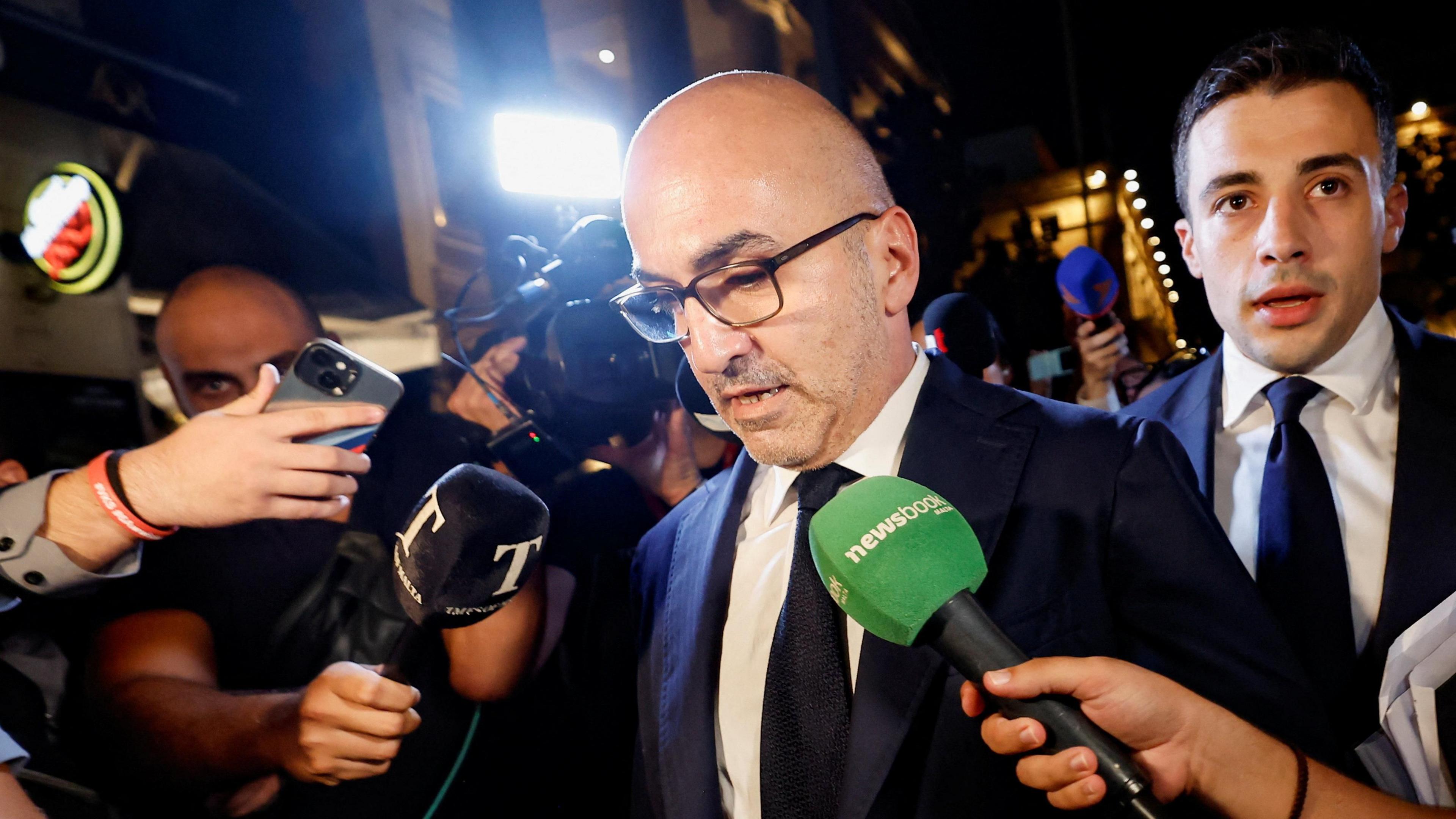
Fenech did not speak to reporters after leaving court, while people outside shouted insults at him. Caruana Galizia's sons attended the hearing. In response to the verdict, her family said that the institutional failures that had contributed to the journalist's murder had not been addressed or reformed. They argued that lasting justice required ensuring that no one else would face similar risks and that Malta had failed in its duty to protect her.
Five people have been convicted in connection with the murder, including three who were found guilty of carrying it out. All five are currently imprisoned. Fenech's acquittal therefore ends this prosecution against a major alleged figure in the case, but the family's comments indicate that broader questions about accountability and institutional protection remain unresolved.
Entities: Malta, Yorgen Fenech, Daphne Caruana Galizia, 2017 car-bomb murder, Investigative journalism • Tone: analytical • Sentiment: negative • Intent: inform
02-09-2026
A Maltese jury has found businessman Yorgen Fenech not guilty of complicity and criminal conspiracy in the 2017 car-bomb assassination of investigative journalist Daphne Caruana Galizia. Prosecutors alleged that Fenech masterminded the killing and ordered and paid for it. His arrest in 2019, while he was attempting to leave Malta on his yacht, triggered mass protests and contributed to the resignation of Prime Minister Joseph Muscat. Fenech was indicted in 2021 and was the last of six people charged in connection with the plot to face prosecution. He left the Valletta courtroom without commenting, amid heckling outside.
Caruana Galizia, 53, was killed on 16 October 2017 when a bomb exploded in her car near her home. She had reported extensively on alleged corruption involving Maltese politicians, business figures and members of Muscat’s inner circle, including offshore companies revealed through the Panama Papers. An independent inquiry published in 2021 concluded that the Maltese state bore responsibility for her assassination because of a culture of impunity originating at the highest levels of government.
Several other people have already been convicted or pleaded guilty. George and Alfred Degiorgio received 40-year prison sentences after admitting to carrying out the killing in 2022. Jamie Vella and Robert Agius were sentenced to life imprisonment in 2025 for supplying the bomb, while Vincent Muscat received 15 years after pleading guilty. Taxi driver Melvin Theuma, who acted as an intermediary and testified against others, received a presidential pardon in 2019.
Caruana Galizia’s family said the verdict denied her the justice she deserved and argued that the institutional failures that enabled the murder remain unresolved. They called for reforms to ensure that no one else faces similar risks. Cameras were not permitted in the courtroom.
Entities: Yorgen Fenech, Daphne Caruana Galizia, Malta, Valletta, Joseph Muscat • Tone: analytical • Sentiment: negative • Intent: inform
02-09-2026
A Maltese court has acquitted businessman Yorgen Fenech of orchestrating the 2017 car-bomb assassination of investigative journalist Daphne Caruana Galizia. Fenech, a wealthy tycoon whose interests included energy and tourism, had been accused of masterminding the killing because Caruana Galizia was allegedly preparing to publish damaging information about his uncle. He was arrested in 2019 aboard his yacht while attempting to leave Malta, after a suspected intermediary in the murder was offered a pardon in exchange for information.
The verdict has provoked strong condemnation from Caruana Galizia’s family and press-freedom organizations. Her family said the decision denied her the justice she deserved, while her son Matthew Caruana Galizia called it a “terrible decision” from which Malta might never recover. The European Centre for Press and Media Freedom and Reporters Without Borders warned that the acquittal sent a dangerous message to those who target journalists and demonstrated that the mastermind had still not been held accountable.
Caruana Galizia, described as a “one-woman WikiLeaks,” had investigated corruption and alleged links between Malta’s political and business elites. Her murder triggered mass protests, a major political crisis and the resignation of Prime Minister Joseph Muscat in 2020. A 2021 public inquiry concluded that the Maltese state bore responsibility for creating an atmosphere of impunity and failing to protect her.
Five people have been convicted in connection with the killing. The men who supplied the explosives, Robert Agius and Jamie Vella, received life sentences in 2025, while the three men who carried out the bombing—George and Alfred Degiorgio and Vince Muscat—are also serving prison terms. However, the family and media watchdogs say broader institutional failures remain unresolved. The Maltese government said it had taken note of the verdict and remained committed to ensuring justice.
Entities: Yorgen Fenech, Daphne Caruana Galizia, Matthew Caruana Galizia, Malta, Maltese court • Tone: analytical • Sentiment: negative • Intent: inform
02-09-2026
France 24 reports that a Maltese court acquitted businessman Yorgen Fenech of orchestrating the 2017 car-bomb assassination of investigative journalist Daphne Caruana Galizia. The ruling, issued on Wednesday, triggered outrage from Caruana Galizia’s family and organizations concerned with media freedom. Fenech, described as a wealthy Maltese tycoon, had been accused of masterminding the killing of the 53-year-old reporter, whose investigative work had focused on corruption and whose death became one of Malta’s most consequential political events in recent years.
According to the article, Caruana Galizia’s assassination prompted unprecedented protests across Malta and contributed to the downfall of a government. The report presents the acquittal as a major development in a case that has drawn international attention because of its implications for justice, press freedom, and political accountability. It also links the case to broader issues associated with Malta, including corruption and the Panama Papers.
The brief report includes commentary from Kurt Sansone, executive editor of MaltaToday, in an interview with France 24. However, the supplied text does not provide the court’s reasoning, details of the evidence presented at trial, the prosecution’s response, or whether an appeal is planned. It primarily emphasizes the contrast between the gravity of the journalist’s killing and the anger provoked by Fenech’s acquittal. The accompanying image shows protesters in Valletta carrying signs reading “Mafia Government” and displaying photographs of Caruana Galizia, underscoring the enduring public reaction to her murder and the continuing importance of the case to Malta’s political and media landscape.
Entities: Yorgen Fenech, Daphne Caruana Galizia, Kurt Sansone, Sharon Gaffney, France 24 • Tone: emotional • Sentiment: negative • Intent: inform
02-09-2026
A Maltese jury acquitted businessman Yorgen Fenech of complicity and criminal conspiracy in the 2017 car-bomb assassination of investigative journalist Daphne Caruana Galizia. Prosecutors had alleged that Fenech was the mastermind who ordered and paid for the killing, but he pleaded not guilty and was found not guilty on both counts. He was the last of six people charged in the murder plot to face prosecution.
Caruana Galizia, 53, was killed on Oct. 16, 2017, when a bomb detonated in her car near her home. Her investigative reporting focused on suspected corruption among Malta’s political and business elites, including figures connected to then-Prime Minister Joseph Muscat and revelations from the Panama Papers. Her murder shocked Europe, triggered mass protests, and contributed to Muscat’s resignation after Fenech was arrested while attempting to leave Malta on his yacht in 2019. Fenech had also been involved in a consortium that won a controversial government power-station contract.
An independent inquiry concluded in 2021 that the Maltese state bore responsibility for the assassination because of a culture of impunity originating at the highest levels of government. Caruana Galizia’s family said the acquittal denied her the justice she deserved and argued that the institutional failures that enabled her murder remain unresolved.
Several other people have been convicted or pleaded guilty. George and Alfred Degiorgio received 40-year sentences after admitting to carrying out the killing. Jamie Vella and Robert Agius were sentenced to life in prison in 2025 for supplying the bomb, while Vincent Muscat received 15 years after pleading guilty. Taxi driver Melvin Theuma, described as a middleman, received a presidential pardon in exchange for testimony. The article presents the verdict within the broader questions of accountability, press freedom, and Malta’s political culture.
Entities: Yorgen Fenech, Daphne Caruana Galizia, Joseph Muscat, George Degiorgio, Alfred Degiorgio • Tone: analytical • Sentiment: negative • Intent: inform
02-09-2026
Jurors in Malta have begun deliberating in the trial of businessman Yorgen Fenech, who is accused of masterminding the 2017 car-bomb assassination of investigative journalist Daphne Caruana Galizia. The killing, which shocked Europe, triggered a major political crisis in Malta and prompted international scrutiny of the country’s police, political system and judiciary.
Fenech, 44, faces a life sentence if convicted of complicity in murder. If found guilty of the lesser charge of criminal association to commit murder, he could receive a sentence of up to 18 years. Judge Edwina Grima instructed the nine-member jury after three days of closing arguments and told jurors that at least six must support a verdict for it to be valid.
Caruana Galizia’s family attended the hearing as the trial, which began on July 1, reached its final stage. Prosecutors relied in part on testimony from alleged intermediary Melvin Theuma, who was granted state protection after turning evidence. Theuma testified that Fenech ordered and financed the killing and paid for the legal defence of the men accused of carrying it out. The prosecution also alleged that Fenech wanted the journalist killed because she was preparing to publish information about him.
Fenech has denied the accusations. His defence sought to direct suspicion toward Keith Schembri, a former chief of staff to then-prime minister Joseph Muscat and a frequent target of Caruana Galizia’s reporting. Muscat resigned in January 2020 amid the political consequences of the assassination, although he has never been linked to the killing. Police told the court that Schembri had never been a suspect, and Schembri has denied involvement. The verdict will conclude one of Malta’s most consequential and closely watched criminal trials.
Entities: Yorgen Fenech, Daphne Caruana Galizia, Melvin Theuma, Keith Schembri, Joseph Muscat • Tone: neutral • Sentiment: negative • Intent: inform