02-09-2026
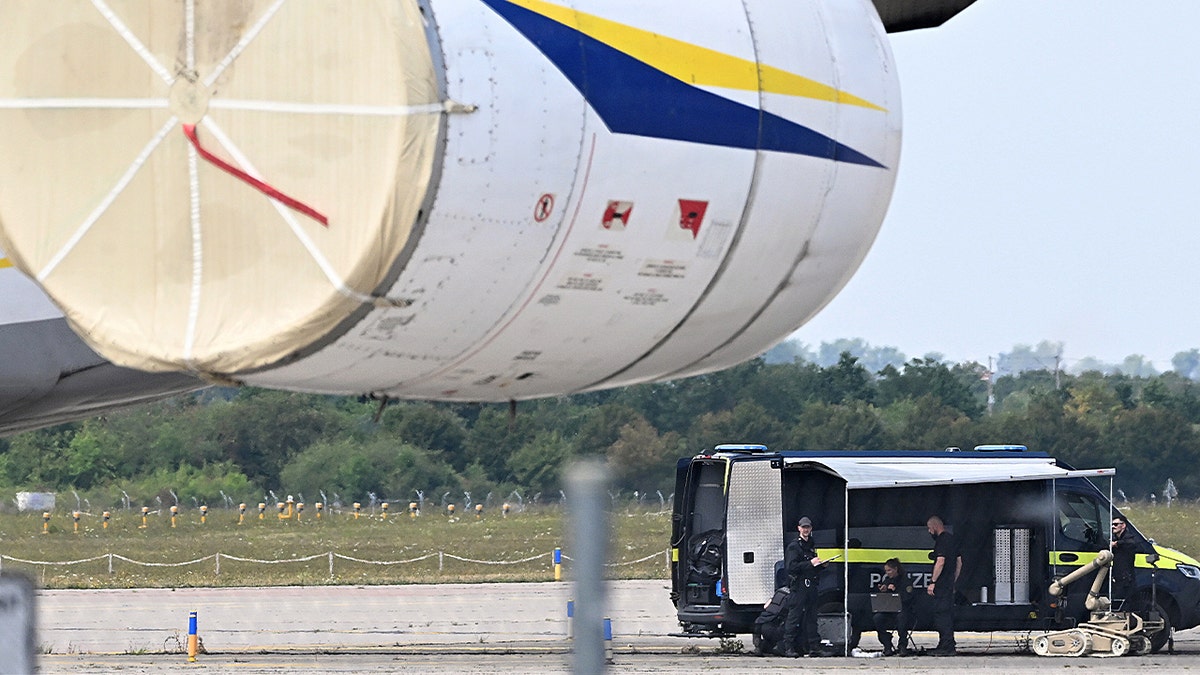
Germany has formally accused Russia of attempting a drone attack at Leipzig-Halle airport in Saxony on August 4. Authorities found an explosives-laden drone near a Ukrainian Antonov Airlines cargo plane, temporarily closed the airport, and used a robot to defuse the device. A second drone was reportedly destroyed after colliding with an aircraft nearby.
German Interior Minister Alexander Dobrindt said investigators identified Russian-style components and technology, along with intelligence indicating Russian responsibility. He said the attack appeared to involve technically sophisticated equipment but relatively low-level agents acting on behalf of Russian state entities. Germany has not publicly released all the evidence linking the incident directly to Moscow.
Berlin responded by announcing the closure of a Russian consulate in Bonn and the planned closure of the Russian House cultural center in Berlin. Germany also intends to advocate adding more Russians to the European Union’s sanctions list, consider tighter entry controls for Russian citizens, and summon Russia’s ambassador. Moscow denied the allegations, called them absurd, and accused Chancellor Friedrich Merz’s government of using Russia as a scapegoat for domestic political problems. Vladimir Putin further alleged that Germany may have planted evidence.
Several NATO members, including Poland, Italy, the United Kingdom, Sweden, and the Czech Republic, supported Germany’s position. EU officials are expected to coordinate a response. Ukraine welcomed Berlin’s actions, which come amid expanding German-Ukrainian security cooperation and increasing reliance on drone warfare.
The article places the incident within a broader pattern of alleged Russian hybrid operations in Europe, including cyberattacks, espionage, sabotage, arson, disinformation, and infrastructure interference. It also highlights the political sensitivity of the accusations, as war fatigue and support for Ukraine are significant issues ahead of elections in Saxony-Anhalt, where the Russia-friendly Alternative for Germany is seeking gains.
Entities: Germany, Russia, Leipzig-Halle Airport, Alexander Dobrindt, Vladimir Putin • Tone: analytical • Sentiment: negative • Intent: inform
02-09-2026
Nato and the European Union have vowed to intensify pressure on Russia after Germany accused Moscow of orchestrating a failed drone attack at Leipzig/Halle airport. European Commission President Ursula von der Leyen described the incident as a “new escalation” on EU territory and said Europe must respond to Russian actions “faster and better.” Nato Secretary General Mark Rutte expressed the alliance’s full solidarity with Germany and warned of a growing threat from drones, missiles and other hostile activities across Europe.
Germany said police investigations and intelligence assessments linked the 4 August incident to Russia. A drone carrying explosives was reportedly defused at the airport, while another may have collided with a cargo plane. A third drone was found 10 days later. German officials said the devices contained components and explosives associated with previous Russian hybrid operations. Two suspects have reportedly been identified, including individuals holding Belarusian, Russian and Latvian passports.
As part of its response, Berlin plans to close Russia’s consulate in Bonn and the Russian House cultural institution, which German officials suspect is used for Kremlin propaganda. Moscow rejected the accusations, threatened reciprocal measures and criticized Germany’s actions as contrary to its interests.
The incident comes amid reports of suspected sabotage in Germany and Poland. Electricity substations and power infrastructure were attacked in several German locations, while fires at factories producing drones and other military equipment in Poland were described as deliberate or potentially deliberate. Authorities are investigating possible foreign-state involvement and domestic extremism.
EU foreign ministers are considering further sanctions, including measures against Russia’s “shadow fleet” and restrictions on Russian visitors. The EU has already agreed to lend Ukraine €90bn, while Kyiv is seeking additional funding for PAC-3 air-defence missiles. Von der Leyen said Europe and Nato would continue increasing pressure until Russia ends its attacks on Ukraine.
Entities: Ursula von der Leyen, Mark Rutte, Vladimir Putin, Alexander Grushko, Jean-Noël Barrot • Tone: urgent • Sentiment: negative • Intent: inform
02-09-2026
Germany has formally accused Russia of carrying out a failed drone attack at Leipzig/Halle Airport on 4 August. A drone carrying an explosive device was found near Ukrainian cargo aircraft, but it failed to detonate, apparently because its detonator was faulty. Investigators also suspect that a second drone collided with a nearby cargo plane, while a third was reportedly discovered near the airport 10 days later. German Interior Minister Alexander Dobrindt said equipment analysis and intelligence findings demonstrated Russian involvement and described the incident as consistent with Russia’s alleged pattern of hybrid operations across Europe.
Russia has denied the accusation. President Vladimir Putin claimed Germany planted evidence to blame Moscow, without providing evidence, while the Russian embassy in Berlin called the allegation absurd. In response to the German government’s announcement, Foreign Minister Johann Wadephul said Germany would close the Russian consulate in Bonn, terminate the contract for the Russian House in Berlin, tighten entry controls for Russian nationals and increase pressure on Russia’s shadow fleet, which is used to evade sanctions. Germany also summoned Russia’s ambassador. Moscow warned it would respond with equivalent measures and called Germany’s actions an unprecedented escalation.
The announcement received support from NATO Secretary General Mark Rutte, European Commission President Ursula von der Leyen, Polish Prime Minister Donald Tusk and British Prime Minister Andy Burnham. Germany and other NATO countries have reported increasing drone activity around airports, military facilities and industrial sites. Berlin has described itself as a daily target of hybrid warfare and is seeking stronger intelligence powers.
The measures come at a politically sensitive time for Chancellor Friedrich Merz. A forthcoming election in Saxony-Anhalt could give the far-right AfD its first state-level government role; the party opposes military support for Ukraine and favors restoring ties with Russia. A CDU lawmaker said Germany’s response remained too weak. Separately, police are investigating explosive and incendiary devices found at a power substation in Brandenburg, although no link to Russia or the airport incident has been established.
Entities: Germany, Russia, Leipzig/Halle Airport, Failed Leipzig airport drone attack, Alexander Dobrindt • Tone: analytical • Sentiment: negative • Intent: inform
02-09-2026
The European Union has summoned Russia’s envoy in Brussels over Germany’s allegation that Moscow was responsible for a failed attempted hybrid attack involving an explosives-laden drone at Leipzig/Halle Airport. EU foreign policy chief Kaja Kallas described the incident as bearing “all the hallmarks of state-sponsored terrorism” and said the bloc was considering how to respond. She also indicated that the EU’s next sanctions package related to Russia’s war in Ukraine could be expanded beyond the approximately 1,600 planned listings.
France announced a similar diplomatic response, with Foreign Minister Jean-Noël Barrot saying Paris had summoned Russia’s chargé d’affaires to protest. Barrot argued that any further sanctions should be adopted at the European level, particularly measures targeting Russia’s so-called shadow fleet. Foreign ministers from Ukraine, the United Kingdom, Canada, Norway, Iceland and Switzerland joined EU ministers for informal talks in Ireland.
German Foreign Minister Johann Wadephul said additional sanctions would be developed in the coming weeks and that pressure on Russia was increasing while support for Ukraine remained strong. He defended Berlin’s decision to publicly attribute responsibility for the incident to Russia, calling it a necessary and proportionate response based on a well-founded assessment.
Interior Minister Alexander Dobrindt said police investigations, crime patterns and intelligence findings collectively supported the conclusion that Russia was responsible. Wadephul added that the drone’s configuration, components, explosives and detonation systems resembled those used in other Russian hybrid operations and in the war against Ukraine.
Russian officials, including President Vladimir Putin, have rejected the allegations and accused Germany of fabricating its account. Leipzig/Halle Airport is a major freight hub, and Ukrainian aircraft manufacturer and airline Antonov operates there, frequently moving material to Ukraine through eastern Germany.
Entities: European Union, Kaja Kallas, Russia, Leipzig/Halle Airport, Germany • Tone: analytical • Sentiment: negative • Intent: inform
02-09-2026
The German government has formally blamed Russia for an attempted drone attack at Leipzig/Halle Airport on August 4, describing it as part of a broader campaign of hybrid operations against Europe. Interior Minister Alexander Dobrindt said investigators found a drone carrying explosives and a detonation mechanism inside the airport’s security area, between Ukrainian cargo aircraft. Authorities believe a second drone may have collided with a nearby DHL aircraft, while German media reported that a third explosives-laden drone was also discovered. Federal prosecutors called the incident a serious attack on Germany’s transport and logistics infrastructure.
Foreign Minister Johann Wadephul said the drone’s configuration, components, explosives and detonation systems resembled those used in other Russian hybrid operations and in the war against Ukraine. German officials said they did not regard the incident as isolated and expected further Russian hybrid attacks. Although Dobrindt emphasized that Germany was not at war, he said the country was subjected to hybrid warfare daily and would respond proportionately but firmly.
Germany announced tighter entry controls for Russian nationals, plans to propose additional EU sanctions, the closure of Russia’s consulate in Bonn and the termination of an agreement allowing the Russian House cultural center to operate in Berlin. The Russian ambassador was summoned. Germany also pledged to coordinate its response with the EU and NATO and continue supporting Ukraine.
NATO Secretary General Mark Rutte and European Commission President Ursula von der Leyen expressed solidarity with Germany and condemned Russia’s alleged efforts to undermine European unity. Russia’s President Vladimir Putin rejected the accusations, saying the evidence had been planted. Ukraine welcomed Germany’s response and said it was working with Berlin on infrastructure protection, sanctions and action against Russia’s shadow fleet.
Entities: Germany, Russia, Leipzig/Halle Airport, Alexander Dobrindt, Johann Wadephul • Tone: analytical • Sentiment: negative • Intent: inform
02-09-2026
Germany has publicly accused Russia of orchestrating a failed drone sabotage operation at Leipzig/Halle Airport and announced a series of diplomatic and security measures in response. German Foreign Minister Johann Wadephul said Russia’s consulate in Bonn would be closed and the contract for the Russian House cultural center in Berlin would be terminated. Germany also announced tighter entry restrictions for Russian nationals, additional measures against Russia’s shadow fleet, and the summoning of Russian Ambassador Sergei Nechayev.
The measures followed an investigation into an Aug. 4 incident in which authorities discovered a drone carrying an explosive device beside a Ukrainian Antonov cargo aircraft at the airport. Officials said the bomb failed to detonate because of a faulty detonator. Germany believes a second drone collided with a nearby cargo aircraft and described the incident as part of what Interior Minister Alexander Dobrindt called Russia’s established pattern of hybrid operations across Europe.
Russia rejected the accusations. Its embassy in Berlin called them absurd, while Foreign Ministry spokeswoman Maria Zakharova threatened a “mirror-image” response and described Germany’s actions as an unprecedented escalation in bilateral relations.
Leipzig/Halle is a major European cargo hub and a logistics center for Germany’s military and NATO allies. It also supports Ukrainian cargo operations, making the airport strategically significant. NATO Secretary-General Mark Rutte endorsed Germany’s findings and expressed solidarity, while European Commission President Ursula von der Leyen said the European Union was preparing further sanctions against Moscow. Polish Prime Minister Donald Tusk also accused Russia of increasing regional tensions.
The dispute comes amid German warnings of a broader campaign of hybrid threats against military facilities, transportation networks and critical infrastructure. Separately, police are investigating improvised explosive and incendiary devices found at a power substation in Brandenburg after a damaged power line caused a temporary outage. Authorities have not attributed that incident to any specific actor.
Entities: Germany, Russia, Leipzig/Halle Airport, Russian consulate in Bonn, Russian House cultural center in Berlin • Tone: urgent • Sentiment: negative • Intent: inform
02-09-2026
The German government has accused Russia of responsibility for an attempted drone attack at Leipzig/Halle Airport on Aug. 4, in which a drone carrying explosives was found near a Ukrainian aircraft. The device was defused, but German officials described the incident as a serious escalation because the airport supports Ukrainian transport operations and NATO logistics.
Interior Minister Alexander Dobrindt said investigators identified features of the drone, explosives and detonator that resembled equipment used in other Russian hybrid operations and in Russia’s war against Ukraine. Intelligence reportedly indicated that individuals acting on behalf of Russian state entities were involved, although German officials did not identify the specific Russian agencies or provide the evidence publicly.
In response, Foreign Minister Johann Wadephul announced that Germany would close Russia’s consulate in Bonn and the Russian House cultural center in Berlin. Germany also plans to seek additional European Union sanctions against Russian individuals connected to hybrid attacks, tighten entry controls for Russian citizens and increase pressure on Russia’s so-called shadow fleet of oil tankers. Russia’s ambassador was summoned, while Russian officials rejected the accusation. Foreign Ministry spokesperson Maria Zakharova called it a contrived pretext for escalation, and President Vladimir Putin claimed evidence had been planted.
The report places the airport incident within a broader pattern of alleged Russian sabotage and malign activity across Europe. The Associated Press has tracked approximately 200 such incidents since Russia’s invasion of Ukraine, including arson, cyberattacks, drone activity and plots against individuals. NATO Secretary-General Mark Rutte expressed solidarity with Germany. The article also notes recent Polish warnings about suspected sabotage, including a fire at a major drone manufacturer. Germany is separately pursuing legislation to expand intelligence agencies’ powers to disrupt sabotage and cyberattacks.
Entities: Germany, Russia, Leipzig/Halle Airport, Alexander Dobrindt, Johann Wadephul • Tone: analytical • Sentiment: negative • Intent: inform
02-09-2026
The European Union is preparing to increase pressure on Russia after Germany reported an attempted drone attack at Leipzig/Halle Airport, while German authorities investigate two further suspected sabotage incidents. European Commission President Ursula von der Leyen said the discovery of an explosives-laden drone at the airport demonstrated Moscow’s growing “recklessness” and vowed that Europe and NATO would intensify sanctions and other measures until Russia ends its war in Ukraine.
Leipzig/Halle is a major civilian freight and NATO logistics hub and hosts Ukrainian Antonov An-124 cargo aircraft. Germany has blamed Russia for the incident, describing it as part of hybrid warfare designed to intimidate Western societies and create divisions over support for Ukraine. Moscow denies involvement and has warned that it will respond to what it describes as anti-Russian actions.
The EU’s specific new sanctions had not yet been finalized. EU foreign policy chief Kaja Kallas said measures targeting Russia’s military-industrial complex were being considered, while France called for action against Russia’s “shadow fleet,” which is accused of helping circumvent energy sanctions. NATO Secretary General Mark Rutte said drones and missiles had increasingly entered NATO airspace and that other malign activities were also rising.
Germany simultaneously investigated damage to critical infrastructure. Vandalism at a substation in North Rhine-Westphalia caused power-generation units with a combined capacity of 4,200 megawatts to shut down. In Brandenburg, conductive devices damaged power lines at a major high-voltage node. Authorities had not identified suspects, and officials said foreign powers and left-wing extremists could not be ruled out.
The incidents occurred shortly before a state election in which the Russia-friendly far-right Alternative for Germany was leading polls. German lawmaker Alexander Throm said the timing appeared intended to unsettle the public, while acknowledging that Russia and other extremist groups could share such a goal.
Entities: European Union (EU), Russia, Germany, Ursula von der Leyen, Mark Rutte • Tone: urgent • Sentiment: negative • Intent: inform
02-09-2026
The article reports that German officials have publicly attributed an attempted drone attack at Leipzig/Halle Airport to Russia. The incident allegedly occurred the previous month, but German authorities waited several weeks before assigning responsibility, indicating an initially cautious or reticent response. On Tuesday, officials announced that Germany would take diplomatic and other retaliatory steps against Moscow. The measures include summoning Russia’s ambassador to Berlin and closing a Russian consulate in Germany, along with additional unspecified actions.
The report presents the developments as a significant escalation in tensions between Germany and Russia. By linking the airport incident to Moscow and announcing concrete countermeasures, Berlin is moving beyond investigation or private diplomatic concern toward a public response. The decision to summon the ambassador represents a formal diplomatic protest, while the planned consulate closure signals a more substantial deterioration in bilateral relations.
The available text does not provide details about the drone, the precise circumstances of the attempted attack, whether the device reached or damaged airport facilities, or the evidence supporting Germany’s attribution to Russia. It also does not identify which Russian consulate would be closed or describe the additional measures under consideration. The article’s central focus is therefore Germany’s decision to blame Russia and respond diplomatically after a period of hesitation. The report frames the announcement as part of a broader confrontation involving alleged attacks on critical infrastructure and the use of state countermeasures, while avoiding further conclusions beyond the statements attributed to German officials.
Entities: Germany, Russia, Catherine Belton, Leipzig/Halle Airport, Berlin • Tone: urgent • Sentiment: negative • Intent: inform