Articles in this Cluster
25-06-2026
Two back-to-back earthquakes struck Caracas, Venezuela, on Wednesday, leaving residents terrified and uncertain about the extent of the damage. Journalist Nicole Kolster, who was at home in the capital when the apartment began shaking violently, described taking cover between a front door and a stone wall as she feared the building might collapse. She and many others evacuated to the streets and remained outside for hours, worried about aftershocks.
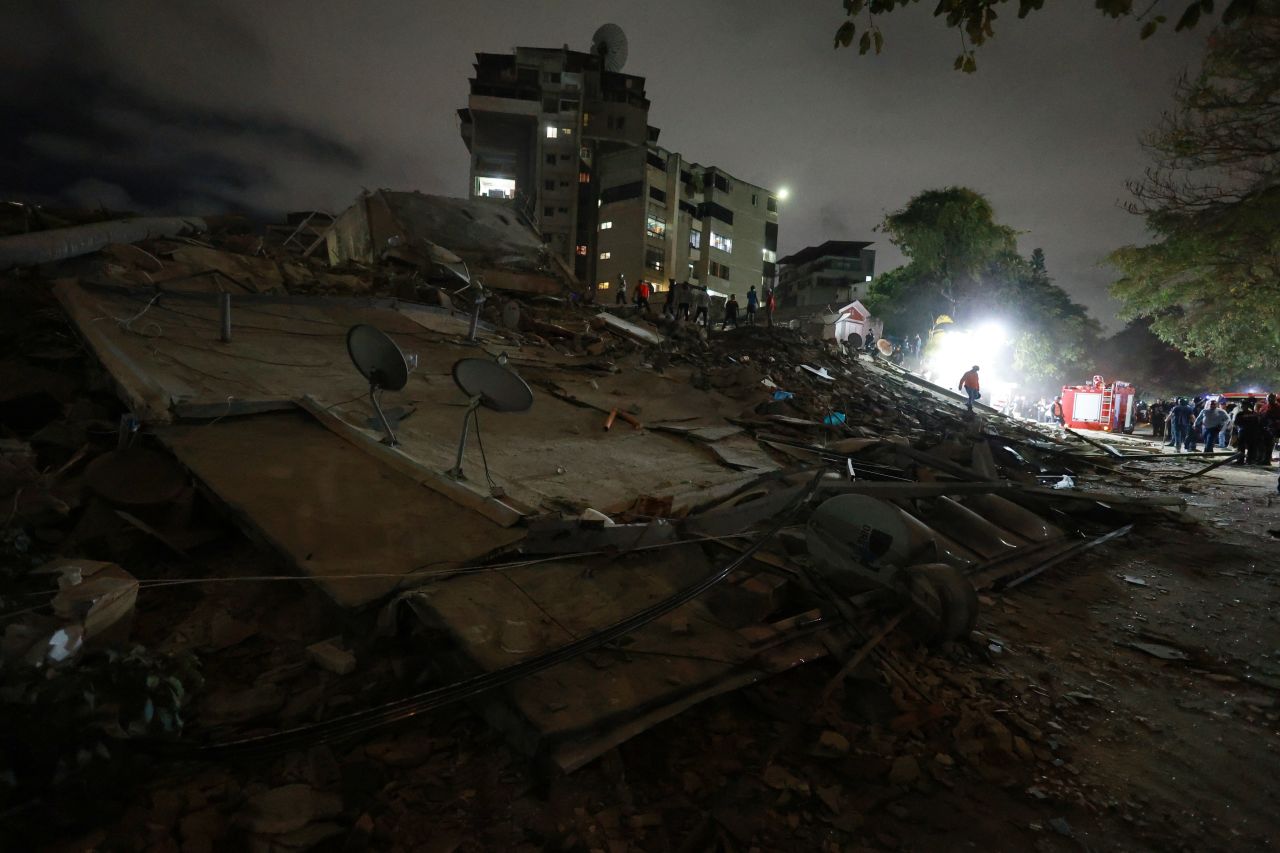
The quakes, reported at magnitudes 7.2 and 7.5, caused collapsed buildings, cracked walls, fallen utility poles, power and signal outages, and widespread panic. Although photos and videos showed people crying, embracing, and trying to rescue pets and vehicles, the full scale of casualties and destruction remained unknown at the time of reporting. Residents in areas such as Palos Grandes said the shaking was among the strongest they had ever felt. Some compared it to the devastating 1967 Caracas earthquake, with older residents saying Wednesday’s quakes felt even worse.
The article emphasizes the emotional shock among residents, the immediate disruption to daily life, and the lack of clarity about the full impact as emergency conditions continued to unfold.
Entities: Caracas, Venezuela, Nicole Kolster, Maria Elise, Coro Martinez • Tone: urgent • Sentiment: negative • Intent: inform
25-06-2026
Two powerful earthquakes struck northwest Venezuela on Wednesday evening, killing at least 32 people and injuring about 700, according to acting President Delcy Rodríguez. The U.S. Geological Survey said the quakes measured 7.2 and 7.5, occurred less than a minute apart, and were centered near Montalbán in Carabobo state. Officials warned the death toll could rise as rescue crews continued searching collapsed buildings and trapped survivors, especially in hard-hit La Guaira and parts of Caracas. The earthquakes caused widespread structural damage, power outages, cellphone disruptions, airport closure, school cancellations, and emergency shelter use. Tsunami advisories were briefly issued for Puerto Rico and the U.S. Virgin Islands before being canceled. Venezuela declared a state of emergency and received offers of assistance from the United States and several Latin American governments. Eyewitnesses described severe destruction, panic, and ongoing aftershocks, while officials urged residents to remain calm, stay outside damaged buildings, and help check on vulnerable people. The article also notes that strong earthquakes are rare in Venezuela despite its location near tectonic fault lines, and places the disaster in regional context by comparing it with more earthquake-prone areas in Latin America.
Entities: Venezuela, Delcy Rodríguez, U.S. Geological Survey (USGS), La Guaira, Caracas • Tone: urgent • Sentiment: negative • Intent: inform
25-06-2026
President Donald Trump said the United States is prepared to rapidly assist Venezuela after two powerful earthquakes—measuring 7.2 and 7.5—hit the country’s northern coast, causing major destruction in Caracas and other areas. The quakes killed at least 32 people and injured about 700, while authorities declared a state of emergency. Trump announced on Truth Social that the U.S. was “ready, willing, and able to help,” and said federal agencies had been instructed to move quickly. U.S. officials, including Deputy Secretary of State Christopher Landau and senior State Department official Jeremy Lewin, said Washington was already in contact with Venezuelan authorities and had mobilized a disaster assistance team, search-and-rescue resources, medical supplies, and humanitarian aid. The U.S. Geological Survey warned the death toll could ultimately be far higher, and estimated the disaster could reduce Venezuela’s GDP by as much as 7%. The article also notes that the offer of assistance reflects a broader diplomatic shift between the Trump administration and Venezuela’s interim government, particularly in the context of U.S. control over Venezuelan oil exports following a January military intervention that removed Nicolás Maduro. The U.S. remains Venezuela’s largest oil buyer under this arrangement.
Entities: Donald Trump, Marco Rubio, Christopher Landau, Jeremy Lewin, Delcy Rodriguez • Tone: analytical • Sentiment: neutral • Intent: inform
25-06-2026
This CNN video report describes the immediate aftermath of two powerful earthquakes that struck Venezuela, triggering panic and widespread damage. The segment centers on CNN correspondent Mary Triny Mena reporting from a collapsed building in Caracas, highlighting the destruction in the capital and the broader sense of alarm felt across the country. The article’s text is sparse because it is a video page, but the core news value is the on-the-ground visual documentation of earthquake damage and the human disruption caused by the back-to-back quakes. The mention of multiple related videos reinforces that this was a major breaking news event with eyewitness accounts and continued coverage. Overall, the piece serves as a brief introduction to CNN’s live or near-live reporting from the disaster scene rather than a full written article.
Entities: Venezuela, Caracas, Mary Triny Mena, CNN, earthquake • Tone: urgent • Sentiment: negative • Intent: inform
25-06-2026
Venezuela is grappling with the aftermath of two powerful earthquakes that struck within about 40 seconds of each other, killing at least 32 people and injuring around 700, with officials warning that both numbers are likely to rise. The first quake, a 7.2 magnitude foreshock, was followed by a 7.5 magnitude main quake, making it the country’s strongest seismic event in more than a century. The tremors caused collapsed homes and major damage in Caracas and other areas, prompting acting President Delcy Rodríguez to declare a state of emergency and triggering an urgent rescue effort as responders searched rubble for survivors.
The article highlights the human and infrastructural impact of the disaster through eyewitness accounts from residents in Caracas, who described the experience as unprecedented and terrifying, with widespread fear, loss of power, and damaged buildings. It also explains that older structures may have been especially vulnerable because they were built before modern seismic codes. Beyond the immediate emergency, the story notes that Venezuela’s oil sector appears largely intact so far, though electricity outages could still disrupt production. Reuters reporting and expert commentary suggest that officials and energy firms are assessing damage to oilfields, plants, and refineries.
International reaction has been swift, with governments across Latin America issuing condolences and expressing solidarity, and some offering humanitarian or rescue assistance. The article also briefly places the disaster in a broader political context by noting how the quake will test the United States’ evolving role in Venezuela after its intervention and support for the current acting government.
Entities: Venezuela, Caracas, Delcy Rodríguez, Donald Trump, Nicolás Maduro • Tone: analytical • Sentiment: negative • Intent: inform
25-06-2026
The article is a CNN video report centered on footage of an earthquake striking Simon Bolivar International Airport in Venezuela. The key moment was captured by former lawmaker Wilmer Azuaje, who recorded the airport scene as strong shaking hit. CNN explains that Venezuela experienced two powerful earthquakes on Wednesday in rapid succession: a magnitude 7.2 foreshock near San Felipe, followed about 40 seconds later by a larger magnitude 7.5 quake southeast of Yumare, according to the US Geological Survey. The report frames the airport video as a visual example of the widespread impact of the seismic event, while also noting that the earthquakes caused panic and extensive damage across the country. The content is presented as a short breaking-news style video package, with related video links on other CNN topics appearing alongside the main story, reinforcing that the primary focus is the earthquake footage and the immediate effects of the quakes in Venezuela.
Entities: Venezuela, Simon Bolivar International Airport, Wilmer Azuaje, Yoyo Chow, CNN • Tone: urgent • Sentiment: negative • Intent: inform
25-06-2026
CNN reports that powerful back-to-back earthquakes struck Venezuela’s northern coast, causing widespread panic and visible damage, especially in the capital, Caracas. According to the article, the first quake was a foreshock with a preliminary magnitude of 7.2, followed about 40 seconds later by a larger 7.5 magnitude quake, based on the U.S. Geological Survey (USGS). Video footage shown in the report captures terrified residents, collapsed buildings, and scenes of destruction across affected areas. The article emphasizes the immediate human reaction to the disaster—fear, confusion, and alarm—while also underscoring the scale of the structural damage. As a CNN video report, the piece primarily conveys breaking-news information through concise narration and visual evidence rather than in-depth analysis. The inclusion of related video headlines on other global topics appears to be platform clutter rather than part of the Venezuela earthquake story. Overall, the article presents an urgent snapshot of a major seismic event and its aftermath in Venezuela, focusing on the shock to residents and the damage to infrastructure.
Entities: Venezuela, Caracas, northern coast of Venezuela, Aria Chen, CNN • Tone: urgent • Sentiment: negative • Intent: inform
25-06-2026
Back-to-back powerful earthquakes struck Venezuela on Wednesday, causing widespread alarm, damage, and emergency response efforts, particularly in and around Caracas. According to the article, the first major quake occurred near the northern coast of Venezuela, about 28 kilometers northwest of Montalbán, with a preliminary magnitude of 7.5 from the US Geological Survey. It was followed just 40 seconds later by a 7.2-magnitude foreshock, intensifying the panic as residents rushed into the streets for safety. The earthquakes led to collapsed buildings in Caracas, damaged apartments, crushed vehicles, and rubble across affected neighborhoods including Parque Central, Los Palos Grandes, and La Guaira. Rescue workers and first responders were shown carrying injured people on stretchers, searching collapsed structures, and helping residents evacuate. The article is presented as a photo gallery and emphasizes the human and visual impact of the disaster through images of frightened residents, families with children and pets, and people consoling one another while emergency crews respond. Overall, the piece documents the immediate aftermath of the earthquakes and the scale of disruption they caused in Venezuela’s capital region.
Entities: Venezuela, Caracas, Montalbán, La Guaira, Parque Central Complex • Tone: analytical • Sentiment: negative • Intent: inform
25-06-2026
Venezuela was struck by two major earthquakes in quick succession on Wednesday, triggering building collapses, evacuations, emergency declarations, and widespread concern about casualties and damage. The first quake, a magnitude 7.2 foreshock near San Felipe in Yaracuy state, was followed about 40 seconds later by a larger magnitude 7.5 earthquake near Yumare, also in Yaracuy. The shaking was felt across much of Venezuela and even in neighboring Colombia, with significant damage reported in Caracas and other areas, including partially collapsed buildings and infrastructure damage in Catia La Mar. Authorities said fatalities had occurred, though no exact death toll was given at the time of reporting.
The US Geological Survey issued two rare red alerts through its PAGER system, warning that high casualties and extensive economic losses were probable and that a broad national or international response might be needed. The quakes prompted Venezuela to declare a state of emergency, deploy security forces nationwide, and establish a high-level task force to coordinate search and rescue efforts. Officials also announced temporary closure of Simón Bolívar Airport, suspension of classes for a week, cancellations of rail services and non-essential activities, and precautionary gas shutoffs in some buildings while structural damage is assessed. Internet and power disruptions were also reported. The article frames the disaster against the backdrop of Venezuela’s broader political and economic instability, underscoring the severity of the event and its potential humanitarian consequences.
Entities: Venezuela, Caracas, Yaracuy state, San Felipe, Yumare • Tone: urgent • Sentiment: negative • Intent: inform
25-06-2026
President Donald Trump responded to two strong earthquakes that struck Venezuela, saying they caused a “devastating number of deaths” and offering U.S. assistance as the country assessed the damage. The earthquakes, which hit back-to-back on Wednesday, caused major destruction in Caracas and other areas, prompting rescue crews to search through rubble and officials to declare a state of emergency. Venezuela’s interim President Delcy Rodríguez later said at least 32 people were killed and more than 700 injured, the first official casualty count released after the disaster.
According to the U.S. Geological Survey, the first quake measured magnitude 7.2 and the second 7.5, striking less than a minute apart. The USGS issued a rare red alert warning that high casualties and extensive damage were likely. The article notes that the earthquakes were among the strongest to hit Venezuela in more than a century and were followed by nearly two dozen aftershocks. Rodríguez urged calm and unity in a televised address.
U.S. officials said they were monitoring the situation and coordinating possible assistance. Deputy Secretary of State Christopher Landau said the U.S. was in contact with Venezuelan authorities, and the State Department said it was closely tracking the aftermath while advising U.S. citizens in Venezuela to enroll in the Smart Traveler Enrollment Program and follow embassy updates. The report frames the event as both a major natural disaster and an emerging international response effort.
Entities: Donald Trump, Delcy Rodríguez, Christopher Landau, Venezuela, Caracas • Tone: urgent • Sentiment: negative • Intent: inform
25-06-2026
Venezuela declared a state of emergency after two powerful earthquakes and more than 20 aftershocks struck the country, causing widespread destruction, airport closures, and a rising death toll. Acting President Delcy Rodriguez said the quakes measured 7.2 and 7.5 and had killed at least 32 people and injured more than 700, with authorities warning the numbers could increase as rescue crews continued searching collapsed buildings and reaching isolated areas. The tremors triggered panic in Caracas, where residents fled buildings, a 22-story structure was reported destroyed in Altamira, and emergency services responded to damaged infrastructure and gas-related safety risks. The main airport near the capital, Maiquetia International Airport, was closed because of serious damage.
The article also highlights the broader regional impact and international response. The earthquakes were felt in neighboring Colombia, where more than 200 tremor reports were received and alarms sounded in Bogotá, though authorities ruled out a tsunami. U.S. President Donald Trump said the United States was ready to assist Venezuela, while USGS described the event as a seismic doublet, with a 7.5 mainshock preceded 39 seconds earlier by a 7.2 foreshock. The piece closes by placing the disaster in historical context, noting that Venezuela’s deadliest recent earthquakes were in 1997 and 1967.
Entities: Venezuela, Caracas, Delcy Rodriguez, Donald Trump, United States Geological Survey (USGS) • Tone: urgent • Sentiment: negative • Intent: inform
25-06-2026
Venezuela was struck by two powerful earthquakes on Wednesday afternoon, with the first measured at magnitude 7.2 and the second at 7.5, causing severe damage in and around the capital, Caracas, and triggering fears of widespread casualties. The US Geological Survey warned that high casualties and extensive destruction were likely, initially estimating a possible death toll between 10,000 and 100,000, though Venezuelan authorities later said 32 people had been killed and 700 injured. Social media videos and eyewitness accounts described panic inside homes, at an airport, and at a baseball game as ceilings collapsed, power lines shook, and people fled for safety.
The quakes damaged or destroyed numerous buildings, leaving debris in the streets and prompting emergency crews to search through rubble for survivors. Officials said the tremors affected several states, and rescue operations were underway by Wednesday evening. The US Tsunami Warning System briefly issued, then withdrew, a tsunami threat for Puerto Rico and the U.S. and British Virgin Islands. The article also notes that Venezuela sits on an active plate boundary and that the quakes were among the strongest to hit the country in more than a century, recalling the devastating 1812 earthquake that killed about 30,000 people.
The report also highlights international reaction, including President Trump’s offer of U.S. assistance for recovery efforts and Venezuelan President Delcy Rodriguez’s public thanks for U.S. support and solidarity. The article closes by situating the disaster within Venezuela’s seismic history and emphasizing the scale of the crisis and ongoing rescue efforts.
Entities: Venezuela, Caracas, US Geological Survey (USGS), Delcy Rodriguez, Diosdado Cabello • Tone: urgent • Sentiment: negative • Intent: inform
25-06-2026
A magnitude 7.5 earthquake struck Venezuela on Wednesday, making it the strongest quake to hit the country or its immediate offshore area since 1900, according to the U.S. Geological Survey. The article places the event in historical context by comparing it to the San Narciso Earthquake of 1900, a magnitude 7.7 quake that shook Caracas, killed 21 people, injured about 50, and caused extensive damage to buildings across the city. Because the 1900 event predates modern instrumentation, its magnitude is an estimate derived from damage reports and historical accounts. The piece notes that the 2026 quake followed a magnitude 7.2 foreshock and may be more destructive than the 1900 earthquake, though the actual death toll and damage were still unclear at the time of reporting. Experts quoted by the U.S.G.S. explained that the earlier quake likely altered stress in the ground, helping trigger the larger main shock. The article also reminds readers that Venezuela lies between the South American and Caribbean tectonic plates, making earthquakes relatively common, and cites other major quakes in 2018 and 1997 as evidence of the country’s seismic history.
Entities: Venezuela, Caracas, U.S. Geological Survey (U.S.G.S.), Paule Earle, William Barnhart • Tone: analytical • Sentiment: neutral • Intent: inform
25-06-2026
Dos fuertes terremotos sacudieron el centro de Venezuela la noche del miércoles, provocando derrumbes de edificios, escenas de pánico en Caracas y una amplia respuesta de emergencia mientras los rescatistas buscaban sobrevivientes. El primer sismo, de magnitud 7,2, fue seguido por otro de 7,5 menos de un minuto después; este último fue descrito por el Servicio Geológico de Estados Unidos como el más fuerte registrado en Venezuela o sus aguas cercanas desde 1900. Las autoridades informaron de daños graves en infraestructura pública, cortes de gas, agua y electricidad en varias zonas, suspensión del metro y trenes, cierre del aeropuerto internacional de la capital y cancelación de clases. Delcy Rodríguez declaró estado de emergencia y pidió al personal médico que acudiera a atender heridos, mientras que un alcalde de Caracas reportó tres fallecidos. El artículo también contextualiza el desastre dentro de la larga historia sísmica del país y compara el evento con el terremoto de Caracas de 1967, que dejó más de 200 muertos. Además, menciona la oferta de ayuda internacional de El Salvador y la declaración de apoyo de Donald Trump, mientras la magnitud real de los daños y el número final de víctimas seguían sin estar claros.
Entities: Venezuela, Caracas, San Felipe, Yaracuy, Servicio Geológico de Estados Unidos (USGS) • Tone: urgent • Sentiment: negative • Intent: inform
25-06-2026
Two major earthquakes struck Venezuela on Wednesday, according to the U.S. Geological Survey, with the first measuring magnitude 7.2 and a second, larger magnitude 7.5 quake occurring just 39 seconds later. The first quake occurred at 6:04 p.m. Venezuela time, about 15 miles northeast of San Felipe. Early U.S.G.S. data had initially placed the first quake at magnitude 7.1 before being updated. The agency warned that, given the quake data and the types of structures common in the region, a widespread disaster with many casualties and extensive damage was likely. In response to the seismic activity, tsunami advisories were briefly issued for coastal areas including Puerto Rico, the U.S. Virgin Islands, and the British Virgin Islands, and waves were also considered possible along the coasts of Venezuela, Bonaire, Curacao, and Aruba.
The article frames the first quake as a possible foreshock and the second as the main quake, noting that aftershocks could follow and that scientists may revise the magnitudes and shake-intensity maps as more data becomes available. The New York Times interactive also includes maps and aftershock tracking, with intensity based on the Modified Mercalli scale and data sourced from the U.S.G.S. and other scientific organizations. Overall, the piece is an urgent earthquake update focused on public safety, potential damage, and evolving scientific assessment.
Entities: Venezuela, San Felipe, Puerto Rico, U.S. Virgin Islands, British Virgin Islands • Tone: urgent • Sentiment: negative • Intent: inform
25-06-2026
Huge twin earthquakes struck Venezuela on Wednesday, causing widespread destruction, at least 32 confirmed deaths and more than 700 injuries, according to officials. The quakes, including one of magnitude 7.5—the strongest to hit the country in more than a century—toppled buildings in Caracas, La Guaira and other areas near the capital, forced evacuations, and triggered emergency measures across the country. President Delcy Rodríguez declared a state of emergency and said rescue teams, medical workers, and international aid teams from several countries would begin arriving. The disaster further strained a nation already experiencing political and economic upheaval, with major disruptions to power, water, transportation, schools, and airport operations. The article also notes that the death toll may rise as damage assessments continue, especially in hard-hit La Guaira, and that officials and residents are using both government and informal channels to report missing people and damage.
Entities: Venezuela, Caracas, La Guaira, San Felipe, Yaracuy • Tone: urgent • Sentiment: negative • Intent: inform
25-06-2026
Two powerful earthquakes struck Venezuela on Wednesday, triggering widespread destruction and casualties in and around the capital, Caracas. Interim President Delcy Rodriguez said at least 32 people were killed and about 700 were injured, while rescue teams continued searching through collapsed buildings for survivors. The first quake measured magnitude 7.2 and struck about 160 kilometers west of Caracas, followed less than a minute later by a larger magnitude 7.5 tremor, according to the US Geological Survey (USGS). Officials warned that the death toll could rise sharply as damage assessments continued, particularly in La Guaira state near Caracas, which appears to be the hardest-hit area and includes the country’s main airport. The USGS’s predictive modelling suggested the death toll could reach into the thousands and might even exceed 10,000, underscoring the potential scale of the disaster.
Rodriguez described the situation as a “true tragedy” and said dozens of buildings had collapsed. She said rescue efforts were intensifying overnight to save as many lives as possible. The article also notes that initial casualty figures did not yet include La Guaira state, implying the official toll could increase as more information becomes available. The overall story is a breaking disaster update focused on the immediate human toll, the extent of structural damage, and the urgent emergency response. It also includes a brief note that the US is “ready, willing, and able to help,” signaling possible international assistance.
Entities: Venezuela, Caracas, La Guaira state, Delcy Rodriguez, US Geological Survey (USGS) • Tone: urgent • Sentiment: negative • Intent: inform
25-06-2026
Venezuela was struck by two powerful earthquakes in quick succession, causing widespread destruction in and around Caracas and other nearby areas, according to the article. The government declared a state of emergency after at least 32 people were reported dead and hundreds injured, with officials warning the toll could rise as rescue efforts continued and more trapped victims were feared under rubble. The US Geological Survey said the country experienced a magnitude 7.5 mainshock followed 39 seconds earlier by a 7.2 foreshock, with the epicenter near Morón on the Caribbean coast and the quake felt as far away as neighboring Colombia.
The article describes collapsed buildings, airport disruption, halted metro and train services, and scenes of panic at Maiquetía airport and in neighborhoods including Altamira, San Bernardino, Baruta, Chacao, and La Guaira. Rescue workers and volunteers searched through debris for survivors, while eyewitnesses reported people trapped inside damaged structures and families desperately awaiting news. Officials stressed that aftershocks could worsen the damage and bring down unstable buildings. International reactions included an offer of assistance from US President Donald Trump and safety warnings from the US embassy in Caracas. Opposition leader María Corina Machado also expressed solidarity and support for affected Venezuelans.
Entities: Venezuela, Caracas, Delcy Rodríguez, US Geological Survey (USGS), Morón • Tone: urgent • Sentiment: negative • Intent: inform
25-06-2026
Venezuela is reeling from two powerful earthquakes that struck near the capital Caracas, causing widespread destruction, fatalities, injuries, and major disruptions. Interim president Delcy Rodríguez said at least 32 people were killed and about 700 injured, while rescue teams searched collapsed buildings and authorities declared a state of emergency. The quakes damaged homes, commercial buildings, and infrastructure across Caracas and surrounding states including Miranda, La Guaira, Aragua, Carabobo, and Falcón. Venezuela’s main airport was closed after being damaged, though the country’s oil infrastructure did not appear to be immediately affected. The tremors were felt beyond Venezuela, including in Colombia, and more than 20 aftershocks followed the initial quakes, keeping residents fearful of returning to their homes.
International support quickly began to arrive. The United States said it was deploying search-and-rescue teams, medical supplies, and humanitarian aid, while US Secretary of State Marco Rubio and President Donald Trump both offered assistance and expressed sympathy. Leaders from neighboring countries, including El Salvador and Ecuador, also offered aid. Reuters and eyewitness accounts described severe panic as buildings cracked, walls fell, and people fled into the streets. The article presents a developing disaster response story, emphasizing the scale of the damage, the urgency of rescue efforts, and the mounting human toll as officials continue to assess casualties and structural impacts.
Entities: Venezuela, Caracas, Delcy Rodríguez, Donald Trump, Marco Rubio • Tone: urgent • Sentiment: negative • Intent: inform
25-06-2026
Two strong earthquakes struck Caracas, Venezuela, on Wednesday evening, causing significant damage in the capital. According to the article’s opening, the quakes toppled several buildings, knocked out communications, and forced residents to rush from damaged homes. The immediate impact appears centered on urban destruction, disruption of basic infrastructure, and fear among people in the affected areas. The article’s available text is limited to the opening lines and then shifts into website-related material, so it does not provide further details about the magnitude, depth, casualties, rescue efforts, or government response. Even so, the incident is framed as a major emergency in a densely populated capital city, implying a serious public safety and humanitarian concern. The piece is presented as breaking news, with associated links to other earthquake-related coverage and Washington Post site prompts, suggesting the story is part of a broader live-news environment. Based on the text provided, the core message is that Caracas experienced a sudden, destructive seismic event with immediate consequences for buildings, communications, and residents’ safety.
Entities: Caracas, Venezuela, Helena Carpio, Samantha Schmidt, earthquakes • Tone: urgent • Sentiment: negative • Intent: inform