30-08-2026
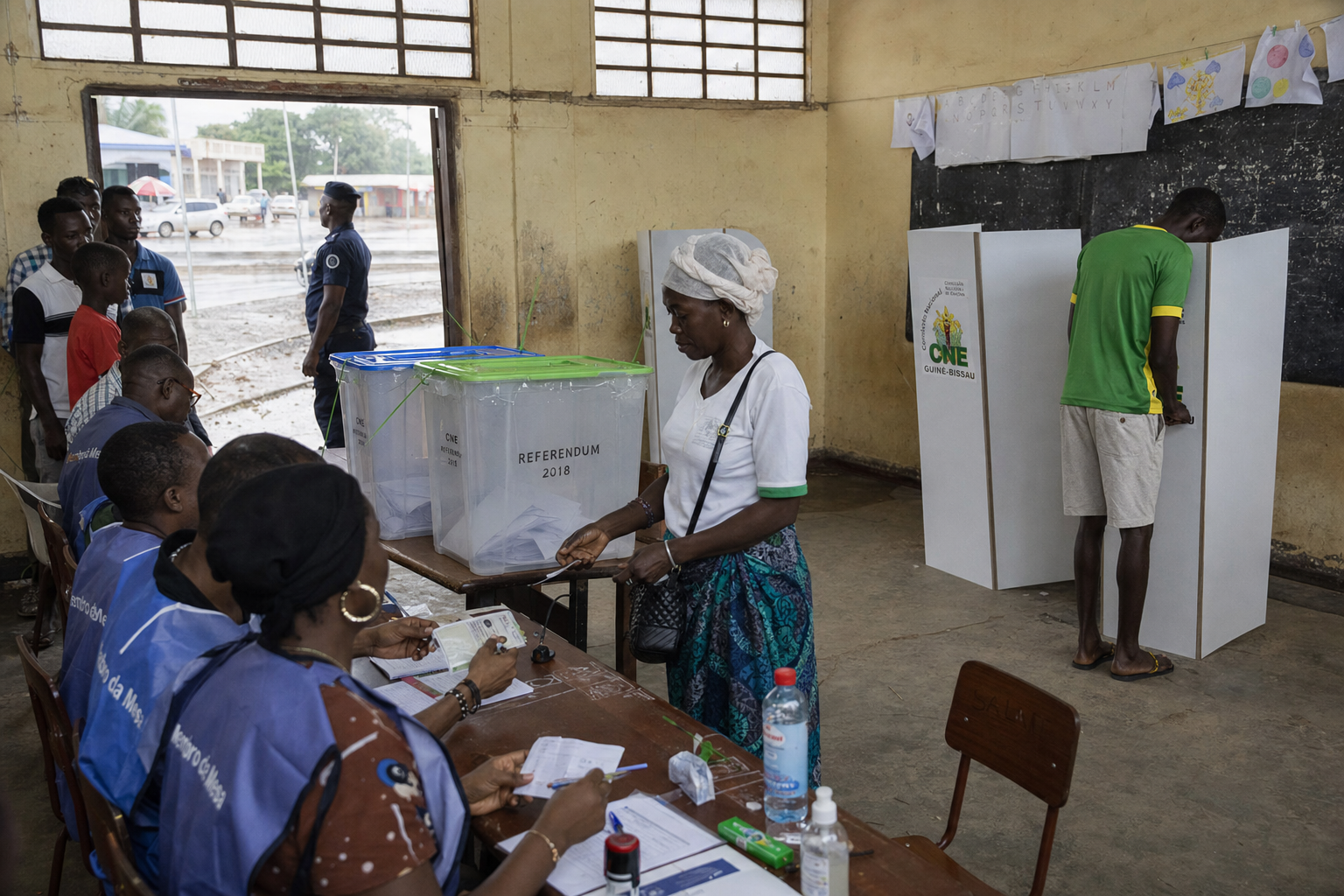
Voters in military-run Guinea-Bissau participated in a referendum on Sunday that could significantly expand presidential powers before planned general elections intended to restore civilian rule on December 6. Polling began slowly in parts of the capital after heavy rain, while national guard and police units increased security at strategic locations. Voting was scheduled to close at 1700 GMT, with preliminary results expected from Tuesday.
The referendum takes place fewer than 10 months after the military seized power, overthrowing President Umaro Sissoco Embalo shortly after a presidential election and suspending the electoral process. The junta appointed General Horta N'Tam as transitional president, although the transitional charter prevents him from contesting future elections. The military says the proposed constitutional changes are necessary to stabilize state institutions before power is returned to civilians.
The amendment would replace Guinea-Bissau’s parliamentary system with a presidential one. Under the proposed constitution, the president would appoint and dismiss the prime minister and government ministers and would have the power to dissolve parliament. Supporters, including voters Halimatou Traore and Braima Seidy, said they hoped the new constitution would reduce instability and improve the country’s prospects.
Opposition groups have called for a boycott, citing restrictions on public freedoms and the tense political environment. Guinea-Bissau has a long history of political turmoil, including five coups and numerous attempted coups since independence from Portugal in 1974. Before his own ouster, Embalo had dissolved an opposition-dominated parliament after alleging an attempted coup and subsequently governed by decree.
The referendum is part of a wider regional pattern in which governments have amended constitutions to extend term limits, remove age restrictions, or strengthen executive authority. The vote therefore represents both a domestic effort to reorganize Guinea-Bissau’s political system and a potentially controversial expansion of presidential power in a fragile democracy.
Entities: Guinea-Bissau, Bissau, Halimatou Traore, Braima Seidy, General Horta N'Tam • Tone: analytical • Sentiment: neutral • Intent: inform
30-08-2026
Guinea-Bissau held a referendum on Sunday over a proposed constitutional overhaul that would significantly expand presidential authority as the country prepares to return from military to civilian rule. More than 900,000 people were eligible to vote, although many polling stations reportedly recorded low turnout after opposition parties urged a boycott.
The junta-backed amendment would replace the country’s existing parliamentary system with a presidential model. Under the proposed constitution, the president would be able to appoint and dismiss the prime minister and dissolve parliament. The number of parliamentary seats would also be reduced from 102 to 65. The military authorities argue that these changes would strengthen and stabilize state institutions before presidential and parliamentary elections scheduled for December 6.
Opposition groups reject the proposal, claiming it is designed to consolidate power in the hands of the junta leader and warning that it could become a “source of political instability at all levels.” Guinea-Bissau has been governed by the military since November, when the army seized power following a disputed election. Former President Umaro Sissoco Embalo and opposition candidate Fernando Dias both claimed victory in that contest.
The referendum takes place against a backdrop of chronic political instability. Since gaining independence in 1974, the country has experienced five coups and several attempted coups. Embalo had also dissolved an opposition-dominated parliament in 2023, saying it had been involved in an attempted coup.
Polling stations were due to close at 1700 GMT, with initial provisional results expected on Tuesday. The referendum’s outcome will help determine the balance of power between the presidency, parliament and the military authorities ahead of the planned elections.
Entities: Guinea-Bissau, West Africa, Guinea-Bissau junta, Umaro Sissoco Embalo, Fernando Dias • Tone: analytical • Sentiment: negative • Intent: inform
30-08-2026
Guinea-Bissau held a referendum on Sunday, 30 August 2026, to decide whether to adopt a new constitution that would substantially increase presidential powers and reduce the size and influence of parliament. The vote is taking place before planned elections to restore civilian rule following the military coup of November 2025, but the process has been widely challenged by opposition parties, civil-society groups and political analysts.
Critics argue that the referendum was drafted and approved by the military junta without consultation and was published in the Official Gazette before citizens had been given an opportunity to consider it. Bubacar Turé of the Guinea-Bissau Human Rights League said neither political parties nor civil-society, traditional or religious leaders were consulted. He also said that supporters of a “no” vote were not permitted to campaign, prompting the opposition to call for a boycott.
The proposed constitution would replace Guinea-Bissau’s parliamentary system with a presidential one. It would allow the president to appoint and dismiss the prime minister and cabinet and dissolve parliament. Parliamentary seats would be cut from 102 to 65. The junta says these changes would make government more effective and address instability caused by complicated power-sharing arrangements. Opposition representatives say they would weaken the prime minister, political parties and the National People’s Assembly while concentrating power in the presidency.
The referendum follows decades of political instability in Guinea-Bissau, including five coups or attempted coups since independence from Portugal in 1973. The 2025 military takeover followed disputed presidential elections involving Umaro Sissoco Embaló and Fernando Dias. General Horta N'Tam was subsequently appointed transitional president and is barred from contesting elections. With about 2.2 million inhabitants, the country remains one of the world’s poorest despite significant natural wealth. Approximately 915,000 people were eligible to vote, with provisional results expected on Tuesday.
Entities: Guinea-Bissau, Bubacar Turé, Paulino Quadé, Umaro Sissoco Embaló, Fernando Dias • Tone: analytical • Sentiment: negative • Intent: inform