26-10-2026
Saudi Arabia, Pakistan and Turkiye have sent senior officials to Tehran for talks with Iranian leaders amid rising tensions between the United States and Iran and attacks by Yemen’s Houthi rebels. The three countries signed the Mecca Joint Defence Agreement, a regional defence pact. The delegation includes Saudi Defence Minister Khalid bin Salman Al Saud, Pakistani military chief Asim Munir and Turkish intelligence chief Ibrahim Kalin, who met President Masoud Pezeshkian and are expected to speak with security chief Mohsen Rezaei.
The visit comes during an intense diplomatic push to prevent renewed conflict. Analysts quoted in the article are doubtful that the talks can avert a US-Iran war, particularly without a credible proposal to bridge the two sides’ differences. They also expect the discussions to focus on Saudi security and Houthi missile and drone attacks. Although Saudi Arabia may seek more support from its partners, analyst Ayesha Siddiqa says Pakistan and Turkiye cannot commit troops to Yemen.
The diplomacy follows recent visits by Munir to Saudi Arabia and Iran and coincides with Pakistan restricting overland trade with Iran amid a US blockade. Iran has expressed support for regional security arrangements. Analysts suggest Turkiye and Pakistan may try to pressure Tehran toward compromise, but doubt they have enough leverage to change its strategic calculations.
The article outlines the parties’ conflicting positions. Washington wants shipping through the Strait of Hormuz restored, Iran’s nuclear programme constrained, and international inspectors to assess its highly enriched uranium. Tehran wants the US naval blockade of its southern ports lifted and a return to a June memorandum of understanding. President Donald Trump is reportedly considering strikes, including against civilian infrastructure, while Israel seeks the overthrow of Iran’s Islamic Republic. Renewed conflict could trigger Iranian attacks on neighbouring countries. The US State Department has also ordered nonemergency government personnel and their families to leave Saudi Arabia because of the Houthi threat. The Mecca pact signatories are expected to try to limit the danger to Saudi Arabia if fighting resumes.
Entities: Maziar Motamedi, Masoud Pezeshkian, Donald Trump, Ali Vaez, Ayesha Siddiqa • Tone: analytical • Sentiment: negative • Intent: analyze
26-10-2026
The live update reports continuing tensions in the Iran war, with President Donald Trump saying he is weighing an agreement with Iran against renewed U.S. military action. Iranian officials say indirect negotiations remain underway but Tehran will not change its positions in response to threats. Brent crude was around $115 a barrel early Monday, following a surge driven by supply concerns and wider geopolitical crises.
Several developments broaden the regional picture. Egypt's parliament authorized President Abdel Fattah el-Sisi to take measures to support Saudi Arabia against attacks by Yemen's Iran-backed Houthi rebels. El-Sisi has described any Egyptian deployment as defensive, while an analyst argued that Egypt should honor its regional security commitments. Separately, the Saudi-led coalition said it struck Houthi military infrastructure, including missile tunnels and launchers, after repeated attacks. It also reported that Saudi air defenses intercepted a missile aimed at Riyadh.
Iranian Foreign Minister Abbas Araghchi praised national resilience and coordination between military and diplomatic services. The report also describes economic pressure on Iran: a U.S. naval blockade has reportedly prevented it from replenishing oil held in tankers for sale to China, costing at least $25 billion in revenue, according to U.S. Central Command. Iranian officials are also anticipating possible winter fuel shortages and have called for reduced gas consumption.
A maritime monitor reported that an unknown projectile struck a tanker transiting out of the Strait of Hormuz on Friday, disabling it; the crew were reported safe. Iran had claimed other tanker strikes, which were not independently corroborated in the update. In Israel, Defense Minister Israel Katz denied reports of a rift between Prime Minister Benjamin Netanyahu and the military chief over possible new Iran strikes. The article presents competing claims and developments without resolving whether diplomacy or further escalation will prevail.
Entities: Donald Trump, Iran, Abdel Fattah el-Sisi, Saudi Arabia, Yemen’s Houthi rebels • Tone: analytical • Sentiment: neutral • Intent: inform
26-10-2026
Crude oil prices fell on Monday as Saudi Arabia’s defense minister traveled to Tehran for talks with senior Iranian officials aimed at easing regional tensions. By 9:19 a.m. ET, U.S. West Texas Intermediate futures were down 1.2% at $102.05 a barrel, while Brent crude declined 0.7% to $115.86. The dip followed a sharp Friday rally, driven by renewed concerns that attacks by Iran-allied Houthi militants could disrupt global energy supplies.
The Houthis said they had targeted Riyadh’s main airport and oil facilities, while Saudi authorities reported intercepting further missiles and drones. Although the airport partially resumed operations, continued hostilities have raised concerns about the security of Saudi energy infrastructure and the possibility of damage to production, refining, or export facilities. Pakistan and Turkey also took part in the de-escalation talks, reflecting their defense ties with Saudi Arabia.
Michael Alfaro of Gallo Partners estimated that geopolitical uncertainty has added about $20 per barrel to oil prices. He warned that strikes on major infrastructure, including the East-West pipeline or refineries, could push prices higher. However, prices above $120 for Brent could reduce consumption, while damage to refining capacity could create a longer-lasting problem for energy markets extending into 2027 and beyond.
The article also notes Saudi Arabia’s plan to store crude in Singapore from the second half of 2027 to bolster the resilience of its Asian supply chain. In the United States, the Energy Department authorized the release of up to 400,000 barrels from the Strategic Petroleum Reserve to address a Louisiana refinery disruption. Meanwhile, U.S. producers remain cautious about substantial new investment despite adding some drilling rigs, leaving the prospect of significant additional domestic supply uncertain.
Entities: Saudi Arabia, Tehran, Prince Khalid bin Salman, Masoud Pezeshkian, Mohsen Rezaei • Tone: analytical • Sentiment: neutral • Intent: inform
26-10-2026
President Donald Trump says he is nearing a decision on whether to pursue an agreement with Iran or resume U.S. military action, raising concerns about further escalation in the Middle East. In a Fox News interview, Trump described the choice as reaching “decision time” and said a potential target could be Pickaxe Mountain, a site linked to Iran’s nuclear program. The last confirmed U.S. strikes on Iran took place on Sept. 1, and Trump had previously said attacks would not resume until after the Nov. 3 midterm elections. Iran says it is preparing a military response if the U.S. strikes again.
Diplomatic efforts are also underway. Qatar sent mediators to Tehran, while senior officials from Saudi Arabia, Turkey and Pakistan were expected to meet with Iran’s leadership. The countries signed a joint defense agreement in August, pledging closer cooperation and treating an attack on one member as an attack on all. The meeting follows Houthi missile and drone attacks on sites in Saudi Arabia, including Riyadh airport and a Saudi Aramco building. Saudi Arabia has also postponed its flagship Future Investment Initiative conference until 2027, citing security concerns after fatal strikes.
The Strait of Hormuz remains a central flashpoint. Trump claims the U.S. controls the waterway and has cited crude oil flows returning to prewar levels, but overall trade through the strait remains severely curtailed. Energy prices remain elevated amid disrupted trade and a global refining squeeze. Earlier in the month, a Singapore-flagged container ship sank in the strait after being hit by an unidentified projectile and catching fire. An Iranian Revolutionary Guard navy official also threatened American warships. The article describes a volatile mix of military threats, diplomatic outreach and disruption to energy markets and global supply chains.
Entities: Donald Trump, Iran, Qatar, Saudi Arabia, Turkey • Tone: analytical • Sentiment: negative • Intent: inform
26-10-2026
The article examines whether direct talks between Saudi Arabia, Pakistan, Turkey and Iran signal a shift in Middle Eastern security arrangements. Senior officials from the three members of the Mecca Defence Alliance are meeting Iranian representatives in Tehran as diplomatic efforts to reduce tensions between Iran and the United States continue. Iran’s Foreign Ministry describes the meeting as a possible step toward regional security cooperation based on “endogenous security,” or arrangements led by regional states themselves.
The Mecca Joint Defence Agreement, signed by Saudi Arabia, Pakistan and Turkey in August 2026, treats an armed attack on one member as an attack on all three and requires mutual assistance. The pact combines Saudi resources and energy influence, Pakistan’s military and nuclear capabilities, and Turkey’s defence industry and NATO membership. Turkish officials have said it is not directed at a particular country, and the agreement’s ratification process is not yet complete in Turkey.
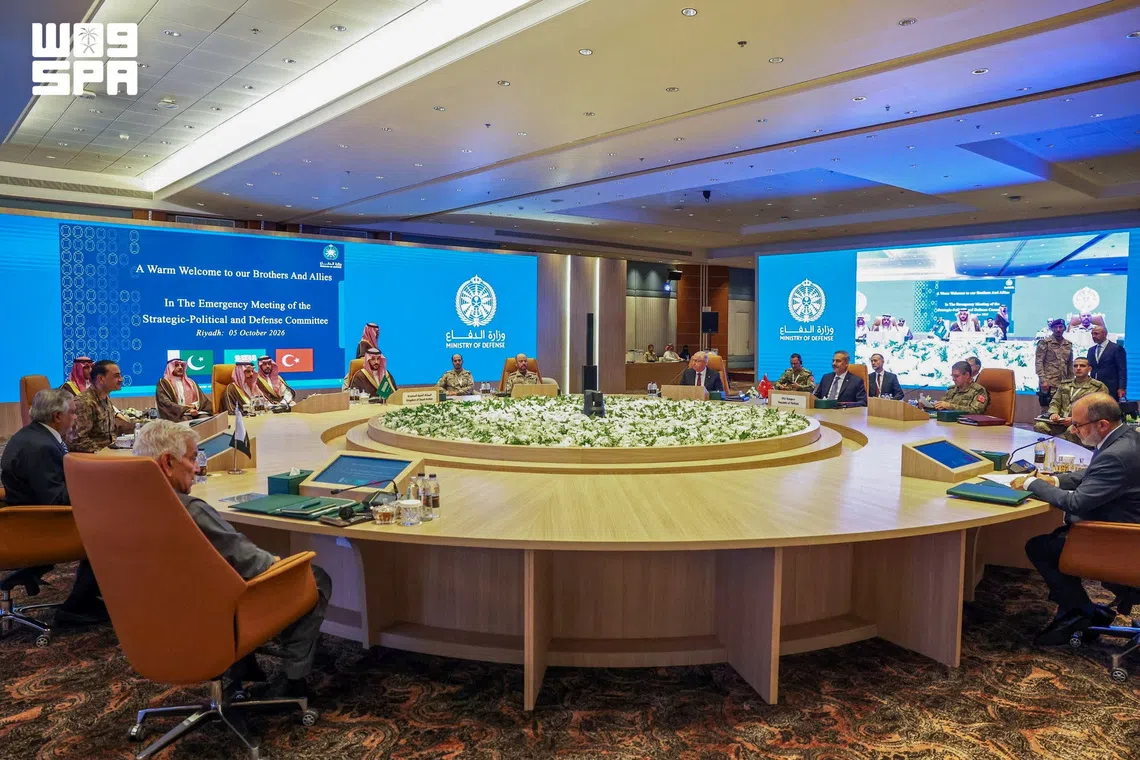
Houthi missile and drone attacks on Saudi Arabia have put the pact’s commitments to an early test. After an emergency meeting in Riyadh, the three countries agreed to move toward measures for rapidly deploying agreed forces and capabilities to Saudi Arabia. Turkey has emphasized that its role is defensive, ruling out Turkish troops taking part in attacks inside Yemen, while considering support such as air defence, electronic warfare and technical assistance.
The Tehran talks reflect distinct interests: Pakistan has mediated between Tehran and Washington, Saudi Arabia wants to contain Houthi attacks, and Turkey seeks to prevent wider escalation. Saudi officials say the visit is intended to reduce tensions and support mediation by Qatar and Pakistan. The article concludes that dialogue with Iran is occurring alongside, rather than necessarily replacing, collective defence planning. Although Iran’s preference for regional security arrangements may overlap in principle with the pact’s stated goals, members retain external security ties and no new regional mechanism has been agreed. Whether this dual approach can durably reduce tensions remains uncertain.
Entities: Saudi Arabia, Pakistan, Turkey, Iran, Mecca Defence Alliance • Tone: analytical • Sentiment: neutral • Intent: analyze
26-10-2026
High-level delegations from Saudi Arabia, Pakistan and Turkey arrived in Tehran to meet Iranian officials, seeking to prevent renewed fighting between Iran and Israel and the United States. The discussions are expected to include a possible agreement between Tehran and Washington, as well as Yemen’s war and attacks by Iran-backed Houthi rebels on Saudi Arabia. Saudi Arabia said the delegations aimed to de-escalate tensions and strengthen regional security.
The meetings are taking place amid heightened concern about a return to full-scale conflict. Israel was approaching an election, and U.S. midterm elections were scheduled for Nov. 3. Iranian Foreign Ministry spokesperson Esmail Baghaei said Iran had not abandoned diplomacy and that messages were being relayed to the United States through intermediaries. But he described negotiations as stalled and criticized what he called unilateral U.S. demands, including the repeated use of the phrase “complete surrender.”
Israeli Prime Minister Benjamin Netanyahu warned that Iran or its allies might attack before elections and said Israel’s military was prepared both to defend and to strike. Israeli media reported a dispute between Netanyahu and the military chief of staff over a proposed action that the army reportedly believed could quickly restart the conflict. Netanyahu dismissed the report as nonsense; the military did not immediately comment.
The article also describes Yemen as an expanding front in the conflict. Fighting intensified after Saudi-led coalition and internationally recognized Yemeni government forces struck Sanaa International Airport in July, ending a ceasefire that had largely halted the civil war since 2022. Houthi spokesperson Yahya Saree said the group had launched ballistic missiles at Saudi-backed forces in Aden and Lahj provinces, claiming casualties and equipment losses. The Associated Press said it could not independently verify the claims.
Entities: Iran, Saudi Arabia, Pakistan, Turkey, Tehran • Tone: analytical • Sentiment: negative • Intent: inform
26-10-2026
Senior officials from Saudi Arabia, Turkey and Pakistan met Iranian leaders in Tehran to discuss ending Houthi attacks on Saudi Arabia and the wider US-Iran war. The meeting marks the first high-level contact between Iran and the Mecca Defense Alliance, which is tasked with defending Saudi Arabia. Saudi Arabia says the talks could help prevent the conflict from escalating into renewed all-out war. The discussions are also intended to lay groundwork for a regional security framework, according to Iranian Foreign Ministry spokesperson Esmail Baghaei. He said regional security should depend on the countries of the region and listed Israel’s policies, conditions in Palestinian territories and Lebanon, and the consequences of US and Israeli military action against Iran as additional topics.
It is uncertain whether the alliance will take stronger action against Iran. Pakistan and Turkey have not responded militarily to the ongoing Houthi attacks, including a drone strike that came close to Mecca. Meanwhile, the Iran-backed Houthis claimed another attack on Monday, reportedly targeting Saudi pumping stations on the East-West oil pipeline and Riyadh’s airport. Egypt, which is not part of the alliance, has authorized its forces to help defend Saudi Arabia.
Saudi Arabia has faced the effects of the US-Iran war for nearly eight months, while the Houthis have renewed attacks against the Riyadh-backed government in Yemen. The rebels have pledged support for Tehran and launched a recent offensive to seize the Bab al-Mandeb Strait, threatening Saudi oil exports. Oil futures dipped slightly Monday amid hopes the talks might lead to a renewed deal.
Entities: Saudi Arabia, Turkey, Pakistan, Iran, Mecca Defense Alliance • Tone: analytical • Sentiment: negative • Intent: inform
26-10-2026
Top officials from Saudi Arabia, Pakistan and Turkey are expected to meet Iranian officials in Tehran on Oct 26, according to two sources cited by Reuters. The meeting is intended to coordinate on regional issues and would be the first high-level contact between Iran and all three members of the Mecca Pact since Houthi attacks on Saudi Arabia have escalated. Saudi Arabia is expected to send Defence Minister Prince Khalid bin Salman, Pakistan its army chief, Field Marshal Asim Munir, and Turkey its intelligence chief. The governments and military offices contacted by Reuters did not immediately comment.
The talks follow Munir’s visit to Tehran the previous week, where he met President Masoud Pezeshkian and other senior officials. Iranian officials reportedly told Munir that Tehran would not negotiate with Washington until its demands were met. Pakistan has served as an intermediary between Iran and the United States; earlier mediation contributed to an interim peace agreement in June, but that agreement unravelled after fighting resumed weeks later.
Saudi Arabia intercepted another wave of missiles and drones on Oct 25 as fighting with the Houthis continued. Earlier in October, ministers from the pact’s member countries met in Riyadh and agreed to support the rapid deployment of military forces and capabilities in Saudi Arabia. The article describes the conflict as a destabilising factor in the wider US-Israeli offensive against Iran, with Saudi Arabia—an ally of the United States—becoming a pressure point.
Saudi Arabia, Turkey and Pakistan signed the Mecca Joint Defence Agreement in August. It treats an armed attack on one member as an attack on all and commits members to use “all necessary means” to address threats to one another’s territorial integrity, sovereignty or internationally recognised borders. Pakistan approved the pact the previous week, while Turkey’s parliamentary ratification process had begun and remained underway.
Entities: Saudi Arabia, Iran, Turkey, Pakistan, Tehran • Tone: analytical • Sentiment: neutral • Intent: inform
26-10-2026
The Times of India reports that US President Donald Trump claimed Iran had lost its senior leaders and much of its military capability amid an ongoing conflict. Speaking at a rally in Georgia, Trump said Iran had no aircraft, ships or leaders, and remarked that he needed to stop killing Iranian leaders so he could determine whom Washington should negotiate with. The article notes that the United States is weighing possible further military action while diplomatic efforts to reach an agreement remain uncertain.
Trump said the US would not strike Iran immediately that Sunday, while also describing two differing sets of intelligence reports as “very advanced” and asserting that Washington was doing well. His statements did not rule out renewed attacks: in a Fox News interview, he framed the choice as making a deal with Tehran or “finish[ing] them off.”
Trump also asserted that the United States now controls the Strait of Hormuz and that a blockade on Iranian ports and shipping was succeeding. The article characterizes the strait as a critical global shipping route and says it remains central to the confrontation. It concludes that, despite a ceasefire and efforts to secure a durable peace agreement, tensions remain high and Washington continues to consider both diplomatic and military options.
Entities: Donald Trump, Iran, United States, Tehran, Georgia • Tone: analytical • Sentiment: negative • Intent: inform
26-10-2026
President Donald Trump said he is nearing a decision on whether to reach an agreement with Iran or resume US attacks, as threats to American interests in the Middle East increase. In an interview with Fox News, Trump framed his options as making a deal or “finish[ing] it off,” while telling reporters there would be no strike that day. He has suggested strikes could resume after the Nov 3 US midterm elections and has sent additional military forces, including a third aircraft carrier group, toward the Persian Gulf.
Officials regard the period between the election and the new Congress taking office as potentially dangerous, and see a negotiated agreement as the likeliest path to ending the conflict. The US is reducing diplomatic and military staffing in parts of the region amid threats from Iran and Iran-backed Houthi militants in Yemen. The Houthis have repeatedly attacked Riyadh airport, which reopened to commercial flights on Oct 25. US staffing changes are reportedly broader than the initially acknowledged departures from Saudi Arabia, as Iran intensifies attacks on ships near the Strait of Hormuz. Tehran is also preparing for possible US bombing and could retaliate against Israel and the United Arab Emirates. Maritime officials say Iran is attacking more ships and inflicting greater damage, using guided missiles rather than drones.
Middle East expert Aslı Aydıntaşbaş said indications point toward renewed war and a major bombing campaign, though its timing is uncertain. Israel’s political situation may also affect events: US Defense Secretary Pete Hegseth met Prime Minister Benjamin Netanyahu ahead of Israel’s Oct 27 election. The vote is the first since the 2023 Hamas attacks that prompted Netanyahu’s wars in Gaza and Lebanon. If Netanyahu loses, rival Gadi Eisenkot may be less inclined to restart the Iran war.
Entities: Donald Trump, Iran, United States, Strait of Hormuz, Persian Gulf • Tone: analytical • Sentiment: negative • Intent: inform
26-10-2026
The article’s live updates describe escalating tensions in the Middle East after months of war involving Iran, the United States and Israel, alongside efforts to keep diplomacy open. Iran’s Foreign Minister Abbas Araghchi said renewed fighting would not change Iran’s positions, while President Trump raised the possibility of further U.S. strikes. Iran has also warned that U.S. ships would not be permitted in the Persian Gulf. U.S. intelligence chief Jay Clayton warned that Iran had increased efforts to target U.S. personnel abroad, with some plots reportedly at advanced stages.
Diplomatic activity is continuing despite stalled negotiations. Iran said messages were still being passed to Washington through intermediaries and that it had not closed the door to diplomacy, while criticizing what it described as U.S. demands for “complete surrender.” Trump said there would be no strike on Iran that day. Separately, Saudi Arabia, Turkey and Pakistan planned talks with Iranian officials in Tehran on regional security and de-escalation, with participants citing support for dialogue and mediation.
The updates also report renewed Houthi attacks involving Riyadh. The Houthis claimed to have targeted the Saudi capital’s airport and other sites, while the Saudi-led coalition said it intercepted a ballistic missile and destroyed missile launchers in Yemen. The airport had only recently resumed flights after an earlier closure that disrupted travel and contributed to the postponement of a major Saudi investment conference.
Inside Iran, residents are preparing for the possibility of renewed war while coping with medicine shortages, inflation and economic pressure. A U.S. naval blockade has restricted Iranian oil exports, and trade has increasingly shifted overland. The article’s final passage is cut off mid-sentence, so it provides no further detail about the economic strain.
Entities: Donald Trump, Abbas Araghchi, Jay Clayton, Iran, United States • Tone: analytical • Sentiment: negative • Intent: inform