Saturday, September 26, 2026
The Daily Signal
World news, clustered and summarised by machine
Edition of 26-09-2026 Afternoon edition
Trends this edition
The Second Trump Era Reshapes the World 2AI Boom Drives Chips, Markets, Investor Scrutiny 14ICE Shootings Drive Immigration Accountability Debate 9Rising Accountability for Social Media Harms 7U.S.-Brazil Tensions Spread Across Trade and Travel 4Cuba-U.S. Relations Swing Between Détente and Pressure 4
All →

Yemen Mobilises as Houthis Advance Toward Bab al-Mandeb

Saturday, September 26, 2026
Part of: Global Turmoil: Trade, Conflict, and Political Upheaval (1385 clusters · 18-04-2025 → 26-09-2026) →
In trend: The Second Trump Era Reshapes the World →
Sources aljazeera.com 3
Image for cluster 28
Image prompt

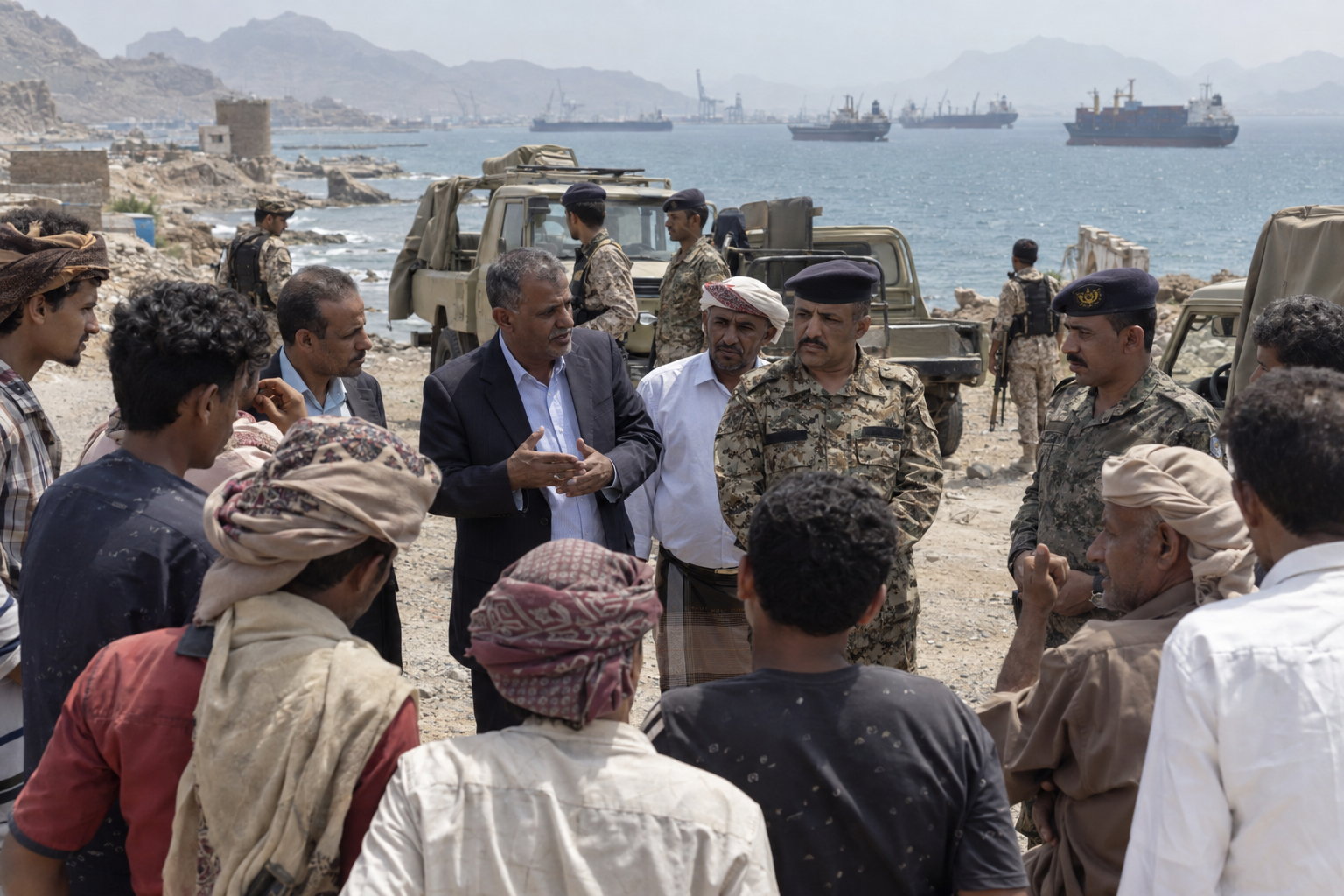
Yemeni government officials and uniformed security personnel coordinating a public mobilisation effort near the western Red Sea coast, citizens listening beside military vehicles with the distant coastline and busy maritime route visible, documentary photojournalism with candid human detail, shot on a 35mm lens in natural daylight under a hazy sky, conveying tension and strategic uncertainty while keeping the scene focused on people and place.

Summary

Yemen’s internationally recognised government has called for general mobilisation and urged citizens to enlist or otherwise support its armed and security forces as Houthi forces make gains along the western Red Sea coast and advance near the strategically vital Bab al-Mandeb strait. Presidential Leadership Council chair Rashad al-Alimi also announced an immediate amnesty, subject to legal procedures, for Houthi fighters who defect, while reaffirming the government’s aim of restoring state authority, including in Sana’a. The appeal follows battlefield setbacks and the collapse of a truce that had paused fighting since 2022; the government remains under pressure on several fronts, and analysts doubt the offer will prompt mass defections in the near term. The advances have heightened regional and international concerns because of Houthi attacks on Saudi Arabia, risks to Red Sea shipping and supply chains, and the route’s growing importance to energy exports. Saudi Arabia, Türkiye and Pakistan have increased military coordination, while Saudi Arabia has reported intercepting missiles and drones and announced a Red Sea naval coalition. The scope of any wider intervention remains uncertain, with technical assistance and intelligence-sharing considered more plausible than foreign ground forces.

Key Points

  • Rashad al-Alimi called for general mobilisation, urging Yemenis to join or support government forces after Houthi advances and government losses on the western coast.
  • The government offered an immediate, legally administered amnesty to Houthi fighters who defect, although the terms are limited in detail and analysts do not expect widespread defections soon.
  • The fighting is focused around strategically important Red Sea locations and the Bab al-Mandeb strait, raising concerns about maritime traffic, international supply chains and Saudi energy exports.
  • Saudi Arabia, Türkiye and Pakistan have stepped up military coordination; Saudi air defences have also intercepted reported Houthi missile and drone attacks.
  • The government’s position remains weak after the collapse of the 2022 truce, and the extent of future regional involvement or intervention is unclear.

Articles in this Cluster

Why has the Yemen government called for a general mobilisation? | Houthis News | Al Jazeera

Yemen’s internationally recognised government has called for a general mobilisation as Houthi forces make rapid gains in the west, including capturing Mocha and Mayyun Island and taking control of the Bab al-Mandeb coastline. In his first speech since government forces were routed from the Red Sea coast, Presidential Leadership Council head Rashad al-Alimi urged citizens to support the fight, pledged to retake Sanaa, and offered immediate amnesty to Houthi fighters who defect. The call follows the collapse of a truce agreed in 2022, which had paused years of fighting. The government’s position is described as exceptionally weak. Its forces remain engaged in Taiz and Marib, and even recent gains, such as the brief capture of Hays district, have quickly been reversed. Analysts suggest the amnesty is unlikely to trigger mass defections soon, but it may reassure fighters that they will not face revenge and help prevent the conflict from becoming tribal warfare. The Houthi advance also raises the stakes for Saudi Arabia. Houthi missiles and drones have targeted Saudi territory, threatening oil exports via the Red Sea. The importance of that route has increased after Iran’s closure of the Strait of Hormuz, while an attack on Saudi pipeline pumping stations has highlighted other vulnerabilities. Saudi Arabia, Turkiye and Pakistan have announced a meeting of military chiefs, but the extent of any intervention in Yemen is uncertain; analysts consider technical support and intelligence sharing more plausible than foreign ground forces. The article also describes concerns about wider effects on shipping and the global economy. Yemen’s government says Houthi threats to navigation put international supply chains at risk, while the Houthis have said they will keep the strait open and have reportedly sought to reassure the EU that its ships will not be targeted. Saudi Arabia has announced a Red Sea naval coalition, though its scale and remit remain unclear.
Entities: Rashad al-Alimi, Yemen’s Presidential Leadership Council, Houthis, Saudi Arabia, Bab al-Mandeb Strait • Tone: analytical • Sentiment: negative • Intent: inform

Yemen’s government offers amnesty to Houthi defectors | Houthis | Al Jazeera

The report says Yemen’s government is offering a general amnesty to Houthi rebels who defect. President Rashad al-Alimi also called on Yemenis to mobilise and join the country’s armed forces. The offer comes amid intensified fighting between government forces and the Houthis, with recent clashes reported near the coast of the Bab al-Mandeb strait. The Houthis are described in the report as Iran-backed. The article provides only a brief account. It does not specify the terms or duration of the amnesty, how many people might be eligible, or whether any defectors have accepted the offer. It also gives no further detail about the recent fighting or its effects. The report’s central points are therefore the government’s appeal for military mobilisation, its amnesty offer to Houthi defectors, and the escalation of clashes near a strategically significant strait. Overall, it presents these developments as part of the ongoing conflict between Yemen’s government and the Houthi movement without offering additional background or analysis.
Entities: Yemen, Rashad al-Alimi, Yemen’s government, Houthi rebels, Houthis • Tone: neutral • Sentiment: negative • Intent: inform

Yemeni leader urges public to enlist, offers amnesty to Houthi defectors | Houthis News | Al Jazeera

Yemen’s Presidential Leadership Council chair, Rashad al-Alimi, has urged Yemenis to enlist in or otherwise support the Saudi-backed government forces as the Houthis make advances towards the strategically important Bab al-Mandeb strait. In a recorded speech on Friday, he called for general mobilisation and said people should join the armed and security forces through official channels or contribute in other ways. The appeal came after government forces were routed from parts of the western Red Sea coast, and as the Houthis continue attacks connected to the conflict. Al-Alimi also announced an immediate amnesty for Houthi fighters who defect to government forces. He said pardons would be granted in accordance with constitutional and legal procedures. He reiterated the internationally recognised government’s goal of restoring state institutions and its authority across Yemen, including in Sana’a, which the Houthis seized in 2014. The speech coincided with the 64th anniversary of the 1962 military coup that ended the monarchy in northern Yemen and prompted civil war. Regional security efforts were also under way. The military chiefs of staff of Saudi Arabia, Turkiye and Pakistan held their first meeting under the Mecca Pact, a trilateral defence agreement, amid continuing Houthi attacks on Saudi Arabia. Separately, the Saudi-led coalition said its air defences intercepted a ballistic missile aimed at Khamis Mushait and two drones headed towards Riyadh. The article presents al-Alimi’s mobilisation appeal and amnesty offer against the backdrop of recent battlefield setbacks, Houthi advances, and heightened regional military coordination.
Entities: Rashad al-Alimi, Yemen, Yemeni Presidential Leadership Council, Houthis, Saudi Arabia • Tone: neutral • Sentiment: neutral • Intent: inform