26-09-2026
CBC’s analysis examines how Charles Spencer’s new book, *Swan Song: Diana, my sister*, adds to continuing debate about the life and legacy of Diana, Princess of Wales, nearly 30 years after her death. Spencer says he intends to tell his memories “once and for all,” but the article questions whether any account can settle the conflicting interpretations of Diana or establish exactly what she thought and felt. The book includes personal recollections from the siblings’ childhood, from Diana’s orderly room and affection for flowers and stuffed toys to more difficult memories, including alleged mistreatment by a nanny and occasional conflict between the siblings. Spencer’s account becomes less detailed as they grew older and spent less time together; he also acknowledges that the family fell out with Diana on multiple occasions.
Much of the media attention has focused on Spencer’s claims about the Royal Family: that King Charles said Diana would soon be forgotten, that Diana told Spencer Charles had said he was not in love with her before their wedding, and that Queen Elizabeth offered to restore Diana’s HRH title after her death. Buckingham Palace made an unusually direct response to the first claim, suggesting grief may cloud memory. The article notes comparisons with the Queen’s earlier “recollections may vary” response to claims by Prince Harry and Meghan.
The book also reflects Spencer’s grief and is organized around his 1997 funeral eulogy, in which he promised that Diana’s family would protect William and Harry and carry on her legacy. His vivid description of Althorp’s Round Oval, a place he and Diana considered a refuge, conveys their closeness. However, the book’s shifting chronology and detours into Spencer’s own life and grievances about the media can make it difficult to follow. Ultimately, the article presents the book as a personal, contested contribution to Diana’s story rather than a definitive resolution of it.
Entities: Charles Spencer, Diana, Princess of Wales, King Charles, Queen Elizabeth, Prince Harry • Tone: analytical • Sentiment: neutral • Intent: analyze
26-09-2026
Prince Harry said his children, Prince Archie and Princess Lilibet, are happy at their new school in England. He made the comment in a CTV News interview on Sept 25, following a skydiving event in the Toronto area to raise money for two veterans’ charities. Harry also said being back in Britain gives him a chance to focus on the Invictus Games, the sporting event for wounded veterans scheduled to take place in Birmingham in July 2027.
Harry and his wife, Meghan, returned to Britain in August after living in the United States for six years. They had stepped back from their roles as working members of the British monarchy amid a bitter dispute with Harry’s family. British media outlets reported that the couple moved their children to a different school soon after returning, citing security concerns. Hello! magazine reported that the distance to the school and heavy traffic along the route were factors in those concerns.
The family is reportedly living in the Cotswolds, in central England. The article also describes Harry’s relationships with members of the royal family: he appears to have improved relations with his father, King Charles III, who is battling cancer, during recent visits to Britain. However, reports say he remains estranged from his brother, Prince William, the heir to the throne, and William’s wife, Catherine. The article presents the school move, Harry’s return and his family relationships as reported developments, while attributing some details to British media.
Entities: Prince Harry, Meghan, Duchess of Sussex, Prince Archie, Princess Lilibet, King Charles III • Tone: neutral • Sentiment: neutral • Intent: inform
26-09-2026
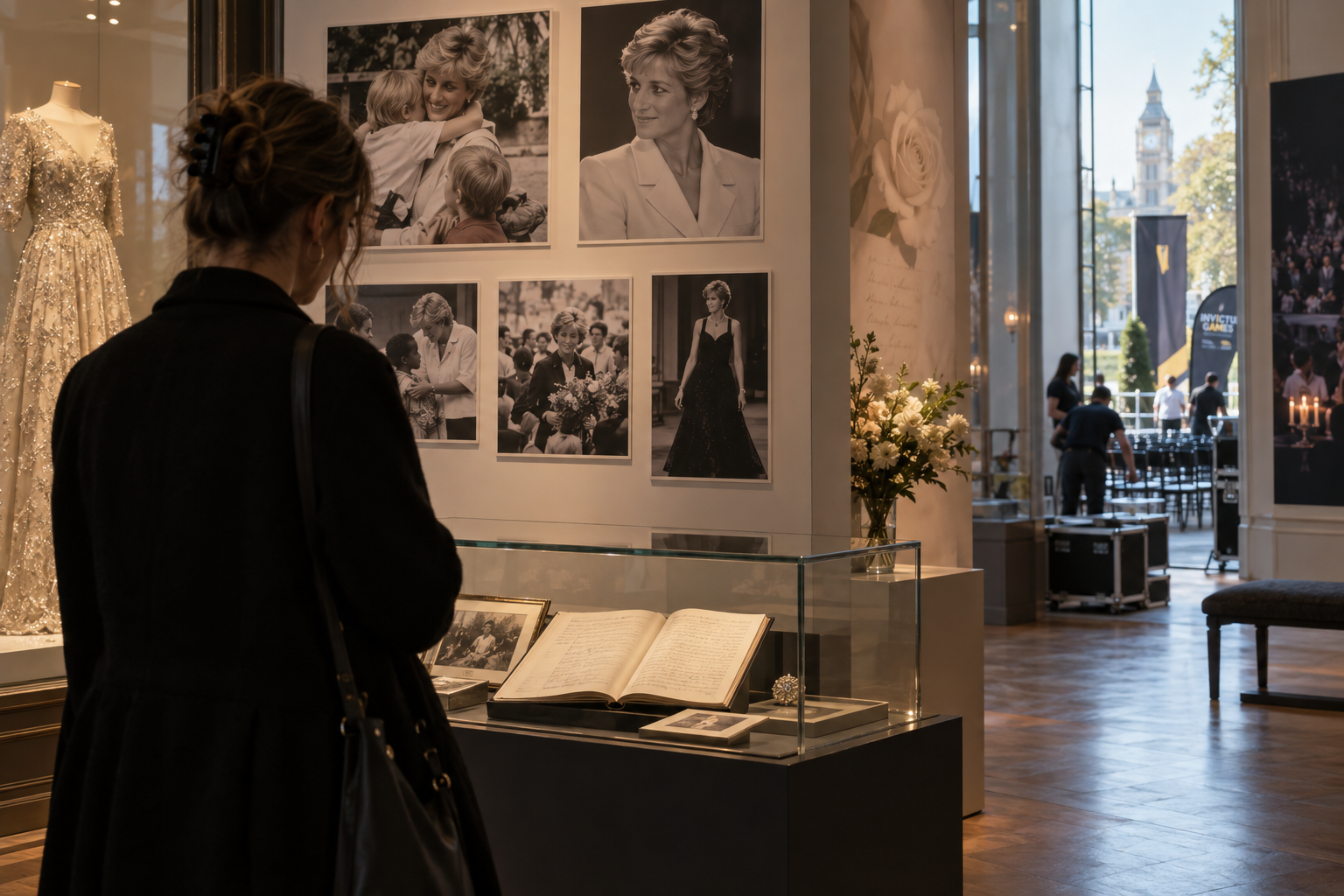
The article examines how Princess Diana’s public image has continued to change since her death in Paris in 1997. Rather than being remembered as one person, Diana has become a collection of sometimes contradictory figures: princess, wife, mother, fashion icon, charity advocate, victim and cultural symbol. The article uses a disputed recollection in Charles Spencer’s memoir, “Swan Song: Diana, My Sister,” to introduce the question of whether the public has forgotten Diana herself while continuing to remember—and remake—her. Spencer recalls an argument with then-Prince Charles over whether William and Harry should walk behind their mother’s coffin, and says Charles predicted she would soon be forgotten. Buckingham Palace disputes Spencer’s account, suggesting grief can affect memory and judgment; Spencer stands by it.
The article argues that Diana’s image was being shaped even while she was alive. Public interpretations turned her gestures, photographs, clothing and private troubles into evidence for larger stories about sensitivity, unhappiness, royalty and national mythology. Author Edward White describes this composite image as a cultural “cut-and-shut,” assembled from different, sometimes conflicting identities. After Diana’s death, her story continued to travel and take on local meanings. In South Asian communities, she could represent a daughter-in-law resisting family expectations, while an imagined “Raj Kumari Diana ji of Southallpur” adapted her into a playful local figure.
A young woman in Pune, Apoorva Jyoti, describes Diana as the “People’s Princess,” a charitable and empathetic role model who confronted patriarchy and had a tumultuous marriage. Her account illustrates the article’s central point: people who never knew Diana can still hold a vivid, meaningful picture of her. But that picture may reveal as much about the needs and values of those remembering her as it does about Diana herself. The supplied article ends mid-sentence as it calls Diana a “jigsaw puzzle.”
Entities: Diana Frances Spencer (Princess of Wales), Charles Spencer, King Charles III, William and Harry, Apoorva Jyoti • Tone: analytical • Sentiment: neutral • Intent: analyze