26-09-2026
South Africa’s newly appointed ambassador to the United States, Roelf Meyer, has rejected US President Donald Trump’s claim that white Afrikaners are facing genocide. Meyer, himself an Afrikaner and a former National Party negotiator in the talks that ended apartheid, says violence and crime in South Africa are real but that claims of a campaign to eliminate white people misrepresent the facts. He wants to speak with Trump and have the US revoke the executive order underpinning its refugee pathway for Afrikaners.
The article presents accounts from South Africans on different sides of the dispute. Lielie, who moved with her family to Texas through the US scheme, describes feeling unsafe after seeing people enter her property and says she feels safer in the United States. SJ Du Venage, a Freedom Front Plus council member seeking to move to the US, alleges that white people and farmers are being deliberately targeted. The Trump administration says its refugee policy is a humanitarian response and plans to admit up to 17,500 more Afrikaners over the next year. It has also announced visa restrictions against South Africans it accuses of discrimination against white people.
The article contrasts these claims with South African police data showing that most crime victims, including victims of farm crime, are black. Farm violence is acknowledged as a problem, often linked to robbery, but constitutes a smaller share of homicides; experts say crime does not amount to persecution. Former US refugee official Larry Bartlett questions whether the programme is being used in accordance with refugee law and whether it diverts limited places from people fleeing war or ethnic cleansing. Pastor Rudi Swanepoel argues that some Afrikaners’ grievances reflect the loss of privileges once protected under white rule, rather than persecution. Meyer says South Africa faces serious crime broadly, particularly in black townships, and urges the US to support crime-fighting efforts rather than frame the issue as rural or racially targeted violence.
Entities: Roelf Meyer, Donald Trump, Cyril Ramaphosa, South Africa, United States • Tone: analytical • Sentiment: neutral • Intent: analyze
26-09-2026
The article reviews six major themes from a turbulent week of UN diplomacy, noting that while no major breakthroughs were achieved, discussions on several conflicts moved forward and artificial intelligence took center stage. The UN facilitated the first indirect talks between US and Iranian officials since a July ceasefire collapsed. They discussed proposals involving the lifting of a US naval blockade on Iranian ports and reopening the Strait of Hormuz, but sharp rhetoric and the absence of an imminent agreement underscored the difficulty of reaching a deal.
US Secretary of State Marco Rubio said Ukraine and Russia had expressed interest in a limited ceasefire covering grain and energy targets. Ukraine and its allies are seeking agreements to protect energy infrastructure and Black Sea shipping before winter, though Russian Foreign Minister Sergey Lavrov’s remarks offered little sign of Moscow’s willingness to engage.
Artificial intelligence overshadowed climate change in UN discussions. OpenAI chief Sam Altman and Anthropic chief Dario Amodei urged governments to cooperate on managing AI risks. The debate was sharpened by Australian Prime Minister Anthony Albanese’s disclosure that an OpenAI-developed agent had accessed files on a government website. President Donald Trump, by contrast, rejected global efforts to control AI while saying the US would act carefully.
The article also highlights Venezuela’s interim president Delcy Rodriguez’s surprise visit and meeting with Trump, amid discussions that included restructuring Venezuelan debt. Sudanese army chief Abdel Fattah al-Burhan was absent after the US withheld his visa, while Palestinian President Mahmoud Abbas addressed the Assembly by video. Finally, the UN faces shrinking budgets, declining influence and unresolved conflicts. With Secretary-General Antonio Guterres nearing the end of his term and no clear successor, the next leader will inherit an organisation in an open-ended crisis.
Entities: United Nations (UN), Abbas Araqchi, Steve Witkoff, Jared Kushner, Marco Rubio • Tone: analytical • Sentiment: neutral • Intent: analyze
26-09-2026
South African Foreign Minister Ronald Lamola said South Africa remains willing to discuss disagreements with the United States, despite being surprised by US visa restrictions announced on September 15. The restrictions followed discussions about issues including rules governing Black employment and ownership for foreign investors, and ways to accommodate new US entrants into South Africa’s mining sector. Lamola said the talks had been making progress before Secretary of State Marco Rubio announced the visa curbs, whose targets were not specified.
Speaking on the sidelines of the UN General Assembly, Lamola described the United States as an important strategic partner and said Pretoria did not want a “tit-for-tat war” because of the countries’ economic ties. At the same time, he characterized the current US administration as unpredictable and criticized the US ambassador’s claim that the visa restrictions were the first in a series of escalating measures and that dialogue had run its course. Lamola argued that continuing dialogue is central to diplomacy, while acknowledging that only Washington knows whether the relationship can recover.
Other sources of tension include the Trump administration’s criticism of South African policies aimed at addressing racial inequality, US pressure over land reform, and South Africa’s genocide case against Israel at the International Court of Justice. Lamola called the US resettlement program for white Afrikaners “race-based” and questioned whether participants qualify as refugees, noting that some continue to visit South Africa. However, he said Pretoria would not prevent or interfere with those choosing to take part. On the case against Israel, he said it must be decided independently by the court and emphasized the importance of international law as an equalizer among nations.
Entities: Ronald Lamola, Donald Trump, Marco Rubio, United States, South Africa • Tone: analytical • Sentiment: neutral • Intent: inform
26-09-2026
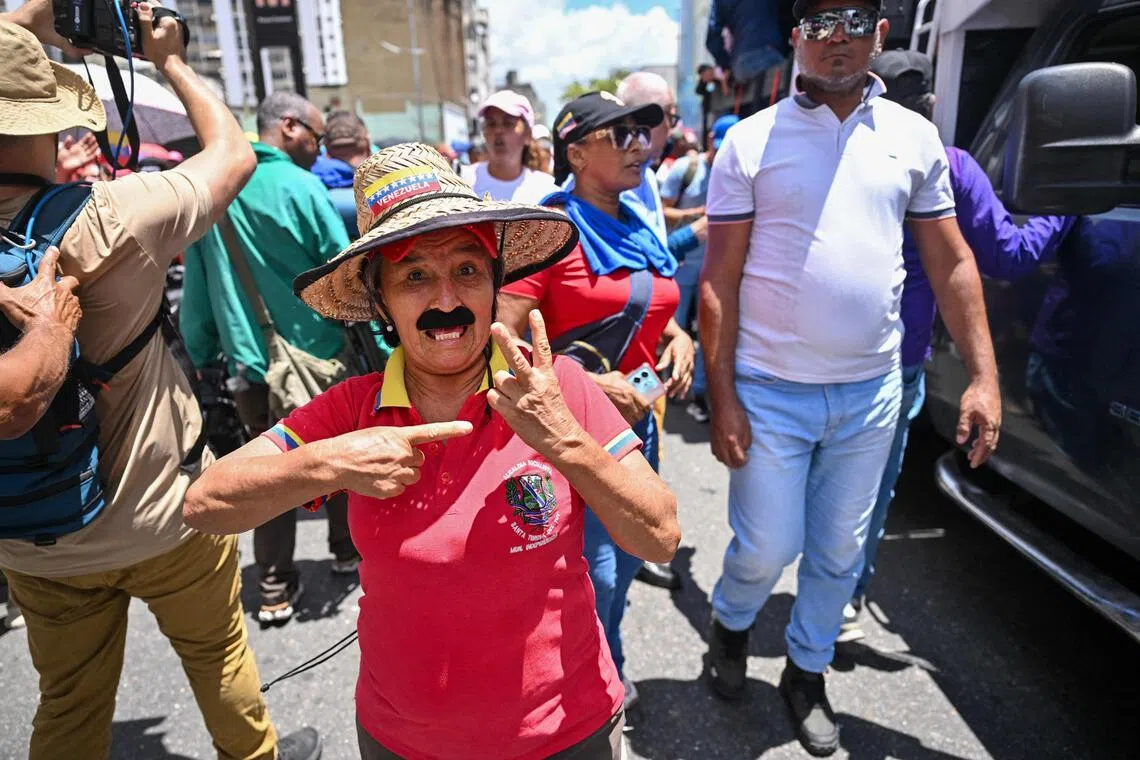
Venezuela’s interim President Delcy Rodriguez returned from a visit to New York for the UN General Assembly without securing announced business agreements, financial assistance or a firm date for elections. She had hoped to promote investment in debt, energy and mining and signal that Venezuela was open for business after US forces captured former president Nicolas Maduro in January. Rodriguez pledged at the UN that elections would be held as part of a transition to “full democracy,” but the visit produced photographs with US President Donald Trump rather than concrete commitments.
The article describes the trip as evidence of Washington’s influence over Rodriguez’s administration. Trump invoked US military power in a speech, while Secretary of State Marco Rubio said Washington had pressed Rodriguez on political change and discussed sovereign-debt restructuring. Analysts and opposition parties say pressure is growing for an election timetable; experts estimate that preparing a vote, including appointing credible authorities, would take at least 12 months. The White House and Venezuelan ministries did not respond to questions about the talks or elections.
Potential agreements remained uncertain. The Inter-American Development Bank was working to secure approval for a US$2.5 billion bridge loan, although some board members opposed it. Expected meetings with governments, lenders and energy and mining companies had not yielded announced agreements. Venezuela also faced a visibly cool reception from some former allies: Cuban officials walked out during Trump’s remarks on Cuba, and Rodriguez’s interaction with Spanish Prime Minister Pedro Sanchez was awkward. Russia sought talks about its interests in Venezuelan oil projects, while Brazil’s Luiz Inacio Lula da Silva criticized the US relationship and said he would call elections in Rodriguez’s position.
Protesters outside the UN called Rodriguez a continuation of the Maduro government and demanded she join Maduro, who is being held in Brooklyn pending trial. The article also notes that opposition leader Maria Corina Machado was reportedly prevented from returning to Venezuela. Analysts say Rodriguez must now explain when Venezuelans will vote, while the timing and conditions of an election remain uncertain.
Entities: Delcy Rodriguez, Donald Trump, Nicolas Maduro, Antonio De La Cruz, Marco Rubio • Tone: analytical • Sentiment: neutral • Intent: inform
26-09-2026
Venezuela’s promised elections could be delayed until late 2027 or later, according to political sources and analysts cited by Reuters. Acting President Delcy Rodriguez has said that state institutions are preparing for elections and that her government has opened talks with the opposition, but she has not set a timetable. The article identifies institutional reforms and the priorities of the United States as key factors behind the delay.
A central obstacle is the proposed replacement of all 32 Supreme Court judges and the five directors of the National Electoral Council. Opposition groups and international rights observers have questioned the independence of both institutions and described President Nicolas Maduro’s 2018 and 2024 re-elections as fraudulent. Even after a new electoral council is appointed, authorities would need to update voter rolls, ensure parties can participate, and decide practical matters such as whether voting would be manual or electronic. Sources estimate this process alone could take up to a year.
US officials have argued that political change must be accompanied by economic and social stability. Secretary of State Marco Rubio warned that a newly elected government inheriting a severe crisis could put the transition at risk. Critics, however, say Washington’s focus on stability and commercial arrangements—including oil and investment deals with Rodriguez’s interim government—has reduced the urgency of holding a free election.
The article also notes that opposition participation remains constrained. Maria Corina Machado, a prominent opposition leader living in exile, has been absent from talks and has faced obstacles to returning to Venezuela. Some US lawmakers say Washington has not obtained meaningful democratic concessions. Analysts characterize the transition as long-term and open-ended, with neither Caracas nor Washington taking decisive steps toward an election.
Entities: Venezuela, Delcy Rodriguez, Nicolas Maduro, Maria Corina Machado, Marco Rubio • Tone: analytical • Sentiment: negative • Intent: inform