24-05-2026
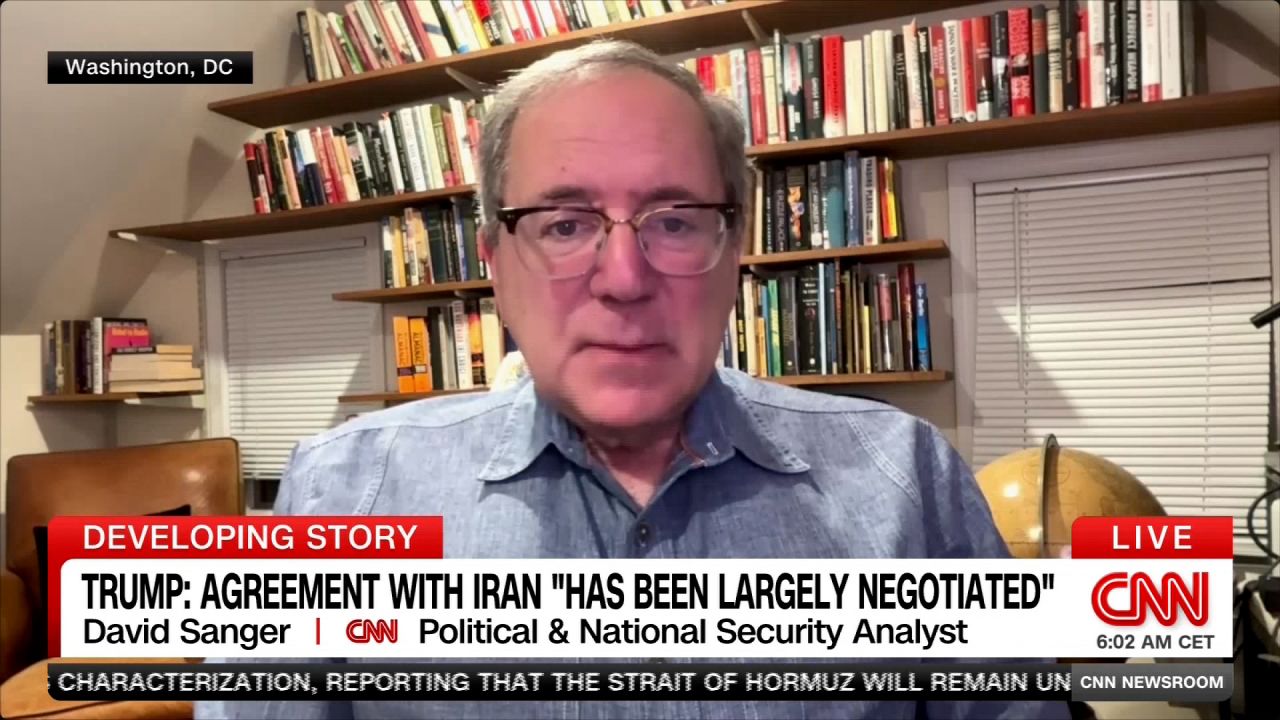
President Donald Trump said an agreement with Iran was “largely negotiated” and that details would be announced soon, claiming the deal would include reopening the Strait of Hormuz. He framed the talks as part of a broader peace effort involving the United States, Iran, and several Gulf states, and said he had recently spoken with leaders in Saudi Arabia, the United Arab Emirates, Qatar, and Israeli Prime Minister Benjamin Netanyahu. Trump also reiterated that any agreement would “absolutely” prevent Iran from obtaining a nuclear weapon.
The article describes a rapidly shifting diplomatic and military backdrop. Iranian foreign ministry spokesman Esmaeil Baqaei said US and Iranian positions had been converging, but warned that important disagreements remained and accused the Americans of sending contradictory signals. He said the sides were working toward a framework memorandum with 14 points, with further talks possible in 30 to 60 days. Pakistan’s prime minister also signaled support for the process, saying Pakistan was helping mediate and hoped to host the next round of talks soon.
At the same time, tensions remain high. The article notes that the US and Israel launched wide-ranging strikes on Iran on 28 February, prompting Iranian attacks on Israel and US-allied Gulf states, before a ceasefire was reached in early April. Since then, the US has blockaded Iranian ports, with US Central Command saying it has redirected vessels and severely restricted trade into and out of Iran. Iran has meanwhile claimed military control over part of the Strait of Hormuz, a claim rejected by the US and Gulf allies. The piece presents the situation as a mix of tentative diplomatic progress, strategic pressure, and the possibility of renewed conflict.
Entities: Donald Trump, Iran, United States, Strait of Hormuz, Esmaeil Baqaei • Tone: analytical • Sentiment: neutral • Intent: inform
24-05-2026
President Trump said the United States and Iran are getting closer to an agreement, while CBS News reported that negotiators are discussing a draft proposal that could reopen the Strait of Hormuz, unfreeze some Iranian assets held in foreign banks, and continue talks. Trump declined to share specifics but said the deal was improving day by day and that he would only sign an agreement that achieves everything the U.S. wants. He said the final arrangement would prevent Iran from obtaining a nuclear weapon and ensure Iran’s enriched uranium is satisfactorily handled. However, sources told CBS News that no final decision has been made and that Trump is still weighing options with advisers and foreign leaders.
The article also describes Trump consulting with leaders from Gulf and other countries, including Saudi Arabia, Turkey, Egypt, Pakistan, the UAE, Jordan, and Qatar, as part of the diplomatic effort. Trump warned that if no deal is reached, Iran will face severe consequences, repeating past threats and suggesting the situation is urgent. Secretary of State Marco Rubio separately said there could be news soon about the talks and acknowledged that some progress has been made, though more work remains. Overall, the piece centers on high-stakes U.S.-Iran negotiations, uncertainty over the terms, and the possibility of an imminent announcement.
Entities: Donald Trump, Iran, United States, CBS News, Strait of Hormuz • Tone: urgent • Sentiment: negative • Intent: inform
24-05-2026
The article reports that the Trump administration was preparing for a possible new round of military strikes against Iran while still pursuing diplomacy, with no final strike decision made as of Friday afternoon. The White House said President Trump’s position remained firm: Iran must never obtain a nuclear weapon or retain enriched uranium. At the same time, Iran was reviewing a U.S. proposal for a possible agreement to end a nearly three-month conflict that has already shaken energy markets and pushed fuel prices higher.
According to sources, the U.S. military and intelligence community were adjusting schedules and readiness plans over Memorial Day weekend in anticipation of possible action, including recall planning for overseas installations and troop rotations in the Middle East. Iran’s Islamic Revolutionary Guard Corps warned that further U.S. or Israeli strikes could widen the conflict beyond the region. The article also notes that Tehran’s response to the U.S. proposal was expected imminently through Pakistan, which has served as an intermediary.
Secretary of State Marco Rubio said the U.S. still preferred diplomacy and that progress had been made, though more work remained. He also referenced contingency discussions with NATO allies about using force to reopen the Strait of Hormuz if Iran would not do so voluntarily. Meanwhile, House Republicans dropped an effort to limit Trump’s authority to conduct military operations against Iran after determining they lacked the votes. Overall, the piece describes a tense standoff in which diplomacy and military pressure were unfolding in parallel, with a potential escalation looming if talks failed.
Entities: Donald Trump, Donald Trump Jr., Iran, Washington, White House • Tone: urgent • Sentiment: negative • Intent: inform
24-05-2026
CNN’s interactive timeline reconstructs the opening phase of the Iran war through a sequence of reporting milestones from Tehran, Tel Aviv, Washington and other locations. The article describes how the conflict began with joint US-Israeli strikes on Iran that killed Iran’s supreme leader and other senior officials, triggering immediate retaliation from Iran, including missile attacks on Israel and subsequent casualties on both sides. It highlights the speed with which the conflict escalated from covert preparations to open warfare and the role of journalists in tracing those developments in real time.
The timeline then broadens to the war’s humanitarian, military, and economic consequences. One of the most devastating episodes described is a strike on a girls’ elementary school in southern Iran, which Iranian state media said killed at least 168 children and 14 teachers. CNN’s investigation, based on satellite imagery, geolocated footage, public statements, and munitions analysis, suggested the US was likely responsible and that the school may have been inadvertently hit due to its proximity to a Revolutionary Guard naval base. The article also covers the first US casualties after an Iranian drone strike on a makeshift operations center at a civilian port in Kuwait, underscoring that the war extended beyond Iran and Israel.
Finally, the piece examines the broader geopolitical and economic fallout, including fears that Iran could close the Strait of Hormuz and send oil prices sharply higher. As futures markets reopened, crude surged, eventually topping $100 a barrel by April and helping drive gasoline prices and inflation concerns. Overall, the article presents the war as a fast-moving regional crisis marked by military escalation, civilian suffering, uncertainty, and global market shock.
Entities: Iran, United States, Israel, Donald Trump, Pete Hegseth • Tone: analytical • Sentiment: negative • Intent: inform
24-05-2026
CNN’s live updates report on rapidly evolving diplomacy aimed at ending the Iran war, with President Donald Trump saying a peace agreement with Iran has been “largely negotiated” and that the Strait of Hormuz would be reopened under the deal. The article says the US and Iran are close to finalizing a memorandum of understanding that would end hostilities, gradually reopen the strait, and end the US blockade of Iranian ports. It would also unfreeze some Iranian assets held abroad and launch at least 30 days of further negotiations over unresolved issues, especially Iran’s nuclear program and its stockpile of near-weapons-grade uranium.
The piece describes a flurry of high-level diplomacy over the weekend. Trump reportedly held calls with Gulf and other regional leaders, who encouraged him to accept the framework agreement, and he also spoke with Israeli Prime Minister Benjamin Netanyahu. Meanwhile, talks in Tehran involving Qatari and Pakistani mediators reportedly made progress on some key disagreements, producing cautious optimism among regional sources. However, the article emphasizes that the deal is not yet finalized and could still fall apart.
Iranian state-affiliated media strongly disputes Trump’s description of the agreement. Fars news agency said claims that the Strait of Hormuz would reopen are “not true” and insisted that although the number of passing vessels may return to pre-war levels, that does not amount to free passage. The report underscores that negotiations remain sensitive, with competing narratives over control of the waterway, sanctions relief, and the future of Iran’s nuclear program still unresolved.
Entities: Donald Trump, Iran, Strait of Hormuz, United States, Fars news agency • Tone: analytical • Sentiment: neutral • Intent: inform
24-05-2026
According to the report, Iran has reportedly agreed to relinquish its stockpile of highly enriched uranium as part of a deal announced by President Trump. The uranium cache is described as enough to potentially build 11 nuclear bombs, underscoring why it became one of the central sticking points in the negotiations. The article says the issue of what would happen to Iran’s enriched uranium was unresolved even after an agreement to end the war had been reached, and that US officials reportedly warned they could resume bombing if Iran refused to give it up. The piece attributes these details to the New York Times, citing two American officials, and frames the development as part of a broader and still unfolding diplomatic and military standoff between the United States and Iran. The article is short, reports the claim as breaking news, and ends by noting that it is a developing story.
Entities: Iran, United States, Donald Trump, The New York Times, The New York Post • Tone: urgent • Sentiment: negative • Intent: inform
24-05-2026
The article reports that, according to two U.S. officials, a proposed agreement between the United States and Iran includes an apparent Iranian commitment to relinquish its stockpile of highly enriched uranium. This element is described as central to any deal, especially as President Trump said the U.S. was close to an agreement meant to end the war and reopen the Strait of Hormuz, though he offered no details and key obstacles remain unresolved. The officials said the agreement does not yet specify exactly how Iran would surrender the uranium stockpile, leaving that for a later round of nuclear talks. Still, they said a general Iranian commitment to give it up is crucial, particularly if Republicans in Congress react skeptically to the overall deal.
The article explains that Iran had initially resisted including the uranium stockpile in the first phase of talks, preferring to defer the issue to a second stage. U.S. negotiators allegedly warned that if Iran did not agree in principle, the United States would abandon negotiations and resume military action. The piece also notes that U.S. military planners have developed strike options targeting the stockpile, reportedly located largely at the Isfahan nuclear site, including bunker-busting bombs. In the background, Trump had previously considered a commando raid with Israeli forces to retrieve the uranium, but that plan was never approved.
The article further places the issue in historical context by citing Iran’s estimated stockpile of 60% enriched uranium and comparing a possible transfer to Russia with the process used under the Obama administration’s 2015 nuclear deal. It says future negotiations would address both the stockpile’s disposal and broader limits on Iran’s enrichment program, including a U.S. desire for a 20-year moratorium. Another major component of any final deal would be the release of billions of dollars in frozen Iranian assets, though access to most of those funds would be tied to a final nuclear agreement, giving Iran an incentive to stay engaged in talks.
Entities: Iran, United States, Donald Trump, White House, Republicans on Capitol Hill • Tone: analytical • Sentiment: neutral • Intent: inform
24-05-2026
The article argues that although President Trump has touted a breakthrough with Iran, the actual terms of the apparent peace proposal remain unclear and possibly incomplete. Trump had previously insisted there would be no deal unless Iran offered “unconditional surrender,” but recent statements from the White House and Trump suggest a more limited memorandum of understanding may be in place. According to two U.S. officials, Iran has agreed in principle to give up its stockpile of highly enriched uranium, but Iran has not publicly confirmed this, and the article emphasizes that the practical details matter enormously.
The piece lays out the major unresolved questions that will determine whether Trump can claim a meaningful diplomatic victory: whether the deal concerns only reopening the Strait of Hormuz or also broader sanctions and military issues; whether frozen Iranian assets will be released; whether Iran will surrender, dilute, or retain its near-bomb-grade uranium; whether Iran will be allowed to continue enriching uranium in the future; and whether the agreement addresses Iran’s missile arsenal, which is especially important to Israel. The article also notes skepticism and backlash from Iran hawks and some former Trump officials even before the full terms were known. Overall, the story frames the proposed agreement as politically consequential but substantively opaque, with too many unanswered questions to determine whether it represents a real peace deal or only a limited tactical arrangement.
Entities: Donald Trump, Iran, Strait of Hormuz, United States, White House • Tone: analytical • Sentiment: neutral • Intent: analyze
24-05-2026
According to U.S. officials, one central element of the proposed Iran-U.S. agreement announced by President Donald Trump is Iran’s apparent commitment to give up its stockpile of highly enriched uranium. The deal is still incomplete, and key details remain unresolved, especially how Iran would physically surrender or dispose of the uranium. U.S. officials said that issue would be left for a later round of nuclear talks. Trump said the U.S. was close to an agreement aimed at ending the war and reopening the Strait of Hormuz, but he offered few specifics. Iranian officials have not publicly responded to the announcement.
The article says Iran originally resisted putting its uranium stockpile into the first phase of the agreement, preferring to postpone it to later talks. U.S. negotiators reportedly warned that without a commitment on the stockpile early in the process, Washington would walk away and resume military action. Military options had reportedly been prepared, including strikes on Iran’s Isfahan nuclear site, where much of the stockpile is believed to be stored, and even a possible commando raid, though that plan was never approved.
The story places the negotiations in the context of broader nuclear and sanctions issues: Iran is said to hold about 440kg of uranium enriched to 60%, and future talks are expected to address both disposal of the stockpile and limits on Iran’s enrichment program. Another major element of any final deal would be the release of billions of dollars in frozen Iranian assets, with access to most of that money tied to completion of a final nuclear agreement.
Entities: Iran, United States, Donald Trump, White House, Strait of Hormuz • Tone: analytical • Sentiment: neutral • Intent: inform
24-05-2026
This page is a Straits Times topic index for “Maritime and shipping,” rather than a single standalone news article. It lists several recent maritime-related headlines, mostly centered on the escalating US-Iran conflict and its implications for the Strait of Hormuz, a critical global shipping route. The featured items suggest that diplomatic efforts are ongoing, with reports of “encouraging” progress in ending the US-Iran war and US Secretary of State Marco Rubio saying there is progress in talks, though more work remains. Other listed headlines highlight strategic and security risks around the Strait of Hormuz, including Iran’s threat to control the strait, the movement of Chinese container ships through the waterway amid deadlock, and claims by Iran’s Hormuz authority regarding waters south of a UAE port. The page also includes unrelated maritime news such as allegations involving Teo Siong Seng and SBF, a fatal capsizing case in Okinawa, and Australia’s disappointment over resistance to a forced port sale. Overall, the page functions as a topical news hub showing the breadth of current shipping and maritime issues, with geopolitical tensions dominating the most prominent stories.
Entities: Maritime and shipping, Strait of Hormuz, US-Iran war, Iran, United States • Tone: analytical • Sentiment: neutral • Intent: inform