23-05-2026
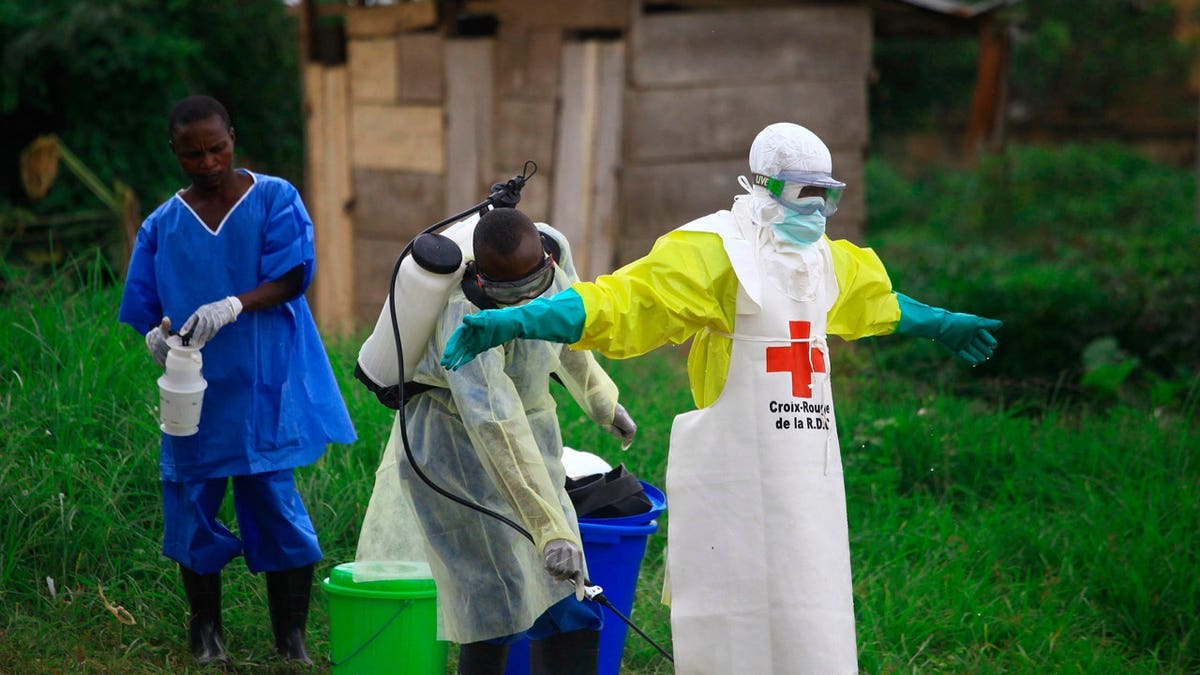
The article reports that the World Health Organization has raised the public health risk from the ongoing Ebola outbreak in the Democratic Republic of Congo from “high” to “very high” at the national level, while keeping the regional risk high and the global risk low. The outbreak is caused by the rare Bundibugyo species of Ebola, which has no proven vaccine and is estimated to kill about a third of those infected. So far, there have been 82 confirmed cases and seven confirmed deaths, though the outbreak has also produced 750 suspected cases and 177 suspected deaths. The WHO says the situation is especially concerning because the response is being hampered by violence, mistrust, and insecurity in eastern Congo, where some cases are in rebel-held areas. A hospital in Rwampara was attacked by angry relatives after staff refused to release a body, highlighting the challenge of enforcing safe burials, which are essential to preventing transmission. The article also notes that researchers at Oxford University are developing a new vaccine based on the same platform as the AstraZeneca Covid vaccine, with animal testing underway and clinical trials potentially beginning within two to three months. Another experimental Bundibugyo vaccine is also being developed, but it will take longer to be ready for testing. The piece underscores the urgency of the outbreak, the fragility of health response efforts, and the broader public fear surrounding the disease.
Entities: World Health Organization (WHO), Dr Tedros Adhanom Ghebreyesus, Democratic Republic of Congo (DR Congo), Uganda, Bundibugyo Ebola species • Tone: urgent • Sentiment: negative • Intent: inform
23-05-2026
An American doctor, Dr. Peter Stafford, contracted Ebola while working with the missionary medical organization Serge in the Democratic Republic of Congo and was evacuated to Charite University Hospital in Berlin for treatment. In a statement, Stafford said he had feared he might not survive before evacuation but is now feeling “cautiously optimistic.” His wife, Dr. Rebekah Stafford, and their four children were also evacuated; they remain asymptomatic, isolated, and under monitoring. Charite said Stafford is severely weakened but not critically ill, and that he remains under close observation in a specialized isolation unit.
The article places Stafford’s case in the context of an ongoing Bundibugyo ebolavirus outbreak in Congo that has spread into Uganda and is believed by health officials to be larger than official counts indicate. The World Health Organization said there are nearly 750 suspected cases and 177 suspected deaths. The story explains that Bundibugyo Ebola is only the third known outbreak of this strain, has no known vaccine or treatment, and carries an estimated fatality rate of 30% to 50%. Stafford reportedly showed symptoms including vomiting, rash, and diarrhea, but his labs were trending slightly in the right direction and he was receiving supportive and intravenous care. The article also notes that another Serge doctor, Dr. Patrick LaRochelle, may have been exposed and is quarantined in Prague, and that the U.S. government has tightened entry rules for travelers returning from affected countries.
Entities: Dr. Peter Stafford, Dr. Rebekah Stafford, Dr. Patrick LaRochelle, Serge, Democratic Republic of Congo • Tone: urgent • Sentiment: negative • Intent: inform
23-05-2026
The article reports that the World Health Organization has raised the national risk level for the Ebola outbreak in the Democratic Republic of Congo to “very high,” warning that the virus is spreading rapidly within the country even though the global risk remains low. WHO Director-General Tedros Adhanom Ghebreyesus said Congo had confirmed 82 cases and seven deaths, while suspected totals are far higher, indicating the outbreak is larger than official confirmations suggest. The crisis is centered in northeastern Congo, especially Ituri Province, where weak health infrastructure, population displacement, and armed conflict are complicating containment efforts.
The piece describes growing tension between public health measures and local customs. Authorities banned funeral wakes and gatherings of more than 50 people and required strict burial protocols, but these measures have triggered pushback, misinformation, and anger among communities. That tension escalated when local youths set fire to an Ebola treatment center in Rwampara after being stopped from taking a friend’s body home for burial. Aid workers had to flee the facility, though calm was later restored and operations resumed.
Health officials and humanitarian groups say the outbreak is still in an investigation-and-tracing phase, and case numbers are likely to rise as surveillance improves. The article also notes that there is currently no available vaccine or medicine for the Bundibugyo strain responsible for the outbreak, and experts estimate it could take six to nine months before one becomes available. In response, the U.S. imposed travel restrictions on recent visitors from Congo, Uganda, and South Sudan, while other regional and international events were postponed or canceled due to the evolving health situation.
Entities: World Health Organization (WHO), Tedros Adhanom Ghebreyesus, Democratic Republic of Congo, Uganda, Ituri Province • Tone: urgent • Sentiment: negative • Intent: inform
23-05-2026
An Ebola treatment center in eastern Congo was attacked and set on fire after residents clashed with authorities over the body of a suspected Ebola victim. According to witness accounts cited by the Associated Press, local youths tried to retrieve the body of a friend who had reportedly died of Ebola; when police intervened and failed to disperse the crowd, the facility was torched. Two tents used for treating Ebola patients were burned at Rwampara Hospital, though Congo’s government later said medical care continued and all six patients at the center were accounted for. The incident highlighted the tension between public health containment protocols and local burial customs, with officials stressing that Ebola victims must be buried under strict regulations to prevent further spread.
The attack occurred amid a worsening outbreak in the Democratic Republic of the Congo, where health officials reported 160 suspected deaths and 671 suspected cases across two provinces. The United Nations said Uganda had also reported two cases, including one death, raising regional alarm. In response, the World Health Organization declared the outbreak a public health emergency, and the United States issued an urgent travel warning. WHO Director-General Tedros Adhanom Ghebreyesus said he was deeply concerned about the outbreak’s “scale and speed.” Officials said the outbreak involves the Bundibugyo strain of Ebola, a rarer variant that may not be as well covered by existing vaccines. The article also notes that WHO approved nearly $4 million in emergency funding to support the response.
Entities: Ebola treatment center, Rwampara Hospital, eastern Congo, Democratic Republic of the Congo, Uganda • Tone: urgent • Sentiment: negative • Intent: inform
23-05-2026
The article reports that World Health Organization Director-General Tedros Adhanom Ghebreyesus is “deeply concerned” about the scale and speed of an Ebola outbreak spreading in the Democratic Republic of the Congo and Uganda. The WHO has scheduled an emergency committee meeting to assess the situation after data showed more than 500 suspected cases in the DRC, 33 confirmed cases there, two confirmed cases in Uganda, and 131 total fatalities. Officials are especially worried because the outbreak is affecting urban areas such as Kampala and Goma, and also the conflict-hit province of Ituri, where response efforts are complicated. The outbreak is caused by the Bundibugyo strain of Ebola, a rarer variant that may not respond as well to existing vaccines. In response, the WHO has approved $3.9 million in emergency funding, and the United States issued an urgent travel warning for the DRC. The U.S. advisory says American citizens cannot receive emergency services in Ituri province and warns against travel there. The article also notes that the Ebola situation is unfolding alongside another global health concern: a hantavirus outbreak tied to the MV Hondius cruise ship, which has sickened multiple people and caused three deaths. Overall, the piece emphasizes the seriousness of the Ebola spread, the international public health response, and the risks of cross-border transmission.
Entities: World Health Organization (WHO), Tedros Adhanom Ghebreyesus, Democratic Republic of the Congo (DRC), Uganda, Kampala • Tone: urgent • Sentiment: negative • Intent: inform
23-05-2026
An Ebola treatment center in Bunia, in the Democratic Republic of Congo’s Ituri Province, was burned down after a mob stormed the hospital demanding the body of a suspected Ebola victim. The article describes how the outbreak of the rare Bundibugyo strain has overwhelmed a region already scarred by conflict, misinformation, and distrust of authorities and medics. Aid is scarce, hospitals are swamped, and health workers face fear and hostility while trying to contain a disease that has already killed 177 people and infected 750 more, according to the World Health Organization.
The article centers on the death of Elie Munungo, a 28-year-old local man whose body was sought by family and neighbors for burial. When staff refused to release the body immediately, the crowd escalated, throwing stones, clashing with police, and setting fire to the isolation ward where five suspected Ebola patients were being treated. The patients fled, and the ward was destroyed. The event illustrates how rumors that medics are poisoning patients, combined with long-standing trauma from decades of conflict, can undermine outbreak response.
Despite the violence, daily life in Bunia continued with an uneasy normalcy: markets were open, children went to school, and funerals enforced screening for symptoms. But medical supplies were running low, masks were scarce and expensive, and families were keeping children home out of fear. Health workers described the situation as dangerous and heartbreaking, especially because the strain has no vaccine or proven treatment and was detected late. The piece closes on the anxiety of those on the front lines, who know they are risking their lives while confronting a disease that still lacks a cure.
Entities: Bunia, Ituri Province, Democratic Republic of Congo, Ebola outbreak, Bundibugyo Ebola species • Tone: urgent • Sentiment: negative • Intent: inform
23-05-2026
An Air France flight traveling from Paris to Detroit was diverted to Montreal after U.S. authorities determined that one passenger was from the Democratic Republic of Congo and therefore subject to Ebola-related travel restrictions. U.S. Customs and Border Protection said the passenger had boarded the plane in error and should not have been allowed to enter the United States under current public health restrictions tied to the Ebola outbreak in Central Africa. Air France said the diversion occurred at the request of U.S. authorities and that there was no medical emergency on board.
After landing in Montreal, the passenger was evaluated by Canada’s Public Health Agency and found to be asymptomatic, meaning there were no Ebola symptoms. The person was then flown back to Paris. Medical experts cited in the article emphasized that Ebola is not transmissible from someone without symptoms, and that the incident posed no risk to fellow passengers. The article also explains broader U.S. measures designed to funnel certain travelers through Washington-Dulles for enhanced screening, reflecting tightened public health controls related to the outbreak in Congo, Uganda, and South Sudan. The report includes passenger testimony describing confusion aboard the plane, including a delayed explanation from the captain and the distribution of face masks, which some experts said may have caused unnecessary alarm.
Entities: Air France, Paris-Charles de Gaulle International Airport, Detroit, Montreal Trudeau International Airport, U.S. Customs and Border Protection (CBP) • Tone: analytical • Sentiment: neutral • Intent: inform