23-05-2026
Two Indian climbers died on Mount Everest during one of the busiest climbing periods in recent years, intensifying concerns about overcrowding on the world’s highest mountain. The deaths occurred on Nepal’s southern route while the climbers were descending at high altitude. Officials from the expedition company said they are working to recover the bodies and identified the climbers as Sandeep Are and Arun Kumar Tiwari, both of whom had reached the summit on different days in May.
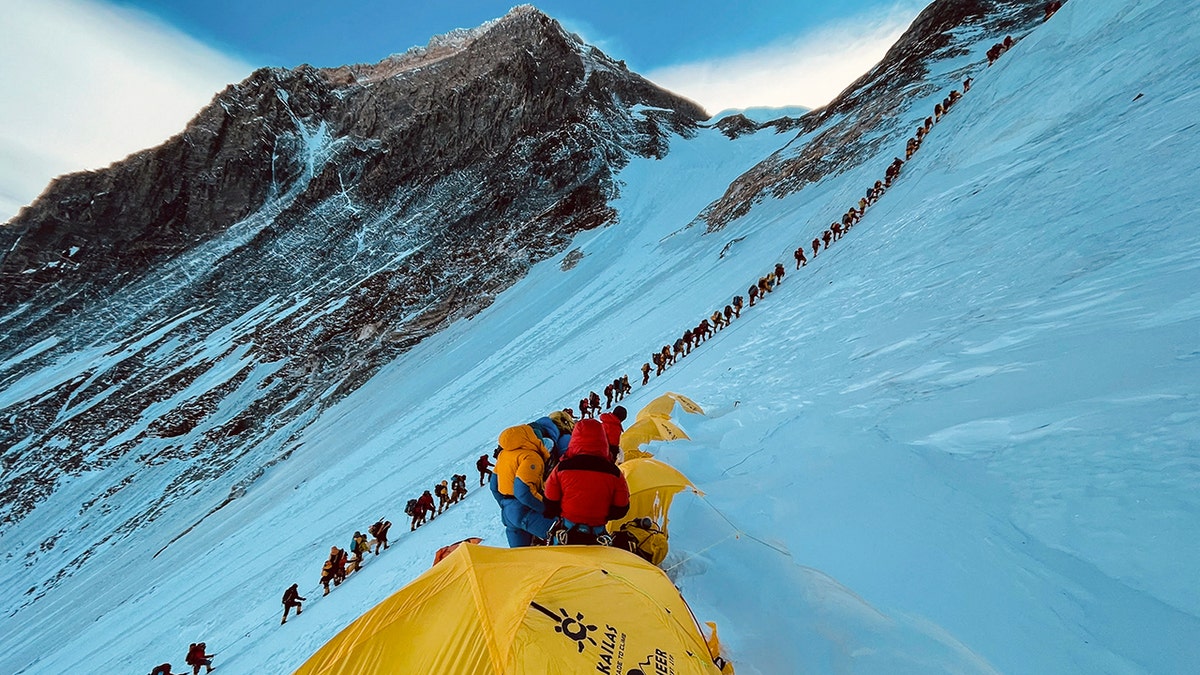
The article places the deaths in the context of a particularly crowded Everest season. At least five climbers have died on Everest this season, including the two Indians and three Nepalis, while two more climbers died on Mount Makalu earlier in the month. The season has seen a record-breaking number of ascents from the Nepali side, with tourism officials reporting a preliminary total of 275 summits on one day alone, pending verification. Overall, about 600 people, including guides, have summited Everest since the spring season began in April.
Veteran climbers and experts are warning that the mountain is becoming dangerously congested, especially when weather narrows the climbing window. Record-holder Kami Rita Sherpa said it was more crowded this year and argued that authorities should limit the number and quality of climbers allowed to attempt the peak. The article also notes that Nepal has tightened controls and raised fees in response to longstanding criticism about overcrowding. British guide Kenton Cool also achieved a new milestone, reaching the summit for the 20th time and extending his record for non-Nepali climbers. The piece frames the deaths and record-setting ascents as part of a broader debate over safety, regulation, and the growing popularity of Everest expeditions.
Entities: Mount Everest, Nepal, Tibet, Kathmandu, Sandeep Are • Tone: urgent • Sentiment: negative • Intent: inform
23-05-2026
Hundreds of climbers reached the summit of Mount Everest from Nepal’s southern route in a single day, setting a new record of 274 successful ascents, according to officials. The total was reported on Thursday after climbers took advantage of clear weather on Wednesday. The figure may rise further if additional summiteers who have not yet reported to base camp are counted. The previous Nepal-side record was 223 climbers in 2019, while China’s side had 113 that same year; however, the route from Tibet is closed this year. The article also highlights several notable individual achievements: veteran guide Kami Rita Sherpa set a personal record by summiting for the 32nd time, Pasang Dawa Sherpa reached the peak for the 30th time, and Lakpa Sherpa broke her own record for the most Everest summits by a female climber with her 11th ascent. This season began late because of concerns about a dangerous serac hanging over the main route, and about 494 climbers plus an equal number of Sherpa guides are expected to attempt the mountain before the season ends later in the month. The story notes ongoing criticism that Nepal allows too many climbers on Everest at once, creating congestion and safety risks, which has led to tighter controls and higher fees. The article closes by placing the event in historical context, recalling the first successful ascent in 1953 by Edmund Hillary and Tenzing Norgay.
Entities: Mount Everest, Nepal, Kathmandu, China, Tibet • Tone: analytical • Sentiment: neutral • Intent: inform
23-05-2026
A record 274 climbers reached the summit of Mount Everest in a single day this week, according to Nepal’s Expedition Operators Association, breaking the previous national record of 223 set in 2019. The surge underscores growing concerns that Everest is becoming dangerously overcrowded as more climbers pursue the summit despite the risks and high cost of access. Nepal has issued 494 climbing permits this season, each costing $15,000, and this year all summit attempts are occurring from the Nepal side because China reportedly did not issue permits for expeditions from Tibet.
The article highlights long-standing criticism from mountaineering experts who warn that congestion on the mountain can create deadly bottlenecks, especially in Everest’s “death zone,” where oxygen levels are extremely low and any delay can become life-threatening. The piece notes that Nepal has tried to address safety concerns by tightening regulations and raising fees, but the number of climbers remains high. Some expedition leaders, however, argue that the risk can be managed with proper preparation and enough oxygen. One organizer cited the 4,000 daily visitors at Germany’s Zugspitze as a comparison, suggesting 274 on Everest is not extraordinary given the mountain’s scale. The article also references a recent tragedy in Nepal, where seven people died at Mount Yalung Ri base camp, reinforcing the broader dangers of high-altitude climbing in the region.
Entities: Mount Everest, Nepal, China, Tibet, Rishi Bhandari • Tone: analytical • Sentiment: neutral • Intent: inform