23-10-2026
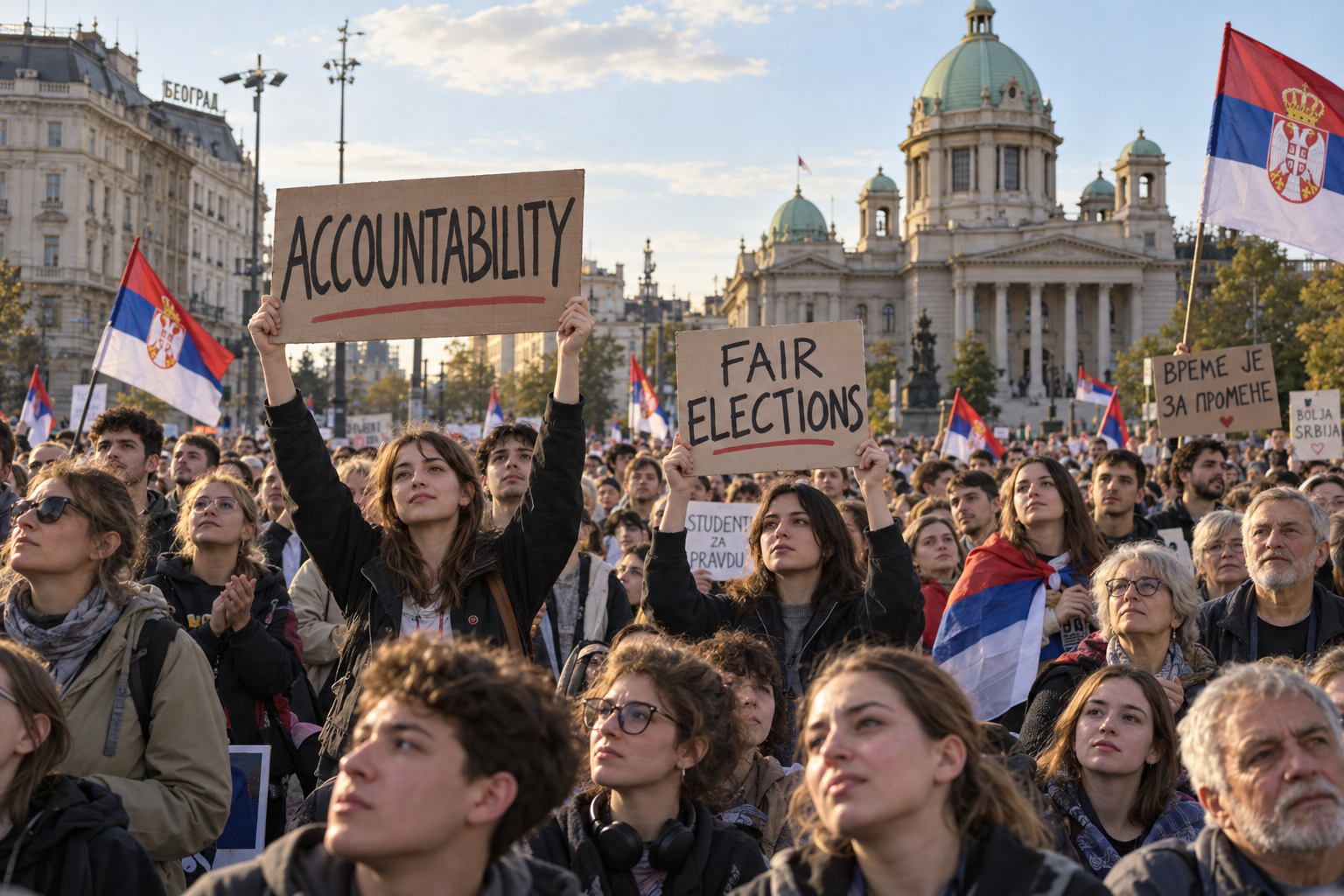
Serbia is approaching a closely contested parliamentary election after two years of student-led protests triggered by the deadly collapse of a concrete canopy at Novi Sad railway station, which killed 16 people in November 2024. The Student List, made up of candidates put forward by the protest movement, held a large final rally in Belgrade, presenting Sunday's vote as a peaceful way to end the current government and demand accountability. Political scientist Dusan Spasojevic described the election as the most competitive since Aleksandar Vucic came to power in 2012, and said polls suggest the Student List could win more than 40% of the vote.
The ruling Serbian Progressive Party (SNS), meanwhile, cast itself as the guarantor of stability and prosperity, warning that a change of government could bring chaos and accusing opponents of serving foreign interests. The campaign has been marred by rising hostility: election monitors recorded 116 incidents involving violence or threats, and reported surveillance and questioning of opposition activists. Investigative reports have also renewed scrutiny of alleged ties between people connected to the SNS and criminal networks, though Spasojevic doubts the reports will sway many voters.
Questions about election fairness are central to the contest. CRTA says the campaign has not been free or fair, citing a strong imbalance in national television coverage and negative reporting about the Student List. BIRN published testimony alleging pressure on public-sector employees to produce votes for the SNS; anonymous sources also told DW that voters had been offered money and holiday packages in return for votes. Authorities have warned of possible election-night violence and arrested several people suspected of plotting disturbances. Spasojevic expects a narrow result could lead to a post-election crisis, particularly if the ruling party wins amid allegations of irregularities. He says the EU's response may help deter escalation and encourage the authorities to accept defeat. The European Commission has noted that recommendations to improve Serbia's electoral framework remain unimplemented.
Entities: Serbia, Belgrade, Novi Sad railway station canopy collapse, Student List, Serbian Progressive Party (SNS) • Tone: analytical • Sentiment: negative • Intent: inform
23-10-2026
More than 100,000 people rallied in central Belgrade on Thursday in support of Serbia’s student-led protest movement, ahead of Sunday’s pivotal election. Independent crowd-monitoring group Archive of Public Gatherings estimated attendance at about 150,000. Protesters chanted “victory” as the movement’s Student List—an alliance of student-backed candidates without a single leader—mounted the strongest electoral challenge in years to President-turned-premier hopeful Aleksandar Vucic and his Serbian Progressive Party (SNS), in power since 2012.
The protests began after a canopy collapsed at the renovated Novi Sad railway station in 2024, killing 16 people. Students initially demanded an independent investigation and later called for early elections, with the movement’s anti-corruption message attracting wider public support. At the rally, Student List candidate and university professor Jugoslav Gasic told the crowd the movement would end years of “humiliation, chaos and betrayal.” One attendee said the students had given her hope of living in a normal country.
Vucic called the snap election as protest pressure grew. He has resigned as president, a move critics say may allow him to seek the premiership. He has portrayed the student movement as a foreign-funded coup and urged supporters to defeat it decisively. His party now faces its biggest electoral challenge since taking power.
The vote is taking place amid concerns about its fairness. A joint statement by 24 civil society organizations said documented findings indicated that conditions for a free and fair election were lacking. Analysts warned that a close result could trigger instability if both sides claim victory. Vucic, who controls the police, said he would suppress unrest after the vote. Although smaller parties are also contesting seats in the 250-member parliament, observers expect the contest between Vucic and the student movement to dominate the campaign.
Entities: Aleksandar Vucic, Marija Nedeljkovic Radic, Jugoslav Gasic, Serbia, Belgrade • Tone: analytical • Sentiment: neutral • Intent: inform
23-10-2026
Around 150,000 people rallied in central Belgrade on Oct 22 in support of Serbia’s student-backed Student List, the day before the country’s Oct 25 parliamentary election. The movement is seeking to end more than 14 years of rule by the Serbian Progressive Party (SNS), led by Aleksandar Vucic, and is described as his most serious electoral challenge since the party took power in 2012. Its candidates, many from academia or outside established politics, campaign on a broad platform centred on fighting corruption.
The movement grew out of student-led protests following the 2024 collapse of a canopy at the newly renovated Novi Sad railway station, which killed 16 people. The tragedy was widely blamed on corruption. What began as demands for a transparent investigation developed into calls for an early election and became one of Serbia’s largest protest movements since Slobodan Milosevic’s fall in 2000. At the Belgrade rally, participants marched to Slavija Square, waved flags, chanted, and heard candidate and university professor Jugoslav Gasic promise an end to years of “humiliation, chaos and betrayal.” The rally concluded with candidates carrying the Serbian constitution into the crowd and joining supporters in a traditional dance.
Vucic, who called the student movement a foreign-funded coup attempt, urged his own supporters to defeat it. Civil society organizations warned that the campaign was marred by intimidation, arrests, attacks, misuse of public resources, and a distorted media environment. Prosecutors had questioned six people arrested on suspicion of plotting election-day violence, while reports of threats against student demonstrators had increased. The rallies had nevertheless remained largely peaceful. With no reliable independent polling and surveys giving widely differing results, the outcome was uncertain; one political scientist expected the Student List to win more than 40 per cent of the vote. Supporters at the rally called for peaceful change and urged one another to vote.
Entities: Aleksandar Vucic, Student List - Students Win, Serbian Progressive Party (SNS), Belgrade, Slavija Square • Tone: analytical • Sentiment: neutral • Intent: inform