23-10-2026
UAE petrol prices may rise for a fourth consecutive month in November as geopolitical tensions continue to keep global oil prices elevated. Brent crude reached $115 a barrel on Friday, surpassing its September peak, while West Texas Intermediate rose to $101.30. Analysts say the risk premium reflects not only current production and export volumes but uncertainty over whether oil can be shipped safely and reliably, particularly through the Strait of Hormuz.
UAE pump prices rose for a third month in October amid uncertainty over a possible US-Iran truce. Current prices are Dh4.40 per litre for Super 98, Dh4.28 for Special 95, Dh4.21 for E-Plus 91 and Dh4.80 for diesel. These rates are more than 70 per cent higher than in March, the first full month of the war in Iran, although the article notes that fuel remains more expensive in Britain and generally more expensive in the US.
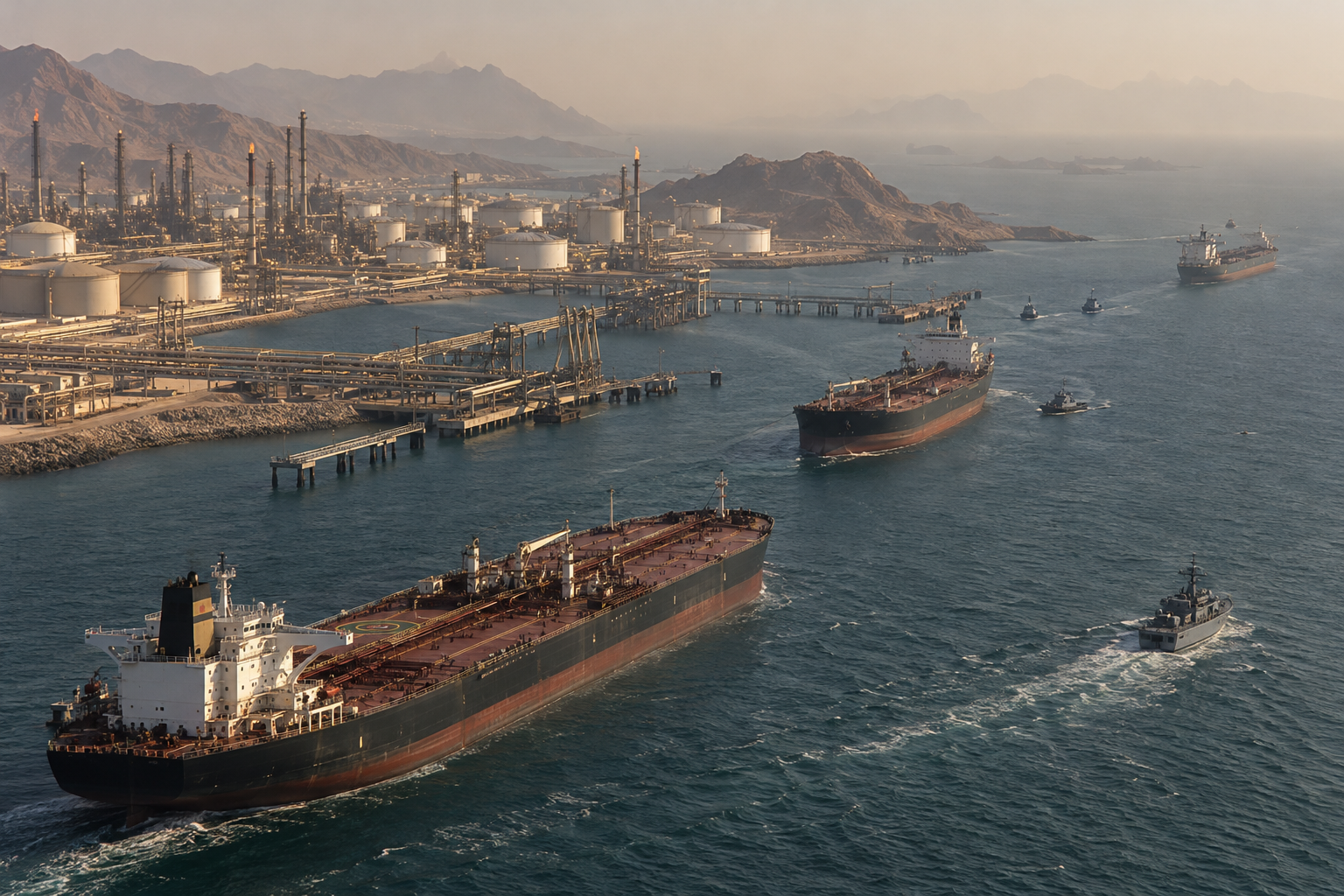
Oil movements through the Strait of Hormuz have recovered to an estimated 80 to 90 per cent of pre-war levels, with US Energy Secretary Chris Wright saying as many as 14 million barrels a day were passing through. But analysts caution that recovering flows do not mean the market has returned to normal. Houthi attacks on Saudi Arabia and persistent shipping risks have pushed crude to five-month highs and sustained concern about future disruptions.
Market observers say a diplomatic breakthrough or more secure shipping could bring prices down, but a lasting decline would require confidence in the safety and reliability of infrastructure and routes. The UAE fuel pricing committee’s end-of-month review will consider international averages, refined-product prices and costs, leaving November’s pump-price decision exposed to the continuing security situation.
Entities: UAE petrol prices, Brent crude, West Texas Intermediate, Strait of Hormuz, Middle East oil supplies • Tone: analytical • Sentiment: neutral • Intent: inform
23-10-2026
The article examines whether the US decision to permit sales of sanctioned “dark fleet” tankers can ease the tanker shortage affecting oil markets during the Iran war. Its central conclusion is that the measure is unlikely to resolve the crisis. Many sanctioned ships are already working in Russian, Iranian or other restricted trades, so allowing them into mainstream markets would more likely shift existing capacity than add a substantial number of available vessels. In addition, some ships remain subject to UK or EU sanctions, which may still prevent them from serving European trades.
The more immediate obstacle is the danger of sailing through the Strait of Hormuz and the wider Arabian Gulf. The International Maritime Organisation had confirmed 120 attacks on ships by October 22, with 22 seafarer fatalities since the conflict began in February. Owners are therefore reluctant to send vessels and crews into the region. A Financial Times report cited in the article says tanker owners are paying captains as much as $100,000 a month, plus $50,000 per voyage, reflecting the risks.
US President Donald Trump’s administration authorised the sale of sanctioned tankers, hoping they could be refurbished and used to transport non-sanctioned oil. Energy Secretary Chris Wright described the plan as moving vessels from the “bad-guy fleet” to the “good-guy fleet.” However, analysts quoted by Bloomberg Intelligence and Vortexa doubt the move will lead to a significant return of these ships to mainstream trade. Their age is another constraint: about 70 per cent of OFAC-listed tankers are at least 20 years old, raising maintenance, inspection, insurance and charterer-acceptance concerns. Overall, sanctions relief may offer limited help, but it cannot by itself overcome security risks, overlapping restrictions and the condition of the vessels.
Entities: Strait of Hormuz, Arabian Gulf, Iran war, US sanctions relief for dark fleet tankers, International Maritime Organisation (IMO) • Tone: analytical • Sentiment: negative • Intent: analyze
23-10-2026
US President Donald Trump invoked part of the Cold War-era Defense Production Act on Oct. 22, designating petroleum production, refining and related activities as essential to national defence. The move gives the administration authority to offer financial incentives for oil-related activities, pipelines and liquid-fuel storage, potentially enabling federal support for fossil-fuel projects. The presidential memo did not identify particular projects, but said the country could not provide energy services quickly enough without action, citing financing constraints, long lead times, permitting and infrastructure bottlenecks, and supply-chain limitations.
The decision comes amid sharply higher crude oil and diesel prices. The article attributes the pressure on global energy shipments to the conflict that began with US and Israeli attacks on Iran at the end of February, as well as Ukrainian attacks on Russian refineries that have worsened fuel shortages. Higher costs could pose a political risk for Republicans ahead of the Nov. 3 elections, as they seek to retain control of both chambers of Congress. A Reuters/Ipsos poll that closed Oct. 19 found that 36 per cent of Americans approved of Trump’s handling of the economy.
The United States produced an average of about 13.6 million barrels of crude oil per day in 2025, making it the world’s largest crude producer. The article also notes that Vice-President J.D. Vance said the previous week that the administration would use the Act to expand capacity at a Texas refinery owned by Delek US Holdings. In 2025, Trump signed legislation that included US$1 billion in Defense Production Act funding for energy projects considered critical to national security.
Entities: Donald Trump, J.D. Vance, United States, Iran, Russia • Tone: analytical • Sentiment: neutral • Intent: inform