21-09-2026
Russia’s ruling United Russia party is leading the country’s first parliamentary elections since the full-scale invasion of Ukraine began in 2022. Early results from the tightly controlled, three-day vote showed United Russia receiving nearly 58 percent of party-list ballots after about 58 percent of precincts had reported. The party was also expected to win most of the 225 single-seat constituencies, preserving its dominant position in the 450-member State Duma. Official turnout was reported at 56.66 percent.
The Kremlin has presented the election as a demonstration of public support for the war and as a means of legitimising its policies. The vote was held amid mounting economic pressure and increasingly frequent Ukrainian drone attacks inside Russia. Russian officials accused Ukraine of attempting to disrupt the election after Kyiv launched hundreds of drones against Moscow and other regions. Authorities said the attacks killed at least three people in the Moscow region and two others in the Russian-controlled part of Ukraine’s Kherson region, including an election official. Russian authorities also reported attacks on electronic voting systems and communications networks, although they said voting proceeded largely without disruption.
The election included residents of Crimea and four Ukrainian regions that Russia claims to have annexed but does not fully control. Ukraine condemned voting in those areas as illegal, while the European Union called it a blatant violation of international law.
The article says the election was conducted without genuine political competition. Smaller pro-Kremlin parties were expected to retain their parliamentary presence, while the liberal Yabloko party was removed from the ballot and anti-war politicians were imprisoned or forced into exile. Russia also did not invite election observers from the Organization for Security and Cooperation in Europe. Together, state media dominance, restrictions on opposition forces, and the exclusion of international observers are expected to ensure that the Kremlin maintains tight control over Russian politics.
Entities: United Russia, Russian parliamentary election, Kremlin, Russia’s Central Election Commission, State Duma • Tone: analytical • Sentiment: negative • Intent: inform
21-09-2026
Russia’s parliamentary election produced few surprises, with preliminary results indicating that United Russia, the party backed by President Vladimir Putin, will retain—and possibly expand—its constitutional majority in the State Duma. The result came despite the effects of more than four years of war in Ukraine, including substantial military losses, economic difficulties and fuel shortages linked to Ukrainian drone attacks on Russian oil infrastructure. Other parties that crossed the 5% threshold had already supported the Kremlin and its description of the war as a “special military operation” in the previous parliament.
The article highlights the exclusion of Yabloko, the only permitted anti-war party, from the party-list ballot. The Supreme Court removed it just 12 days after its registration, which Yabloko chairman Nikolai Rybakov interprets as evidence that the Kremlin feared the party’s pro-peace message was gaining support. Although some Yabloko candidates remained in individual constituency races, none was expected to win. The party also reported that candidates had been jailed or barred from standing and that some election observers were denied registration.
The election took place amid a major Ukrainian drone attack on the Moscow area, including a strike on the capital’s oil refinery. Voters interviewed near the refinery expressed resignation rather than surprise, reflecting how the war has increasingly affected daily life in Russia’s major cities.
The article concludes that the election’s main significance lies not in its result but in how the Kremlin will use it. The government is likely to portray the outcome as a public mandate for Putin and continued military action. Although Putin recently ruled out another mobilisation wave, widespread anxiety remains that one could be ordered later. The election may therefore provide political justification for future decisions about the war.
Entities: Russia, State Duma, United Russia, Vladimir Putin, The Kremlin • Tone: analytical • Sentiment: negative • Intent: analyze
21-09-2026
Russia’s ruling United Russia party was on course for a decisive victory in the country’s parliamentary election, receiving 57.5% of the vote after more than 71% of ballots had been counted. The election was the first for the 450-seat State Duma since Russia launched its full-scale invasion of Ukraine in 2022. The vote was held under tightly controlled wartime conditions, and all registered parties broadly supported President Vladimir Putin and his political positions. The liberal Yabloko party, the only registered party opposing the war, was barred from participating by Russia’s top court.
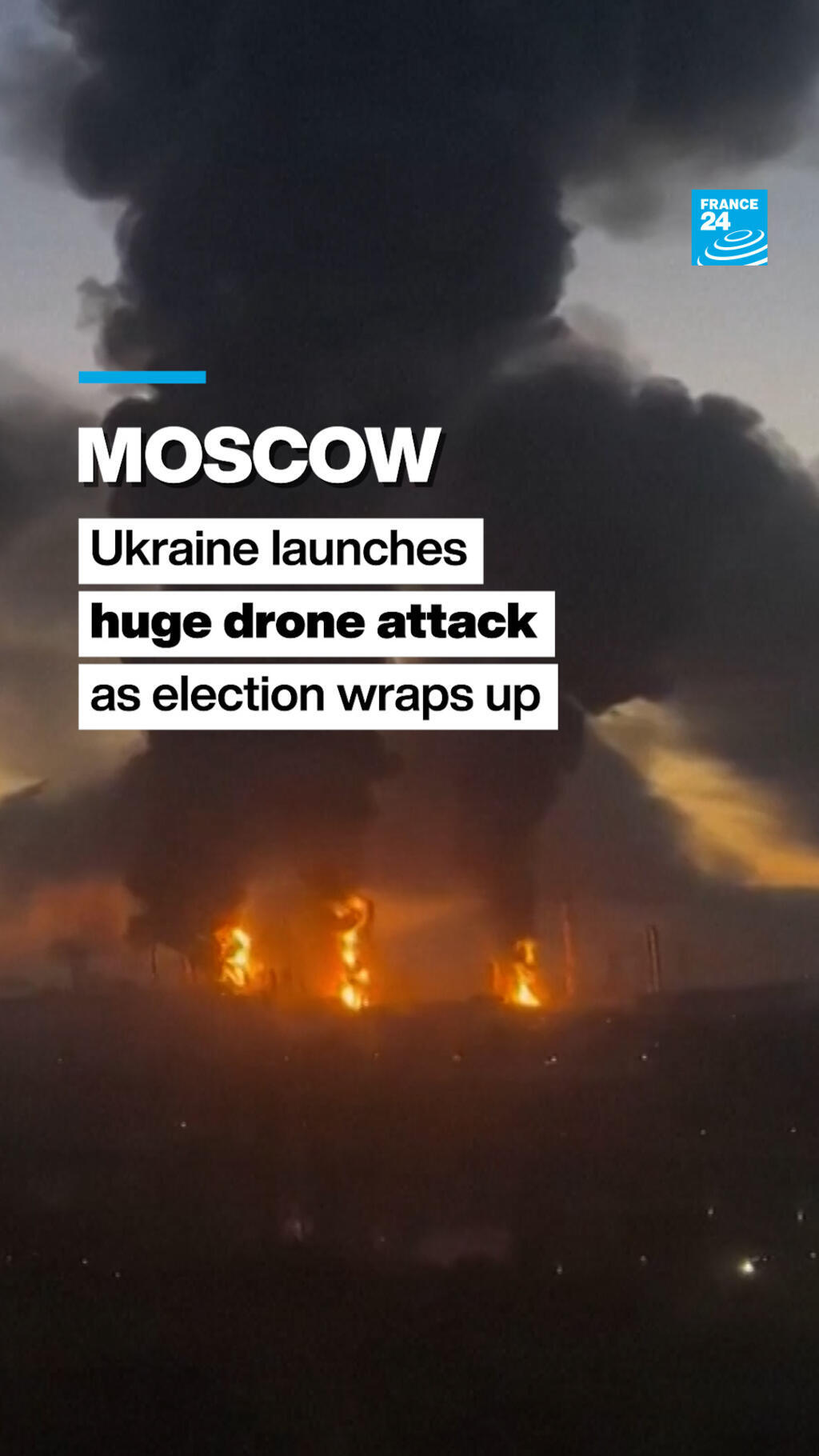
The election’s final day was overshadowed by what Moscow Mayor Sergei Sobyanin described as the largest Ukrainian drone attack on the Russian capital. Ukraine reportedly launched more than 1,000 drones, including hundreds toward Moscow. Three people were killed, while an oil refinery facility and residential buildings were damaged. Russian officials accused Ukraine of attempting to disrupt the election. Ukraine criticized Russia for holding the vote in territories it illegally annexed during the war.
Elina Ribakova of the Peterson Institute for International Economics said the result would help the Kremlin demonstrate political legitimacy and noted that United Russia’s vote share appeared significantly higher than in 2021. She warned, however, that the more serious challenges would come after the election. Returning soldiers could face high inflation and stagnant growth if fighting ends or pauses, creating political pressure for Putin’s government.
Separately, Ukrainian President Volodymyr Zelenskyy said he had agreed to meet U.S. President Donald Trump in New York during the United Nations General Assembly. Zelenskyy cited possible diplomatic momentum and discussions on de-escalation, energy security, food security and civilian protection. He also reported Russian attacks on Zaporizhzhia and Kharkiv, including damage to residential and public buildings, injuries and one death.
Entities: United Russia, Vladimir Putin, Russian parliamentary election, State Duma, Ukraine • Tone: analytical • Sentiment: negative • Intent: inform
21-09-2026
Russia’s ruling United Russia party has retained its parliamentary majority, according to preliminary results announced by the country’s Central Election Commission. With 95% of ballots counted, United Russia had received 57.83% of the vote and was projected to win 355 of the 450 seats in the State Duma—about 20 more seats than it currently holds and its strongest result ever.
The election was the first parliamentary vote since Russia launched its full-scale invasion of Ukraine in 2022. President Vladimir Putin presented the contest as a referendum on public support for the war, officially described by the Kremlin as a “special military operation.” However, parties supporting Putin and the Kremlin’s war policies were the only groups permitted to register, while opposition forces were barred from participating. The vote therefore took place amid widespread criticism that the process was tightly controlled and lacked meaningful political competition.
The election also occurred during a period of growing domestic pressure, including rising prices, fuel shortages, internet restrictions, a crackdown on political opponents and speculation about another mobilization campaign after the vote. Voting was extended to residents of Donetsk, Luhansk, Kherson and Zaporizhzhia, Ukrainian regions occupied and illegally annexed by Moscow. Balloting also took place in Crimea, which Russia annexed in 2014. Kyiv condemned voting in all of those territories as illegal.
The commission additionally announced that Ramzan Kadyrov, a close ally of Putin, had won a fifth term as leader of Chechnya with 99.85% of the vote, slightly higher than his 2021 result. International observers have previously criticized electoral practices in Chechnya. Human rights organizations have accused Kadyrov’s government of widespread abuses, including targeting journalists and homosexuals, allegations he denies. Kadyrov’s forces have also participated in Russia’s invasion of Ukraine.
Entities: Vladimir Putin, United Russia, Russian State Duma, Central Election Commission, Ella Pamfilova • Tone: analytical • Sentiment: negative • Intent: inform
21-09-2026
A France 24 live report says Russian President Vladimir Putin’s ruling United Russia party won a large majority in Russia’s parliamentary elections, according to results published by Russian state media early Monday. The vote was reportedly conducted amid cyberattacks and a major wave of Ukrainian drone strikes, raising concerns about security and possible efforts to disrupt the electoral process.
The report focuses heavily on an overnight drone barrage targeting Russia, particularly Moscow. Russian officials said Ukrainian forces launched more than 1,000 drones at targets across the country. Moscow’s mayor described the assault as the largest ever directed at the Russian capital, while also alleging that more than 1,600 drones had been sent toward Russia with the intention of disrupting the parliamentary elections. The differing figures are presented as claims by Russian officials and are not independently verified in the excerpt.
In response, Moscow vowed to intensify its strikes on Kyiv. The escalation followed a Russian strike in Ukraine’s Kyiv region that Ukrainian authorities said killed at least four people, including three children. The report therefore portrays the election as taking place against the backdrop of a rapidly intensifying war involving long-range drone attacks, retaliatory threats and civilian casualties.
The supplied text is an introductory liveblog update rather than a complete account of the election or military events. It attributes information to Russian officials, Ukrainian authorities, state media, and the news agencies AFP, AP and Reuters. The article’s overall focus is on the reported election result, the scale and political significance of the drone attack, and the risk of further escalation between Moscow and Kyiv.
Entities: Vladimir Putin, United Russia, Russia, Ukraine, Moscow • Tone: urgent • Sentiment: negative • Intent: inform
21-09-2026
This France 24 video report, credited to Reuters, describes a major Ukrainian drone assault on Russia as Russia’s parliamentary elections concluded. According to officials cited in the report, Ukraine launched more than 1,000 drones toward Russian territory, including hundreds aimed at Moscow. They characterized it as the largest attack of the war so far.
The timing of the attack was politically significant. It occurred on the final day of voting in Russia’s tightly controlled parliamentary elections. President Vladimir Putin had presented the elections as a test of public support for Russia’s war in Ukraine, linking the domestic political process to the country’s military campaign. The report therefore places the drone strikes in the context of both the continuing conflict and the Kremlin’s effort to demonstrate political legitimacy and public backing.
The available article text provides few operational details. It does not specify the number of drones intercepted, the extent of damage, casualties, or which Russian officials supplied the figures. It also does not include a Ukrainian response or independent verification of the claims. The report is presented primarily as a short video news update rather than a detailed account of the attack.
Overall, the item highlights the scale and timing of the reported assault, its direct threat to Moscow, and its connection to Russia’s parliamentary vote. The language emphasizes the unprecedented size of the attack and the political importance of the election, conveying the continued intensity of the war and the vulnerability of locations far from the front line.
Entities: Ukraine, Russia, Moscow, Vladimir Putin, Sam Ball • Tone: urgent • Sentiment: negative • Intent: inform
21-09-2026
France 24 reports that Russian President Vladimir Putin’s United Russia party secured a large majority in parliamentary elections, based on preliminary results released by Russian state media. The vote is politically significant because it is the first parliamentary election held since Russia launched its full-scale invasion of Ukraine in 2022.
The election took place in a highly contentious security and political environment. France 24 says the voting period was marked by Ukrainian drone strikes, cyberattacks, and a crackdown on anti-war opposition inside Russia. These circumstances frame the result not simply as an electoral outcome, but as one produced during wartime and amid restrictions on dissent. The report does not provide specific vote shares, turnout figures, seat totals, or assessments from independent election observers.
The article identifies United Russia as Putin’s party and notes that its victory was reported by state-controlled media. This qualification is important because it indicates that the initial results came from sources closely associated with the Russian authorities. The report also features commentary from Oliver Farry, France 24’s international affairs editor, who offers additional analysis of the election and its implications.
Overall, the short report presents the election as a display of the governing party’s continued dominance while highlighting the broader context of war, political repression, cyber activity, and attacks involving Ukraine. It informs viewers about the preliminary result and directs attention to expert interpretation rather than providing a detailed statistical account of the vote.
Entities: Russia, Vladimir Putin, United Russia, Russian parliamentary elections, Ukraine • Tone: analytical • Sentiment: negative • Intent: inform
21-09-2026
The NPR item examines how Russia’s parliamentary election could affect Moscow’s war in Ukraine. In the segment, host Steve Inskeep interviews Hanna Notte, identified as a Russian foreign policy expert, about the election results and their possible implications for Russia’s conduct of the war. The article is presented as a short Morning Edition audio feature, with a listed runtime of approximately four minutes and forty-five seconds.
The supplied text provides the segment’s headline, introduction, publication information, and interview description, but it does not include a transcript or detailed account of the election results. As a result, it does not specify which parties or candidates performed well, whether the outcome altered the balance of power within Russia, or what concrete changes might follow for the war in Ukraine. It also does not state Hanna Notte’s conclusions about Russian domestic politics, military policy, public opinion, or the Kremlin’s decision-making.
The article’s central purpose is therefore to frame an expert discussion rather than to present a fully developed written analysis. It connects Russia’s internal political process with the country’s ongoing war against Ukraine and signals that the election may have consequences for Moscow’s foreign-policy posture. The segment is factual and restrained in presentation, relying on an expert interview rather than overt commentary. Based on the available content, the strongest conclusion is that NPR is inviting listeners to consider whether the parliamentary election reflects or could influence the Russian government’s approach to the conflict. Any assessment of the election’s actual impact would require the audio segment or a full transcript, neither of which is included in the supplied article text.
Entities: NPR, Steve Inskeep, Hanna Notte, Russia, Russian parliamentary election • Tone: analytical • Sentiment: neutral • Intent: inform
21-09-2026
Russia’s pro-Kremlin United Russia party has retained its decisive majority in the national parliament, according to near-complete results from an election conducted in a tightly controlled political environment. Most candidates who opposed Moscow’s war in Ukraine were excluded, allowing President Vladimir Putin to present the result as evidence of continued public support for his policies and the conflict.
The article outlines several ways Putin may use the victory. First, he could portray it as a mandate to continue the war until Russia achieves its stated objectives, despite growing domestic consequences such as Ukrainian drone strikes, attacks on Moscow, fuel shortages caused by strikes on oil refineries, business disruptions and rising public anxiety. Second, the election could help him promote the creation of a “new elite” composed of military veterans. With around 200 veterans expected to enter parliament, Putin may present political advancement as a reward for battlefield service and use their success to encourage further recruitment.
The vote also gives Putin an opportunity to contrast Russia’s electoral system with Ukraine’s. He may argue that Russia has maintained its election timetable during wartime, while Ukraine has postponed elections under martial law. In addition, a nationwide parliamentary election held across Russia’s 11 time zones could support the Kremlin’s effort to project normality and reassure citizens that life continues despite the war.
However, critics fear the result could also be used to justify a new military mobilisation or intensified repression. Although Putin has dismissed claims of an imminent mobilisation as malicious misinformation, Western intelligence agencies report heavy Russian losses and an urgent push for territorial gains. Critics also worry about expanded censorship, including possible restrictions on foreign internet data that could affect VPN users accessing banned websites and applications.
Entities: Vladimir Putin, United Russia, Russia’s national parliament, Moscow, Ukraine • Tone: analytical • Sentiment: negative • Intent: analyze
21-09-2026
Russia’s ruling United Russia party has taken a commanding early lead in the State Duma election, receiving 57.5% of the vote in initial results, according to the country’s Central Election Commission. The three-day parliamentary election concluded on Sunday, with final results and the distribution of all 450 seats expected by September 25. United Russia, which supports President Vladimir Putin, previously won 324 seats in the 2021 election.
The vote is the first parliamentary election since Russia launched its full-scale invasion of Ukraine in February 2022. Putin presented the election as an opportunity for Russians to demonstrate unity and support for the country’s military campaign, linking voter participation to backing for Russian troops and the government’s domestic and military policies. Putin was not a candidate and is not due to face another presidential election until 2030.
The election took place in a highly restricted political environment. CNN reported that meaningful opposition to the Kremlin was largely absent, while Yabloko, described as Russia’s only registered anti-war party, was barred from participating in the federal party-list contest after a Supreme Court decision. National voter turnout was reported at 56.66%, with high participation also reported in Moscow. Because the result was widely anticipated, turnout and the final allocation of seats are key issues being monitored.
The election was also overshadowed by renewed military activity. Ukraine reportedly launched more than 1,000 drones toward Moscow and the surrounding region on Sunday. Russian officials said that at least two people were killed and an oil refinery was damaged. Moscow Mayor Sergei Sobyanin said the attacks aimed to disrupt the vote, although Ukraine had not independently confirmed that claim. The Kremlin is expected to use United Russia’s result as evidence of domestic support for Putin and his policies, including the war. Russian citizens abroad also voted, including at five polling stations in India.
Entities: United Russia, Vladimir Putin, State Duma, Russia’s Central Election Commission, Russian parliamentary election • Tone: analytical • Sentiment: neutral • Intent: inform
21-09-2026
The article’s provided excerpt describes a major political and military contrast in Russia. Parliamentary elections held on Sunday are presented as producing a predictable, “scripted victory” for Vladimir Putin. These were the first parliamentary elections in Russia since its 2022 invasion of Ukraine, making the vote politically significant and linking it directly to the country’s ongoing war effort. The wording suggests that the electoral process reinforced Putin’s political control rather than representing a genuinely competitive contest.
At the same time, Ukraine carried out a large-scale attack against the Moscow region using drones and missiles. The strikes reportedly hit a key oil refinery, highlighting Ukraine’s ability to reach strategically important infrastructure near the Russian capital. The attack also demonstrates that Russia continues to face serious security challenges despite the apparent domestic political success represented by the parliamentary election.
The central argument of the excerpt is that electoral dominance does not translate into victory on the battlefield. Although Putin secured the expected parliamentary result, Ukraine’s ability to attack the Moscow area and damage energy infrastructure indicates that Russia has not achieved its broader war aims. The article therefore frames the election and the refinery strike as two opposing developments: one showing Putin’s control over Russia’s political system, and the other exposing the limits of that control in the context of the war.
Because only a short excerpt is provided, the article does not include detailed election results, casualty figures, the refinery’s condition, or official responses from either government. Its primary emphasis is the contrast between a controlled political victory and continuing military vulnerability.
Entities: Vladimir Putin, Mary Ilyushina, Natalia Abbakumova, Russia, Ukraine • Tone: analytical • Sentiment: negative • Intent: analyze