21-09-2026
The article outlines three developments likely to influence markets during the coming week: Costco’s quarterly earnings, Meta’s annual developer conference, and a planned meeting between U.S. President Donald Trump and Chinese President Xi Jinping.
Costco is scheduled to report after Thursday’s close. Investors will focus on earnings, membership growth and retention, and the possibility of a special dividend. The company’s bulk-selling model and value proposition could benefit from persistent inflation as consumers seek lower prices. Analysts expect earnings of $6.53 per share on revenue of $94.8 billion and believe a special dividend could be announced within the next several quarters.
Meta Connect begins Wednesday, with CEO Mark Zuckerberg delivering the keynote. Artificial intelligence is expected to dominate the event, including updates on Meta’s Muse Spark models, its Muse agentic AI application, and the integration of AI into the company’s consumer products and developer tools. The article also highlights potential updates on Ray-Ban smart glasses and a new mixed-reality headset.
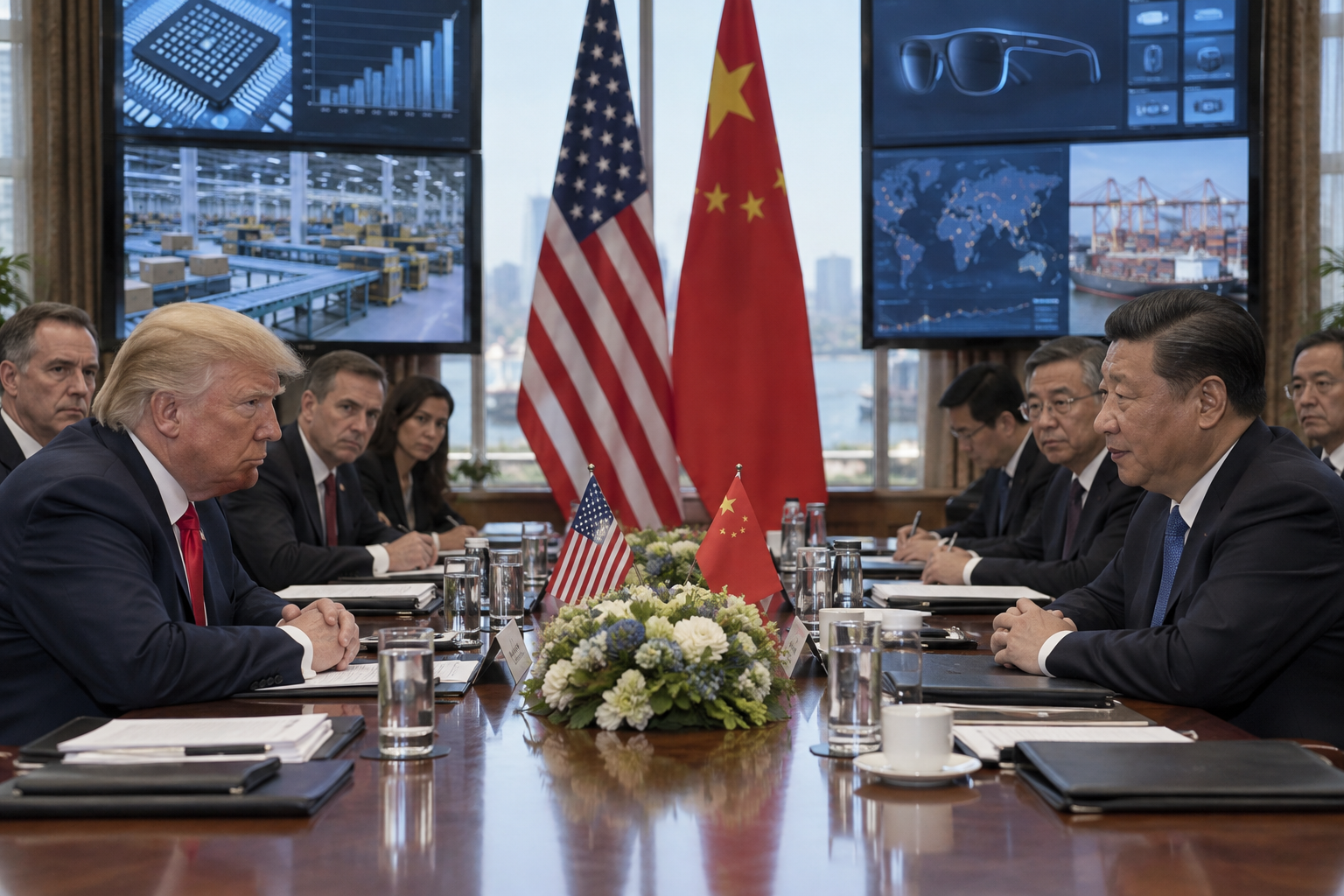
The Trump-Xi summit in Washington is expected to address tariffs, trade, artificial intelligence, crude oil supplies and Taiwan. Investors will particularly watch for an extension of the tariff truce, which is scheduled to expire on Nov. 10, as well as possible Chinese aircraft purchases from Boeing. AI regulation and competition between U.S. and Chinese companies may also feature prominently. The leaders could discuss the war in Iran and its effect on oil shipments through the Strait of Hormuz, along with Taiwan’s importance to the global semiconductor supply chain.
The week’s economic calendar includes initial jobless claims and new home sales on Thursday, while companies such as AutoZone, Cintas, Darden Restaurants and Costco are scheduled to report results.
Entities: Costco Wholesale, Meta Platforms, Meta Connect, Donald Trump, Xi Jinping • Tone: analytical • Sentiment: neutral • Intent: analyze
21-09-2026
The article examines the growing economic costs of US-China trade and technology restrictions as Chinese President Xi Jinping is expected to meet US President Donald Trump in Washington. Although the two countries have occasionally granted reprieves, the broader rivalry continues to intensify, affecting technology companies and industrial manufacturers in both economies.
Drawing on earnings reports from 18 listed companies, the article describes several consequences of the restrictions, including lost sales, lower profits, cancelled orders, squeezed margins, supply-chain disruptions, inventory write-downs and stronger competition. Some firms have benefited from increased government support intended to offset the damage, but the overall impact is presented as a growing burden for businesses on both sides.
The available section focuses first on direct financial hits. Companies have reported measurable losses linked to export controls, tariffs and other reciprocal restrictions. Nvidia, a major US chipmaker, recorded a US$400 million charge during the first half of its 2027 financial year, which ended in July. The charge was related to excess inventory and purchase obligations involving its H200 graphics chip, illustrating how restrictions can affect even leading firms through both lost market access and stranded products.
The article frames the upcoming Xi-Trump summit as a moment when the commercial consequences of the rivalry are likely to receive renewed attention. Rather than treating trade and technology controls as purely diplomatic or strategic measures, it emphasizes their effects on corporate earnings, production networks and competitive conditions. The supplied excerpt ends during the discussion of direct financial impacts and does not include the article’s later sections or additional company examples.
Entities: Xi Jinping, Donald Trump, Washington, United States-China trade restrictions, US-China technology restrictions • Tone: analytical • Sentiment: negative • Intent: analyze
21-09-2026
Zhejiang, one of China’s most export-oriented provinces, is encouraging local companies to take advantage of a temporary period of stability in China-US economic relations ahead of President Xi Jinping’s planned trip to Washington and a meeting with Donald Trump. Provincial officials have reportedly asked major manufacturers to increase production and speed up deliveries of goods destined for the United States.
The initiative reflects Zhejiang’s continued reliance on the American market, even as China and the US have pursued supply-chain diversification and partial economic decoupling. Zhejiang’s export sector has been a major contributor to the province’s economic growth, helping it achieve the second-largest annual export value among China’s provincial-level localities. The United States remains its largest overseas market.
Officials concluded that bilateral economic and trade relations would remain relatively “settled,” creating what they view as a favourable environment for expanding exports. The province is therefore urging traders and manufacturers to “grasp the window” created by the rare period of detente and use it to increase shipments before conditions change.
The article presents the move as both a practical commercial response and evidence of the continuing importance of US demand to key Chinese regional economies. While Chinese localities have attempted to reduce exposure to the US through market diversification and decoupling, Zhejiang’s appeal for increased US-bound production demonstrates that trade links remain significant. The province’s actions also suggest that officials see the upcoming Xi-Trump meeting as offering short-term predictability and an opportunity for businesses to strengthen exports.
Entities: Xi Jinping, Donald Trump, Zhejiang province, Washington, South China Morning Post • Tone: analytical • Sentiment: neutral • Intent: inform