18-08-2026
The article reports that Hakainde Hichilema has won a second term as president of Zambia, securing 60 percent of the vote. The result follows a disruption in the vote-counting process, which was briefly halted after attacks on election officials. Although the article does not provide details about the attacks, their inclusion highlights security concerns surrounding the election and the potential challenges facing Zambia’s electoral institutions.
The report also places the election in the context of Zambia’s strategic economic importance. Zambia is identified as Africa’s second-largest producer of copper, a resource that is increasingly important because copper is essential to renewable energy infrastructure and the broader global energy transition. Demand for the metal has made Zambia an important focus of competition between China and the United States.
The article therefore connects Hichilema’s re-election to both domestic political developments and wider geopolitical and economic interests. His victory gives him another term to govern a country with significant mineral wealth and an important role in global supply chains. At the same time, the temporary suspension of vote counting because of violence or intimidation against election officials introduces an element of concern about the conduct and stability of the electoral process.
The brief Al Jazeera report is primarily factual and provides no extensive analysis of the election campaign, the opposition, voter turnout, or the policies Hichilema is expected to pursue. Its focus is instead on the election result, the interruption to counting, and Zambia’s importance as a copper-producing nation amid international competition for critical minerals.
Entities: Hakainde Hichilema, Zambia, Al Jazeera, African Union, Zambian presidential election • Tone: neutral • Sentiment: neutral • Intent: inform
18-08-2026
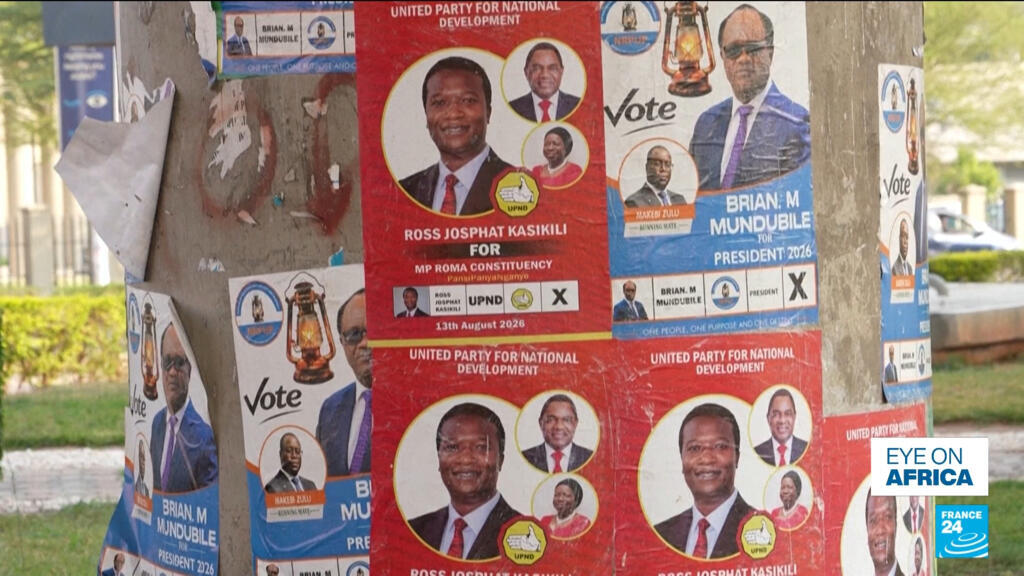
Zambian President Hakainde Hichilema has been declared the winner of the country’s August 13, 2026 presidential election, securing a second five-year term. Electoral authorities said Hichilema won approximately 61.4 percent of valid votes, compared with about 38 percent for his main challenger, Brian Mundubile of the National Reconciliation Party for Unity and Prosperity. The result marks Hichilema’s seventh presidential bid, while Mundubile was running for the presidency for the first time.
The announcement prompted celebrations in Lusaka, where hundreds of supporters of Hichilema’s United Party for National Development gathered wearing red, singing, dancing and setting off firecrackers. In a statement, the 64-year-old president thanked voters for their confidence and said he would continue working for those who supported the opposition. Mundubile had not immediately responded to the result.
The election took place amid rising tensions and allegations of fraud and misconduct. On election night, authorities arrested 11 people, including prominent opposition figures, during a raid involving an exchange of gunfire. The government said the operation targeted militia activity and that those arrested possessed military-grade weapons intended for an armed insurrection. Mundubile’s party disputed the account, saying the raid occurred at its leader’s home and wounded a lawmaker.
Vote counting was also temporarily suspended after reports of violence against polling staff and stolen ballot papers. Mundubile alleged that result forms might have been altered and called for an independent investigation, while Hichilema’s camp accused him of lying. European Union observers described the election as largely peaceful but said restrictions, legal uncertainty, late legal changes and unequal campaign conditions limited fundamental freedoms and distorted the electoral playing field.
Around five million people voted. Zambia, with a population of 22 million and an economy heavily associated with copper production, has maintained a record of peaceful electoral transfers of power since the restoration of multiparty politics in 1991.
Entities: Hakainde Hichilema, Brian Mundubile, Mwangala Zaloumis, Zambia, Lusaka • Tone: neutral • Sentiment: neutral • Intent: inform
18-08-2026
Zambia’s President Hakainde Hichilema has won re-election to a second five-year term, receiving approximately 60 per cent of valid votes, according to results announced by the Electoral Commission of Zambia. His main challenger, Brian Mundubile, received about 38 per cent. Hichilema’s victory was widely anticipated because of his incumbency and his campaign’s focus on the economic record of his administration, which took office during a pandemic-era debt crisis in 2021. However, Mundubile performed more strongly than expected, drawing on public frustration over continuing economic hardships despite Zambia’s broader economic turnaround.
The election took place on Aug. 13 after a relatively calm campaign period, but tensions increased sharply during and after voting. International observers, including the European Union, described the election as largely peaceful while criticizing the wider electoral process for limiting fundamental freedoms. The EU cited late legal changes, legal uncertainty and unequal campaign conditions as factors that distorted the contest.
Authorities arrested 11 people on election night, including prominent opposition figures, during a raid involving an exchange of gunfire while Mundubile was present. Vote counting was suspended the following day after reports of violence against polling staff and stolen ballot papers. Mundubile also alleged that results forms from polling stations might have been altered and called for an independent investigation, while Hichilema’s camp denied the accusation.
The Zambia Conference of Catholic Bishops criticized the deployment of the army during vote counting, arguing that election-related order should be maintained by the police. The opposition is not expected to accept the results and may pursue a legal challenge, although analysts consider it unlikely to succeed. Localized political violence remains possible, but widespread unrest is not expected. Zambia’s copper resources have also made the country a focus of competition between China and the United States over critical minerals.
Entities: Zambia, Hakainde Hichilema, Brian Mundubile, Electoral Commission of Zambia, Mwangala Zaloumis • Tone: analytical • Sentiment: neutral • Intent: inform
18-08-2026
Zambian President Hakainde Hichilema has won a second five-year term after securing 61.4% of approximately five million votes in the presidential election held the previous Thursday, according to the Electoral Commission of Zambia. His main challenger, Brian Mundubile of the NRPUP party, received 38% of the vote. Commission chairperson Mwangala Zaloumis formally declared Hichilema president-elect on August 18, 2026, while noting that results from five of the country’s 226 constituencies remained outstanding but were unlikely to change the outcome.
Hichilema’s victory was widely anticipated and represents the continuation of his presidency, which began in 2021. The election was largely peaceful, but the process was marked by allegations from the opposition of intimidation, arrests, violence, and irregularities. Authorities arrested 11 people, including prominent opposition figures, during an election-night raid described by the government as an operation against alleged “militia activity.” Mundubile’s party rejected the accusation, reported that shots were fired at his home, and described the raid as an attack on his life.
Vote counting was also temporarily suspended after reports of attacks on polling officials and ballot theft. Although counting resumed under increased security, international observers, including the European Union, warned that the nearly six-hour interruption threatened the credibility of the process and public confidence.
Economic performance was central to the campaign. Hichilema pointed to Zambia’s debt restructuring and falling inflation after taking office during a pandemic-era debt crisis and economic downturn. Mundubile argued that improved macroeconomic indicators had not translated into better living standards for ordinary Zambians. In his victory message, Hichilema thanked voters and pledged to continue working for those who supported the opposition.
Entities: Hakainde Hichilema, Brian Mundubile, Zambia, Electoral Commission of Zambia, Mwangala Zaloumis • Tone: analytical • Sentiment: neutral • Intent: inform
18-08-2026
Zambia’s President Hakainde Hichilema has won re-election with approximately 60% of the vote, according to the Electoral Commission of Zambia. The result, announced on Tuesday after the 13 August presidential election, was widely anticipated. Hichilema, who has been in office since 2021, faced 13 challengers, with former provincial minister Brian Mundubile emerging as his main rival and receiving nearly 38% of the vote. Five of the country’s 226 constituencies had not yet been tallied, but electoral commission chairperson Mwangala Zaloumis said the remaining results were unlikely to change the overall outcome.
The election was viewed as a referendum on Hichilema’s first term, during which Zambia’s economy returned to growth following years of fiscal distress. However, the vote was also marked by controversy. Opposition parties and civil society organizations accused the government of restricting campaigning and shrinking political space ahead of the election. Domestic and international observer missions said these conditions created an uneven playing field.
Vote counting was suspended nationwide after attacks on election staff and the theft of marked ballot papers, while opposition groups alleged electoral fraud. Tensions increased after the election when authorities arrested nearly a dozen people, including senior opposition figures, during a raid involving an exchange of gunfire. The government claimed those arrested were connected to militia or insurgent activity linked to the election, but Mundubile’s NRPUP party denied the allegations.
The result gives Hichilema another term in the copper-rich southern African country, while the disputed campaign conditions, violence, arrests and allegations of electoral misconduct are likely to remain central to assessments of Zambia’s democratic trajectory.
Entities: Hakainde Hichilema, Zambia, Electoral Commission of Zambia, Mwangala Zaloumis, Brian Mundubile • Tone: neutral • Sentiment: neutral • Intent: inform
18-08-2026
Zambian President Hakainde Hichilema won a second term on August 18, 2026, receiving roughly 60% of the vote and defeating his main challenger, Brian Mundubile. His campaign emphasized the economic recovery achieved since he took office in 2021, particularly Zambia’s major debt restructuring, improved relations with international lenders, and efforts to attract investment to the copper sector.
Hichilema has promised to build on that record during his second term by doubling the size of the economy, creating jobs, and expanding opportunities for households. His government also introduced free secondary education, which brought an estimated 2.3 million children back into classrooms, increased social cash transfers, and funded community projects. Supporters credit him with stabilizing an economy that had defaulted on its debt in 2020 and was experiencing one of its worst crises since independence.
However, the president faces pressure over persistent poverty, hunger, high living costs, and food prices. Critics argue that economic improvements have not sufficiently benefited ordinary Zambians. His administration has also been accused of becoming increasingly intolerant of political dissent. Opposition parties, civil society organizations, rights groups, church leaders, and a UN special rapporteur have raised concerns about restrictions on opposition activity, the use of law enforcement against critics, and the alleged weaponization of the criminal justice system. A cyber law passed in 2025 has also been criticized as vague and potentially allowing authorities to intercept electronic communications.
The article also profiles Hichilema’s long political journey, from repeated electoral defeats and a treason arrest under former President Edgar Lungu to his eventual victory in 2021. It portrays him as a self-made businessman whose managerial approach has shaped his presidency, while noting concerns that decision-making has become concentrated around the presidency.
Entities: Hakainde Hichilema, Zambia, Brian Mundubile, Edgar Lungu, Michael Sata • Tone: analytical • Sentiment: neutral • Intent: inform
18-08-2026
Zambian President Hakainde Hichilema has won a second term after receiving roughly 60% of the vote, defeating his main challenger, Brian Mundubile. Having spent his first term restructuring Zambia’s debt and restoring relations with international lenders, Hichilema now says his government will focus on converting economic recovery into broader expansion. His goals include doubling the size of the economy, creating jobs and widening opportunities for households.
Since taking office in 2021, Hichilema has overseen major debt-restructuring agreements, attracted investment to Zambia’s copper sector and improved relations with global lenders after the country defaulted on its debt in 2020. His government has also expanded social spending, introducing free secondary education, increasing cash transfers and funding community projects. Supporters credit these policies with reviving the economy and addressing social needs, while many citizens continue to struggle with high living costs and food prices.
The article also profiles Hichilema’s long political journey. A former corporate executive and businessman, he lost five presidential elections before defeating Edgar Lungu in 2021. His imprisonment on treason charges in 2017, though the charges were later dropped, helped shape his image as a politician persecuted by the former government.
However, Hichilema’s managerial governing style has generated concerns about the concentration of power around the presidency and limited tolerance for dissent. Opposition groups, civil society organizations, churches and rights advocates have accused his government of restricting political campaigning and using law enforcement to silence critics. Catholic bishops and a United Nations special rapporteur have raised concerns about the criminal justice system, while rights groups have criticized a cyber law that permits the interception of electronic communications. Hichilema rejects claims that his government is undermining democratic freedoms, arguing that prosecuting lawbreakers does not amount to restricting human rights.
Entities: Zambia, Hakainde Hichilema, Brian Mundubile, Edgar Lungu, Michael Sata • Tone: analytical • Sentiment: neutral • Intent: analyze