18-08-2026
The article examines growing uncertainty among US allies in Asia after President Donald Trump publicly adopted a friendly tone toward North Korean leader Kim Jong Un and ordered the Pentagon to substantially reduce joint military exercises with South Korea. Trump shared a meme and an AI-generated image of Kim on Truth Social, said Kim had always treated him with respect, and suggested the two leaders understood each other. His remarks have fueled speculation that he is seeking another summit with Pyongyang.
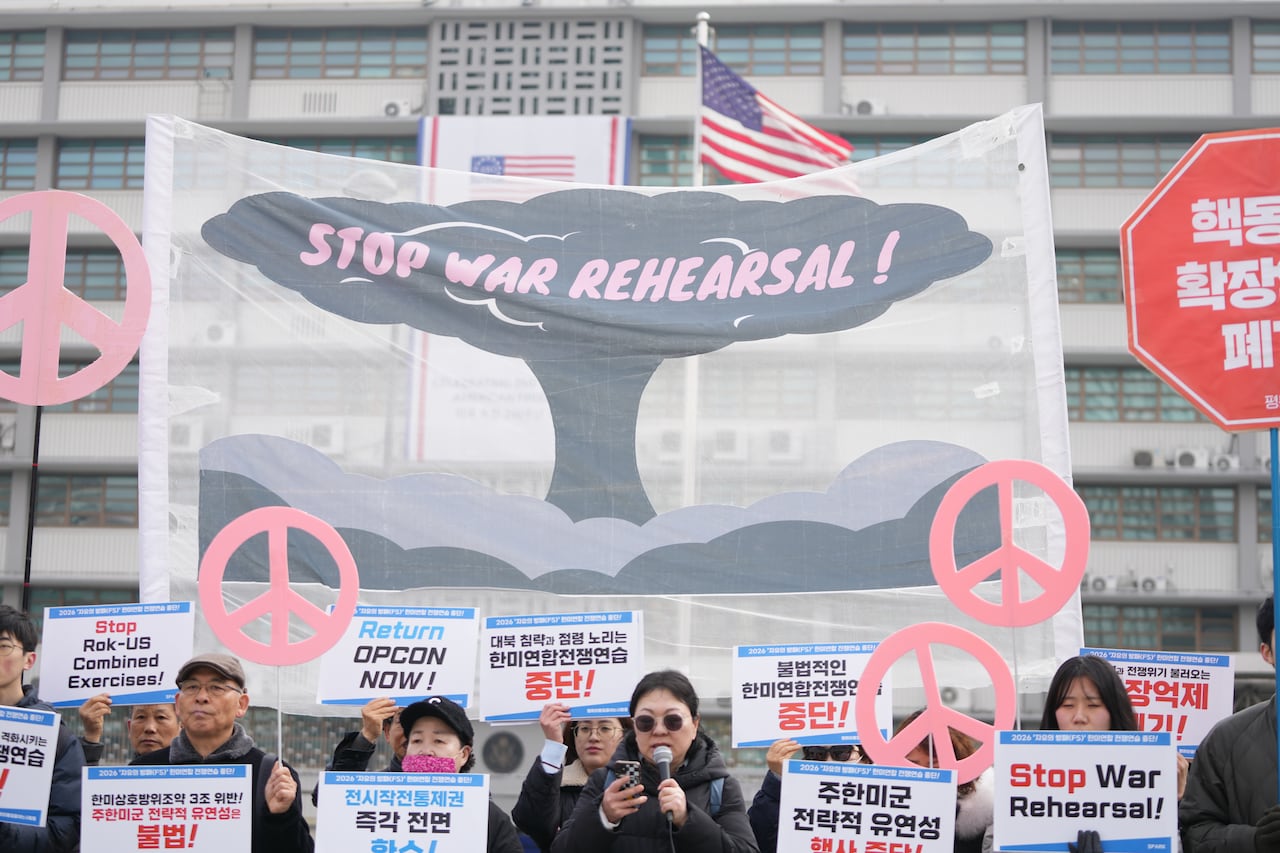
The military exercises, involving 18,000 South Korean troops over 11 days, are intended to prepare for a North Korean attack and deter aggression. North Korea has historically condemned them as invasion rehearsals and recently fired two ballistic missiles toward Japan. While Trump linked the reduction to South Korea’s refusal to assist with US military operations in Iran, analysts widely view the decision as a diplomatic gesture toward Kim.
South Korean officials cautiously welcomed the possibility of dialogue, while retired Lieutenant General In-bum Chun warned that reducing exercises could weaken Seoul’s negotiating position and be interpreted by North Korea, China, Russia and Iran as a sign of US weakness. Analysts also doubt that Pyongyang would agree to denuclearisation, given its continued nuclear development and expanding military cooperation with Russia. James Acton suggested that narrower goals, such as risk reduction or limiting further nuclear development, might be more realistic.
The decision has also raised broader concerns about US reliability. Allies including South Korea, Japan and Australia may question whether Washington’s defence commitments are predictable or dependent on Trump’s personal relationships and transactional demands. The withdrawal of the USS George Washington from the Asia-Pacific has added to perceptions of a US retreat. However, analysts stress that existing treaties, military relationships and shared strategic interests remain substantial, meaning the Asian alliance system is damaged but not collapsing.
Entities: Donald Trump, Kim Jong Un, North Korea, South Korea, US–South Korea military exercises • Tone: analytical • Sentiment: negative • Intent: analyze
18-08-2026
The article reports that US President Donald Trump says North Korean leader Kim Jong Un has responded “very positively” to a request for talks. Trump’s comments suggest a possible diplomatic opening between Washington and Pyongyang, although the article does not provide details about when or where talks might occur, what issues would be discussed, or the precise nature of Kim’s response.
The report also states that Trump scaled back military exercises with South Korea at the last minute on Sunday. The article presents this decision alongside Trump’s argument that direct communication with Kim makes South Korea and the wider region safer. It does not specify which exercises were reduced, why the change was made, or whether the South Korean government formally supported the decision.
The brief report focuses on Trump’s characterization of engagement with North Korea as a security measure rather than providing an independent assessment of its potential consequences. It includes no detailed reaction from Kim Jong Un, North Korean authorities, South Korean officials, or US military representatives. As a result, the article establishes that Trump is signaling support for renewed dialogue and a less confrontational approach to military exercises, but it does not confirm that formal negotiations have begun or that any agreement has been reached. Published on August 18, 2026, the report frames the development as a potentially significant diplomatic move on the Korean Peninsula while leaving most substantive details unresolved.
Entities: Donald Trump, Kim Jong Un, United States, North Korea, South Korea • Tone: neutral • Sentiment: neutral • Intent: inform
18-08-2026
US President Donald Trump has announced that the United States will “substantially reduce” joint military exercises with South Korea, linking the decision to the cost of the drills, their perceived hostility toward North Korea, and Seoul’s refusal to support the US in what Trump called the “denuclearisation” of Iran. Trump also cited his relationship with North Korean leader Kim Jong Un and said the exercises sent an “inappropriate and hostile” signal to Pyongyang.
The announcement came as the annual 11-day Ulchi Freedom Shield exercises were due to begin. South Korea initially said the drills would proceed as scheduled, but later said it was reviewing Trump’s comments. Seoul indicated that improved US-North Korea relations could potentially create opportunities for meaningful talks. North Korea has condemned the exercises as preparations for an aggressive war, but had not responded directly to Trump’s announcement.
Military experts warned that reducing the exercises could weaken alliance coordination, slow South Korea’s assumption of greater responsibility for its own defence, and undermine deterrence against regional conflict. They argued that any financial savings would be limited and that the diplomatic benefits with North Korea were uncertain. The planned exercises were expected to involve about 18,000 South Korean troops, while approximately 28,500 US personnel remain stationed in South Korea.
The decision follows recent North Korean ballistic missile tests and the country’s deployment of troops to support Russia’s war in Ukraine. Trump has previously suspended or reduced exercises during negotiations with Kim in 2018 and during the Covid-19 pandemic. His latest move also reflects longstanding complaints that the US bears disproportionate costs for South Korea’s defence. Seoul has sought to ease tensions by committing $350bn to investment in the US and proposing talks with North Korea on formally ending the Korean War, which technically remains unresolved.
Entities: Donald Trump, Kim Jong Un, South Korea, North Korea, United States • Tone: analytical • Sentiment: negative • Intent: inform
18-08-2026
The BBC examines President Donald Trump’s latest change in policy toward South Korea and North Korea. Trump has said the United States will “substantially reduce” its joint military exercises with South Korea, presenting the decision as consistent with his “very good relationship” with North Korean leader Kim Jong Un. The announcement signals a further shift in the way Trump describes US security and diplomatic relationships on the Korean Peninsula.
According to the article, Trump’s decision follows his frustration with South Korea, or Seoul, after it declined to join the United States in the “denuclearisation” of Iran. The article does not provide further details about the Iranian issue, but presents it as an important factor behind Trump’s current position toward South Korea.
BBC correspondent Tom Bateman explains how Trump’s relationships with North and South Korea have evolved. The report focuses on the contrast between Trump’s positive description of his relationship with Kim Jong Un and his criticism of South Korea’s position. Reducing joint military exercises could affect the longstanding military cooperation between Washington and Seoul, while potentially being viewed by North Korea as a conciliatory gesture.
The article is primarily an explanatory video report rather than a detailed account of policy implementation or regional reaction. It highlights Trump’s stated reasoning and places the announcement within the broader context of his changing approach to both Korean governments. The report also identifies North Korea-US relations, Kim Jong Un, South Korea, North Korea, Donald Trump and Lee Jae-myung as relevant topics or figures associated with the story.
Entities: Donald Trump, Kim Jong Un, Tom Bateman, Lee Jae-myung, United States • Tone: analytical • Sentiment: neutral • Intent: analyze
18-08-2026
U.S. President Donald Trump ordered the Pentagon to substantially scale back planned joint military exercises with South Korea, arguing that the drills are too costly and send an “inappropriate and hostile” signal to North Korea. He also cited South Korea’s reported refusal to assist U.S. efforts to denuclearize Iran and pointed to his positive relationship with North Korean leader Kim Jong-un.
Trump said the exercises were too far along to cancel completely, so he instructed Secretary of War Pete Hegseth to reduce them. The decision recalls Trump’s first-term criticism of U.S.-South Korean exercises as provocative. However, South Korea’s Defence Ministry confirmed that the exercises began as scheduled. The presidential Blue House said Seoul was reviewing Trump’s statement and emphasized that the two countries would continue coordinating their defence posture and military training. It also said South Korea was considering possible military contributions related to Iran while taking into account Korean Peninsula readiness and domestic legal requirements.
The 11-day Ulchi Freedom Shield exercises involve approximately 18,000 South Korean troops and are intended to improve readiness against North Korean threats. Planned activities include complex joint operations, live-fire precision-targeting exercises, a wet-gap crossing and the distribution of pre-positioned equipment. U.S. officials describe the drills as central to regional peace and security and as evidence of the alliance’s commitment to defending both countries.
Trump’s announcement drew criticism from Democratic Sen. Mark Kelly, who called reducing the exercises shortsighted. The decision also came shortly after North Korea resumed ballistic missile testing and threatened strong action against the United States and South Korea, describing the drills as preparation for an aggressive war. Analysts say North Korea often uses the exercises as justification for weapons tests and efforts to strengthen domestic support for Kim.
Trump has met Kim three times and has expressed interest in reviving nuclear negotiations since returning to office. His latest announcement reflects his preference for engagement with North Korea, even as it creates friction with a longstanding U.S. ally.
Entities: Donald Trump, South Korea, North Korea, Kim Jong-un, U.S. Department of Defense/Pentagon • Tone: analytical • Sentiment: negative • Intent: inform
18-08-2026
President Donald Trump announced that he had ordered the Pentagon to substantially reduce joint military exercises with South Korea. He argued that the drills are expensive and send an inappropriate and hostile signal to North Korea, which he said has remained unthreatening and respectful during his presidency. Trump said it was too late to cancel the upcoming exercises but directed Defense Secretary Pete Hegseth to scale them back.
Trump also said he had recently asked South Korea’s president whether the country wanted to join the U.S. effort to denuclearize Iran, but that Seoul declined. Although Trump described the Iranian issue as somewhat unrelated to his decision on the military exercises, the announcement linked the two matters in his public explanation. South Korea’s presidential office said it was monitoring the statement and hoped for meaningful dialogue with Washington.
The 11-day exercises involve approximately 18,000 South Korean troops and are intended to improve readiness against North Korean threats. Planned activities include live-fire precision-targeting drills, complex maneuver scenarios, wet gap crossings, and the distribution of prepositioned military equipment. The U.S. military has characterized the exercises as essential to regional peace and security and as evidence of the two countries’ commitment to defend their homelands.
North Korea had threatened unspecified stern measures against the United States and South Korea, calling the drills preparations for aggressive war. Experts noted that Pyongyang frequently uses the exercises as justification for weapons testing and efforts to strengthen domestic support for Kim Jong Un.
Trump previously sought to halt the exercises during his first term, calling them provocative after his 2018 meeting with Kim. He has met Kim three times and, since returning to office, has expressed interest in restarting discussions about North Korea’s nuclear program.
Entities: Donald Trump, Kim Jong Un, Pete Hegseth, United States Department of Defense/Pentagon, South Korea • Tone: analytical • Sentiment: neutral • Intent: inform
18-08-2026
South Korean President Lee Jae-myung said maintaining peace is his country’s top priority, but warned that South Korea must also prepare for a “worst-case scenario.” His comments followed U.S. President Donald Trump’s instruction to Defense Secretary Pete Hegseth to substantially reduce joint military exercises with Seoul, arguing that the drills could send an inappropriate and hostile signal to North Korea.
The annual Ulchi Freedom Shield exercises began Monday and are scheduled to continue through Aug. 27, involving approximately 18,000 South Korean military personnel. Lee characterized the exercises as defensive and said they are not intended to attack North Korea or increase tensions on the Korean Peninsula. Pyongyang has long condemned the drills as preparations for an invasion, and its foreign affairs ministry argued that the exercises demonstrate U.S. preparations for military confrontation.
Trump has cited his positive relationship with North Korean leader Kim Jong Un, describing North Korea as unthreatening and respectful. He also criticized South Korea for not assisting the United States in its conflict with Iran, pointing to the roughly 39,000 U.S. troops stationed there to deter North Korea. The U.S. Forces Korea command is composed of about 28,500 personnel.
South Korean presidential officials said Seoul is discussing possible practical and military contributions with Washington while considering military readiness on the peninsula and domestic legal requirements. Victor Cha of the Center for Strategic and International Studies said Trump may be using the exercises to encourage Kim to meet with him and to shift public attention away from Iran. Cha noted that Trump used a similar approach in 2018, when exercises were suspended during negotiations with Pyongyang.
Entities: Lee Jae-myung, Donald Trump, Kim Jong Un, Pete Hegseth, South Korea • Tone: analytical • Sentiment: neutral • Intent: inform
18-08-2026
The article examines the regional and international consequences of President Donald Trump’s decision to scale back joint military exercises with South Korea. Although Trump justified the move by citing South Korea’s refusal to join the US war against Iran and his personal relationship with North Korean leader Kim Jong-un, former US officials and foreign-policy experts argue that the decision reflects a transactional approach that could weaken American alliances and security interests.
Dan Fried, a former assistant secretary of state under President George W. Bush, said the decision had no apparent US benefit. He warned that it could undermine South Korea and Japan, frighten Taiwan, unsettle Nato, and embolden both China and North Korea. Danny Russel, who served as assistant secretary of state for East Asian and Pacific affairs under President Barack Obama, described the policy as an exceptionally damaging reversal.
Russel argued that Trump was effectively punishing a treaty ally while rewarding an adversary. North Korea has long opposed the annual US-South Korean military exercises, which are intended to strengthen deterrence and improve the allies’ readiness. By reducing the drills to avoid antagonising Kim Jong-un, Trump is, in Russel’s view, prioritising the North Korean leader’s sensitivities over the security partnership with South Korea.
The experts cited in the article suggest that the decision could have effects beyond the Korean Peninsula. It may raise doubts about Washington’s reliability among Japan, Taiwan, Nato members and other partners, while giving China and North Korea greater confidence. Overall, the article presents the move as a potentially destabilising example of personal and transactional foreign policy, with critics warning that it could weaken deterrence and damage US credibility among its allies.
Entities: Donald Trump, South Korea, United States, North Korea, Kim Jong-un • Tone: analytical • Sentiment: negative • Intent: analyze
18-08-2026
The article reports that US President Donald Trump has again praised North Korean leader Kim Jong Un, highlighting what Trump describes as their strong personal relationship. Speaking to reporters, Trump said Kim has “always treated me with great respect” and claimed that the two leaders understand and get along with each other. He referred to meetings and discussions held during his first presidential term.
Trump contrasted his relationship with Kim with the North Korean leader’s alleged attitudes toward former US presidents Joe Biden and Barack Obama, saying Kim disliked them but maintained a good relationship with him. Trump presented this relationship as a factor in his efforts to make the situation safer.
In a post on Truth Social, Trump criticized a longstanding US agreement to participate in joint military exercises with South Korea. He described the drills as costly and argued that they send an inappropriate and hostile message to North Korea. Trump claimed that North Korea had remained unthreatening and respectful during his presidency.
Although he acknowledged that it was too late to cancel the exercises entirely, Trump instructed Hegseth to substantially reduce their scale. The article does not provide a response from South Korea, North Korea, the US military, or other officials regarding the proposed changes.
The report also notes that Trump recently shared an older photograph of himself with Kim, writing that although they appeared unfriendly in that particular image, the two leaders get along “GREAT.” The article is based on Trump’s public comments and social-media statements, with additional reporting attributed to ANI.
Entities: Donald Trump, Kim Jong Un, United States, North Korea, South Korea • Tone: analytical • Sentiment: neutral • Intent: inform