18-08-2026
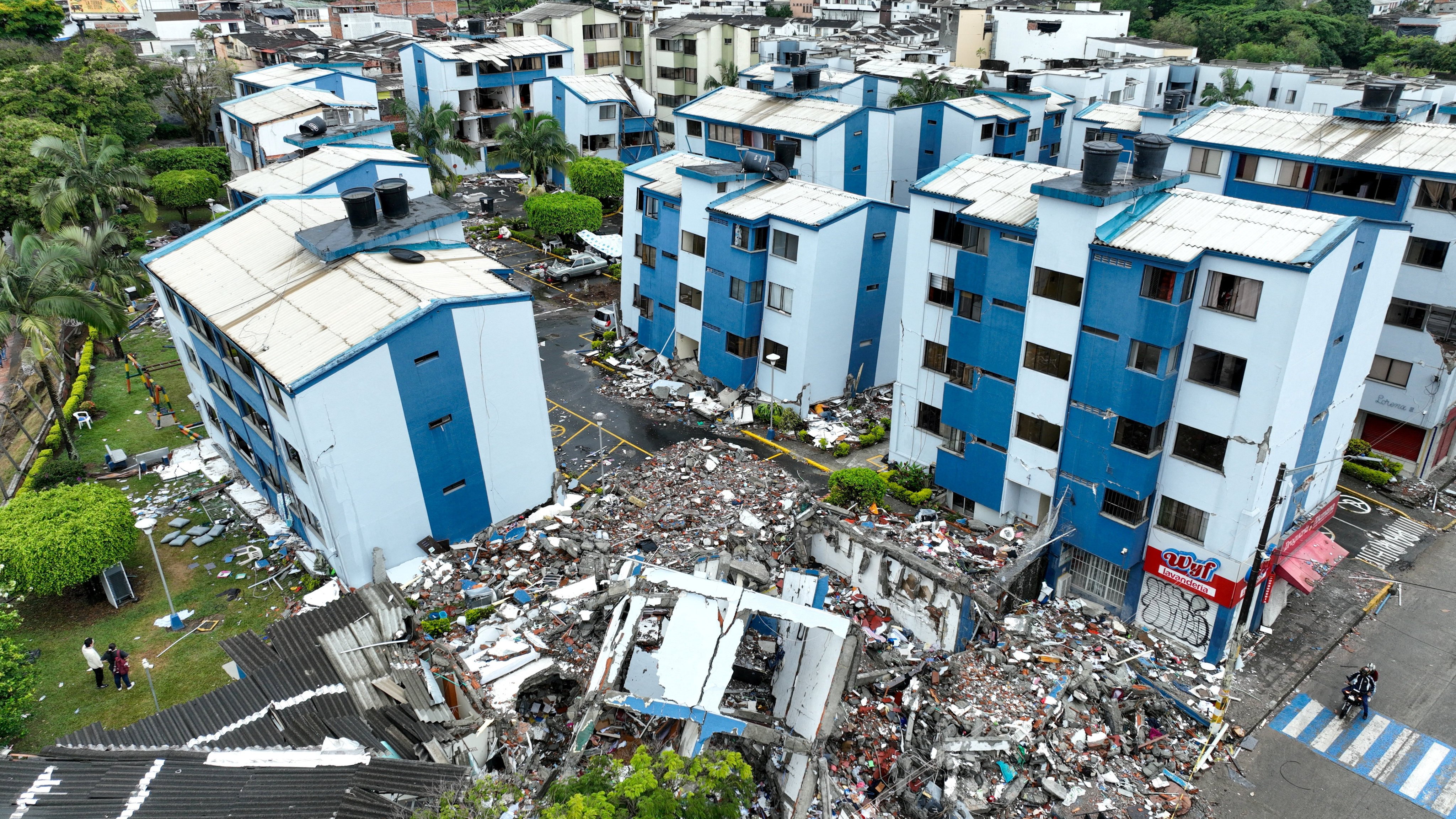
One week after a magnitude 7.4 earthquake struck western Colombia, the country is transitioning from an intensive search-and-rescue operation to a longer-term recovery effort. The earthquake, which was centered near San José del Palmar in the Pacific region, affected 15 of Colombia’s 32 provinces and devastated communities including Cali, Pereira, Quibdó and Buenaventura. At least 289 people have died, 4,187 have been injured and more than 127,000 homes have been damaged, with nearly 27,000 destroyed. Hundreds of health centres, schools, roads, water systems, bridges and airports have also been affected.
Rescue teams have saved 354 people, but the likelihood of finding additional survivors has declined sharply. Government figures list 143 people as missing, while an unofficial database reports more than 3,000. Some operations, including the search at Cali’s Vanessa Building, have been suspended and shifted toward body recovery, demolition and reconstruction. International teams from Israel, the United States and Mexico have assisted Colombian rescuers, although some volunteers continue to hope that survivors may still be found.
The immediate priority is now shelter and basic assistance for more than 120,000 affected families. Authorities have converted stadiums and community centres into temporary shelters, while citizens and organizations distribute food, water, clothing and hygiene supplies. However, the need is particularly acute in poorer and more isolated areas. In Chocó, already affected by armed conflict, drug trafficking, illegal mining and displacement, residents say the national government has been slow to provide shelter. Limited transport links also make it difficult to assess the full extent of the damage.
The earthquake has caused major economic losses. Businesses such as a bicycle shop in Buenaventura have been destroyed, while many owners lack insurance. International aid includes pledges from the European Union and the United States, and the government estimates reconstruction will cost at least $6.4bn. President Abelardo de la Espriella has declared an economic emergency and chosen borrowing over new taxes, making the disaster a major early test of his administration.
Entities: Magnitude 7.4 Colombia earthquake, Colombia, San José del Palmar, Cali, Pereira • Tone: analytical • Sentiment: negative • Intent: inform
18-08-2026
Rescue efforts after a 7.4-magnitude earthquake in western Colombia are entering a more desperate phase as crews report that hopes of finding survivors are fading. The earthquake struck shortly after 7:30 a.m. on Monday, damaging or destroying apartment buildings, homes, schools and hospitals across the country’s coffee-growing region. By Thursday evening, government figures showed at least 281 people dead, more than 3,900 injured and 379 still missing.
In Cali, Colombia’s third-largest city, responders at many locations moved from searching for survivors to removing debris, reflecting the passage of the critical first 72 hours. Families continued waiting for news, while volunteers and professional crews worked through unstable rubble. At one residential complex, volunteers formed bucket brigades and were warned to wear protective equipment. Restaurant workers in Cali prepared roughly 1,000 meals daily for rescuers, medical workers and volunteers.
The response has been uneven outside major cities. In Buenaventura, some neighborhoods were reportedly inaccessible because of armed groups, and local residents said they had been forced to search through rubble with their bare hands. Basic services, including water, gas and electricity, remained unavailable in some areas. Food donations were also reportedly seized by armed groups.
The earthquake has produced more than 150 aftershocks, increasing risks for rescue workers and people left homeless. The government estimates that more than 10,500 homes were destroyed. In Pereira, Enrique Marin described the death of his mother after she was rescued alive from the ruins of her home but died while being taken to hospital. Authorities were also investigating human remains exposed by the earthquake in Roldanillo Cemetery.
President Abelardo De La Espriella, who took office only days before the disaster, said he would declare an economic emergency and establish a reconstruction fund for hospitals, schools, homes and infrastructure. The disaster is becoming the first major test of his new conservative government, amid criticism that assistance has been slow or inadequate in several communities.
Entities: Colombia, Cali, Pereira, Buenaventura, Roldanillo Cemetery • Tone: urgent • Sentiment: negative • Intent: inform
18-08-2026
Colombian President Abelardo de la Espriella has asked U.S. President Donald Trump to temporarily suspend tariffs on Colombian products as the country struggles to recover from a devastating 7.4-magnitude earthquake. The disaster killed at least 289 people and struck only days after de la Espriella took office. The Colombian president, who was supported by Trump during Colombia’s closely contested presidential election, said he spoke with Trump on Saturday and thanked him for U.S. assistance before requesting tariff relief for Colombian businesses affected by the earthquake. The Trump administration had not immediately responded to the request. The United States has committed US$26.5 million in aid, including food, shelter and health supplies.
The earthquake severely damaged western Colombia, including Pereira, Cali and Quibdo, with communities along the Pacific coast among the hardest hit. Its epicenter was in Choco, one of the country’s poorest regions. The government reported that 143 people were missing, 3,937 were injured, 14,705 homes were destroyed and another 81,536 were damaged. However, civilian databases reportedly placed the number of missing people in the thousands.
In Cali, rescue workers continued searching for more than 70 missing people. Although the critical 48-to-72-hour period for finding survivors had passed, officials maintained hope that people could still be rescued. Cali Mayor Alejandro Eder said crews were concentrating on locations where victims were believed to remain and expressed hope of finding survivors alive. The article presents the tariff request as part of Colombia’s broader recovery effort while emphasizing the scale of the humanitarian emergency and the ongoing rescue operation.
Entities: Colombia, Abelardo de la Espriella, Donald Trump, U.S. State Department, Cali • Tone: urgent • Sentiment: negative • Intent: inform
18-08-2026
The article reports growing political anger in Colombia after Housing Minister Jaime Andres Beltran was seen vacationing with his family in the Caribbean city of Santa Marta while the country was dealing with the aftermath of a devastating earthquake. The 7.4-magnitude earthquake struck western Colombia on August 10, only three days after right-wing President Abelardo de la Espriella took office. It killed nearly 300 people and was described as Colombia’s most powerful earthquake in almost 50 years.
The disaster also caused extensive housing damage: nearly 27,000 homes were destroyed, leaving many survivors without shelter and sleeping outdoors on mattresses or makeshift beds. Against this backdrop, photographs and videos showing Beltran relaxing on a beach became public over the weekend, prompting criticism from the political opposition.
The left-wing opposition said it would introduce a motion of no confidence against Beltran, arguing that taking leave during such a critical period was inappropriate for a minister whose department has a central role in responding to the housing crisis. The report does not include a response from Beltran or the government to the criticism. The controversy highlights the political sensitivity of the government’s handling of the earthquake response, particularly because the housing minister’s responsibilities are directly connected to the needs of the thousands of people displaced by the disaster. The article focuses on the timing of the minister’s holiday and the contrast between his public images of leisure and the severe conditions facing earthquake survivors.
Entities: Colombia, Jaime Andres Beltran, Abelardo de la Espriella, Colombian Housing Ministry, Agence France-Presse • Tone: negative • Sentiment: negative • Intent: inform
18-08-2026
Colombian Housing Minister Jaime Andres Beltran is facing calls for his removal after photos and videos showed him relaxing on a beach in Santa Marta during the aftermath of a devastating earthquake. The 7.4-magnitude quake struck western Colombia on Aug 10, killed nearly 300 people and destroyed almost 27,000 homes, leaving many survivors sleeping outdoors or in makeshift shelters. The disaster occurred only three days after right-wing President Abelardo de la Espriella took office and was the strongest earthquake to hit Colombia in nearly 50 years.
Beltran denied that he had been on holiday, saying he spent a few hours with his wife and children after not seeing them for several days before immediately returning to reconstruction work. The left-wing opposition nevertheless said it would pursue a motion of no confidence against him.
The article also describes growing humanitarian needs in Cali, Pereira and other affected areas, where open-air refugee camps have emerged as hopes of finding survivors fade. Colombian pop star Shakira visited Chocó, the quake’s epicentre, with philanthropist Howard Buffett. After seeing damaged schools, she pledged to rebuild 10 of them and announced an initial contribution of US$1 million. She said Chocó had suffered from long-standing neglect.
The earthquake has also created political difficulties for President de la Espriella. Although he announced rent subsidies for displaced families and sought help from US President Donald Trump on tariffs, he was criticised for distributing footballs bearing his campaign slogan near the epicentre. Opponents said the gesture politicised the disaster and trivialised victims’ needs, while supporters said it offered survivors a small moment of joy.
Entities: Jaime Andres Beltran, Abelardo de la Espriella, Shakira, Howard Buffett, Donald Trump • Tone: analytical • Sentiment: negative • Intent: inform
18-08-2026
Colombia’s President Abelardo De La Espriella estimates that the 7.4-magnitude earthquake that struck the country last week has caused preliminary economic losses of 30 trillion pesos, equivalent to about S$12.23 billion. The estimated damage comprises approximately 24.5 trillion pesos in buildings and 5.5 trillion pesos in infrastructure. De La Espriella stressed that the figure is provisional and will likely be revised as authorities conduct more detailed assessments across the affected regions.
The earthquake caused widespread destruction in western Colombia, including the major cities of Cali and Pereira. It killed 280 people, injured more than 4,000 and left 143 others missing. Collapsed buildings and damage to infrastructure have created a major emergency requiring search, rescue, relief and reconstruction operations.
The disaster is the first major crisis faced by De La Espriella, who took office only days before the earthquake. He must now coordinate the government’s response while overseeing efforts to assess the damage and rebuild affected communities.
The article compares Colombia’s losses with the damage caused by earthquakes in neighbouring Venezuela on June 24. An initial assessment by the United Nations Office for Disaster Risk Reduction estimated that the Venezuelan earthquakes caused US$37 billion in damage to housing and infrastructure. Colombia’s president cautioned that the country’s own loss estimate could change as more information becomes available.
Entities: Colombia, Abelardo De La Espriella, Bogotá, Cali, Pereira • Tone: analytical • Sentiment: negative • Intent: inform