18-08-2026
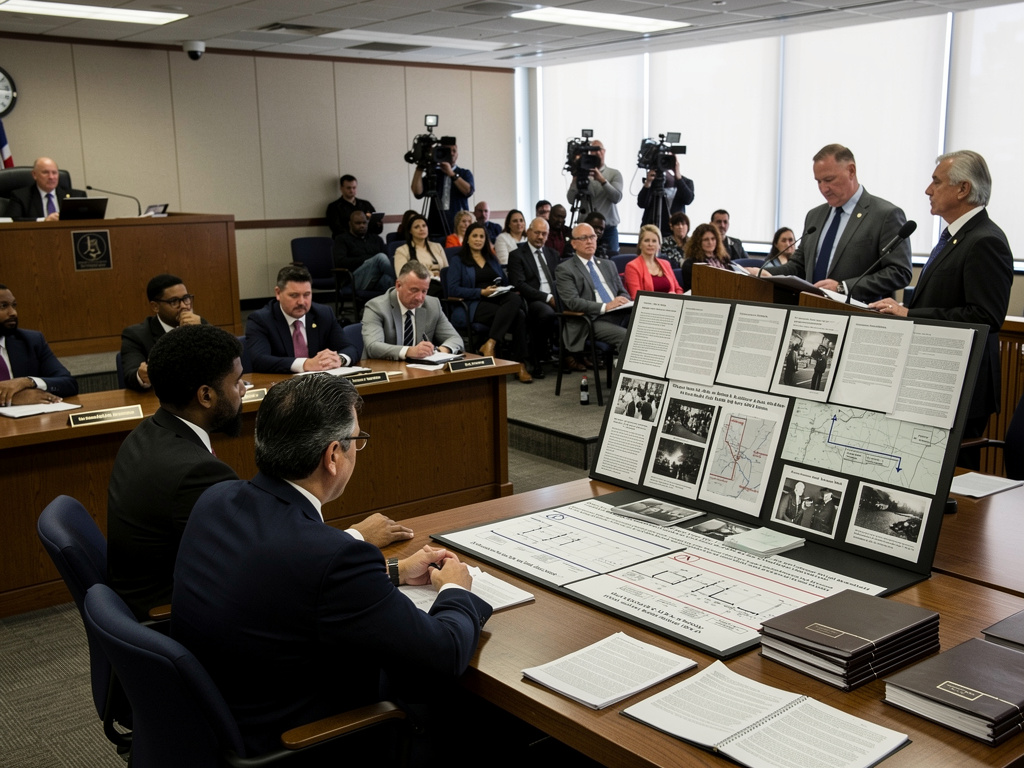
The murder trial of Duane “Keefe D” Davis, accused of coordinating the 1996 killing of rapper Tupac Shakur, has begun in Las Vegas, Nevada. Prosecutor Binu Palal told jurors that Davis masterminded the drive-by shooting as an act of revenge after Shakur and members of his entourage allegedly beat Davis’s nephew at the MGM Grand Hotel and Casino. Prosecutors say Davis was the on-the-ground commander who obtained and supplied the murder weapon, although they do not allege that he fired the shots.
Shakur was riding in a BMW driven by Death Row Records co-founder Marion “Suge” Knight when a white Cadillac carrying Davis and other men followed their vehicle. Shakur was shot four times and died in hospital six days later. Knight suffered a minor injury. The confrontation was connected to tensions between the South Side Compton Crips, associated with Davis, and the Mob Piru group linked by police to Knight and Death Row Records. The groups were in Las Vegas to attend a heavyweight boxing match between Mike Tyson and Bruce Seldon.
Davis, now 63, has pleaded not guilty to murder with a deadly weapon and an allegation that the crime was intended to promote, further or assist a criminal gang. Prosecutors say public statements Davis made in recent years helped revive the investigation and provided evidence that he had implicated himself. His defense attorney, Michael Sandt, argues that authorities still lack sufficient evidence after three decades and urges jurors to question whether the prosecution’s account is “truth or fiction.”
The trial, before Judge Carli Kierny, is expected to last up to six weeks. Knight may testify while serving a 28-year sentence for an unrelated voluntary manslaughter conviction. Shakur’s death became a defining event in rap history, reinforcing the violent image associated with 1990s gangsta rap and intensifying the rivalry between East Coast and West Coast hip-hop artists.
Entities: Tupac Shakur (2Pac), Duane Davis (“Keefe D”), Binu Palal, Michael Sandt, Marion “Suge” Knight • Tone: analytical • Sentiment: negative • Intent: inform
18-08-2026
The opening day of the trial over Tupac Shakur’s 1996 murder focused on prosecutors’ claim that former South Side Compton Crips leader Duane “Keffe D” Davis orchestrated the shooting as revenge for an earlier fight involving his nephew, Orlando Anderson. Prosecutors acknowledged that Davis did not fire the fatal shot, but argued that he organized the group, acquired a gun and directed the confrontation that ended with Shakur being shot from a vehicle in Las Vegas.
Chief Deputy District Attorney Binu Palal told jurors that Davis’s own 2019 memoir and public statements would support the prosecution’s case. Davis has said he was a passenger in the vehicle and that he handed the gun to Anderson, whom prosecutors identify as the shooter. However, Davis’s lawyers argue that the memoir is fictionalized, that Davis did not write all of it and that it should not be treated as reliable evidence.
The defence described the case as the result of a flawed, decades-long investigation, highlighting missing police reports, disputed evidence and witnesses with criminal records, financial motives or inconsistent accounts. Lawyers also questioned why no one was arrested for almost 30 years and argued that witnesses may have been influenced by investigators, money or media attention.
The jury heard from former Las Vegas police officer Garry Dale, who recalled riding in an ambulance with Shakur after the shooting. Dale testified that Shakur refused to identify the perpetrators, saying, “We’ll take care of it.” Prosecutors attributed the lack of cooperation to the culture of gangs and violence, where “silence means survival.”
Witness Ingrid Stokes also described seeing a vehicle follow Shakur and Marion “Suge” Knight before gunshots erupted at a traffic light. She testified that “all hell broke loose.” Shakur, who was 25, died six days after being shot following a Mike Tyson boxing match on 7 September 1996. Further testimony from witnesses, investigators, experts and possibly celebrity witnesses is expected in the coming weeks.
Entities: Tupac Shakur, Duane “Keffe D” Davis, Orlando Anderson, Marion “Suge” Knight, Binu Palal • Tone: analytical • Sentiment: neutral • Intent: inform
18-08-2026
Opening statements have begun in the Las Vegas murder trial of Duane “Keffe D” Davis, nearly 30 years after rapper Tupac Shakur was fatally shot in a drive-by attack. Davis, 63, is accused of planning the September 1996 shooting in retaliation for an earlier confrontation involving his nephew, Orlando “Baby Lane” Anderson. Prosecutors allege Davis arranged the attack and handed a gun to men in the back seat of a white Cadillac, although they acknowledge that he did not fire the weapon himself. Davis has pleaded not guilty and could face life in prison if convicted of murder with a deadly weapon and an allegation that the crime was connected to the promotion or assistance of a criminal gang.
Chief Deputy District Attorney Binu Palal told jurors that Davis’s own interviews, a 2019 memoir, and other public statements will demonstrate his role. Prosecutors played footage of Shakur’s entourage attacking Anderson outside the MGM Grand shortly before the shooting and audio in which Davis described the gun being passed to the occupants of the Cadillac. They also cited interviews with federal investigators in 1998 and 1999 and Las Vegas police in 2009.
The defence called the prosecution’s case “fiction,” arguing that investigators lacked reliable evidence, lost or failed to preserve documents, and relied on biased, incomplete police work. Attorney Michael Sanft said Davis was not charged for decades because authorities knew he was unreliable.
The trial began with testimony from retired officer Garry Dale, who had stopped the vehicle carrying Shakur and Marion “Suge” Knight shortly before the shooting, and former homicide detective Brent Becker. Becker described Knight’s guarded police interview and said investigators struggled to persuade witnesses to cooperate. Authorities had suspected Davis, Anderson, Deandrae “Freaky” Smith and Terry “Bubble Up” Brown, but no living witness could identify the men in the Cadillac. The trial is expected to last about a month. Shakur’s family attended as prosecutors presented evidence, while the other three suspected occupants of the Cadillac have since died.
Entities: Tupac Shakur, Duane “Keffe D” Davis, Binu Palal, Michael Sanft, Orlando “Baby Lane” Anderson • Tone: analytical • Sentiment: negative • Intent: inform