18-05-2026
Taiwan has reaffirmed that it is already a sovereign and independent country after U.S. President Donald Trump warned it against formally declaring independence from China. The comments came following Trump’s summit in Beijing with Chinese President Xi Jinping, where Trump said he had made no commitment either way on Taiwan and would soon decide whether to approve an $11 billion weapons package for the island. Taiwan’s presidential office responded that its status was “self-evident,” while also emphasizing that Taipei remains committed to the status quo, meaning it neither declares independence nor unites with China.
The article explains the longstanding U.S. balancing act on Taiwan: Washington does not formally recognize Taiwan as a separate state, but under law it must provide Taiwan with means of self-defense while also maintaining relations with Beijing. Trump reiterated that U.S. policy had not changed and said he did not want conflict with China, adding that he wanted both sides to “cool down.” He also said Xi strongly opposes any Taiwanese move toward independence. Beijing continues to view Taiwan as part of its territory and has increased military drills around the island in recent years, heightening regional tensions.
Taiwan’s government thanked Trump for continued support for security in the Taiwan Strait and said it would deepen cooperation with the U.S. to preserve peace and stability through strength. The piece highlights the fragile, high-stakes diplomatic balance among Washington, Beijing, and Taipei, especially as arms sales, military posturing, and political symbolism continue to shape cross-strait relations.
Entities: Taiwan, Donald Trump, Xi Jinping, Lai Ching-te, Karen Kuo • Tone: analytical • Sentiment: neutral • Intent: inform
18-05-2026
Taiwanese President Lai Ching-te responded to comments made after a high-profile meeting between Donald Trump and Xi Jinping by reiterating that Taiwan will not provoke conflict or surrender its sovereignty. The article centers on renewed tension over Taiwan’s status after Xi reportedly told Trump that Taiwan was the most important issue in US-China relations and that mishandling it could trigger conflict. Trump then publicly cautioned Taiwan against pursuing independence, while also saying US policy had not changed and that he sought no conflict with Beijing.
Lai used his first direct response to the summit to reaffirm Taiwan’s longstanding position: that it is already a sovereign and independent democratic country, and that there is no need to formally declare independence. He stressed that Taiwan’s future should be determined by the Taiwanese people and that Taipei remains committed to preserving the cross-strait status quo. At the same time, he said Taiwan is willing to pursue dialogue with China on equal terms, but rejects coercion disguised as talks about “unification.”
The article also explains the strategic backdrop: the US is legally bound under the Taiwan Relations Act to help Taiwan defend itself, and Washington remains Taiwan’s most important arms supplier and ally. The piece notes that the Trump administration had approved a large arms package for Taiwan, which angered Beijing amid its increased military pressure and drills around the island. Lai welcomed continued US support, arguing that arms sales and security cooperation are necessary for regional peace and stability, especially given China’s refusal to renounce force against Taiwan.
Entities: Taiwan, Lai Ching-te, Donald Trump, Xi Jinping, China • Tone: analytical • Sentiment: neutral • Intent: inform
18-05-2026
Taiwan’s representative to the United States, Alexander Yui, used a Sunday appearance on CBS’s “Face the Nation” to argue that Taiwan wants peace, stability, and the status quo amid renewed scrutiny of the island after President Trump’s summit with Chinese President Xi Jinping in Beijing. Yui said Taiwan is not responsible for escalating tensions and that Beijing is the party creating pressure through military and political coercion. He argued that Taiwan has been forced to defend its sovereignty for 77 years, dating back to 1949, and that its desire for independence means only that it should remain free from Chinese control, not that it seeks to provoke war.
The article focuses on how Taiwan was discussed during Trump’s visit to China, where Xi reportedly warned of possible “clashes and even conflicts” if the Taiwan issue is not handled properly. Trump said he had talked a lot about Taiwan with Xi and later suggested Taiwan should “cool it” while calling a pending U.S. weapons sale to Taiwan a possible negotiating chip. Yui welcomed Trump and Secretary of State Marco Rubio’s public affirmation that U.S. policy on Taiwan has not changed, but he also expressed concern that Trump may have heard only the Chinese side of the story. Overall, the piece highlights the continuing strategic tension among Taiwan, China, and the U.S., and the centrality of Taiwan to broader U.S.-China relations.
Entities: Taiwan, Alexander Yui, United States, President Trump, Xi Jinping • Tone: analytical • Sentiment: neutral • Intent: inform
18-05-2026
In this Face the Nation transcript, Taiwan’s representative to the United States, Alexander Yui, responds to questions about the Trump administration’s approach to Taiwan after President Trump’s recent visit to Beijing and comments suggesting a possible call with Taiwan’s president, Lai Ching-te. Yui stresses that Taiwan wants to present “its side of the story” and argues that Taiwan has faced Chinese pressure and aggression for 77 years, since 1949. He says Taiwan’s position is one of defending its sovereignty, democracy, high-tech economy, and way of life, not seeking formal independence in the way Beijing characterizes it.
The interview also focuses on U.S.-Taiwan arms sales and whether Trump’s reported willingness to hold up a weapons package as leverage in talks with China could weaken Taiwan’s deterrence. Yui argues the opposite: that Taiwan must be able to strengthen its own defense through arms purchases so peace can be preserved and the United States is not forced to defend Taiwan militarily from far away. He repeatedly emphasizes the importance of “peace and stability” in the Taiwan Strait, says the U.S. has long maintained consistent policy under the Taiwan Relations Act and related commitments, and points to past administrations, including Trump’s first term, as continuing arms sales.
Overall, the transcript presents Taiwan’s case that it is a sovereign democracy facing external coercion, and that continued U.S. support—especially defensive arms sales—is essential to deterring conflict and preserving the status quo.
Entities: Alexander Yui, Margaret Brennan, Taiwan, United States, President Trump • Tone: analytical • Sentiment: neutral • Intent: inform
18-05-2026
This CBS News transcript features an interview between Margaret Brennan and former Defense Secretary Robert Gates about escalating geopolitical risks, U.S.-China competition, Taiwan, and American defense readiness. Gates argues that the world is in an exceptionally dangerous period because the United States now faces nuclear-armed adversaries in both Europe and Asia, especially Russia and China. He says China is nearing U.S. power in some domains but is not yet at parity, noting U.S. advantages in military, economic, and technological strength while warning that China’s industrial base, global reach, and non-military instruments of power make it a formidable rival.
A major theme is the recent U.S.-China summit and what it accomplished. Gates says the main goal was likely to stabilize the relationship, preserve the trade truce, and avoid further escalation rather than produce dramatic breakthroughs. On Taiwan, he supports maintaining the U.S. policy of strategic ambiguity and says it would be a mistake to alter Washington’s carefully worded stance in response to Beijing’s rhetoric. He also endorses proceeding with additional arms sales to Taiwan, while cautioning that existing backlogs in U.S. weapons production may delay actual delivery.
The interview also touches on U.S. military stockpiles and defense industrial capacity. Gates acknowledges concerns that depleted reserves from Ukraine and other conflicts have reduced U.S. flexibility, but says the administration has been working to expand production and bring more companies into the defense industrial base. Overall, the interview presents a sober assessment of great-power competition, the risks around Taiwan, and the need to strengthen U.S. defense readiness.
Entities: Robert Gates, Margaret Brennan, CBS News, Face the Nation, Donald Trump • Tone: analytical • Sentiment: neutral • Intent: analyze
18-05-2026
Taiwanese President Lai Ching-te publicly reaffirmed that U.S. arms sales are essential to Taiwan’s security and to regional peace after President Trump suggested a pending multibillion-dollar weapons package could be used as a bargaining chip with China. Lai thanked Trump for continued support since his first term, including expanded arms sales, but stressed that Taiwan’s defense needs are not negotiable and that the Taiwan Strait’s stability cannot be sacrificed.
The article explains that Trump’s remarks have raised fresh concerns in Taipei about whether Washington remains fully committed to the long-standing policy of supporting Taiwan’s self-defense without consulting Beijing on arms sales. Taiwan is awaiting approval of a $14 billion package that would include missiles, anti-drone systems, and air defense equipment. The story situates the dispute in the broader historical context of U.S.-Taiwan relations, especially the 1979 break in diplomatic ties and the 1982 Reagan-era commitments that shaped U.S. policy.
Trump told reporters he and Chinese leader Xi Jinping discussed the arms-sale issue “in great detail,” prompting anxiety that Taiwan could become part of broader U.S.-China negotiations. U.S. Trade Representative Jamieson Greer tried to reassure audiences by saying there was “no change” in U.S. policy toward Taiwan, while also noting that past administrations had paused arms sales at times and that the president was still considering how to handle the matter. Taiwan’s representative in Washington, Alexander Yui, emphasized that Taiwan is acting defensively, not aggressively, and argued that selling arms to Taiwan strengthens deterrence and peace. Overall, the article captures uncertainty over the durability of U.S. support for Taiwan amid Trump’s approach to diplomacy with China.
Entities: Taiwan, Taiwan Strait, United States, China, Donald Trump • Tone: analytical • Sentiment: neutral • Intent: inform
18-05-2026
The article argues that President Trump’s decision to frame a proposed $14 billion U.S. arms package to Taiwan as leverage in negotiations with China has already benefited Beijing. Chinese state media quickly used his remarks to reinforce a message that the United States is unreliable as Taiwan’s defender, while also portraying Taiwan’s leadership as isolated and vulnerable. The piece explains that Trump’s comments came after a summit with Xi Jinping in Beijing, where Trump said he was holding the Taiwan weapons package “in abeyance” and that it could be used as a bargaining chip depending on China’s behavior. Analysts quoted in the article suggest that Beijing is unlikely to offer explicit concessions on issues such as Iran or trade in exchange for a Taiwan-related decision, because China does not want arms sales to Taiwan to become part of a visible quid pro quo. Still, China could potentially respond with economic gestures, such as buying more U.S. agricultural goods or Boeing planes, if Trump delays or scales back the sale. The article emphasizes that the real advantage for Beijing may be diplomatic and psychological: Trump’s remarks echo aspects of China’s own framing of Taiwan as a separatist problem, while also raising doubts in Taiwan about U.S. reliability. Taiwanese officials sought to calm concerns, insisting that U.S. policy has not changed, but opposition figures in Taiwan seized on the moment to criticize President Lai and argue that the island’s position has become more precarious. Overall, the article portrays the episode as a strategic messaging win for China and a potential weakening of deterrence and confidence in U.S. commitments to Taiwan.
Entities: Donald Trump, Xi Jinping, Taiwan, China, Taipei • Tone: analytical • Sentiment: negative • Intent: analyze
18-05-2026
The article presents an interview with Wu Yongping, a leading mainland Chinese scholar on Taiwan affairs and dean of the Institute for Taiwan Studies at Tsinghua University, about the significance of the Xi-Trump summit for Taiwan. Wu argues that President Xi Jinping’s message to Donald Trump was intentionally blunt in order to signal how sensitive and dangerous the Taiwan issue is for China-U.S. relations. According to Wu, Xi’s warning that mishandling the Taiwan question could lead to confrontation or even conflict underscores Beijing’s belief that Taiwan is a core issue that could escalate into a war neither side wants. He interprets this as part of Chinese diplomatic practice, where strong language is often used up front to clarify red lines and deter miscalculation. Wu says that if the United States supports or encourages Taiwanese independence in a way that escalates tensions, China would respond firmly, demonstrating both resolve and confidence. At the same time, he notes that the summit also showed both countries’ willingness to pursue a constructive relationship based on strategic stability, suggesting that while tensions over Taiwan remain acute, there is still room for a managed bilateral relationship. The article frames the summit as important not because it resolves the Taiwan question, but because it clarifies the stakes and reinforces Beijing’s long-term position that the trend toward resolving the Taiwan issue will not change regardless of the meeting’s immediate outcome.
Entities: Wu Yongping, Xi Jinping, Donald Trump, Taiwan, China • Tone: analytical • Sentiment: neutral • Intent: analyze
18-05-2026
The article reports that Xi Jinping is preparing to host Vladimir Putin in Beijing just four days after Xi met Donald Trump, highlighting China’s increasingly central role in global diplomacy. Xi and Putin exchanged congratulatory letters ahead of Putin’s planned two-day visit, during which they are expected to discuss bilateral cooperation that Beijing says has deepened and solidified over 30 years of strategic partnership. The piece emphasizes Western concern over China’s relationship with Russia, especially since Russia’s full-scale invasion of Ukraine in 2022, and notes that Chinese economic and diplomatic support has helped sustain Moscow’s war effort.
The article details the scale of Sino-Russian trade and energy ties, including record trade levels since 2022 and China’s purchase of more than $367 billion in Russian fossil fuels since the invasion began. It explains that these imports support both Russia’s war finances and China’s energy security, particularly amid disruptions in the Middle East and concerns over oil supply routes such as the Strait of Hormuz. The article also compares Xi’s talks with Trump last week, noting that Ukraine barely figured in those discussions, which instead focused on trade, Taiwan, and Middle East tensions.
A further theme is Taiwan. Xi reportedly warned Trump about the risk of conflict if the issue is mishandled, while Trump did not commit to approving a major US weapons sale to Taiwan. The article suggests that Taiwan may also be an underlying issue in the Xi-Putin meeting, with analysts speculating that China could seek additional fossil fuel arrangements and pipeline capacity from Russia to improve its energy security in any future Taiwan crisis.
Entities: Xi Jinping, Vladimir Putin, Donald Trump, China, Russia • Tone: analytical • Sentiment: neutral • Intent: inform
18-05-2026
The article reports that Xi Jinping is preparing to welcome Vladimir Putin to China just four days after hosting Donald Trump, highlighting Beijing’s growing role as a major venue for high-level international diplomacy. According to Chinese state media and Kremlin aide Yuri Ushakov, Putin is set to arrive on Tuesday evening and meet Xi on Wednesday morning, with the two leaders expected to discuss the full range of bilateral relations, including the proposed Power of Siberia 2 gas pipeline. The timing of the visit underscores how China is positioning itself as a diplomatic focal point, especially as it hosts the leaders of both the United States and Russia in quick succession.
The article places the Xi-Putin meeting in the broader context of China-Russia relations, noting that their partnership has deepened significantly since Russia’s full-scale invasion of Ukraine in 2022. Western officials and analysts view China’s economic and diplomatic support for Russia as helping sustain the war effort. Trade between the two countries has reached record levels, with China buying more than a quarter of Russia’s exports and purchasing vast quantities of Russian crude oil and fossil fuels. These purchases have bolstered Moscow financially while also supporting China’s energy security.
The piece also examines the recent Xi-Trump summit, which largely focused on trade, Taiwan, and the Middle East rather than Ukraine or Russia. Xi reportedly pressed Trump on Taiwan, while Trump left Beijing undecided on a major weapons deal for the island. Analysts suggest that Taiwan may be a major underlying concern in the Xi-Putin meeting, with Beijing potentially seeking expanded Russian energy supplies and infrastructure to strengthen its resilience in the event of future conflict. Overall, the article portrays China as balancing its ties with both Washington and Moscow while reinforcing its strategic interests.
Entities: Xi Jinping, Vladimir Putin, Donald Trump, Beijing, China • Tone: analytical • Sentiment: neutral • Intent: inform
18-05-2026
China and the United States announced a series of trade-related understandings after a high-profile summit between President Donald Trump and President Xi Jinping in Beijing, though the two governments emphasized different details. According to the White House, China agreed to buy at least $17 billion of U.S. agricultural products annually through 2028, in addition to earlier soybean purchase commitments, and to address U.S. concerns about access to rare earths such as yttrium, scandium, neodymium and indium. The U.S. also said China would again allow sales of American beef and poultry and would buy 200 Boeing airplanes, with the U.S. ensuring supply of engines and other parts. Beijing’s statement was more cautious: it said both sides agreed to promote agricultural trade, did not name soybeans or rare earths, and said tariff reductions would be part of the plan. Both readouts did agree to establish trade and investment boards to continue discussions. The article frames the summit as yielding tangible but limited progress, while noting that the lack of alignment in official statements suggests lingering tensions and uncertainty. A trade analyst quoted by CNBC described the summit as underwhelming and argued that U.S.-China relations may improve only incrementally while Trump remains president.
Entities: Donald Trump, Xi Jinping, Beijing, China, United States • Tone: analytical • Sentiment: neutral • Intent: inform
18-05-2026
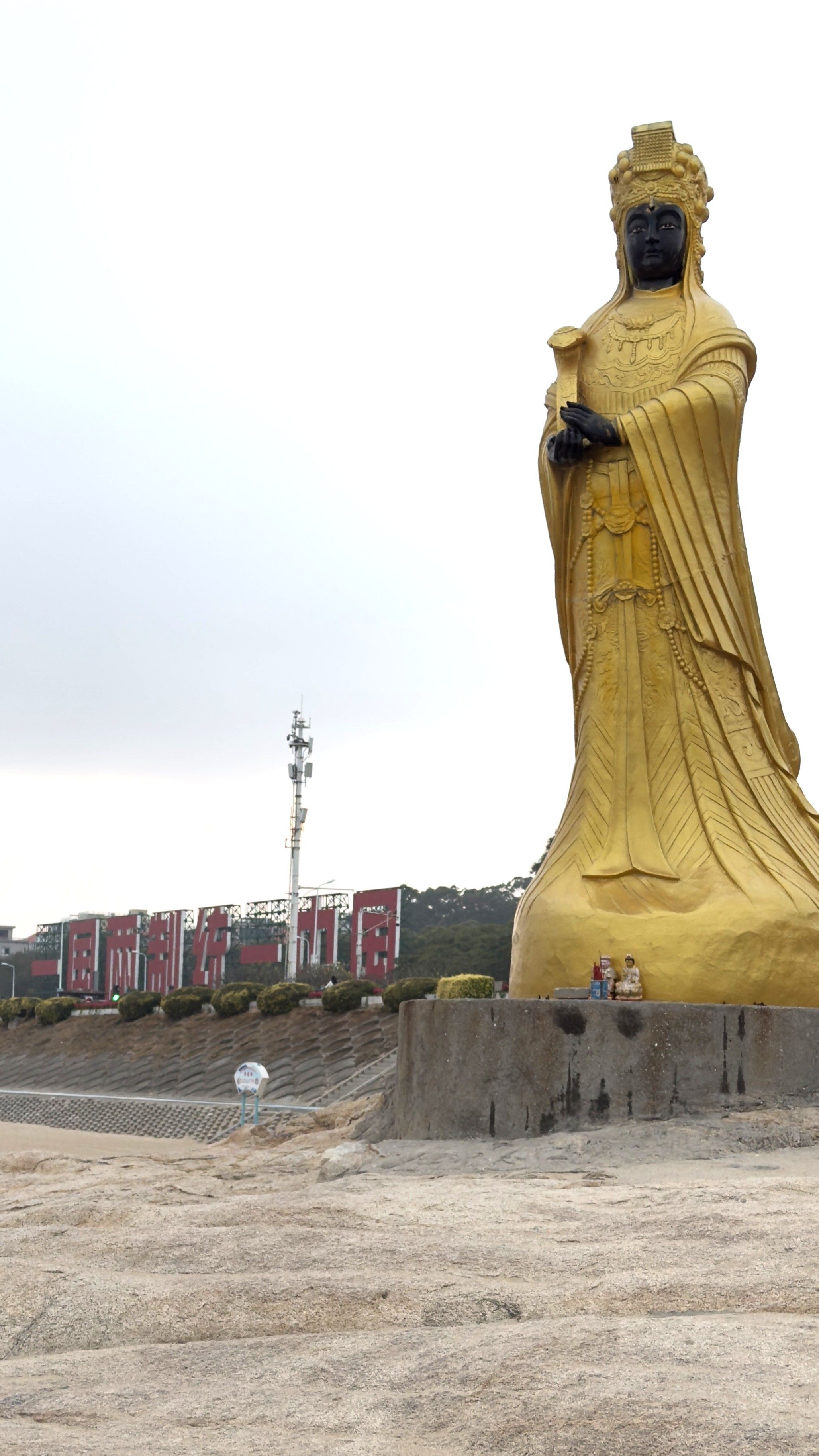
The article examines Kinmen, a Taiwanese island archipelago just 3km from China’s Xiamen, as a symbolic and practical testing ground for Beijing’s long-term reunification ambitions toward Taiwan. It describes how Kinmen’s geography, history, and economic dependence create a paradox: although the islands once stood as a heavily militarised front line against Communist China, many residents now favor closer ties with Xiamen because of limited local opportunities and the pull of nearby mainland prosperity. The piece highlights Beijing’s dual strategy of offering economic carrots—such as business incentives, tourism links, and infrastructure cooperation—while also applying pressure through grey-zone tactics like maritime patrols and efforts to weaken Taiwan’s jurisdiction. Experts quoted in the article say Kinmen’s proximity makes it especially vulnerable to Chinese influence, allowing Beijing to test how far it can advance its political agenda without military conflict. The article also traces Kinmen’s Cold War history, including artillery shelling, propaganda broadcasts, and rival reunification slogans, showing how memories of conflict coexist with present-day social and economic engagement. Ultimately, the article argues that Kinmen’s future will depend heavily on Taipei’s determination to preserve its autonomy, even as Beijing continues to treat the islands as a possible model for eventual reunification.
Entities: Kinmen, Xiamen, Taiwan, Fujian province, Wu Shan-hua • Tone: analytical • Sentiment: neutral • Intent: analyze