17-05-2026
The World Health Organization has declared the Ebola outbreak in the Democratic Republic of Congo’s eastern Ituri province a public health emergency of international concern, citing a growing number of suspected and confirmed cases, deaths, and uncertainty about the outbreak’s true scale. The current outbreak is caused by the Bundibugyo strain of Ebola, for which the WHO says there are no approved drugs or vaccines. Authorities have reported around 246 suspected cases and 80 deaths, with eight laboratory-confirmed cases in the DRC and two confirmed cases in neighboring Uganda, raising fears of cross-border spread.
The WHO emphasized that the outbreak does not qualify as a pandemic emergency, but urged Congo and Uganda to strengthen emergency operations, surveillance, tracing, isolation, and infection-prevention measures. It also advised bordering countries to increase health reporting and monitoring, while warning countries outside the region not to impose border closures or trade and travel restrictions, which it said are not scientifically justified. The article explains that Ebola spreads through direct contact with bodily fluids and broken skin, can cause severe bleeding and organ failure, and has a fatality rate of around 50% on average. Officials and public health experts also warned that population movement, trade, travel, and mining activity in affected areas increase the risk of wider spread.
Entities: World Health Organization (WHO), Dr Tedros Adhanom Ghebreyesus, Democratic Republic of Congo (DR Congo), Ituri province, Bunia • Tone: urgent • Sentiment: negative • Intent: inform
17-05-2026
At least 80 deaths have been reported in a new Ebola outbreak in Congo’s eastern Ituri province, prompting a major public health response and renewed concern about cross-border spread into neighboring countries. The World Health Organization declared the outbreak a public health emergency of international concern, though not a pandemic emergency, as health officials raced to intensify screening, tracing, and containment efforts. The outbreak was initially announced with 65 deaths and 246 suspected cases, and Congo’s health minister later said eight laboratory-confirmed cases had been found, including four deaths. Testing identified the strain as Bundibugyo virus, a rarer Ebola variant that has had only two previous outbreaks, both relatively limited in scale, and for which there are no approved vaccines or treatments. The suspected index case was a nurse who died in a Bunia hospital after showing symptoms consistent with Ebola.
The article emphasizes the difficulty of responding in Ituri, a conflict-affected and logistically challenging region far from Congo’s capital. The disease has spread across three health zones, and health authorities note that only a small number of blood samples have been tested so far, with some unusable because of insufficient volume. The outbreak has already prompted Uganda to confirm an imported case in Kampala, while Kenya and regional health agencies have increased surveillance and preparedness due to the risk of further spread. Doctors Without Borders is preparing a large-scale response, and local residents in Bunia describe fear and frequent burials, even as daily life continues in parts of the city.
The story also raises questions about the U.S. response capacity amid cuts to USAID and the Trump administration’s withdrawal from the WHO. Experts quoted in the article warn that the United States may no longer be positioned to respond as quickly as it once did, though one doctor argues Ebola is not easily transmissible and that existing U.S. high-containment systems could still help if needed.
Entities: Ebola outbreak, Bundibugyo virus, Congo, Ituri province, Bunia • Tone: urgent • Sentiment: negative • Intent: inform
17-05-2026
The article focuses on Dr. Craig Spencer, a New York emergency room physician and public health professor who survived Ebola in 2014, and his warning that healthcare workers are especially vulnerable in the current Ebola outbreak in eastern Congo. Spencer emphasizes that medical staff face the greatest risk because they have close contact with patients when they are most contagious, especially near death. The outbreak in Ituri province is reported to have at least 246 suspected cases and 65 deaths, with health officials warning that the region’s instability and population movement could complicate containment. CBS News medical correspondent Dr. Céline Gounder explains that this outbreak appears to involve the Bundibugyo ebolavirus strain, for which there are no approved vaccines or treatments.
The article also revisits Spencer’s own Ebola infection in Guinea in 2014, describing his symptoms, hospitalization at Bellevue Hospital, quarantine procedures affecting his apartment and contacts, and his full recovery after 19 days. His experience is used to underscore both the danger of Ebola and the importance of rapid public health response. Spencer criticizes the Trump administration’s dismantling of USAID, the U.S. withdrawal from the WHO, and the absence of a director for the White House Office of Pandemic Preparedness and Response, arguing that the United States has lost capacity to respond quickly to outbreaks and coordinate with global partners. Even so, he says the U.S. still has the ability to manage Ebola because it does not spread easily and because specialized quarantine and treatment centers remain available. Overall, the article combines outbreak reporting, expert warning, and policy critique, framing Ebola as a continuing global health threat that depends heavily on preparedness and international cooperation.
Entities: Dr. Craig Spencer, Brown University, Ebola, Ituri province, eastern Congo • Tone: analytical • Sentiment: neutral • Intent: inform
17-05-2026
The World Health Organization has declared the Ebola outbreak affecting the Democratic Republic of Congo and Uganda a public health emergency of international concern, warning that the situation poses a serious risk to neighboring countries. The outbreak is caused by the Bundibugyo strain of Ebola, and WHO said it does not yet qualify as a pandemic emergency, but it could spread further because the affected regions border other countries and international spread has already been documented. In DRC’s Ituri province, authorities have reported 80 suspected deaths, eight laboratory-confirmed cases, and 246 suspected cases across several health zones. The WHO said the outbreak may be larger than currently known due to a high positivity rate in initial samples and the growing number of suspected cases.
The article emphasizes that this outbreak is especially concerning because there are no approved therapeutics or vaccines specifically for the Bundibugyo strain, unlike the Ebola Zaire strain. The WHO reported linked or travel-related cases in Kampala, Uganda, and Kinshasa, DRC, underscoring the cross-border nature of the outbreak. It advised affected individuals not to travel internationally, except for medical evacuation, and recommended isolation of confirmed cases, daily monitoring of contacts, and restrictions on national travel for exposed individuals. At the same time, WHO urged governments not to close borders or impose trade restrictions out of fear, warning that such actions could drive informal crossings that are harder to monitor. The story also reminds readers that Ebola is a deadly virus spread through direct contact with bodily fluids or contaminated materials, and that the DRC has repeatedly faced outbreaks since Ebola was first identified there in 1976.
Entities: World Health Organization (WHO), Reuters, Democratic Republic of Congo (DRC), Uganda, Bundibugyo strain • Tone: urgent • Sentiment: negative • Intent: inform
17-05-2026
Africa’s top public health agency confirmed a new Ebola outbreak in Congo’s remote Ituri province after officials recorded 65 deaths and 246 suspected cases. Health authorities are still determining whether the outbreak is caused by the Ebola Zaire strain, the deadliest and most famous form of the virus, or another variant. The outbreak is centered in the Mongwalu and Rwampara health zones in eastern Congo, close to the borders of Uganda and South Sudan, where weak infrastructure, mining-related movement, and insecurity raise fears of cross-border spread.
The article notes that only four of the deaths have been laboratory confirmed so far, while testing and sequencing continue. Early tests suggest the outbreak may not be the Zaire strain that caused Congo’s 2018-2020 epidemic, which killed more than 1,000 people. Uganda has already confirmed one Ebola-related death in a Congolese man whose case was believed to have been imported from Congo, underscoring the regional risk.
The World Health Organization has deployed a response team and is providing $500,000 in emergency funding. Congo reportedly has Ebola treatments and about 2,000 doses of the Ervebo vaccine, though the vaccine only protects against the Ebola Zaire strain, not Sudan or Bundibugyo variants. The report says this is Congo’s 17th Ebola outbreak since the virus was first identified there in 1976.
Entities: Ebola outbreak, Congo, Ituri province, Africa Centers for Disease Control and Prevention, Ebola Zaire strain • Tone: urgent • Sentiment: negative • Intent: inform
17-05-2026
The article reports that the World Health Organization has declared the Ebola outbreak in the Democratic Republic of Congo an international health emergency after the disease killed more than 80 people and spread rapidly, including across the border into Uganda. Health authorities said the outbreak is caused by the Bundibugyo strain of Ebola, for which there is no vaccine or specific treatment, raising concern about its lethality and the difficulty of containing it. Officials from the Africa CDC said there were 88 deaths and 336 suspected cases, while the WHO warned that the true scale may be larger than currently reported.
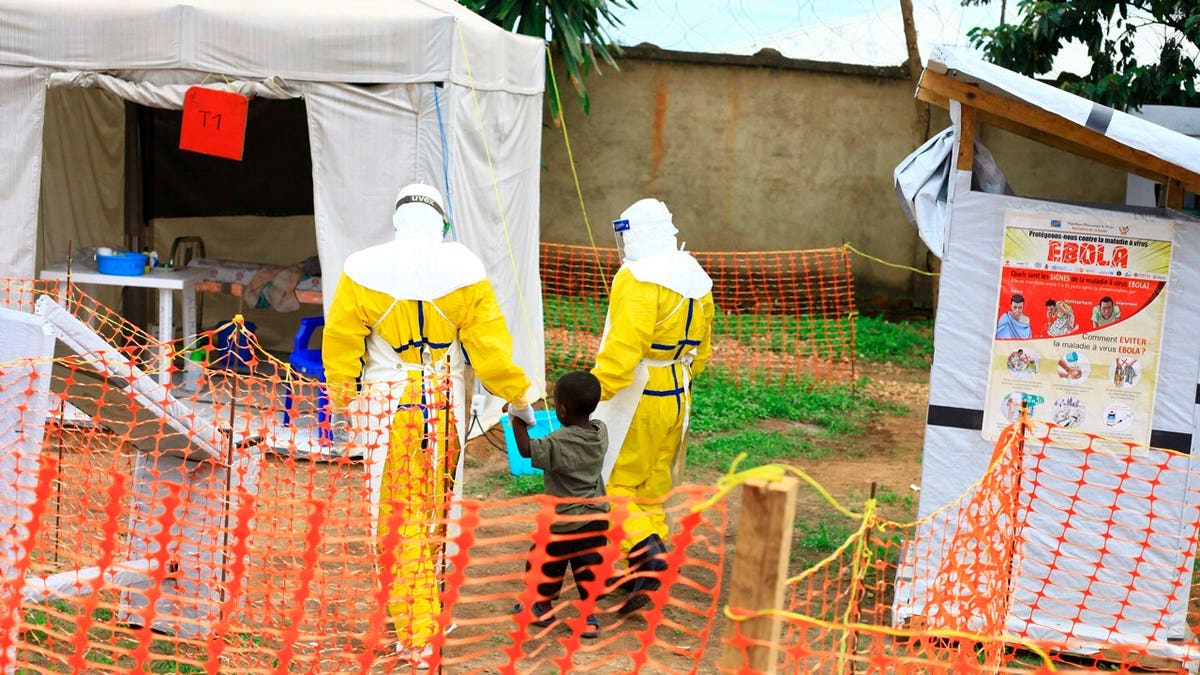
The outbreak was confirmed in Ituri province, in eastern Congo, where local health systems are strained and many sick people are reportedly dying at home because there is nowhere to isolate them. The first known patient was a nurse who fell ill in Bunia in late April. Medical charity Doctors Without Borders said it was preparing a large-scale response and described the speed of spread as extremely concerning. The WHO stressed that the outbreak posed a significant local and regional risk, especially given the high positivity rate in initial samples, suspected underreporting, and confirmed cases in two countries.
The article also places the current outbreak in context, noting that this is Congo’s 17th Ebola outbreak and that previous outbreaks have caused thousands of deaths, including nearly 2,300 in the 2018-2020 epidemic. It explains that Ebola spreads through bodily fluids and can cause severe bleeding and organ failure, with symptoms including fever, vomiting, and hemorrhaging. Because vaccines exist only for the Zaire strain, the current Bundibugyo strain presents a major challenge to health workers and responders.
Entities: World Health Organization (WHO), Democratic Republic of Congo (DRC), Ebola outbreak, Bundibugyo strain, Africa Centres for Disease Control and Prevention (Africa CDC) • Tone: urgent • Sentiment: negative • Intent: inform