Articles in this Cluster
01-07-2026
A three-year-old boy has been rescued alive from the rubble in Venezuela six days after powerful earthquakes struck the country, offering a rare moment of hope amid a worsening humanitarian crisis. The child, identified as Klieber Morán, was pulled from wreckage in La Guaira state by a Jordanian rescue team and taken to hospital, with officials saying his vital signs were good. The rescue came as the death toll from the quakes, measuring 7.2 and 7.5, climbed to 1,943, with more than 10,000 injured and tens of thousands still unaccounted for.
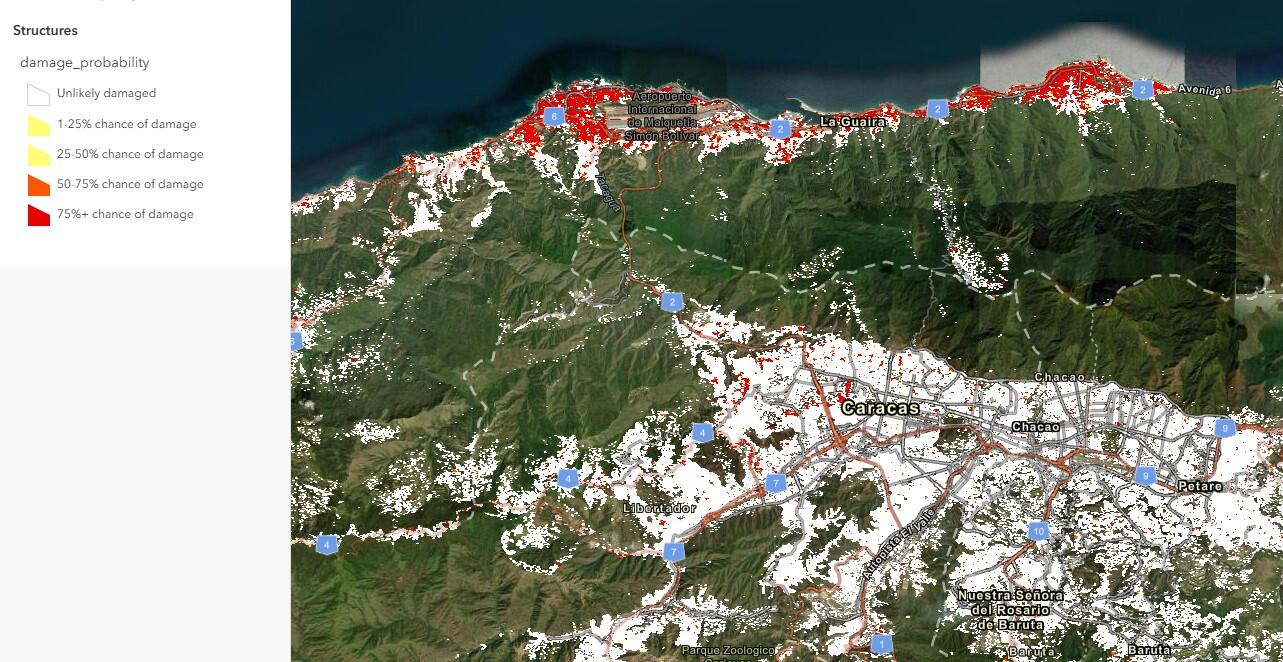
The article describes the scale of the disaster, including satellite-based estimates that nearly 59,000 buildings were damaged or destroyed. It also details the severe strain on local communities, where food shortages, collapsed services, and broken communications have deepened the crisis. The UN and WHO warned of urgent needs for food, shelter, medical support, and disease prevention, while aid shipments and international rescue teams continued arriving. Officials and residents alike described both the difficulty of rescue efforts and the emotional toll of the disaster, as families searched for missing loved ones and many began burying the dead.
Entities: Venezuela, La Guaira, Caracas, Klieber Morán, Delcy Rodríguez • Tone: urgent • Sentiment: negative • Intent: inform
01-07-2026
Six days after twin earthquakes struck northern Venezuela, rescuers were still searching desperately for survivors amid widespread destruction and a rising death toll. The quakes, measuring 7.5 and 7.2, hit within a minute of each other on June 24 and had killed more than 1,900 people by Tuesday, with thousands still missing. Search and rescue operations were concentrated in La Guaira and nearby areas along Venezuela’s Caribbean coast, where international teams, including an American task force from Fairfax, Virginia, joined local responders in combing collapsed buildings for signs of life.
The article emphasizes the emotional toll on families waiting for news. CBS News described one search effort in which rescuers called out from inside and outside a collapsed structure, asking trapped victims to make three sounds if they could hear them, but no one responded. Relatives such as Miguel Coello pleaded for help finding missing loved ones, while Rubmar Carolina Garcia mourned the loss of her 13-year-old son and her mother, who were found together in the rubble. Rescue workers said the longer the search continued, the harder it became to find anyone alive, though teams remained determined to keep working until there were no more signs of life.
The piece also cites a NASA satellite assessment suggesting that nearly 58,870 buildings may have been damaged or destroyed across the affected region. NASA stressed that this estimate was preliminary and had not yet been verified by on-the-ground assessments. Overall, the article presents a grim picture of mass casualties, devastated infrastructure, and a narrowing window for rescue as emergency teams race against time.
Entities: Venezuela, Caracas, La Guaira, Caribbean coastline, NASA • Tone: urgent • Sentiment: negative • Intent: inform
01-07-2026
Nearly a week after two powerful earthquakes struck northern Venezuela, international rescue teams are still searching the rubble for survivors while facing dangerous, unstable conditions. The article centers on 44-year-old security guard Hernan Gil Flores, who remains trapped in a partially collapsed 10-story building in La Guaira. Rescuers, including a task force from the Los Angeles County Fire Department, say the operation is extremely delicate because surrounding buildings are leaning into the damaged structure and could collapse further. Flores’s wife says rescuers have made contact with him, confirmed he is not injured, and have been able to provide him water.
The article places his case within the broader humanitarian catastrophe caused by the quakes, which measured 7.5 and 7.2 and struck within a minute of each other on June 24. As of Tuesday, the confirmed death toll had surpassed 1,900, while tens of thousands were still missing, according to the United Nations. At the same time, rescue crews have managed a number of successful recoveries, including an 18-day-old baby and mother pulled from a collapsed high-rise after 32 hours, and a mother and her 9-month-old baby who were rescued with only minor injuries. Venezuelan officials say about 6,400 people have been rescued so far.
The article also describes the scale of the destruction, citing NASA satellite estimates that nearly 59,000 buildings may have been damaged or destroyed. The U.N. says 1.8 million people, including nearly 700,000 children, need humanitarian assistance. Much of the worst damage is concentrated in La Guaira, forcing many residents to flee inland to Caracas and live in tents after losing their homes. Through these details, the story highlights both the ongoing rescue efforts and the immense human toll of the disaster.
Entities: Venezuela, La Guaira, Caracas, Hernan Gil Flores, Gusbimar Gonzalez • Tone: urgent • Sentiment: negative • Intent: inform
01-07-2026
Rescue crews in Venezuela are continuing a frantic search for survivors five days after twin earthquakes devastated the country, with tens of thousands still believed missing and more than 1,400 reported dead. The article highlights both the scale of the destruction and the emotional toll on families who are searching hospitals, rubble piles, and survivor lists for loved ones. In hard-hit La Guaira and Caracas, people are left with little more than personal remnants—such as stuffed animals, a passport, and a graduation diploma—scattered among collapsed buildings.
Despite the overwhelming loss, the piece emphasizes several moments of rescue that have offered hope amid the disaster. A U.S. search team helped pull a mother and her 9-month-old baby from debris, and another child, 11-year-old Kenger, was rescued after his family’s building collapsed, leaving him the only survivor among close relatives. Venezuelans interviewed by CBS News describe a desperate need for more aid and support as the humanitarian crisis deepens.
The article also underscores the international response, noting that more than 300 American rescuers are on the ground and that U.S. officials have offered continued assistance. Statements from the U.S. State Department and diplomats frame the response as a moral and humanitarian commitment, while the report closes by noting the ongoing collaboration between the U.S. and Venezuela during the rescue effort.
Entities: Venezuela, Caracas, La Guaira, U.S. search team, U.S. State Department • Tone: urgent • Sentiment: negative • Intent: inform
01-07-2026
The article is a CNN video explainer examining how long a person might survive if buried in rubble after an earthquake. Framed around the aftermath of Venezuela’s twin earthquakes, the piece notes that survivors were still being rescued days after collapsed buildings trapped people inside. It uses this real-world disaster as a starting point to answer a broader survival question and to highlight the difficulty and urgency of search-and-rescue operations following major structural collapses.
The article emphasizes that survival time depends on conditions such as access to air, water, temperature, physical injuries, and the amount of space around the trapped person. The Venezuela disaster serves as a dramatic example of why rapid rescue efforts matter: even as days pass, some people can still be found alive beneath the debris. The piece also indirectly underscores the obstacles rescuers face, including damaged infrastructure and resource shortages, by connecting the survival question to the ongoing rescue response. Overall, the article functions as a short, informative health-and-disaster explainer meant to help viewers understand both the biology of survival and the practical realities of earthquake rescue efforts.
Entities: Venezuela, earthquakes, collapsed buildings, rubble, search and rescue • Tone: analytical • Sentiment: neutral • Intent: inform
01-07-2026
CNN reports from La Guaira, Venezuela, where two devastating earthquakes have left residents searching collapsed buildings by hand amid fuel shortages, limited equipment, and growing anger at the government’s response. Heavy machinery sits idle in some places because there is no gasoline, forcing families, volunteers, and local rescuers to dig through rubble with pickaxes, shovels, and bare hands in hopes of finding survivors or recovering bodies. The article describes a mounting humanitarian crisis: the official death toll has risen to 1,943, but US Geological Survey estimates suggest the true number of dead could be far higher, with tens of thousands possibly killed. The UN and Venezuelan authorities are reportedly preparing 10,000 body bags, and makeshift morgues are filling with caskets. The piece highlights criticism from analysts and opposition figures who say the disaster exposes a hollowed-out state, more focused on repression and propaganda than basic services. It also shows the determination of families like Hassel Mendoza, who flew in from Tampa to search for missing relatives, and Deivis Ramos, whose daughters and in-laws died in the quake but who continues digging for their remains. While officials say they are organizing volunteers and insist on trust in government-led coordination, the article portrays a population largely left to rescue itself, with some hope still sustained by miraculous survival stories and rescue workers unwilling to give up on finding people alive.
Entities: Venezuela, La Guaira, CNN, Max Saltman, Isa Soares • Tone: urgent • Sentiment: negative • Intent: inform
01-07-2026
Nearly a week after twin earthquakes devastated La Guaira, Venezuela, residents are still rescuing neighbors, friends, and relatives by hand because shortages of fuel have left heavy machinery unavailable. The article/video describes a rescue effort slowed by the country’s inability to deploy equipment quickly, even as frustration grows over the contradiction of a nation rich in oil yet unable to supply gasoline. CNN’s Isa Soares reports from the ground, speaking with families affected by the disaster and with U.S. volunteers assisting in the search-and-rescue effort.
The piece highlights both the human and political dimensions of the crisis: ordinary citizens are carrying out dangerous, exhausting recovery work themselves while government response is seen as faltering. The lack of machinery means manual digging is the only option in many locations, prolonging the time it takes to reach survivors and recover victims. At the same time, the story underscores the broader national outrage and irony surrounding Venezuela’s fuel shortages, framing them as a major obstacle to disaster response in a country that is one of the world’s largest oil producers. Overall, the article focuses on the emergency conditions on the ground and the strain placed on communities forced to rely on themselves and outside volunteers.
Entities: Venezuela, La Guaira, twin earthquakes, fuel shortages, gasoline shortage • Tone: urgent • Sentiment: negative • Intent: inform
01-07-2026
The article describes the aftermath of two powerful earthquakes that struck Venezuela’s Caribbean coast, causing widespread destruction, thousands of deaths, and tens of thousands of people reported missing. It emphasizes that the true scale of the disaster is difficult to verify because official statistics are viewed with deep skepticism in a country long marked by opacity, corruption, and political repression. Through reporting by Venezuelan journalist Clavel Rangel, the piece portrays families searching rubble for loved ones, overwhelmed mortuaries, and civil society groups creating tools to track the missing, while highlighting the inadequacy of the government response and the suspicious presence of heavily armed military police in affected areas.
The article also situates the disaster within Venezuela’s broader political crisis after the removal of Nicolás Maduro by US forces earlier in the year. It notes that local people feel abandoned by the state and are often forced to search for survivors themselves using limited resources, while international teams from several countries have stepped in with specialized rescue equipment. The US has pledged hundreds of millions of dollars in aid, and US marines are helping repair the port at La Guaira to facilitate supply deliveries. Yet tensions remain, especially given the involvement of figures like Diosdado Cabello and the uneasy coexistence of rescue cooperation and ongoing regime hostility. Overall, the article presents a picture of a nation in catastrophe, where ordinary people and international aid workers are doing much of the recovery work amid political instability and institutional weakness.
Entities: Venezuela, Caribbean coast, La Guaira, Nicolás Maduro, Clavel Rangel • Tone: analytical • Sentiment: negative • Intent: inform