30-06-2026
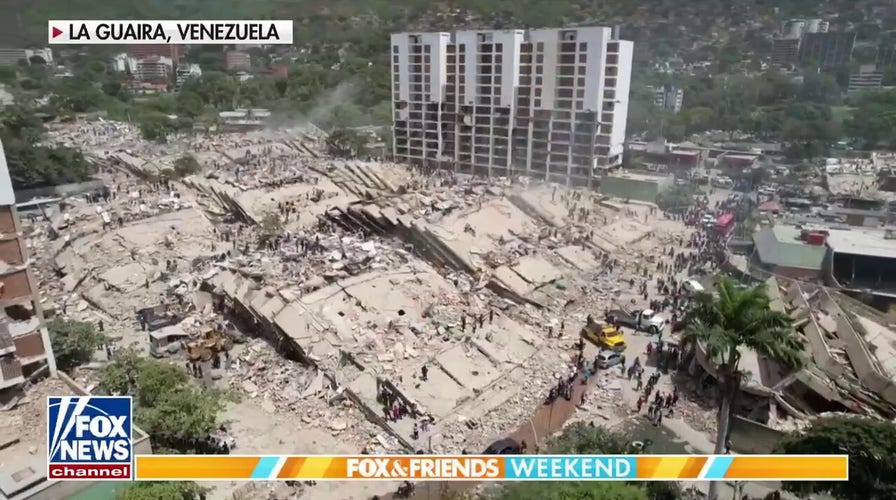
A twin-earthquake disaster in Venezuela has left many communities struggling with minimal state assistance, forcing residents, volunteers, and international teams to conduct much of the rescue work themselves. In La Guaira and surrounding areas, people have been digging through rubble with hand tools and bare hands, searching for missing relatives and neighbors after quakes of magnitude 7.2 and 7.5 struck within seconds of each other. An aftershock on Monday renewed fear but caused no reported additional damage.
The article describes mounting anger among survivors over the slow, patchy response from authorities, especially the shortage of heavy machinery and visible official presence at the collapse sites. Local accounts emphasize desperation, grief, and the shift from rescue to recovery as some families now search for remains rather than survivors. At the same time, Venezuela’s government says tens of thousands of emergency workers have been deployed, and it is setting up temporary camps and a system to assess building safety.
Hope of finding survivors is fading, though one 21-year-old man was rescued alive after more than 100 hours trapped, with help from Venezuelan, Mexican, and Salvadoran teams. The UN says more than 500 aftershocks have occurred and thousands of structures have been affected, while also preparing body bags in anticipation of a rising death toll. International assistance is increasing, including major US funding, aid from the Netherlands, and support from China, as efforts continue to deliver supplies and stabilize the disaster zone.
Entities: Venezuela, La Guaira, Caracas, Catia La Mar, El Junquito • Tone: urgent • Sentiment: negative • Intent: inform
30-06-2026
The BBC article reports on widespread anger among Venezuelans in La Guaira after twin earthquakes killed at least 1,700 people and destroyed buildings in coastal communities. Families searching for missing relatives say the government’s response was delayed, insufficient, and indifferent, leaving many residents to conduct rescues themselves with little official support. Through the testimony of people like Miguel Oscar Nunez, Kevin Montilla, and Deilisbeth Herreira, the article shows how survivors and relatives describe a slow, under-resourced, and fragmented rescue effort, with some areas not yet reached by search teams. The article also notes that rescue operations eventually included Venezuelan firefighters and international teams from Colombia, El Salvador, and the US, but by then precious time had been lost. The piece emphasizes both the emotional devastation of those awaiting news of loved ones and the uncertainty surrounding the final death toll, as many bodies may never be recovered.
The article’s central focus is not the earthquakes alone, but the public outrage over state negligence and apathy. It portrays scenes of desperate civilians digging with their bare hands, listening for survivors, and pleading for more machinery and personnel. Families accuse the authorities of failing to act quickly enough and of abandoning them during the most critical hours after the disaster. The article closes by underscoring the possibility that the true scale of the disaster may never be fully known.
Entities: Venezuela, La Guaira, Delcy Rodríguez, Yogita Limaye, Miguel Oscar Nunez • Tone: analytical • Sentiment: negative • Intent: inform
30-06-2026
The article reports the tragic deaths of the wife and two children of Argentine soccer player Lucas Trejo after powerful twin earthquakes struck Venezuela. Trejo, who plays for Club Sport Maritimo La Guaira, had been at a training camp in Caracas when the quakes hit and rushed back to his home in La Guaira, the hardest-hit state, where he searched through rubble for three days before rescue workers recovered the bodies of his wife Yanina and their children, Aaron and Ainhoa. The piece places the personal loss in the broader context of the deadly disaster, noting that more than 1,700 people have died and tens of thousands remain missing or unaccounted for. It also describes ongoing rescue efforts, including a U.S. urban search and rescue team pulling a mother and baby from the wreckage, and contrasts those efforts with complaints from residents that state rescue teams have been scarce in hard-hit areas. Venezuelan officials said the government was mounting a full response, but online databases still list many people as missing. The article ends with a local resident’s determination to keep searching for her missing brother, underscoring the human toll and unresolved grief caused by the earthquakes.
Entities: Lucas Trejo, Yanina, Aaron, Ainhoa, Venezuela • Tone: urgent • Sentiment: negative • Intent: inform
30-06-2026
Five days after twin earthquakes devastated Venezuela, rescue crews are still searching desperately for survivors, with tens of thousands of people believed missing and more than 1,400 confirmed dead. The article describes the scale of the humanitarian disaster in hard-hit areas such as La Guaira and Caracas, where families are combing hospitals and rubble for missing loved ones and trying to identify the dead or injured. In one hospital in Caracas, relatives search patient lists hoping to find family members, while survivors recount devastating losses, such as Genesis Fonseca, whose 6-year-old nephew survived but whose sister did not. The destruction has left behind scattered personal belongings, underscoring how abruptly lives were shattered.
Amid the devastation, the article highlights moments of rescue that offer some hope, including a U.S. search team helping pull a mother and her 9-month-old baby from the debris and the rescue of 11-year-old Kenger, the only surviving member of his immediate family. Venezuelans interviewed in the piece are pleading for greater international support, particularly from the United States, as rescue and recovery needs remain urgent. U.S. officials say more than 300 American rescuers are on the ground, and the State Department and Secretary of State Marco Rubio have emphasized U.S. assistance and coordination with Venezuela’s acting leadership. Overall, the story combines human grief, ongoing emergency response, and diplomatic outreach as the country grapples with a massive natural disaster.
Entities: Venezuela, Caracas, La Guaira, twin earthquakes, rescue teams • Tone: urgent • Sentiment: negative • Intent: inform
30-06-2026
A U.S. search and rescue team working in Venezuela after devastating twin earthquakes helped pull a mother and her nine-month-old baby from the rubble of a collapsed building, offering a rare moment of relief amid a disaster that has killed more than 1,400 people. Videos shared by the Virginia Urban Search and Rescue Task Force 1 and the U.S. State Department show the rescue of the woman and infant, both of whom sustained only minor injuries. The article frames the rescue as a symbol of hope, using quotes from rescue personnel and U.S. officials to underscore the emotional significance of saving lives in the midst of a widening humanitarian crisis.
The article also details the broader international response to the quakes. U.S. military assets, including airmen, Marines, the USS Fort Lauderdale, and Army helicopters, were deployed to assist Venezuelan authorities with airport traffic and port reopening efforts. Other teams, including Los Angeles County Fire Department’s Urban Search and Rescue Task Force 2, were on the ground conducting assessments, while volunteers from several countries joined the rescue efforts. Despite these operations, conditions remained dire: Venezuelan officials said the death toll had reached 1,450, with 3,150 injured, and many people were still missing. The piece emphasizes the lack of adequate government aid, the urgency of the search-and-rescue window, and the desperation of families searching for loved ones.
Entities: Venezuela, Virginia Urban Search and Rescue Task Force 1, U.S. State Department, U.S. Southern Command (SOUTHCOM), La Guaira • Tone: analytical • Sentiment: negative • Intent: inform
30-06-2026
The article describes the catastrophic aftermath of two back-to-back earthquakes in Venezuela, focusing on the human toll, the collapse of the health system, and the country’s broader vulnerability after years of political and economic crisis. In Caracas, hospitals are overwhelmed and under-resourced, with doctors forced to ration care because of shortages of personnel, medicines, ventilators, and basic supplies. The Dr. José Manuel de Los Ríos Children’s Hospital, for example, can only treat four children at a time in intensive care, even as earthquake injuries continue to pour in.
The article emphasizes that the official death toll has surpassed 1,700, but the real number may be far higher. The U.S. Geological Survey has warned the quakes may have killed tens of thousands, and rescue crews say the “golden window” for finding survivors has largely passed. Still, families continue to wait beside collapsed buildings in hope that missing relatives might be found alive. The stench of death and decay has spread through ruined neighborhoods, underlining the scale of destruction and the grim reality facing search-and-rescue teams.
Beyond the immediate disaster, the article places blame on Venezuela’s long-term decline: government mismanagement, sanctions, brain drain, damaged schools, hospital closures, and the loss of Cuba’s medical mission all contributed to a system incapable of coping with such a crisis. The piece closes on a scene of uncertainty and fear, with residents kept from returning to damaged homes and authorities using a traffic-light system to classify building safety.
Entities: Venezuela, Caracas, La Guaira, Dr. José Manuel de Los Ríos Children’s Hospital, Dr. Huníades Urbina-Medina • Tone: urgent • Sentiment: negative • Intent: inform
30-06-2026
The article reports on the families of Venezuelans deported from the United States who are now searching desperately for answers after a pair of deadly earthquakes struck Venezuela hours after their arrival. According to Venezuelan authorities and ICE Flight Monitor, a deportation flight from Miami landed in Caracas on Wednesday morning carrying 146 people, including women and children. The deportees were taken to Hotel Santuario in La Guaira, a coastal city north of Caracas, where many were staying when two powerful earthquakes hit later that day. The quakes caused catastrophic damage in La Guaira, killing at least 1,700 people and leaving many others missing. Some deportees survived, but others are believed trapped in the rubble of the collapsed hotel.
The article centers on the anguish of relatives who say they cannot get clear information from local authorities about whether their family members are alive, hospitalized, or dead. Several family members describe waiting for days for news and pleading for the return of bodies so they can bury their loved ones properly. One mother said her son, 21-year-old Anderson Salcedo, had arrived safely and even called her from the hotel before the disaster, but is now hospitalized with severe injuries, including amputated legs and respiratory support. The story also places the events in the broader context of U.S. immigration policy, noting that the deportations occurred amid the Trump administration’s move to end Temporary Protected Status for Venezuelans and that the United States has been deporting large numbers of Venezuelans in recent months. The U.S. has since sent search-and-rescue teams and pledged more than $300 million in relief aid to Venezuela.
Entities: Venezuela, La Guaira, Caracas, Simón Bolívar International Airport, Hotel Santuario • Tone: urgent • Sentiment: negative • Intent: inform
30-06-2026
Venezuela is facing a worsening humanitarian disaster after twin earthquakes struck its northern coast, collapsing buildings and leaving widespread death, injury, displacement, and uncertainty about the missing. Search-and-rescue crews, including U.S., Colombian, Mexican, and Swiss teams, managed to pull 33 people alive from the rubble over the weekend, including an infant and two 11-year-old boys, but officials and aid workers warned that the critical 72-hour survival window had nearly expired. The death toll had climbed to 1,430 by late Saturday, while the number of missing remained highly disputed and chaotic, ranging from government estimates of hundreds to roughly 50,000, with the Associated Press citing families who listed 68,900 missing people. The hardest-hit area was La Guaira state, where apartment blocks, hotels, and public housing were flattened by magnitude 7.2 and 7.5 quakes, followed by hundreds of aftershocks that hindered rescue efforts and left survivors exposed to dangerous heat. The article emphasizes the race against time, the scale of destruction, and the difficulty of accounting for victims in the midst of communications failures. It also notes international support efforts, including U.S. emergency aid, rescue teams, and Starlink connectivity services to restore communication, as well as Pope Leo’s message of solidarity with the Venezuelan people.
Entities: Venezuela, Caracas, La Guaira state, Delcy Rodríguez, Sebastian Eugster • Tone: urgent • Sentiment: negative • Intent: inform
30-06-2026
Survivors and residents in Venezuela are criticizing what they describe as a slow, uneven government response after twin earthquakes devastated parts of the country, killing more than 1,700 people and leaving thousands injured and homeless. Five days after the June 24 quakes, people in hard-hit areas such as El Junquito said they had seen few public officials and were relying largely on neighbors, farmers, and volunteers for food, tents, and other essentials. Rescue operations continued amid hundreds of aftershocks, with authorities reporting some successful rescues, but the chance of finding more survivors was fading. The disaster has exposed longstanding structural weaknesses, including poor building-code enforcement and weak licensing practices under the governments of Hugo Chavez and Nicolas Maduro, which experts say likely worsened the death toll and destruction. The article also notes political tensions around the recovery effort, including opposition leader Maria Corina Machado’s claim that the government blocked her return, while officials urged the public not to believe rumors or criticism amplified on social media. International aid has poured in from dozens of countries, and the government says shelters and provisional camps have been set up, but many residents remain frustrated and displaced as recovery efforts continue.
Entities: Venezuela, El Junquito, Caracas, La Guaira, Hugo Chavez • Tone: analytical • Sentiment: negative • Intent: inform
30-06-2026
A Guardian report describes the aftermath of deadly earthquakes in Venezuela and the plight of more than 100 Venezuelans who had just been deported from the United States and were being housed in a hotel in La Guaira when the tremors struck. According to survivors, the deportees were transported from a Miami deportation flight to the Hotel Santuario La Llanada, where they were undergoing medical exams and receiving identification documents before expected release the next day. Instead, the first quake and then a second, stronger one caused the hotel to collapse, trapping occupants in the rubble and prompting desperate rescue efforts. Survivor Lisbeth Portillo recounted escaping with other deportees, walking kilometers through chaos and destruction before reaching a National Guard building and calling relatives. Other deportees, including Jenny Rodriguez, described being trapped under debris and freed with help from fellow passengers. The article situates the disaster within the broader context of the Trump administration’s mass deportation campaign and the continued resumption of deportation flights to Venezuela, while also noting the Venezuelan government’s claim that more than 1,700 people were killed in the earthquakes. The piece emphasizes uncertainty about the fate of missing deportees and the lack of immediate response from US Immigration and Customs Enforcement.
Entities: Venezuela, La Guaira, Marriott hotel, Hotel Santuario La Llanada, Miami • Tone: urgent • Sentiment: negative • Intent: inform
30-06-2026
The article is a short CNN video post centered on a dramatic survival story from the devastating earthquakes in Venezuela. It reports that an 18-day-old baby and his mother were rescued after spending 32 hours trapped beneath rubble. The piece is framed as a human-interest update amid broader earthquake coverage, emphasizing the extraordinary resilience and precariousness of survival during a major disaster. Because the source text is largely a video listing page, it also includes several unrelated video teasers, but the main news item focuses on the baby’s survival and the earthquake aftermath in Venezuela.
Entities: Jillian Ward, CNN, Venezuela, earthquakes in Venezuela, 18-day-old baby • Tone: emotional • Sentiment: negative • Intent: inform
30-06-2026
The article is a CNN video report on the aftermath of the twin earthquakes that struck Venezuela, with drone footage showing severe devastation in the La Guaira area on day five after the disaster. The report emphasizes that rescue operations are still underway as teams continue searching through rubble for survivors and victims. It notes the scale of the catastrophe, stating that more than 1,700 people are known to have died since the quakes the previous week. The piece is presented as one of several related CNN vertical world news videos, but its main focus is the continuing emergency response and the widespread destruction left behind by the earthquakes. The story combines visual reporting with a brief factual update, underscoring both the human toll and the ongoing struggle of rescuers in the affected region.
Entities: Venezuela, La Guaira, CNN, Briana Morales, earthquakes • Tone: urgent • Sentiment: negative • Intent: inform
30-06-2026
The article reports on the U.S. military’s involvement in earthquake relief efforts in Venezuela after a pair of devastating quakes struck the country. According to U.S. Southern Command (SOUTHCOM), U.S. military capabilities were arriving in Venezuela to support relief operations requested by the Venezuelan government and coordinated through the U.S. State Department. The military emphasized that its personnel were operating independently and not drawing on local Venezuelan resources, while working alongside U.S. and international first responders to assist in search-and-rescue efforts in the hardest-hit areas.
The piece underscores the scale of the disaster, citing a rapidly rising death toll and a large number of missing persons, injured survivors, and overwhelmed emergency services. It highlights public statements from SOUTHCOM describing Marines as “saving lives” and continuing day-and-night rescue work. The article also notes that the U.N. dispatched additional emergency workers to help with the response. Through official quotes and operational updates, the story presents the U.S. response as a humanitarian effort centered on rescue, relief, and international coordination in the aftermath of the earthquakes.
Entities: U.S. military, U.S. Southern Command (SOUTHCOM), Venezuela, Venezuelan government, U.S. State Department • Tone: urgent • Sentiment: negative • Intent: inform
30-06-2026
The article describes Venezuelans responding to a devastating earthquake largely on their own, with minimal assistance from authorities or outside organizations. It opens with a vivid scene in Caracas, where Alejandro Palombizio witnesses an apartment tower collapse into dust after the ground shakes. From there, the piece centers on the theme of mutual aid and survival: neighbors helping neighbors, communities improvising rescue and relief efforts, and people relying on personal networks rather than expecting robust institutional support. The title’s line, “We have only each other,” captures the central message that Venezuelans are coping through solidarity in the face of crisis and state weakness.
The article likely situates the disaster within Venezuela’s broader social and political fragility, implying that emergency response systems are strained, under-resourced, or ineffective. Rather than highlighting a coordinated national rescue effort, it emphasizes the human cost of the quake and the determination of ordinary residents to dig through rubble, comfort one another, and organize aid themselves. The article’s emotional core is resilience under hardship, but it also conveys a sense of abandonment and urgency. The broader significance is that Venezuelans are forced to depend on community-based support mechanisms when formal help falls short, making survival itself an act of collective improvisation.
Entities: Alejandro Palombizio, Helena Carpio, Venezuela, Caracas, Los Palos Grandes • Tone: analytical • Sentiment: negative • Intent: inform