30-06-2026
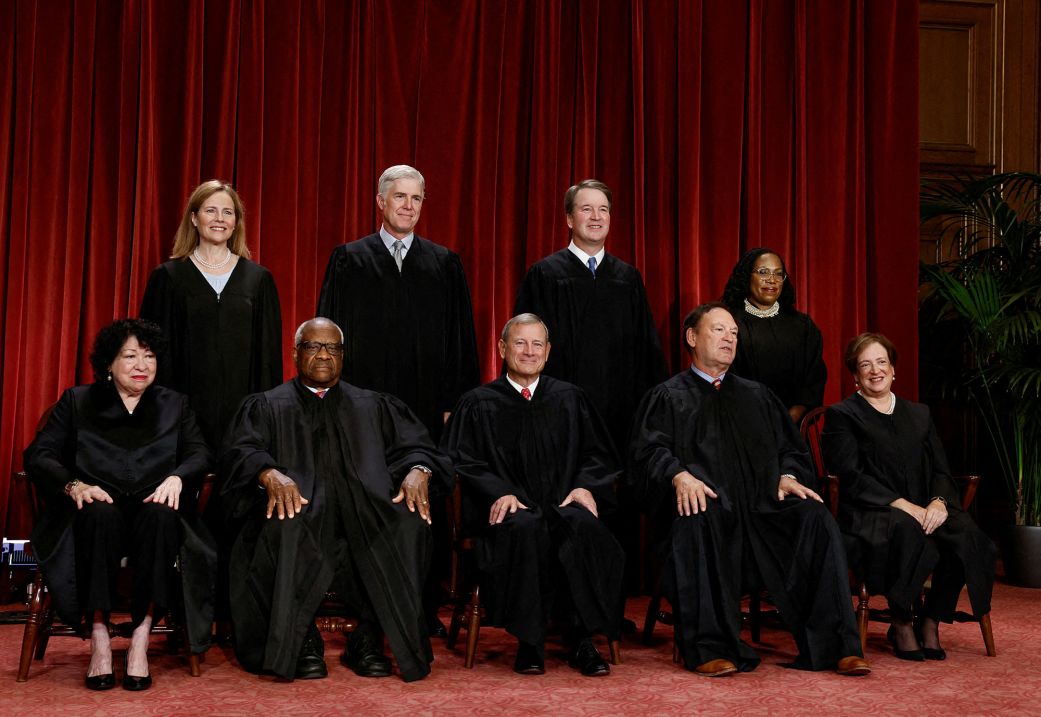
The article reviews a major Supreme Court day that produced mixed outcomes for Donald Trump: a significant expansion of presidential authority over independent regulators, but also notable setbacks on the Federal Reserve, mail-in ballots, and his defamation dispute with E. Jean Carroll. The biggest win came when the Court overturned a longstanding precedent that had limited presidents’ ability to remove leaders of certain independent agencies, effectively strengthening the power of future presidents to fire regulators across a wide range of bodies, including those tied to elections, labor, communications, finance, and environmental policy. However, the Court also ruled against Trump in a 5-4 decision preserving Lisa Cook’s ability to challenge her attempted removal from the Federal Reserve Board, with Chief Justice John Roberts and Justice Brett Kavanaugh joining the liberal justices. In a separate election-related ruling, the Court allowed states to count mail-in ballots received after Election Day if they were postmarked on time, another result Trump opposed. Finally, the Court declined to hear Trump’s appeal in E. Jean Carroll’s defamation case, leaving in place a $5 million judgment against him. Overall, the article frames the day as one in which Trump secured a sweeping institutional victory but also discovered that the conservative majority is not uniformly aligned with his preferences, especially on issues involving the Fed, election procedures, and personal legal exposure.
Entities: Donald Trump, Supreme Court, John Roberts, Brett Kavanaugh, Amy Coney Barrett • Tone: analytical • Sentiment: neutral • Intent: inform
30-06-2026
The article reports that the US Supreme Court has temporarily blocked President Donald Trump from firing Federal Reserve Governor Lisa Cook, saying she was not given adequate due process to challenge her removal. The decision sends the dispute back to lower courts, where the administration must prove its mortgage-fraud allegations if it wants to proceed. Cook has denied the claims and says they are a manufactured pretext for political interference, especially over interest rates. The ruling is being viewed as an important affirmation of the Federal Reserve’s independence, since federal law allows the president to remove Fed governors only “for cause.”
The article also places the decision in a broader legal and political context. On the same day, the Supreme Court issued a separate 6-3 ruling that made it easier for presidents to fire members of other independent federal agencies, weakening a 90-year-old precedent from Humphrey’s Executor. That case, involving the firing of FTC Commissioner Rebecca Slaughter, signals a major expansion of presidential control over independent regulators. The contrasting rulings highlight both a continued protection for the Fed and a broader shift toward stronger executive authority elsewhere in the federal government.
Entities: US Supreme Court, Donald Trump, Lisa Cook, Federal Reserve, Federal Reserve Governor • Tone: analytical • Sentiment: neutral • Intent: inform
30-06-2026
The Supreme Court issued a major 6-3 decision in Trump v. Slaughter that expands presidential authority over independent federal agencies by striking down removal protections for members of the Federal Trade Commission. Writing for the majority, Chief Justice John Roberts said that officials exercising executive power on the president’s behalf must be removable at will, and the Court overturned the 90-year-old precedent Humphrey’s Executor v. United States, which had allowed Congress to shield members of certain multi-member agencies from firing except for cause. The ruling is a significant step in a longer trend of narrowing the independence of agencies created during the New Deal era.
The case arose after President Donald Trump fired FTC Commissioner Rebecca Slaughter without cause in March 2025, arguing her continued service was inconsistent with his administration’s priorities. Slaughter challenged the firing and initially won in lower courts. The Supreme Court had already allowed Trump to remove her while the case was pending, and had similarly cleared the way for him to fire officials from other agencies such as the NLRB, MSPB, and CPSC. However, the Court noted that its decision does not directly resolve the status of the Federal Reserve or certain federal judges’ tenure protections, leaving those questions for another day.
Justice Sonia Sotomayor, joined by Justices Elena Kagan and Ketanji Brown Jackson, dissented sharply, warning that the majority’s ruling reshapes the structure of government and transfers substantial power to the presidency. The decision is likely to affect more than two dozen independent boards and commissions, including the FERC, NRC, and NLRB, and has already been celebrated by Trump as a sweeping expansion of presidential power.
Entities: Supreme Court, John Roberts, Sonia Sotomayor, Elena Kagan, Ketanji Brown Jackson • Tone: analytical • Sentiment: neutral • Intent: inform
30-06-2026
The article argues that the Supreme Court has significantly expanded Donald Trump’s power over the federal bureaucracy by weakening the long-standing protection that insulated leaders of independent agencies from direct presidential removal. It opens with the historical example of Franklin Roosevelt firing FTC commissioner William Humphrey, whose challenge led to Humphrey’s Executor v. United States, a landmark 1935 decision that allowed Congress to shield agency commissioners from political pressure. The piece explains that this precedent has served for nearly a century as a check on presidential control over bodies meant to operate independently.
The article’s central claim is that the court has now moved away from that tradition, leaving dozens of agencies vulnerable to presidential dismissal at will. This shift would let the president more directly shape or pressure regulators and policy-making bodies, concentrating executive power in the White House. The piece emphasizes that the change is broad in scope, though it notes one major exception: the Federal Reserve remains outside this direct presidential reach. Overall, the article presents the ruling as a major constitutional and administrative turning point, with implications for the balance between the president and independent federal agencies.
Entities: Donald Trump, Franklin Roosevelt, William Humphrey, Supreme Court, Federal Trade Commission (FTC) • Tone: analytical • Sentiment: negative • Intent: analyze
30-06-2026
CNN analysis argues that the Supreme Court has become an unusually powerful and politically consequential institution in the Trump era, not merely interpreting law but effectively reshaping power in the United States. The article says the Court is repeatedly deciding issues that Congress has failed to resolve, including immigration, executive authority, social policy, electoral rules, and administrative-state power. It highlights how President Donald Trump’s broad challenges to legal and constitutional limits have drawn the Court into central governing disputes, while recent rulings have tended to expand presidential power, including a 2024 immunity decision and a 2026 decision limiting Congress’s ability to restrict the president’s power to remove agency leaders.
The piece argues that the Court’s influence is amplified by the collapse of effective legislative action in Congress and by public perception that the Court is increasingly partisan. It notes that Democrats see the conservative majority as the product of political maneuvering, particularly the contrasting treatment of Obama’s 2016 nominee and Trump’s 2020 nominee, Amy Coney Barrett. The article also emphasizes the Roberts Court’s long-standing conservative theory of expansive executive power, rooted in the unitary executive idea, and says that Trump has benefited from this legal environment.
At the same time, the article places the Court in historical context, comparing today’s moment to periods such as slavery, the New Deal, same-sex marriage, and the 2022 decision overturning abortion rights. Overall, the analysis contends that the Supreme Court has moved beyond its traditional judicial role and now functions as a major force redistributing power across America’s political system.
Entities: Supreme Court, Roberts Court, John Roberts, Donald Trump, Congress • Tone: analytical • Sentiment: neutral • Intent: analyze