30-06-2026
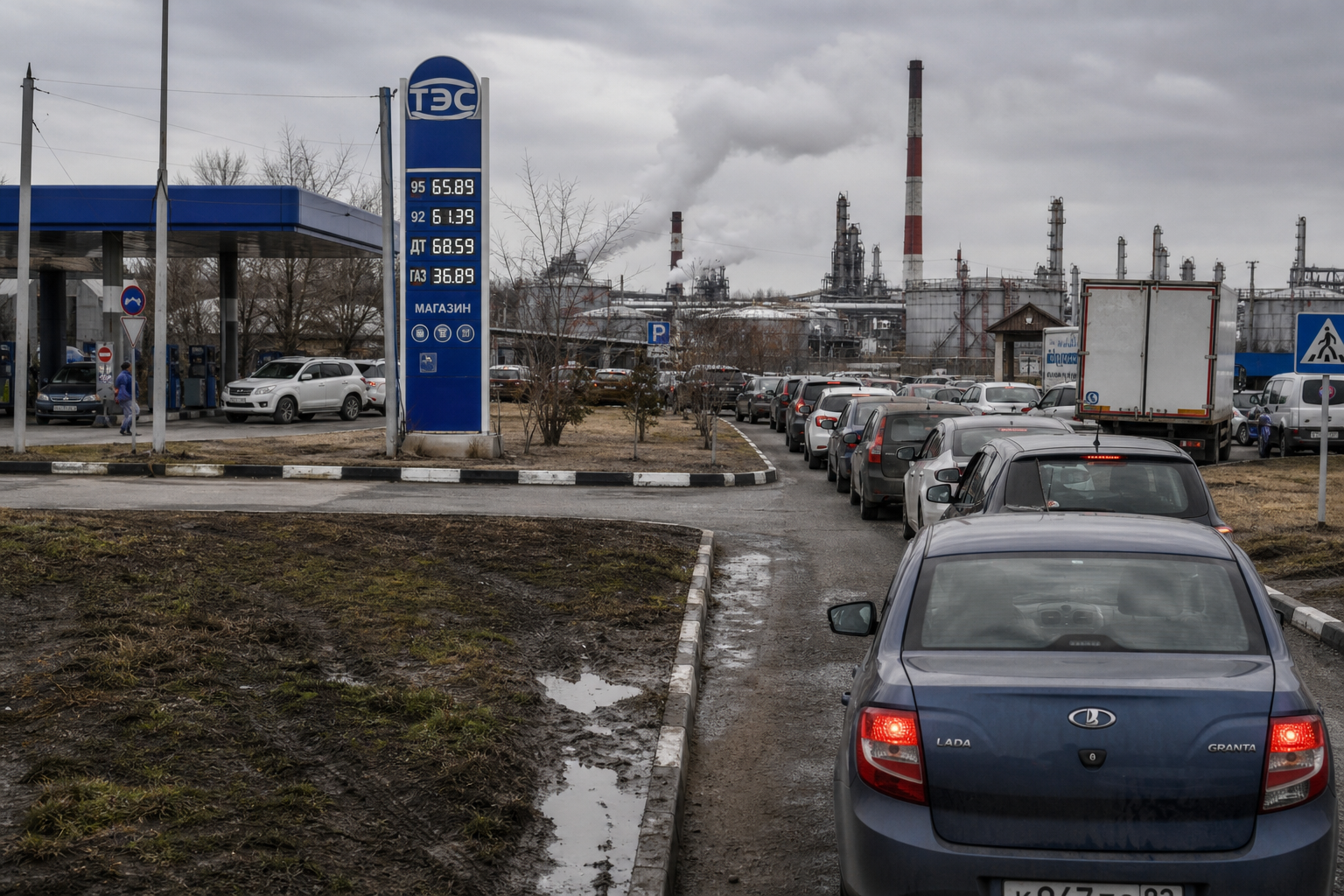
The article reports that Vladimir Putin has unusually acknowledged that Ukrainian missile and drone strikes are causing fuel shortages inside Russia and in occupied Crimea. While Russian authorities have long faced visible disruption—such as petrol queues, rationing, refinery damage, and restrictions on fuel sales in Crimea—Putin publicly admitted that motorists and businesses are experiencing problems and that there is currently a shortage, though he insisted it is not critical. He also said agricultural supply depends on fuel deliveries, that air defences will be expanded, and that repairs to damaged refineries will be accelerated.
The article frames this admission as significant because Putin rarely concedes domestic strain caused by the war. It highlights the symbolic and strategic importance of Crimea, which Russia annexed in 2014 and has used as a military base for its 2022 invasion of Ukraine. Putin’s remarks are presented as part of a broader information and strategic battle: he claims Ukraine is trying to divide Russian society and push negotiations, while Kyiv argues its strikes are meant to bring the war home to Russians and force Moscow to divert military resources away from the front line.
Despite the fuel crisis, the Kremlin says its war aims remain unchanged: forcing Ukrainian forces out of four southeastern regions that Russia claims. Putin also dismissed Ukrainian talk of limiting hostilities and entering negotiations as a ploy to buy time. The article shows both the domestic pressure created by Ukrainian deep strikes and the Kremlin’s effort to publicly minimize their impact while maintaining confidence in Russia’s military position.
Entities: Vladimir Putin, Ukraine, Russia, Crimea, Moscow • Tone: analytical • Sentiment: negative • Intent: inform
30-06-2026
In a rare public acknowledgment, Russian President Vladimir Putin conceded that Ukrainian strikes on Russian critical infrastructure, especially energy facilities, are causing problems for Russia, though he downplayed the damage as noncritical. The article explains that Ukraine has recently intensified attacks on Russia’s energy and logistics infrastructure, including a major drone assault that hit multiple Russian regions and Crimea. It also notes that Russian authorities in Crimea responded to pressure from the strikes by declaring a state of emergency and halting fuel sales to civilians. Putin said that improving air defenses and addressing fuel shortages are now top priorities for Russia.
The piece places Putin’s comments in a broader context of mounting strain inside Russia: analysts say Ukraine is targeting and weakening Russian air defenses, while CBS News has reported a shortage of S-300 interceptors. The article cites Ukrainian defense data claiming thousands of Russian air defense systems have been destroyed since the invasion began. It also points to political pressure inside Russia, referencing a survey showing widespread public support for ending the war. Despite these pressures, Putin signaled no willingness to compromise, rejecting a Ukrainian ceasefire proposal on long-range strikes and framing continued conflict as necessary to prevent Kyiv from gaining any advantage.
Entities: Vladimir Putin, Ukraine, Russia, Kyiv, Crimea • Tone: analytical • Sentiment: negative • Intent: inform
30-06-2026
The article reports that Russian soldiers on parts of the front lines in Ukraine may survive only 20 to 35 minutes once they arrive, according to Russian military bloggers cited by historian Peter Frankopan. Although CBS News says it has not independently verified the claim, the piece says such reports reflect a growing awareness among Russians of the war’s human cost, which the Kremlin has tried to obscure. The article describes how drones have transformed the battlefield into a “kill zone,” sharply increasing Russian losses and forcing Moscow to rely on infiltration tactics—small groups of soldiers moving on foot or motorcycles—rather than heavy artillery. It cites estimates suggesting Russian casualties may be approaching 500,000 deaths and that Russia is losing men at a far higher rate than Ukraine, with drones accounting for more than 80% of Russian losses, according to Ukrainian President Volodymyr Zelenskyy.
The article also notes that Ukraine is under manpower strain as well and has adopted similar infiltration tactics, but has been more effective at using drones to reduce exposure in combat, evacuation, and logistics. Despite its losses, Russia continues to make battlefield gains in parts of Donetsk, including around Kostyantynivka. The piece closes by describing a Russian public opinion survey showing that the war is affecting more families inside Russia, though many Russians still do not view the conflict as existential.
Entities: Russia, Ukraine, Kyiv, Donetsk region, Kostyantynivka • Tone: analytical • Sentiment: negative • Intent: inform