01-07-2026
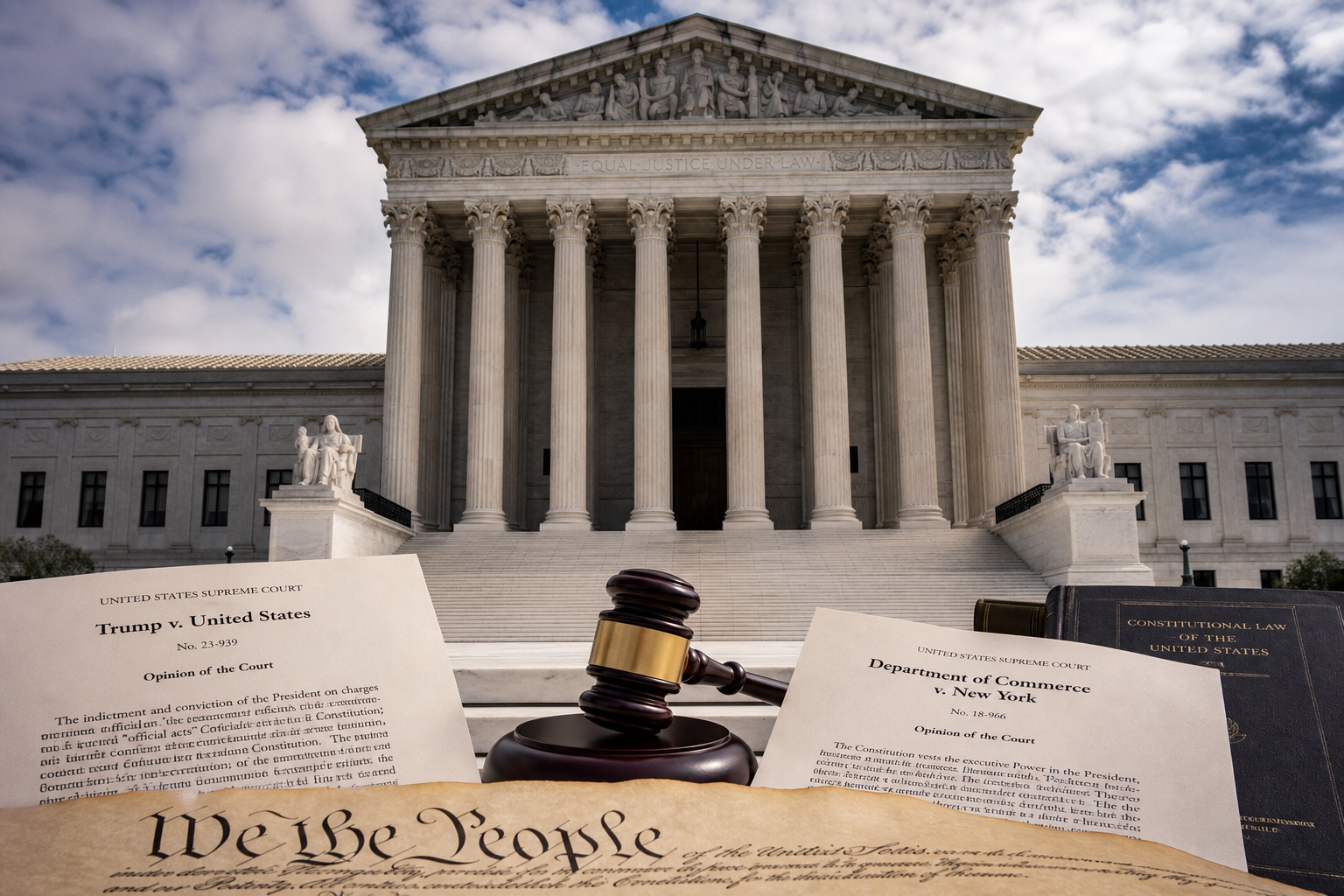
The article argues that the US Supreme Court has been a mixed institution for Donald Trump: on the one hand, it has repeatedly blocked some of his most aggressive and legally novel initiatives, including his attempt to end birthright citizenship, sweeping tariffs imposed by decree, and efforts to deploy the National Guard over state objections. On the other hand, the court’s conservative majority has also significantly expanded presidential power in ways that benefit Trump and future presidents alike. The article emphasizes that the court has increasingly embraced a broad view of executive authority, including allowing presidents greater control over independent federal agencies and protecting official acts from prosecution. It also notes several other rulings that have favored Trump and Republicans, such as decisions affecting immigration enforcement, asylum, campaign finance, and voting rights. Overall, the piece presents the Supreme Court as both a constraint on Trump’s ambitions and a powerful enabler of his political and constitutional agenda, with the potential for further influence if another conservative justice retires.
Entities: Donald Trump, US Supreme Court, John Roberts, Amy Coney Barrett, Neil Gorsuch • Tone: analytical • Sentiment: neutral • Intent: analyze
01-07-2026
The U.S. Supreme Court has ruled that babies born in the United States are constitutionally entitled to citizenship, dealing a major setback to President Donald Trump’s effort to end birthright citizenship through executive action. In a 6-3 decision, Chief Justice John Roberts wrote for the majority that children born in the U.S. to parents who are unlawfully or temporarily present are “citizens at birth” under the 14th Amendment. The ruling rejected Trump’s argument that such children are not “subject to the jurisdiction” of the United States and therefore are not covered by the amendment’s citizenship guarantee.
The decision preserves a long-standing interpretation of the 14th Amendment and affirms a principle in place since 1868, when citizenship was extended to all persons born in the country and later reinforced by Supreme Court precedent. The majority emphasized that citizenship is the right “to have rights” and that the Constitution’s promise extends to “every free-born person in this land.” Three justices dissented, with Justice Thomas criticizing the amendment’s use in political battles and Justice Alito arguing the ruling would grant citizenship too broadly.
The ruling was a major blow to Trump’s immigration agenda and drew sharp reactions from both sides. Trump called the decision “too bad” and said he would keep trying to end birthright citizenship through legislation. Senior adviser Stephen Miller denounced the ruling as one of the Court’s most destructive decisions, while Democrats and civil rights advocates celebrated it as a constitutional affirmation of American citizenship for those born on U.S. soil regardless of their parents’ status.
Entities: US Supreme Court, Donald Trump, John Roberts, 14th Amendment, birthright citizenship • Tone: analytical • Sentiment: neutral • Intent: inform
01-07-2026
CNN analysis argues that Donald Trump is portraying his second term as a spectacular winning streak, but the historical record may judge him far more unevenly. The piece opens with Trump’s own rhetoric about America “winning too much,” then contrasts that self-congratulation with a mixed ledger of real outcomes. On the positive side for Trump, the Supreme Court’s conservative majority has expanded presidential power in some areas and delivered policy wins on immigration, and he continues to dominate the Republican Party. But the court has also blocked major parts of his agenda, including unilateral tariffs and his attempt to end birthright citizenship, reminding readers that constitutional limits still matter.
The article also questions Trump’s broader claims of global success. Trump says America is once again respected, but the analysis argues his foreign policy has left the United States isolated, mistrusted, and less stable. It notes defense-spending gains among NATO allies, yet warns that these come at the cost of a strained alliance system. Trump’s second-term style of upheaval—embodied by DOGE, the dismantling of parts of the federal government, and attacks on democratic norms—is portrayed as chaos that his supporters may celebrate but critics see as destructive. The story also argues that economic indicators are not enough to sustain a political narrative of victory if ordinary voters continue to struggle with affordability, healthcare, rent, groceries, and childcare. Ultimately, the article concludes that Trump’s legacy will be judged not by his own win-loss rhetoric, but by a much broader historical standard.
Entities: Donald Trump, Supreme Court, John Roberts, Republican Party, MAGA • Tone: analytical • Sentiment: negative • Intent: analyze
01-07-2026
The article is a New York Post opinion piece praising three Supreme Court rulings at the end of the term. It argues that the Court acted sensibly and in line with common sense in cases involving transgender athletes, campaign-finance regulation, and birthright citizenship. The author celebrates the decision allowing states to ban transgender girls from participating in girls’ sports, framing it as a victory for fairness, women’s rights, and parental comfort. The piece also supports the ruling striking down limits on coordinated political spending by parties and candidates, treating it as consistent with First Amendment principles and prior precedent like Citizens United. On birthright citizenship, the article acknowledges that the Court rejected Donald Trump’s executive order ending it, but says the decision reflects a straightforward reading of the 14th Amendment and long-standing law. Overall, the author presents the Court as grounded in “reality,” “common sense,” and textual interpretation, while noting that immigration hardliners may be disappointed by the birthright citizenship ruling. The article closes by suggesting that a prior border ruling limiting bogus asylum-seekers partly addresses restrictionists’ concerns, and concludes that the Court’s decisions amount to a strong affirmation of shared values and plain legal meaning.
Entities: Supreme Court, Donald Trump, John Roberts, Title IX, Citizens United • Tone: analytical • Sentiment: positive • Intent: persuade