18-05-2026
The article reports that U.S. President Donald Trump has warned Iran that time is running out for a diplomatic breakthrough as negotiations to end the conflict remain stalled. Trump posted on Truth Social that Iran must move quickly or face dire consequences, repeating increasingly forceful rhetoric about the urgency of reaching a deal. The warning came amid reports that his call with Israeli Prime Minister Benjamin Netanyahu had taken place the same day, underscoring the close coordination between Washington and Jerusalem as the conflict continues.
The piece explains that Iranian media claimed the U.S. response to Tehran’s latest proposals contained no meaningful concessions, raising the possibility of an impasse. Tehran had reportedly demanded an immediate end to hostilities across all fronts, an end to the U.S. blockade of Iranian ports, guarantees against further attacks, compensation for war damage, and recognition of Iranian sovereignty over the Strait of Hormuz. In contrast, Iranian reports said Washington wanted Iran to limit its nuclear program to one operating site and transfer enriched uranium to the United States. Trump has recently signaled some flexibility by suggesting he could accept a long suspension of Iran’s nuclear program rather than a total dismantling.
The article also situates the diplomatic standoff within the broader military and economic pressure campaign. It notes that Israeli and U.S. air strikes began on February 28, that a ceasefire has mostly held despite occasional fire exchanges, and that Iran’s continued control of the Strait of Hormuz has helped drive global oil prices higher. Meanwhile, the U.S. has maintained a blockade of Iranian ports. Pakistan is described as mediating between the two sides, but the article concludes that the gap between them remains wide.
Entities: Donald Trump, Iran, United States, Israel, Benjamin Netanyahu • Tone: urgent • Sentiment: negative • Intent: inform
18-05-2026
The article describes an apparent opening for diplomacy between the United States and Iran, while emphasizing that the situation remains dangerously unstable and could still collapse into renewed war. According to leaks from the White House, the U.S. is closer than ever to a deal that might end its war with Iran, and both Donald Trump and Iranian officials are presenting the talks as active and potentially promising. Trump has spoken of “very good talks,” and Iran says the American proposal is under consideration.
But the article argues that words alone are not enough to reassure Iran’s leadership. On the ground, recent military actions point in the opposite direction: America attacked an Iranian tanker in the Gulf while it attempted to break a blockade of the Strait of Hormuz, Israel struck Beirut, and Iran responded by creating a new “Persian Gulf Strait Authority.” That authority is demanding payment in rial for safe passage through the waterway. The piece suggests that Iran’s claims over the strait are even more destabilizing than its nuclear program, because they directly threaten the possibility of a bargain with Washington and raise the risk of renewed conflict.
Overall, the article presents a fragile and contradictory moment in which diplomacy appears possible but is undermined by military escalation, regional power struggles, and Iran’s use of the Strait of Hormuz as leverage.
Entities: Iran, United States, Donald Trump, White House, Strait of Hormuz • Tone: analytical • Sentiment: negative • Intent: inform
18-05-2026
The article describes how Gulf states, especially the United Arab Emirates and Saudi Arabia, are growing increasingly worried that the Iran crisis is moving from a temporary wartime disruption into a prolonged economic and strategic problem. What began as an expected short ceasefire between America and Iran has dragged into a sixth week, leaving the region in a destabilizing limbo. Although large-scale fighting has paused, the absence of a durable peace has meant that traffic through the Strait of Hormuz remains nearly nonexistent, depriving the Gulf of one of its most important commercial lifelines. The article emphasizes that the Gulf had initially hoped for a quick end to the conflict and a rapid return to normal economic activity, but instead the war’s pause has created uncertainty that may be more damaging over time than the fighting itself.
The piece focuses on the risk of long-term fallout if no settlement is reached by the end of the summer. With skirmishes continuing in the Strait and Iranian attacks on the UAE adding to the sense of vulnerability, Gulf governments and businesses are left unsure how long the disruption will last or whether it will deepen. The article’s central warning is that the region may suffer irreversible harm if diplomacy fails and the truce remains only a temporary pause rather than the start of a lasting peace.
Entities: Gulf states, Iran, United States, America, United Arab Emirates • Tone: analytical • Sentiment: negative • Intent: inform
18-05-2026
The article describes a heightened wartime atmosphere in Iran as the Trump administration renews threats of military action, while Iranian state authorities mobilize public support and prepare civilians for possible renewed conflict. In Tehran, nightly state-sponsored rallies have become a regular feature, with crowds chanting anti-American slogans, waving flags, and voicing defiance toward President Donald Trump’s warnings and demands that Iran end its nuclear program. The piece highlights how the government is using public demonstrations, patriotic messaging, and even weapons training booths to project readiness and resilience.
The article also shows how this militarized messaging extends into Iranian state television, where presenters have been shown holding and firing rifles on air after receiving training from the IRGC. These scenes are presented as part of a broader official push to normalize war readiness and signal that the country is preparing for further confrontation. At the same time, the reporting emphasizes that Iranian public opinion is not monolithic. Alongside hawkish, pro-government voices, the article includes Iranians who oppose war and want peace, normalcy, and a better future for their children.
Overall, the story portrays a country caught between official calls to arms and civilian fear of renewed hostilities, with escalating tension fueled by stalled diplomacy, Trump’s threats, and the possibility of US-Israeli strikes. It presents Iran as emotionally and politically divided, yet increasingly braced for another round of conflict.
Entities: Donald Trump, Tehran, Iran, United States, Israel • Tone: urgent • Sentiment: negative • Intent: inform
18-05-2026
President Donald Trump said he will delay a planned Tuesday attack on Iran after requests from regional leaders in Qatar, Saudi Arabia, and the United Arab Emirates, while warning that the U.S. military must remain ready to strike “on a moment’s notice” if talks fail. Trump framed the pause as a response to what he described as growing optimism that negotiations could produce a deal acceptable to the United States and its Middle East allies, emphasizing that any agreement must bar Iran from obtaining nuclear weapons. Later at the White House, Trump said the situation felt “a little bit different” from previous rounds of stalled diplomacy, though he remained cautious about whether the talks would succeed.
The article says Trump had previously planned a strike for Tuesday after being presented with military options, but he withheld the operation following appeals from Gulf states that believed a deal was near and asked for a short delay. Trump indicated the pause could be brief or potentially longer, depending on the outcome of negotiations. At the same time, U.S. and Iranian officials continued exchanging proposals through mediators, including Pakistan, but American officials reportedly did not see Iran’s latest response as offering enough concessions on key issues such as nuclear enrichment and uranium stockpiles.
The piece also places the decision in a broader political and economic context: the war has continued for months, driven up gas prices, and hurt Trump’s approval on the economy. Trump is expected to meet again with his national security team to decide next steps, but his public statements make clear that both diplomacy and military action remain on the table.
Entities: Donald Trump, Iran, Qatar, Saudi Arabia, United Arab Emirates • Tone: urgent • Sentiment: negative • Intent: inform
18-05-2026
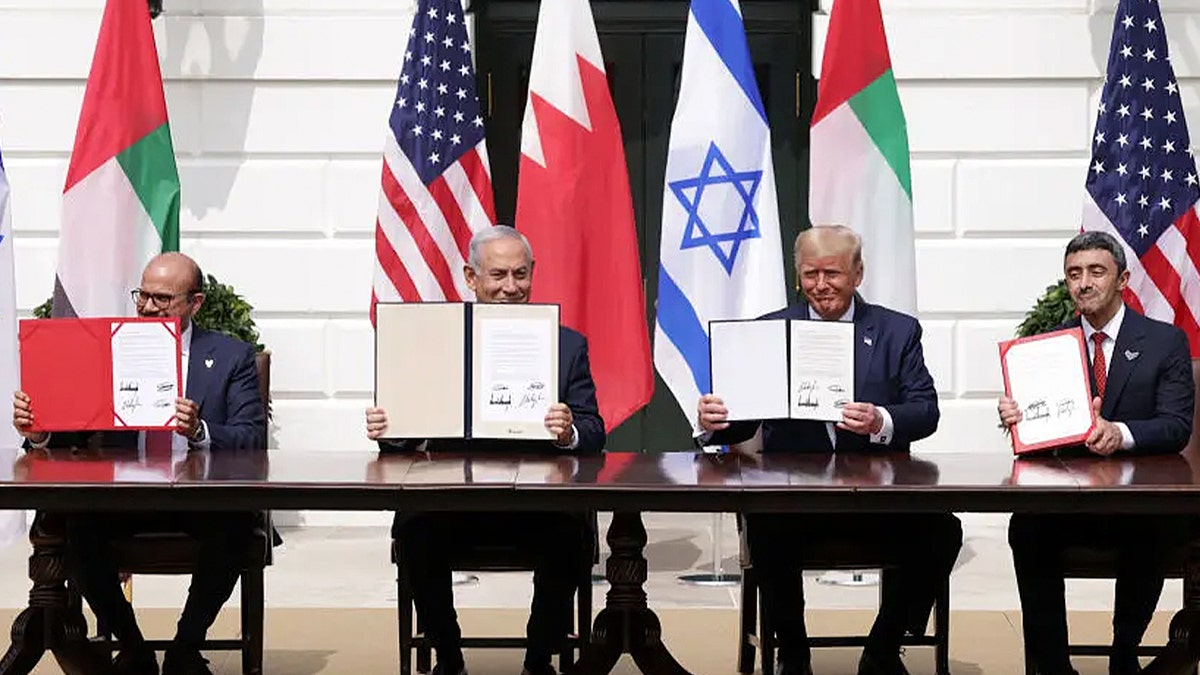
The article examines growing strain within the U.S.-brokered Abraham Accords alignment as Israel and the United Arab Emirates face friction amid escalating tensions with Iran. The immediate dispute centers on Israeli Prime Minister Benjamin Netanyahu’s office describing a May 13 meeting with UAE President Sheikh Mohammed bin Zayed Al Nahyan as a “historic breakthrough” and a “secret visit” to Al Ain. The UAE quickly denied that any clandestine meeting occurred, stressing that ties with Israel are public and were established through the Abraham Accords, not secrecy. Analysts quoted in the piece say the episode may have embarrassed the UAE and potentially damaged trust, even though both countries continue to share a strategic interest in countering Iran.
The story places this diplomatic tension in the broader context of heightened regional conflict. President Donald Trump spoke with Netanyahu as fears grew over a wider confrontation with Tehran, and Netanyahu said he was prepared for “every scenario.” The article notes that the Abraham Accords, brokered by the United States in 2020, significantly reshaped Middle East alignments by normalizing relations between Israel and several Arab states, while also deepening security cooperation against Iran. That cooperation has become more important as Iran has attacked Gulf infrastructure and sent drones and missiles toward the UAE and Israel.
Middle East Institute analyst Natan Sachs argues that Netanyahu’s public framing of the UAE visit was a diplomatic blunder, possibly driven by domestic politics, and may have risked undermining the trust that underpins the relationship. Still, the article emphasizes that both Israel and the UAE remain strategically aligned against Iran, even if the public revelation of the visit created an avoidable political and diplomatic problem at a critical moment of regional instability.
Entities: Israel, United Arab Emirates, Iran, Benjamin Netanyahu, Sheikh Mohammed bin Zayed Al Nahyan • Tone: analytical • Sentiment: neutral • Intent: analyze
18-05-2026
A drone strike caused a fire near the United Arab Emirates’ sole nuclear power plant, Barakah, raising alarms about the possibility of renewed regional conflict as tensions remain high between the U.S., Iran, Israel, and Iran-backed groups. UAE authorities described the incident as an “unprovoked terrorist attack,” though no one immediately claimed responsibility and no injuries or radiological release were reported. The UAE said three drones entered from its western border with Saudi Arabia, while two were intercepted, and its nuclear regulator said plant safety was unaffected. The International Atomic Energy Agency confirmed that the strike ignited an electrical generator and that one reactor was running on emergency diesel power.
The article situates the attack within a broader escalation across the Middle East. It notes Trump’s aggressive public warnings to Iran, Iranian officials’ declarations that diplomacy is still ongoing even as military readiness remains high, and continuing instability despite a fragile ceasefire. Saudi Arabia condemned the strike and said it intercepted other drones entering from Iraqi airspace. The piece also emphasizes the strategic importance of the Barakah plant, which can supply about a quarter of the UAE’s energy and is the only nuclear power plant in the Arab world. Finally, the article contrasts the UAE’s tightly controlled civilian nuclear program with Iran’s controversial enrichment program and notes that nuclear facilities have increasingly become wartime targets in recent conflicts.
Entities: Barakah nuclear power plant, United Arab Emirates, Dubai, Abu Dhabi, Saudi Arabia • Tone: urgent • Sentiment: negative • Intent: inform
18-05-2026
The article describes President Trump’s wavering approach to the war with Iran, portraying a day of escalation followed by hesitation. Trump said he had authorized a new round of strikes but then delayed them, saying he wanted to allow room for “serious negotiations” after several Gulf leaders reportedly urged him to give diplomacy more time. The piece emphasizes a broader pattern in which Trump repeatedly threatens military action against Iran and then backs off, leaving U.S. policy contradictory and uncertain.
The war, which Trump launched alongside Israel on Feb. 28, has entered its third month despite his original prediction that it would last only four to five weeks. The article says Trump is torn between seeking Iran’s submission and declaring victory, producing inconsistent public statements and dramatic threats. While U.S. officials say Iran remains resilient and still retains its nuclear stockpile, the military campaign has inflicted heavy damage: thousands of targets have been hit, Iran’s navy has been devastated, and senior Iranian leaders, including Supreme Leader Ali Khamenei, have been killed.
At the same time, the conflict is deeply unpopular in the United States, with a New York Times/Siena poll showing most voters opposed to it and concerned about its economic costs. Negotiations over Iran’s nuclear program and the Strait of Hormuz have stalled, and Trump insists any deal must permanently block Iran from obtaining nuclear weapons. The article also notes that Iran has used the pause in fighting to repair damaged missile sites, move launchers, and adapt its defenses, possibly with Russian help, making any renewed U.S. strike riskier and more uncertain.
Entities: Donald Trump, Iran, Israel, Qatar, Saudi Arabia • Tone: analytical • Sentiment: negative • Intent: inform
18-05-2026
US President Donald Trump said he has delayed a planned military attack on Iran after Tehran sent what he described as a peace proposal to Washington, raising the possibility of a nuclear deal and an end to the wider war. Trump said he paused the strike after requests from key Middle Eastern allies, including Qatar, Saudi Arabia and the United Arab Emirates, who reportedly wanted negotiations to continue. He framed the situation as time-sensitive but said there was now a “very good chance” the sides could reach an agreement that would prevent Iran from obtaining a nuclear weapon.
The article reports that Iran conveyed its latest proposal through Pakistan, which has been acting as an intermediary in the conflict. According to Iranian and Pakistani sources, the proposal would prioritize ending the war, reopening the Strait of Hormuz, and lifting maritime sanctions, while postponing the most contentious nuclear and uranium-enrichment issues to later talks. The article also says the US may have shown some flexibility, including the possible release of part of Iran’s frozen assets and allowing limited peaceful nuclear activity under international supervision, though Washington did not confirm those concessions.
Despite the diplomatic opening, the situation remains precarious. A fragile ceasefire is already in place after six weeks of war triggered by US-Israeli airstrikes on Iran, and drone attacks from Iraq toward Gulf states continue to complicate the environment. The article emphasizes that no final deal has been announced, the parties remain far apart on key issues, and the US is still prepared to launch a major strike if negotiations collapse.
Entities: Donald Trump, Iran, United States, Pakistan, Qatar • Tone: analytical • Sentiment: neutral • Intent: inform
18-05-2026
President Donald Trump said he had called off a planned U.S. military attack on Iran after leaders of Qatar, Saudi Arabia, and the United Arab Emirates urged him to delay the strike to allow more time for negotiations. In a Truth Social post and later remarks to reporters, Trump said the attack had been scheduled for the next day but was paused because the Middle Eastern leaders said talks were nearing a breakthrough and could produce a peace deal acceptable to the United States. He stressed that the pause was temporary and that the U.S. military remained ready to launch a major assault if negotiations failed.
The article places Trump’s decision in the context of an escalating and highly unstable conflict between the United States, Israel, and Iran, including disputes over the Strait of Hormuz, a critical oil shipping lane. It reports that recent diplomacy has centered on Iran’s nuclear program, uranium enrichment limits, sanctions relief, and the future of Iranian proxy forces. Officials and diplomats described competing proposals, with Iran rejecting earlier U.S. demands for long-term enrichment bans and the two sides still divided over sequencing and broader concessions.
The piece also highlights the military and political stakes of the conflict. U.S. forces remain heavily deployed in the region, including two aircraft carriers and an ongoing naval blockade against Iranian vessels. The Pentagon has acknowledged the war’s high cost, while lawmakers may scrutinize any renewed attacks under the War Powers Act. Overall, the article portrays a volatile situation marked by shifting decisions, ongoing negotiations, and serious regional and economic consequences.
Entities: Donald Trump, Iran, Qatar, Saudi Arabia, United Arab Emirates • Tone: analytical • Sentiment: neutral • Intent: inform
18-05-2026
CNN reports from inside Iran as state-sponsored rallies and public displays of military preparedness are spreading across the country, reflecting heightened fears of renewed conflict. The piece describes how ordinary Iranians are being urged to brace for the possibility of war, with crowds chanting against the United States, weapons training taking place in public squares, and gun demonstrations broadcast on state television. The article frames these scenes as part of a broader atmosphere of insecurity in Tehran and beyond, where daily life is increasingly shaped by the prospect of escalation. The report is notable because CNN says it is operating in Iran with government permission while retaining full editorial control, allowing a rare on-the-ground view of public mobilization and anxiety inside the country. Overall, the article portrays a nation in a tense state of readiness, where official messaging and public spectacle are reinforcing war fears rather than calming them.
Entities: Iran, Tehran, United States, CNN, Matthew Chance • Tone: urgent • Sentiment: negative • Intent: inform
18-05-2026
The article examines the status of the Strait of Hormuz dispute in the aftermath of the Trump-Xi summit, noting that the deadlock over the strategically vital shipping route remains one of the key unresolved issues. It explains that Iran is now taking steps to formalize its control over the strait through a new “professional mechanism” intended to regulate shipping and collect fees for specialized services. According to Ebrahim Azizi, who heads the Iranian parliament’s national security commission, this framework would apply only to commercial vessels and those cooperating with Iran, while excluding operators aligned with what Iran calls the “freedom project.”
The piece also highlights signs that Tehran and Washington may still be exploring diplomatic off-ramps despite the standoff. Iranian Foreign Minister Abbas Araghchi said at a Brics meeting in India that Iran had received messages indicating the Trump administration was open to renewed talks, suggesting that negotiations remain possible even as tensions persist. Overall, the article portrays a geopolitical impasse in which Iran is asserting greater administrative control over the Strait of Hormuz while the US appears to be signaling willingness to re-engage diplomatically, leaving the future of the shipping route uncertain.
Entities: Strait of Hormuz, Donald Trump, Xi Jinping, Iran, Tehran • Tone: analytical • Sentiment: neutral • Intent: inform
18-05-2026
The article examines growing U.S.-U.K. friction over Britain’s refusal to take an offensive role in military action against Iran, even as the Starmer government moves to strengthen defensive deployments in the region. It says the U.K. will send military assets to help protect freedom of navigation in the Strait of Hormuz, but that this falls short of the direct strike support President Donald Trump wanted from London. Trump is quoted criticizing Prime Minister Keir Starmer as insufficiently supportive and mocking Britain’s military readiness, including its aircraft carriers and overall capabilities.
To explain Britain’s limited role, the article cites a Royal United Services Institute report and an assessment from a U.S.-based security expert. These argue that years of defense underinvestment, shrinking overseas commitments, and the recent ‘NATO First’ emphasis have left the U.K. less able to project force globally. While the Starmer government plans to raise defense spending to 2.5% of GDP by 2027, the article says analysts believe that may be too late to restore near-term operational power. The piece also notes that British assets have taken part in defensive actions, including downing Iranian drones while helping defend Jordan and Iraq.
Overall, the article frames Britain as trying to balance alliance politics, regional security, and military limitations, while Trump’s public criticism adds pressure to an already strained transatlantic relationship.
Entities: United Kingdom, Keir Starmer, Donald Trump, Iran, Strait of Hormuz • Tone: analytical • Sentiment: negative • Intent: analyze
18-05-2026
Oil prices rose and U.S. stock futures fell on Monday after President Trump issued a fresh warning to Iran, raising doubts about the durability of the cease-fire between Washington and Tehran. The article frames the market reaction as driven by geopolitical uncertainty, especially the unresolved question of whether the Strait of Hormuz—a critical route for global oil and gas shipments—will reopen. Trump’s Sunday post on social media intensified concerns, suggesting renewed pressure on Iran and implying the truce may not hold. In financial markets, Brent crude climbed nearly 2% to around $111 a barrel, while West Texas Intermediate rose more than 2% to about $108. The effect on broader markets was negative, with S&P 500 futures pointing lower and Asian stock markets mostly declining, reflecting the vulnerability of major importers to higher energy costs. By contrast, gasoline prices in the U.S. had not yet moved much, remaining at a national average of $4.51 per gallon, though the article notes they are still more than 50% higher than before the war began. Diesel prices also dipped slightly but remain elevated. Overall, the article emphasizes the immediate market response to geopolitical risk while noting that consumer fuel prices typically lag crude oil movements.
Entities: Oil prices, Brent crude, West Texas Intermediate, President Trump, Iran • Tone: analytical • Sentiment: negative • Intent: inform