18-05-2026
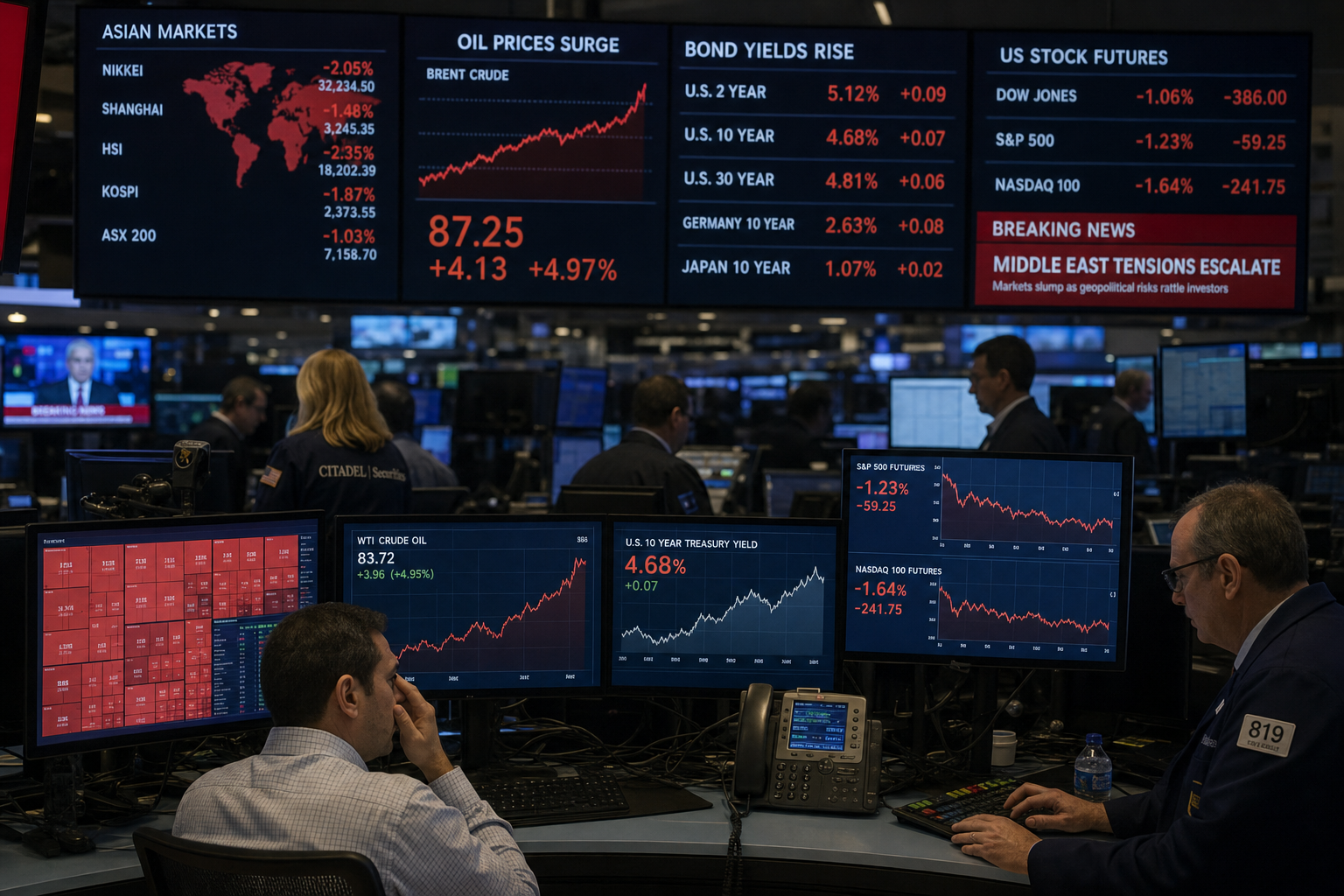
Asia-Pacific markets traded lower on Monday as investors reacted to renewed geopolitical tensions after U.S. President Donald Trump issued a stark warning to Iran, reviving fears of escalation in the Middle East and possible disruptions to global oil supplies. Trump’s post on Truth Social, telling Iran to "get moving, FAST" and warning that the "Clock is Ticking," sent oil prices higher by more than 1%, with Brent crude and WTI both advancing sharply. The regional market reaction was broadly negative: Australia’s S&P/ASX 200, Japan’s Nikkei 225 and Topix, Hong Kong’s Hang Seng, mainland China’s CSI 300, Taiwan’s Taiex, and India’s Nifty 50 all fell, while South Korea’s Kospi managed to reverse early losses and finish higher. Japan’s 10-year government bond yield also jumped, reflecting broader concerns about inflation and rising global bond yields. The article additionally notes that U.S. stock futures were mostly flat after a strong prior week, as investors looked ahead to Nvidia’s quarterly results and earnings from major U.S. retailers. It also reviews Friday’s declines on Wall Street, where tech stocks, higher Treasury yields, and disappointment over a Trump-Xi summit weighed on major U.S. indices. The piece frames the market moves as driven mainly by geopolitical risk, energy supply concerns, and profit-taking in technology shares.
Entities: Asia-Pacific markets, Nikkei 225, Hang Seng Index, Kospi, Nifty 50 • Tone: analytical • Sentiment: negative • Intent: inform
18-05-2026
European markets were set to open lower at the start of the trading week as investors reacted to heightened geopolitical tension stemming from the U.S.-Iran conflict. Futures pointed to declines across major regional indexes, including the U.K.'s FTSE 100, Germany's DAX, France's CAC 40 and Italy's FTSE MIB, with losses of up to 1% expected. The bearish outlook followed a social media warning from U.S. President Donald Trump, who urged Iran to quickly accept peace terms and said the “clock is ticking,” implying there would be severe consequences if no agreement was reached. The comments intensified fears that negotiations between Washington and Tehran remain stalled and raised concern that the conflict could escalate further.
The article also noted that oil prices moved higher overnight in response to the rhetoric, reflecting the market's sensitivity to geopolitical risk and possible supply disruptions. Brent crude futures and U.S. West Texas Intermediate both gained more than 1%, with WTI above $107 per barrel and Brent above $111 per barrel. Higher oil prices and the deteriorating diplomatic outlook contributed to the cautious tone in European markets. In addition to the geopolitical developments, the article mentions that Ryanair was scheduled to publish its latest earnings report later on Monday, indicating that corporate news was also part of the day's market backdrop. Overall, the piece is a market preview focused on how war-related headlines, oil price movements and forthcoming earnings were shaping investor sentiment in Europe.
Entities: European stocks, FTSE 100, DAX, CAC 40, FTSE MIB • Tone: analytical • Sentiment: negative • Intent: inform
18-05-2026
U.S. stock futures pointed lower Monday after a strong, record-setting week, as investors turned their attention to several near-term market risks: Nvidia’s earnings, major U.S. retail reports, elevated bond yields, and renewed geopolitical tensions tied to the U.S.-Iran conflict. Dow Jones Industrial Average futures fell sharply in early trading, while S&P 500 and Nasdaq-100 futures also declined. Oil prices rose as traders worried about potential supply disruptions from the Middle East, adding to inflation concerns and the pressure on equities.
The article explains that last week’s rally pushed the S&P 500 and Nasdaq to fresh record highs and briefly lifted the Dow back above 50,000, but Friday’s selloff showed signs that the market’s momentum may be fading. Rising sovereign bond yields in the U.S., U.K., and Japan weighed particularly on technology stocks, which have been leading the market higher. The Nasdaq-100 posted its worst one-day drop since late March, underscoring the sector’s sensitivity to rate increases.
The piece also highlights the broader macro backdrop: persistently high oil prices, escalating tensions between Iran and the U.S., and fresh inflation data that makes near-term Federal Reserve rate cuts look unlikely. Analysts cited by the article say markets are now pricing in a “higher for longer” interest-rate environment, which could challenge equity valuations. Additional coverage from Asia-Pacific markets shows regional stocks declining as Trump’s warning to Iran stoked fears of further escalation and global energy supply disruption. Overall, the article frames the session as a cautious, risk-off start to the week after a powerful market run.
Entities: Stock market, New York Stock Exchange, Dow Jones Industrial Average, S&P 500, Nasdaq-100 • Tone: analytical • Sentiment: negative • Intent: inform