14-10-2026
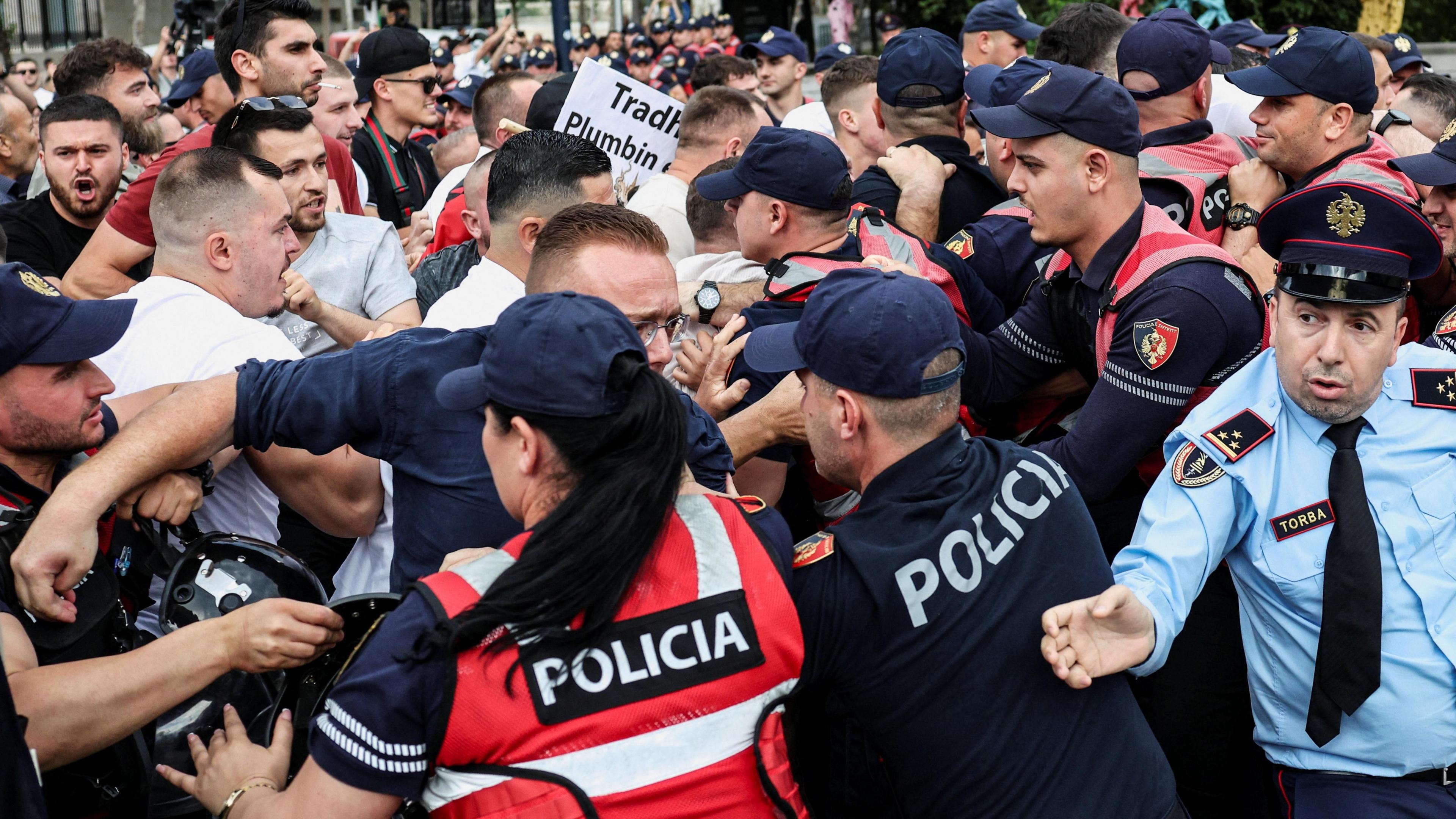
Hundreds of students and other demonstrators gathered outside Albania’s Education Ministry in Tirana to call for better university conditions, more financial support and improved job prospects. The protest turned violent, with demonstrators throwing stones, breaking shop windows and damaging businesses. Police used tear gas and water cannon to disperse or control the crowds. A police update issued Wednesday said 16 people had been arrested and 49 others were facing criminal proceedings. Six police officers and at least one journalist were injured.
The student demonstrations have become part of a broader anti-government movement called the Flamingo Revolution. The movement is demanding the resignation of Prime Minister Edi Rama amid allegations of corruption, adding to the political pressure on his government. Protesters are also opposing a luxury coastal development linked to Jared Kushner, the son-in-law of US President Donald Trump. They argue that the project could harm the environment. The movement’s name refers to pink flamingos that campaigners say could be threatened by the development. The article describes a convergence of student concerns, opposition to the coastal project and wider anger at the government, alongside escalating street violence and police action.
Entities: Albania, Tirana, Education Ministry, Flamingo Revolution, Edi Rama • Tone: neutral • Sentiment: negative • Intent: inform
14-10-2026
Thousands of students protested in Tirana for a second day, with demonstrations that began over university conditions and job prospects escalating into attacks on government buildings and nearby businesses. On Wednesday, part of the education ministry building was set on fire; protesters also targeted the prime minister’s office and the finance and interior ministries. Images and reports described demonstrators wearing masks and balaclavas and throwing rocks and firecrackers. Police responded with tear gas and water cannons. Deputy Prime Minister Albana Koçiu urged calm, while other government officials distinguished peaceful protest from violence and warned that setting fire to public institutions endangered lives. Sixteen people were arrested in connection with violent acts during Tuesday’s protest, according to Albania’s state-run news agency. Protesters said their anger went beyond student concerns, citing corruption, crime, and dissatisfaction with the political system. Opposition leader Sali Berisha praised the demonstrators. The student protests are taking place amid months of wider anti-government demonstrations known as the Flamingo Revolution, which calls for Prime Minister Edi Rama to resign. That movement was sparked by a luxury tourism project linked to Jared Kushner, the son-in-law of Donald Trump, and has focused on allegations of corruption and a lack of transparency in Rama’s government.
Entities: Tirana, Albania, Albana Koçiu, Enida Bimi, Arber Leshi • Tone: neutral • Sentiment: negative • Intent: inform
14-10-2026
Tens of thousands of students protested in Tirana, Albania, for a second consecutive day, demonstrating against rising higher-education costs, university conditions, corruption, inadequate financial support and limited employment prospects after graduation. During Wednesday’s unrest, protesters set fire to the Education Ministry building and two banks, threw stones at police, overturned garbage cans and damaged local businesses. Police used water cannons and tear gas to disperse the crowds; the article also describes an injured officer at the scene.
The demonstrations form part of a broader wave of student activism across Europe focused on education and living conditions. In France, high school students have held weeks of protests and school blockades, calling for more teachers and better facilities and warning that deteriorating buildings and overcrowded classrooms are harming education.
The Albanian unrest is described as the most violent outburst in anti-corruption protests that began in May and have increasingly challenged Prime Minister Edi Rama’s government. Deputy Prime Minister Albana Koçiu acknowledged the right to protest but condemned violence and vandalism, urging students and other citizens to distance themselves from those actions. The article presents the protests through a photo-focused account, with images documenting confrontations, fires, police response and the crowds in Tirana.
Entities: Tirana, Albania, Albanian Education Ministry, Albanian student protests, Edi Rama • Tone: neutral • Sentiment: negative • Intent: inform
14-10-2026
Albania’s Education Ministry caught fire on Wednesday as student protests in the capital, Tirana, escalated for a second day. Thousands gathered outside the ministry, with many wearing face coverings. Some protesters threw bricks, damaged sidewalk barriers and overturned trash cans; a nearby bank also caught fire, according to a witness cited by Reuters. Police used tear gas and water cannons to disperse crowds. Early Wednesday, police reported about 40 detentions and 13 people injured, including six officers, though unrest continued afterward.
The demonstrations began Tuesday with a peaceful gathering of several hundred students, then became violent in some places. Student organizers say their concerns include university conditions, higher education costs, financial support and employment prospects after graduation. Deputy Prime Minister Albana Kociu condemned attacks on public institutions and police, describing the violence as “orchestrated” and urging students who support the right to protest to distance themselves from vandalism. She also accused political actors of using young people to conceal their own failings.
The protests form part of wider unrest in Albania this year, sometimes called the “Flamingo Revolution.” Those demonstrations were partly prompted by a disputed construction project in a protected Adriatic coastal area inhabited by flamingos, but have also reflected broader dissatisfaction with the country’s dominant political forces. Prime Minister Edi Rama’s Socialists and Sali Berisha’s right-wing Democrats have alternated in power for more than three decades, since Albania’s transition from communist rule. The article notes that the timing of the student protests coincides with international attention to school and student demonstrations in France, although it does not establish a direct connection.
Entities: Tirana, Albania, Albanian Education Ministry, Edi Rama, Albana Kociu • Tone: neutral • Sentiment: negative • Intent: inform