14-10-2026
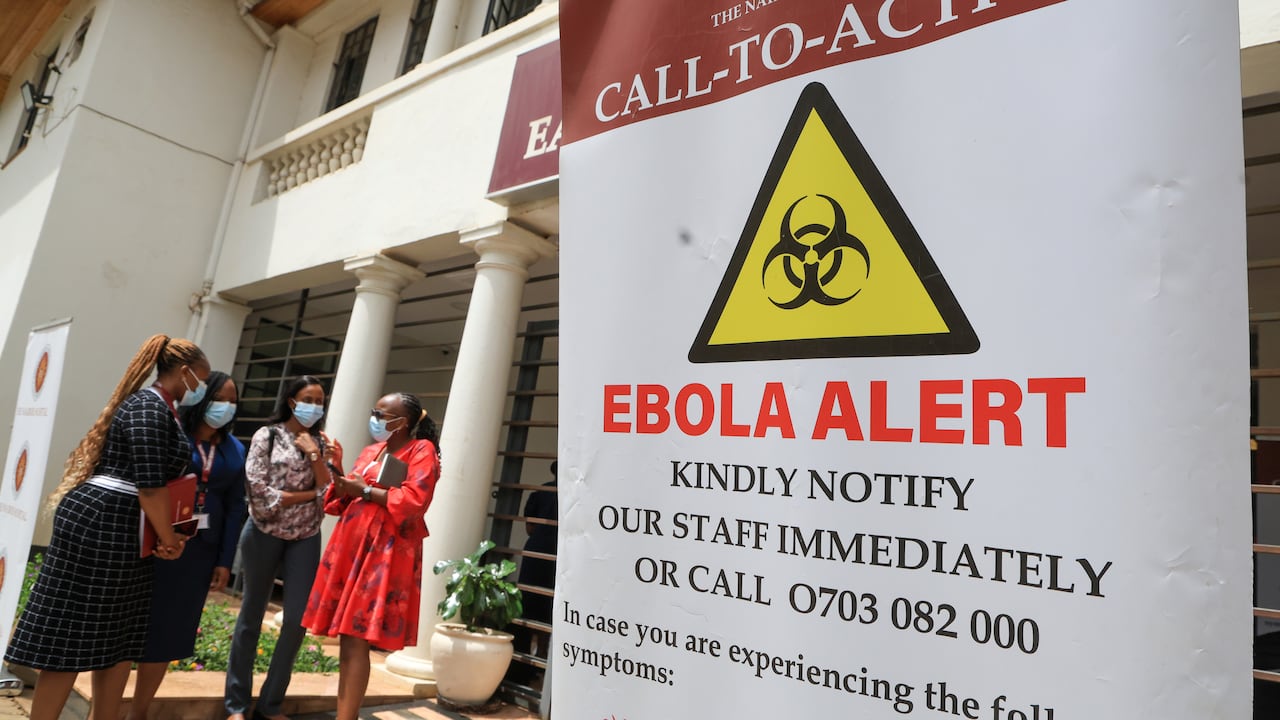
Kenya has reported a second Ebola case linked to the first patient, according to the health ministry. The new patient is a 39-year-old man and close family member of the first case. He was already in quarantine when symptoms began on Tuesday, suggesting he had been identified as a contact and isolated before becoming ill.
The first patient was a Kenyan man who had been ill in Congo. He travelled overland to Uganda and then flew to Nairobi on October 3. He died in a Nairobi hospital on October 5. His journey has prompted concern about regional border screening: he was able to cross from Congo into Uganda even though the border had been closed since May.
Kenya is the fourth country to report a case connected to the Ebola outbreak in Congo, which is described as one of the largest recorded globally, with more than 8,000 cases and over 4,000 deaths. Uganda reported 20 cases and two deaths earlier in the year, but was declared Ebola-free in August. A doctor who travelled from Congo to France in June also tested positive; no further transmission from that case was reported.
The article explains that Ebola is transmitted through direct contact with the bodily fluids of infected people. Symptoms may include fever, vomiting and diarrhoea, while severe illness can cause internal and external bleeding. The outbreak was declared in Congo in mid-May and is caused by the rare Bundibugyo strain. It may have begun months before it was officially declared.
Entities: Kenya, Congo, Uganda, Nairobi, France • Tone: neutral • Sentiment: negative • Intent: inform
14-10-2026
Residents of a Kenyan town near the Ugandan border expressed both fear and confidence after Kenya reported its first Ebola death. The deceased, a 40-year-old Kenyan businessman, had travelled from the Democratic Republic of Congo through Uganda before arriving in Nairobi on October 3. He became ill after receiving treatment in the DRC, was confirmed to have Ebola at a Nairobi hospital, and later died. Health Minister Aden Duale said the man had experienced fever, chills, fatigue, weakness, muscle pain, painful swallowing, a sore throat and bleeding beneath the skin at injection sites. Officials planned a safe burial in accordance with public health standards.
Kenya’s authorities said they would strengthen screening at all entry points. Some residents and cross-border workers nevertheless called for measures to reach villages as well as towns. Health officials identified 28 contacts, including relatives and healthcare workers; none had tested positive at the time of reporting. They were also trying to locate 23 passengers and four crew members from the same flight, and said quarantine arrangements for people considered at risk were ready. Duale urged the public not to panic, while health ministry director general Patrick Amoth questioned how a traveller with obvious symptoms had been able to cross borders and fly.
The DRC declared its 17th Ebola outbreak in May. The article reports that the Bundibugyo-strain outbreak had spread across seven provinces and that the World Health Organization had recorded 4,082 deaths among 8,463 cases as of October 2. The strain has no vaccine or specific treatment. Conflict and shortages of resources have complicated the response, and Médecins Sans Frontières warned of a surge in cases in North Kivu, which borders Uganda. Uganda previously recorded 20 cases and two deaths in the outbreak before being declared Ebola-free in August. The Africa Centres for Disease Control and Prevention said a team would assist Kenya. The report also notes public anger earlier in the year over a proposed Ebola facility for US citizens at Laikipia Air Base.
Entities: Phelister Nekesa, Ramadhan Wahatenze, Aden Duale, Patrick Amoth, Jean Kaseya • Tone: analytical • Sentiment: negative • Intent: inform
14-10-2026
The Ebola outbreak in the Democratic Republic of Congo is worsening, with confirmed cases exceeding 9,000 and deaths surpassing 4,300. The epidemic has spread across seven provinces, and health authorities are struggling to contain transmission in multiple hotspots. A major concern for health workers and the World Health Organization is that many patients are dying in their communities rather than at treatment centres, suggesting cases are not being identified while patients are alive and able to receive care.
Dr Catherine Swallwood, the WHO’s incident manager in the DR Congo, said that approximately 60 percent of cases have been community deaths. Although that proportion has changed in recent weeks, about one-third of new cases are still community deaths. The WHO is therefore directing more of its response toward remote communities and hard-to-reach health zones, aiming to bring services directly to the areas most affected. Swallwood emphasized that response teams cannot be everywhere at once, making it important to prioritize communities where people are sick and dying.
The outbreak involves the Bundibugyo strain of Ebola, which has an overall case fatality rate of 48.3 percent. No vaccine or treatment has yet been specifically approved for this strain, though clinical trials are underway. The article highlights the scale and severity of the epidemic, as well as the challenge of reaching patients before they die.
Entities: Democratic Republic of Congo, Ebola outbreak, Bundibugyo strain, World Health Organization, Dr Catherine Swallwood • Tone: urgent • Sentiment: negative • Intent: inform
14-10-2026
Kenya’s Health Ministry has confirmed a second Ebola case, involving a 39-year-old relative of the country’s first confirmed patient. The second man developed symptoms on Tuesday and tested positive while in quarantine. Officials said he had been identified as a close contact of the first patient, a 40-year-old Kenyan who had been living in Congo. The first patient became ill there, received treatment at two health facilities, and travelled through three provinces affected by Ebola before leaving Congo for Uganda on Oct. 1. He then flew to Kenya, where a relative collected him at the airport and drove him to a hospital. He tested positive on Oct. 5 and died that same day, two days after arriving from Congo.
Health officials identified about 128 contacts connected to the first case and quarantined 108 of them. Five contacts are outside Kenya, and authorities in those countries have been notified. The second patient was among those placed in quarantine. The ministry said that detecting the infection early improves his chances of recovery. It also said the two cases are linked and that there is no evidence of community spread.
Since the first case was detected, Kenya has increased screening at airports and border crossings. The ministry has also urged the public to take precautions and report suspected infections through an emergency hotline. The report presents the new case as a contained, linked infection while describing the contact tracing, quarantine, and border measures underway.
Entities: Kenya, Kenya Ministry of Health, Congo, Uganda, Nairobi Hospital • Tone: neutral • Sentiment: neutral • Intent: inform
14-10-2026
The supplied France 24 page is a brief programme description for an episode of “Eye on Africa,” rather than a full report on the events it mentions. It says that Kenya has confirmed a second case of Ebola, but provides no information about the patient, where the case was detected, how it was confirmed, or what public-health measures are being taken. The page therefore does not give enough detail to assess the significance of the case or the wider situation in Kenya.
The programme description also previews two other topics. Nobel Peace Prize winner Navi Pillay is said to have warned that international justice is facing growing pressure. No further explanation of her remarks or the sources of that pressure appears in the supplied text. The final item concerns millions of people in Nigeria who, according to the description, have been without TikTok for about a month. It offers no explanation for the disruption or information about its effects.
The page identifies the programme as a 12-minute, 34-second edition issued on 14 October 2026. It credits Clarisse Fortuné, Antonia Cimini, Bastien Renouil, Sam Olukoya, and Laurent Berstecher. The remaining supplied page text consists mostly of website interface notices, video-player and advertising prompts, and an unavailable-content message. Since the actual video transcript or a fuller article is not included, the summary can report only the topics and claims stated in the short programme description; it cannot add details about the Ebola case, Pillay’s warning, or the TikTok interruption.
Entities: Kenya, Ebola, Second Ebola case, Navi Pillay, Nobel Peace Prize • Tone: neutral • Sentiment: neutral • Intent: inform
14-10-2026
Congo’s Ebola outbreak has surpassed 9,000 confirmed cases and caused more than 4,300 deaths, according to figures released by the Health Ministry. The latest report counted 9,066 confirmed cases and 4,381 deaths, including 88 new cases. The outbreak now affects 65 health zones across seven provinces, and authorities warn that community transmission remains a concern. Health workers are especially alarmed that many recorded deaths have occurred outside treatment centers.
Officials estimate confirmed cases represent only about one-third of all cases, suggesting the outbreak may be substantially larger than reported. The virus is the rare Bundibugyo strain, for which there is no approved vaccine or treatment. Containment has been hindered by fighting between government forces and rebel groups, population movements, widespread disregard for health precautions, and shortages of medical supplies and treatment centers. The conflict has contributed to a severe humanitarian crisis.
The outbreak has exceeded the scale of Congo’s previous 16 Ebola outbreaks and could surpass the 2014–2016 West Africa regional outbreak, which killed about 11,000 people. A resident of Bunia, one of the affected areas, said the government appeared overwhelmed and urged it to take full responsibility for an effective response. Concern about international spread has also increased: Kenya recently became the second country, after Uganda, to report an Ebola case imported from Congo.
Entities: Democratic Republic of the Congo, Ebola outbreak, Bundibugyo virus, Congo Health Ministry, Samuel Buju • Tone: urgent • Sentiment: negative • Intent: inform