13-09-2026
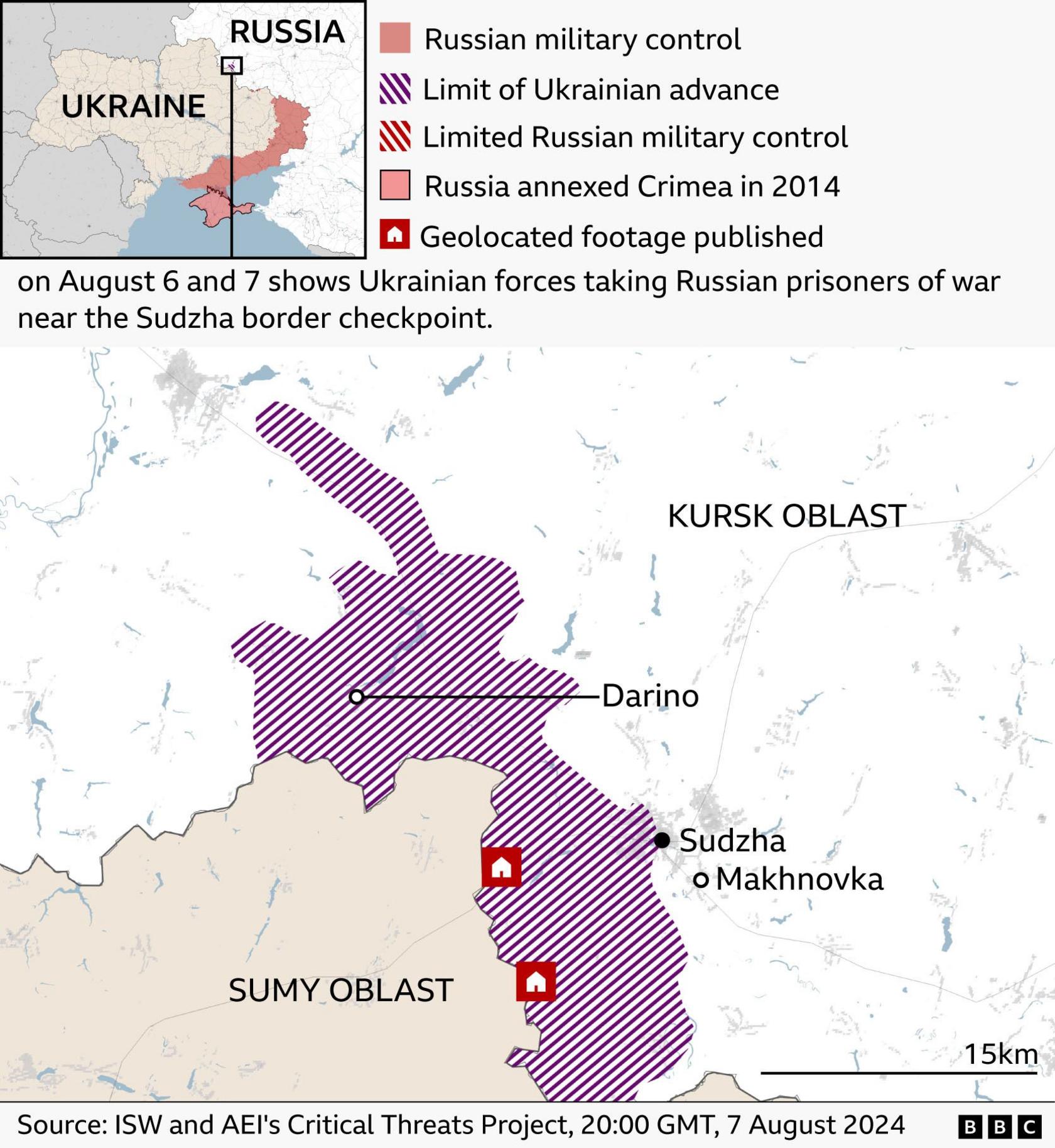
The article examines the unresolved disappearance of hundreds of Russian civilians after Ukraine’s surprise incursion into the Kursk region in August 2024. Ukrainian forces quickly seized more than 777 sq km of Russian territory around Sudzha, while Russian state television reassured residents that the situation was under control. Many people therefore remained in their villages, despite the fighting and the loss of mobile and internet connections. A proposed humanitarian corridor for civilians never materialized.
Families searching for relatives formed informal groups and compiled lists of missing people, often receiving little or no assistance from Russian authorities. One volunteer’s list grew to approximately 1,000 names. An official list of 517 missing Kursk residents published in early 2025 contained serious errors, including confusing missing people with those searching for them, further upsetting relatives.
The personal story of Lyubov illustrates the consequences. Her mother stayed in the village of Darino, which was heavily damaged during the fighting. After Russian forces retook the area, survivors and volunteers described recovering bodies under dangerous conditions, frequently paying for equipment and transport themselves. Lyubov eventually learned that her mother had died from a head injury, but her body remained unidentified in a mortuary for months after her DNA sample was reportedly lost. She ultimately identified her mother from a photograph and had her cremated because returning the ashes to their home village was not yet possible.
Lyubov blames the authorities for failing to prevent the incursion, evacuate residents and communicate the danger honestly. Russian officials and the Russian Red Cross did not respond to the BBC’s requests for comment, while Ukrainian authorities said all civilians they evacuated had been returned to Russia. The article concludes with Lyubov mourning the destruction of once-friendly cross-border communities.
Entities: Lyubov, Anastasia Platonova, Kursk region, Sudzha, Darino • Tone: emotional • Sentiment: negative • Intent: inform
13-09-2026
Ukraine’s navy has released video it says shows the first-ever naval engagement between two uncrewed surface vessels: a Ukrainian Sargan 3000 sea drone and an unmanned Russian vessel. The footage, reportedly recorded from the Ukrainian craft, shows it firing on the Russian vessel during an encounter at sea. Ukraine’s military intelligence agency was involved in the operation, and the Sargan 3000 was equipped with a 12.7 mm Protector weapon.
According to a statement posted on the Ukrainian Navy’s Telegram account, the engagement represents a new development in naval warfare. The Russian vessel was reportedly destroyed and sank, although the article notes that no sailors appeared to be aboard. The New York Post says it could not independently determine the identity of the Russian vessel or when the battle took place, and the encounter itself could not be independently verified.
The reported clash occurred amid the broader Russia-Ukraine war, which has increasingly relied on drone technology. Russia has used Iranian and other kamikaze drones to attack Ukrainian cities, while Ukraine has developed drones to intercept Russian strikes and conduct attacks deeper inside Russia since Vladimir Putin’s 2022 invasion.
The article also mentions a separate claim from Iran’s Islamic Revolutionary Guard Corps, which recently said it had captured a U.S. Navy drone submarine. That incident raised concerns that Iran might reverse-engineer the technology or transfer it to Russia or China. Together, the events illustrate the expanding role of remotely operated and autonomous systems in modern warfare, particularly in air and maritime operations.
Entities: Ukraine, Russia, Ukrainian Navy, Ukrainian military intelligence agency, Sargan 3000 • Tone: urgent • Sentiment: negative • Intent: inform
13-09-2026
At least five people were wounded in a Russian drone attack on Odesa, Ukraine, on the morning of Sunday, Sept. 13, according to Ukrainian officials. The attack damaged residential areas in several districts of the southern port city, and local authorities were assessing the full extent of the destruction, said Serhiy Lysak, head of the Odesa military administration.
The strike came one day after a separate Russian drone attack on Odesa killed two people and injured 26 others. That earlier attack hit an apartment building, according to officials. The repeated strikes underscore the continuing danger faced by the city, which is home to Ukraine’s main port hub and has experienced persistent Russian missile and drone attacks in recent months.
The attacks have also affected the operation of Odesa’s seaports, which are important to Ukrainian exports. The article does not provide details about the types of residential damage in Sunday’s attack or identify the five people who were wounded.
Russian attacks also continued overnight and into Sunday morning in several other regions of western Ukraine, regional authorities said. No civilian casualties were immediately reported in those areas. The report, attributed to Reuters, presents the developments through statements from Ukrainian officials and does not include a response from Russian authorities.
The latest strikes illustrate the ongoing impact of the Russia-Ukraine war on civilians, residential neighborhoods, and critical infrastructure. Odesa’s strategic importance as a maritime and export center has made it a recurring target during the conflict.
Entities: Odesa, Ukraine, Russia, Serhiy Lysak, Odesa military administration • Tone: neutral • Sentiment: negative • Intent: inform
13-09-2026
At least two people were killed and several others injured after Russia and Ukraine exchanged extensive overnight drone strikes across locations in both countries. In Russia, Ukrainian drones struck Nizhnekamsk in Tatarstan, killing two civilians and injuring 12, according to regional authorities. Officials said a drone hit a tree near a parked car, causing the deaths. Nizhnekamsk contains a major oil-refining and petrochemical complex, and the city’s mayor reported a fire at one of its industrial enterprises.
Ukraine has increasingly attacked Russian oil and gas infrastructure, arguing that the sector finances Moscow’s war effort. Kyiv also says such strikes have contributed to fuel shortages and rationing in some parts of Russia. Ukraine’s defence intelligence agency claimed that its drones hit an oil refinery in Slavyansk-on-Kuban in the Krasnodar region, damaging an oil-processing unit and a tank farm and starting a large fire. Russian regional authorities confirmed injuries, a fire and pipeline damage at an enterprise but did not independently verify the refinery claim. Russia’s Defence Ministry said it intercepted 389 Ukrainian drones overnight, including over Tatarstan, other Russian regions and Crimea.
In Ukraine, at least nine people were injured in what officials called a large Russian drone attack on Odesa. The assault followed a strike the previous day on an Odesa residential high-rise that killed two people and injured 26. Russian drones also struck western Ukraine, including near the Yahodyn-Dorohusk border crossing with Poland, where a petrol station caught fire.
The attacks come as Russia has intensified its aerial campaign using drones and ballistic missiles, while Ukrainian officials warn that energy infrastructure is increasingly being targeted ahead of winter. The developments raise concerns about civilian safety, industrial damage and possible disruptions to energy supplies.
Entities: Russia-Ukraine war, Ukraine, Russia, Nizhnekamsk, Tatarstan, Rustam Minnikhanov • Tone: urgent • Sentiment: negative • Intent: inform