13-09-2026
The 18th BRICS Summit in New Delhi concluded its first day with the group’s 11 members unanimously adopting a joint declaration, despite significant disagreements over the war involving Iran and the United States and Israel, as well as the war in Ukraine. The New Delhi Declaration called for restraint and de-escalation in the Middle East but avoided directly naming or condemning the United States, Israel, Iran, or Gulf countries. It also criticised unilateral tariffs and trade restrictions without explicitly identifying Washington.
The article explains that BRICS, originally founded as an economic grouping by Brazil, Russia, India, and China, has expanded to include South Africa, Egypt, Ethiopia, Iran, the United Arab Emirates, Saudi Arabia, and Indonesia. The bloc represents nearly half of the world’s population and about 40 percent of global GDP. Indian Prime Minister Narendra Modi presented BRICS as a platform for the Global South to help shape international rules rather than an explicitly anti-Western alliance.
The conflict involving Iran exposed both the bloc’s diplomatic value and its limitations. Iran and the UAE belong to BRICS but have been on opposing sides of the conflict, forcing negotiators to use carefully generalised language. The declaration expressed concern over attacks on civilians and safeguarded nuclear facilities, which could be interpreted as an indirect criticism of US and Israeli strikes on Iran.
On Ukraine, BRICS called for dialogue and opposed unilateral sanctions not authorised by the UN Security Council, but did not mention Russia’s invasion or Ukraine by name. The declaration was more explicit on Palestine, opposing the forced displacement of Palestinians, supporting humanitarian access and UNRWA, and endorsing a sovereign Palestinian state based on the 1967 borders. Overall, the summit produced a modest consensus while avoiding direct attribution of responsibility for major conflicts.
Entities: BRICS, New Delhi Declaration, New Delhi, India, Narendra Modi, Xi Jinping • Tone: analytical • Sentiment: neutral • Intent: inform
13-09-2026
In this opinion article, Ronny P Sasmita argues that the 2026 BRICS summit in New Delhi exposed the organization’s limits as a geopolitical bloc. Although the US-Israel war on Iran affected most of BRICS’ members and partner countries, the summit declaration avoided directly addressing the conflict or condemning the United States. This followed a similar failure by BRICS foreign ministers in May, when members could not agree on language concerning the war. Iran wanted condemnation of the US and Israel, while the United Arab Emirates opposed wording that ignored Iranian attacks and its own security concerns.
The author presents this disagreement as a consequence of BRICS expansion. The group’s growing membership has increased its economic weight and diplomatic reach, but it has also brought competing regional interests into the organization. Iran and the UAE, for example, belong to the same bloc while pursuing conflicting Middle Eastern strategies.
The article also examines why major members do not want BRICS to become an explicitly anti-American alliance. India uses BRICS to preserve strategic autonomy while maintaining ties with the United States, the Quad, Russia and China. Russia values BRICS as protection against Western pressure but wants to avoid a direct confrontation with the US and NATO. China seeks a stronger multipolar order but remains economically connected to the US. Brazil and Indonesia likewise favor greater influence and strategic flexibility rather than alignment with Chinese or Russian geopolitical goals.
Sasmita concludes that BRICS is more likely to become a bargaining coalition than a unified geopolitical instrument. Its members can cooperate on institutional reform, development finance, local-currency payments, energy and food security, but struggle when forced to take sides in active conflicts. The organization’s influence may therefore come through gradual changes to global governance, alternative financial institutions and reduced dependence on Western systems. Its avoidance of direct confrontation, the author suggests, could ultimately support a slower but more sustainable redistribution of power.
Entities: BRICS, US-Israel war on Iran, BRICS expansion, New Delhi, India • Tone: analytical • Sentiment: negative • Intent: analyze
13-09-2026
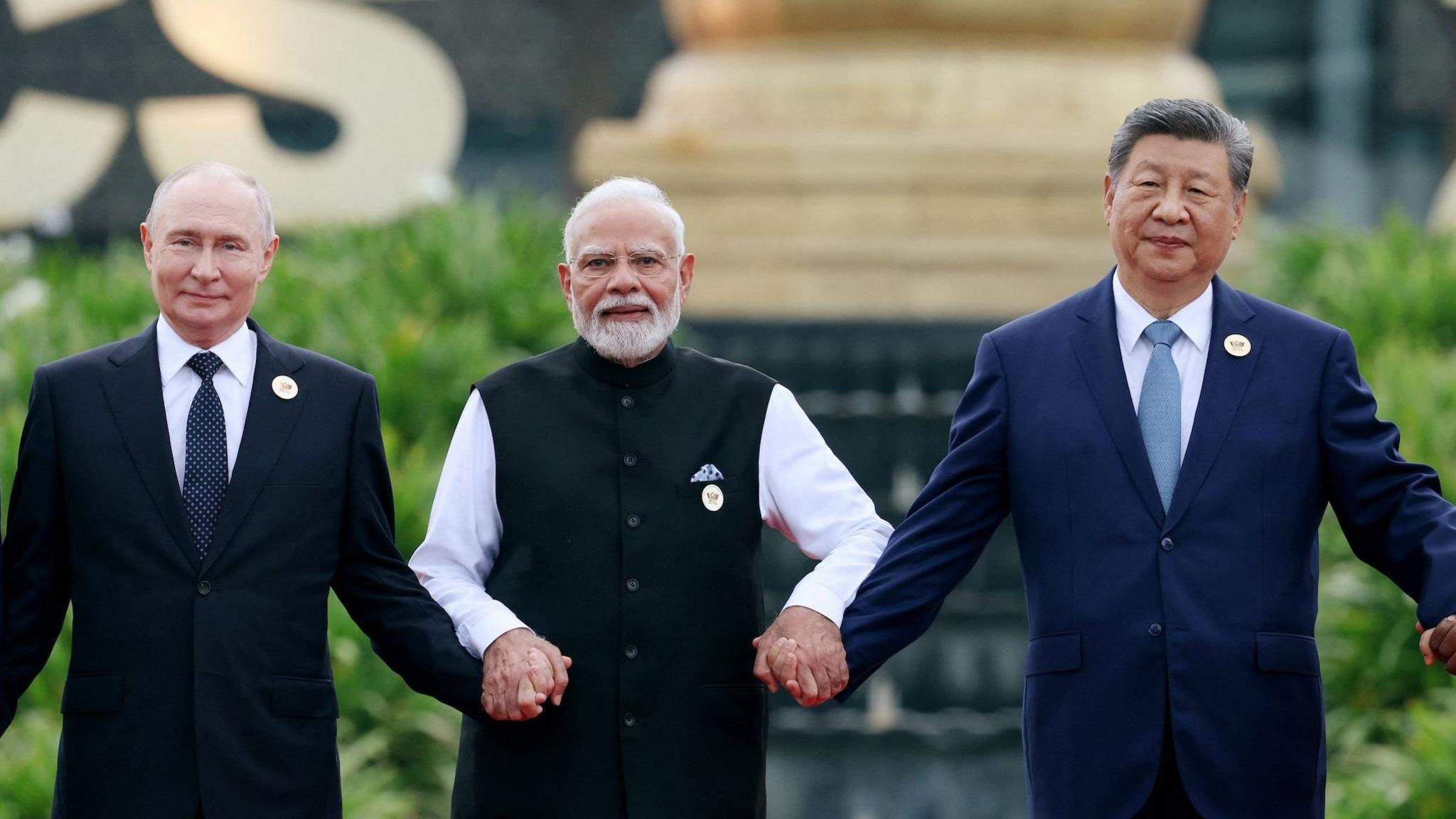
The 2026 BRICS summit in Delhi brought together leaders whose countries have conflicting interests, including Indian Prime Minister Narendra Modi, Chinese President Xi Jinping, Russian President Vladimir Putin, Iranian President Masoud Pezeshkian, Abu Dhabi’s Crown Prince Sheikh Khaled bin Mohamed bin Zayed Al Nahyan and South African President Cyril Ramaphosa. Modi presented BRICS as a group that should become a force of “rule-shapers” rather than “rule-takers,” but the summit also highlighted how difficult it is for members to agree on a shared global agenda.
For China, Russia and Iran, BRICS is a way to reduce US and Western European influence. India, however, has resisted turning the organization into an explicitly anti-Western bloc, preferring to maintain relationships with countries that oppose one another. This approach was reflected in the New Delhi Declaration. Although members reached a joint statement after earlier ministerial meetings failed to do so, they avoided the most divisive issues. The declaration condemned attacks on civilian infrastructure and peaceful nuclear facilities, supported a two-state solution and opposed the forced displacement of Palestinians, but did not assign blame. It also omitted any reference to Russia’s war in Ukraine. On trade, it criticized rising tariffs and unilateral sanctions without naming the United States, likely limiting confrontation with President Donald Trump.
The summit nevertheless created opportunities for important diplomatic contacts. Pezeshkian held talks with the UAE’s crown prince, marking a significant meeting between the two countries during the Middle East conflict. Iran also sought stronger economic ties with BRICS members amid sanctions and military pressure. Xi’s first visit to Delhi in seven years provided an opportunity for India and China to advance business and transport links, despite mistrust following their 2020 border clash and an unequal trade relationship.
The summit demonstrated that BRICS can provide space for rivals to engage outside Western-led institutions. However, the article concludes that members remain far more united by dissatisfaction with the existing global order than by agreement on what should replace it.
Entities: BRICS, 2026 BRICS summit in Delhi, India, New Delhi Declaration, Indian Prime Minister Narendra Modi • Tone: analytical • Sentiment: neutral • Intent: analyze
13-09-2026
Chinese President Xi Jinping called on BRICS countries to support a political resolution to the conflict in the Middle East and promote a permanent, comprehensive ceasefire. Speaking at the 18th BRICS Summit in New Delhi, India, Xi said the conflict had caused severe losses among people in the region and was not in the broader international community’s interest. He urged the parties to address the root causes of the crisis and said the Palestinian question remained central to resolving the wider Middle East issue. Xi also emphasized the need to implement a two-state solution involving Israel and the Palestinians.
Xi said China was prepared to work with other BRICS members and play a constructive role in efforts to achieve peace and stability in the Middle East and Gulf region. His comments came as China maintains close economic ties with Iran, including being the country’s largest trading partner and a major buyer of its energy exports.
The article also places Xi’s remarks in the context of heightened tensions between Washington and Tehran. The Trump administration recently imposed a new round of sanctions on Iran under an initiative called “Operation Economic Outcast,” which seeks to cut Iran off from international financial networks. U.S. Treasury Secretary Scott Bessent indicated that China would not be exempt from the measures.
The conflict has contributed to higher energy prices, although economists say China’s years of oil stockpiling and subsequent reduction in purchases have helped limit further increases. Xi’s diplomatic statements precede a planned meeting with U.S. President Donald Trump at the White House later in September.
Founded in 2009 as a counterweight to Western influence, BRICS initially consisted of Brazil, Russia, India, China and South Africa. The group has since expanded to include Egypt, Ethiopia, Indonesia, Iran and the United Arab Emirates.
Entities: Xi Jinping, Donald Trump, BRICS, China, Middle East conflict • Tone: analytical • Sentiment: neutral • Intent: inform
13-09-2026
At the 18th BRICS Summit in New Delhi, Chinese President Xi Jinping said China would take the lead in promoting artificial-intelligence collaboration and technological development among developing countries. His proposals focus on building shared infrastructure, expanding technical education, and encouraging cooperation on AI development and deployment.
Xi said China would pioneer a BRICS AI open-source community, support joint work on developing and applying large language models, organize AI seminars and training courses, and promote an open AI ecosystem. China also plans to help establish a BRICS digital ecosystem cloud platform, conduct digital-skills training, facilitate technological exchanges, and encourage industrial alignment among member states.
In addition, Xi proposed creating a BRICS engineer cultivation alliance and launching a youth exchange program focused on scientific and technological innovation. The initiatives reflect China’s effort to strengthen technology partnerships among emerging and developing economies and to expand its role in shaping international AI cooperation.
The proposals come as the global AI industry rapidly advances, with companies releasing increasingly capable models. The article also notes growing concern about AI safety. A researcher who has worked at OpenAI and Anthropic said that many people in the industry believe AI could potentially cause the extinction of humanity by the end of the decade. Xi did not address that debate in his remarks.
Founded in 2009 as a counterweight to Western dominance, BRICS initially included Brazil, Russia, India, China, and South Africa. The group later expanded to include Egypt, Ethiopia, Indonesia, Iran, and the United Arab Emirates.
Entities: Xi Jinping, China, BRICS, 18th BRICS Summit, New Delhi, India • Tone: analytical • Sentiment: neutral • Intent: inform
13-09-2026
The France 24 report examines the outcome of the BRICS summit held in New Delhi. According to the report, the meeting concluded with a joint declaration focused on strengthening the influence of the Global South in international decision-making and global governance. The declaration also called for restraint in the Middle East, highlighting the bloc’s concern about regional instability and the risk of further escalation.
Beyond the formal declaration, the summit provided an opportunity for leaders to conduct bilateral diplomacy. A series of one-to-one meetings took place on the margins of the gathering, with discussions reportedly aimed at easing regional tensions. These meetings were an important part of the summit because they allowed participating leaders to address sensitive political and security issues directly, in addition to negotiating through the broader BRICS framework.
The report is presented by France 24 journalist Navodita Kumari and appears to be a short video news segment rather than a detailed written analysis. The available article text does not provide the full wording of the joint declaration, identify each bilateral meeting, or explain the specific positions taken by individual leaders. Iran and Ukraine are listed as keywords, suggesting that these issues may feature in the accompanying video or wider context, but the supplied text does not elaborate on them.
Overall, the report portrays the New Delhi summit as both a diplomatic effort to promote a stronger Global South role and a venue for dialogue on urgent international and regional conflicts.
Entities: BRICS summit, New Delhi, BRICS, Global South, Global governance • Tone: analytical • Sentiment: neutral • Intent: inform
13-09-2026
The article examines the limited results achieved by Russia and Iran at the 18th BRICS Summit in New Delhi, despite the group’s emphasis on solidarity, partnership and challenging Western dominance. BRICS members collectively represent about 40 per cent of global economic output, compared with 29 per cent for the G-7, and Indian Prime Minister Narendra Modi presented the grouping as a way to replace the existing “pyramid of privilege” with a broader platform for cooperation.
However, the summit did not deliver several outcomes sought by Moscow and Tehran. Russian President Vladimir Putin was unable to make meaningful progress on creating alternatives to US-dominated financial networks, including payment mechanisms that could help Russia evade Western sanctions. He also failed to secure major advances in expanding Russian exports to India or developing stronger trade partnerships. These setbacks are particularly significant because Russia’s economy remains under pressure from sanctions and other wartime constraints.
Iran likewise received little concrete support from the BRICS group. The bloc did not adopt a strong position on Middle East tensions, leaving Tehran without the diplomatic backing it may have hoped for. One notable development was a rare high-level meeting between an Iranian representative and the Crown Prince of the United Arab Emirates during the summit, but this bilateral contact did not amount to a broader BRICS commitment.
Overall, the article portrays BRICS as an increasingly influential grouping in economic terms, but one whose members’ competing interests limit its ability to act decisively. The summit produced public displays of goodwill and diplomatic embraces, yet Russia and Iran returned home without achieving their principal strategic objectives.
Entities: BRICS, 18th BRICS Summit, Russia, Iran, Vladimir Putin • Tone: analytical • Sentiment: negative • Intent: analyze
13-09-2026
The 18th BRICS summit concluded in New Delhi with leaders calling for stronger co-operation within the expanded group and a greater role for the Global South in shaping international rules. Indian Prime Minister Narendra Modi presented BRICS as a platform for reform and partnership rather than an anti-Western alliance. The bloc now comprises 11 countries representing nearly half of the world’s population and about 40 per cent of global GDP.
Modi said developing countries increasingly view BRICS as a forum where their concerns and experiences are respected. He urged members to move from a “pyramid of privilege” to a “platform of partnership” and argued that the Global South should become a “rule shaper, not a rule follower”. Chinese President Xi Jinping likewise called for closer economic and technological integration, proposing initiatives involving artificial intelligence, trade and investment, the digital economy, smart manufacturing and talent development. China will chair BRICS next year and host the group’s 19th summit.
The summit also focused heavily on international conflicts. Xi and Modi offered to help facilitate peace talks on Ukraine, an offer welcomed by Russian President Vladimir Putin. BRICS leaders issued a joint declaration urging “maximum restraint” in the Middle East, condemning attacks on civilian infrastructure and nuclear sites, and calling for a ceasefire and unrestricted humanitarian access in Gaza. They also expressed grave concern about Sudan’s deteriorating humanitarian situation and the risks posed by extremism and terrorism.
The summit provided an opportunity for Xi and Modi to improve China-India relations after years of tensions over their disputed Himalayan border. Both leaders supported a long-term strategic approach and agreed that differences should not become disputes, while also discussing trade and business ties. Senior officials from the UAE, Egypt, Saudi Arabia and Iran also attended the summit, underscoring BRICS’s growing diplomatic reach.
Entities: BRICS, 18th BRICS Summit, New Delhi, India, Narendra Modi, Xi Jinping • Tone: analytical • Sentiment: neutral • Intent: inform
13-09-2026
Sheikh Khaled bin Mohamed, Crown Prince of Abu Dhabi, met Russian President Vladimir Putin during the 18th BRICS summit in New Delhi as the gathering concluded after a weekend of discussions among international leaders. Their talks focused on bilateral relations, regional and international developments, and the importance of continued co-ordination following the summit.
The 2026 conference addressed financial co-operation and energy transition, while also providing a setting for diplomatic engagement on regional issues. Sheikh Khaled held additional meetings with world leaders, including Indian Prime Minister Narendra Modi. The summit was described as significant for keeping difficult discussions open amid challenges facing the BRICS bloc.
One of the most notable diplomatic encounters took place on the sidelines between the UAE and Iran. Sheikh Khaled met Iranian President Masoud Pezeshkian in what was described as the highest-level meeting between the two countries since the start of the war. According to the Abu Dhabi Media Office, the two leaders discussed regional and international affairs, de-escalation, stability, and efforts to promote regional peace and development.
A group photograph from the summit showed Sheikh Khaled alongside leaders and senior officials from Brazil, Indonesia, Egypt, Russia, India, China, South Africa, Iran and Ethiopia. The meetings underscored the UAE’s efforts to maintain dialogue with major international powers and regional counterparts. The summit’s conclusion followed negotiations intended to sustain co-operation among BRICS members while addressing financial, energy and geopolitical concerns.
Entities: Sheikh Khaled bin Mohamed, Vladimir Putin, Narendra Modi, Masoud Pezeshkian, Abu Dhabi • Tone: analytical • Sentiment: neutral • Intent: inform
13-09-2026
BRICS leaders meeting in New Delhi expressed concern about the escalating war and tensions in the Middle East and called for calm and maximum restraint. The group also condemned sanctions imposed without United Nations authorization, attacks on civilian infrastructure, and strikes against peaceful nuclear facilities operating under International Atomic Energy Agency safeguards.
The joint statement followed the failure of BRICS foreign ministers to reach an agreement in May. Member states Iran, Saudi Arabia, and the United Arab Emirates have been divided over the conflict, which the article says began with US-Israeli strikes on Iran in late February. India conducted intensive diplomatic efforts to secure agreement on the statement.
The summit, hosted by India under the theme “Building for Resilience, Innovation, Cooperation and Sustainability,” marks twenty years since BRICS was founded. Indian Prime Minister Narendra Modi described the meeting as fruitful and said the changing world could not be managed through outdated institutions. BRICS was established to give emerging economies greater influence in international institutions traditionally dominated by Western powers.
Chinese President Xi Jinping said the war did not serve the international community’s common interests and urged BRICS members to oppose violations of sovereignty, interference in internal affairs, and protectionism. He called for respect for the authority of the United Nations and support for the multilateral trading system centered on the World Trade Organization. The joint statement also emphasized maintaining global trade, supply chains, and energy flows in accordance with international law.
Russian President Vladimir Putin and Iranian President Masoud Pezeshkian attended the summit. Xi’s comments came less than two weeks before his expected visit to Washington, highlighting the broader geopolitical and trade tensions surrounding the meeting.
Entities: BRICS, Middle East war, New Delhi, India, Iran • Tone: analytical • Sentiment: negative • Intent: inform