12-09-2026
The article reports that Saudi Arabia shut its East-West oil pipeline after it was damaged in a drone attack. A satellite image reportedly shows damage to the critical pipeline, which is an important part of Saudi Arabia’s oil-export infrastructure. Riyadh says the attack originated in Iraq, presenting the incident as a cross-border strike and linking it to a wider regional security concern. The article does not provide details about the alleged attackers, the precise location or extent of the damage, casualties, or how long the pipeline will remain closed.
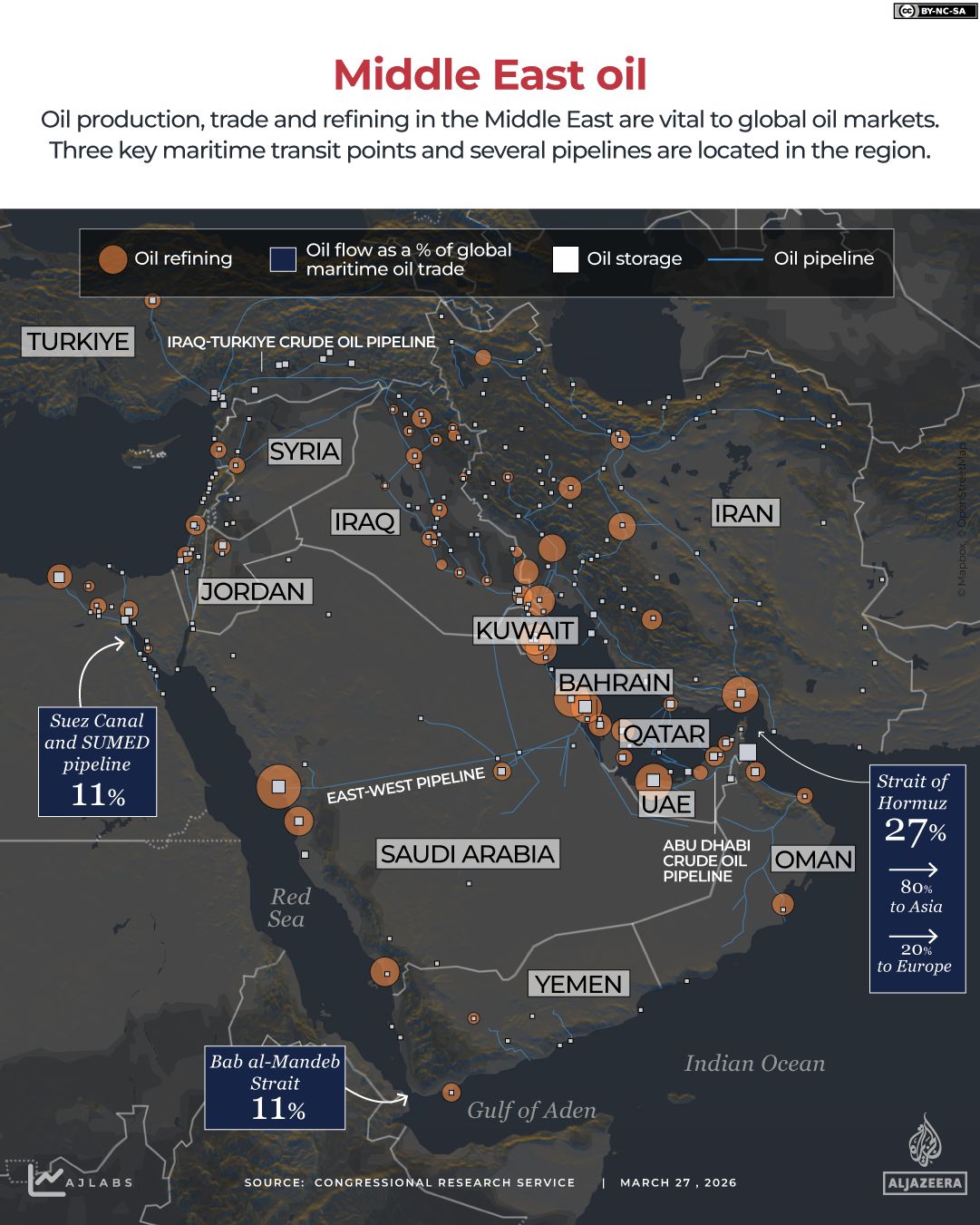
The East-West pipeline is strategically significant because it allows Saudi Arabia to transport oil toward the Red Sea and export it without relying entirely on the Strait of Hormuz. The strait is a major global energy chokepoint, so the pipeline provides Riyadh with an alternative route for moving oil and reducing its exposure to disruptions there. Damage to the pipeline could therefore affect Saudi oil logistics and highlight the vulnerability of critical energy infrastructure to drone attacks.
The report is brief and primarily descriptive. It attributes the claim about the attack’s origin to Saudi authorities rather than presenting it as independently verified. The central developments are the reported drone strike, the visible pipeline damage, the shutdown of the East-West route, and the broader strategic importance of the infrastructure. The article’s focus is on informing readers about the incident and its implications for Saudi oil transportation, rather than offering an extensive analysis of responsibility or regional consequences.
Entities: Saudi Arabia, Riyadh, Iraq, East-West oil pipeline, Strait of Hormuz • Tone: neutral • Sentiment: negative • Intent: inform
12-09-2026
Saudi Arabia has temporarily shut its 1,200-kilometre East-West oil pipeline after drone strikes hit facilities in the Riyadh and Medina areas. The pipeline, operated by Saudi Aramco, carries oil from the Abqaiq oilfield in the east to Yanbu on the Red Sea and has recently transported an estimated four to five million barrels per day—around 4 to 5 percent of global supply. The closure has halted Saudi oil exports through the route and further reduced the kingdom’s ability to bypass the Strait of Hormuz, which has already been disrupted by the conflict involving the United States, Israel and Iran.
According to Iraqi officials, the drones originated in Maysan province in southeastern Iraq. No group has claimed responsibility, but analysts suspect Iran-backed armed groups and say the attack may be intended to pressure Saudi Arabia to withdraw from Yemen, where Houthi forces have advanced against the Saudi-backed government. The Houthis have also seized the strategic island of Mayun near the Bab al-Mandeb strait.
Iraq condemned the attack, launched an investigation, dismissed the commander of the Maysan operations command and temporarily closed the Shalamcheh border crossing with Iran. Saudi Arabia has so far refrained from retaliation at the Iraqi prime minister’s request, while reserving the right to take measures to protect its interests. Analysts expect a possible response involving regional allies, including Turkiye and Pakistan, and warn of further escalation.
The pipeline shutdown is expected to intensify pressure on global energy markets. Brent crude is above $104 per barrel, compared with about $72 before the war began, while US diesel prices have reached a record high. Experts say the loss of Saudi Arabia’s main alternative to the Strait of Hormuz removes crucial supply buffers. The article notes that the timeline for repairs and reopening remains uncertain, especially because a previous strike on the pipeline caused output to fall sharply.
Entities: Saudi Arabia, East-West oil pipeline, Saudi Aramco, Iraq, Maysan province • Tone: analytical • Sentiment: negative • Intent: inform
12-09-2026
A Saudi oil pipeline has been shut down after a fire that Saudi authorities attributed to a drone attack launched from Iraq. The East–West pipeline, also known as the Petroline, connects Abqaiq near the Persian Gulf with Yanbu on the Red Sea. It is considered strategically important because it allows Saudi Arabia to transport oil without relying on the Strait of Hormuz, which has been affected by a blockade and escalating regional tensions.
Saudi Arabia’s foreign ministry said the fire occurred near Medina and caused human and material damage. A Saudi government official said people were injured in the attack and the subsequent blaze, and that the pipeline was closed as a precaution. Iraq acknowledged that the attack originated from its territory and dismissed the commander of Maysan province in southern Iraq as a consequence.
Saudi Arabia has frequently accused Iran-linked armed groups operating in Iraq of attacking its oil infrastructure with drones. The Gulf Cooperation Council condemned the incident as a dangerous escalation and an unacceptable threat to Saudi security. Riyadh said it would not retaliate immediately, instead supporting Iraqi efforts to prevent further attacks from its territory against Saudi Arabia and neighboring countries.
The incident occurred one day after Iran-backed Houthi rebels in Yemen reportedly seized a strategically important island in the Bab al-Mandab Strait, a major route for global oil shipments. The Houthis said navigation remained safe for everyone except the Saudis, while Saudi Arabia supports Yemen’s government.
The pipeline attack adds to a broader series of incidents linked to the war launched by the United States and Israel against Iran in February. The conflict has driven oil and fuel prices to record levels, with crude rising above $100 per barrel on Friday.
Entities: Saudi Arabia, Iraq, East–West pipeline, Abqaiq, Yanbu • Tone: urgent • Sentiment: negative • Intent: inform
12-09-2026
The article reports that Saudi Arabia has been forced to shut down a crucial pipeline connected to the Red Sea following attacks. It links the disruption to a major development involving the Iran-backed Houthi militia, which reportedly captured a strategic Red Sea port city during the week of publication. The pipeline shutdown is presented as a significant regional consequence because the Red Sea is an important area for energy infrastructure and shipping, although the supplied article text does not provide further operational details about the pipeline, the attacks, or the extent of the disruption.
NPR host Scott Simon discusses the situation with April Longley Alley of the Washington Institute. Their conversation appears to focus on the strategic implications of the Houthi capture and the resulting pressure on Saudi Arabia. The excerpt identifies the segment as part of Weekend Edition Saturday and indicates that the associated audio runs for approximately five minutes.
The material provided is an article-page excerpt rather than a full transcript or detailed written report. It does not name the captured port city, specify when or how the attacks occurred, explain the pipeline’s exact route or function, or describe responses from Saudi authorities, the Houthis, Iran, or other governments. Consequently, the central news point is clear—the reported pipeline shutdown and the Houthi takeover of a strategic Red Sea location—but the broader military, economic, and geopolitical consequences are left to the accompanying interview. The article’s framing emphasizes the seriousness of the development and directs readers to an expert discussion for additional context.
Entities: Saudi Arabia, Red Sea, Iran-backed Houthi militia, Strategic Red Sea port city, Saudi Arabian pipeline shutdown • Tone: urgent • Sentiment: negative • Intent: inform
12-09-2026
Saudi Arabia said on Sept. 11 that several drones launched from Iraqi territory attacked the East-West oil pipeline in the Riyadh and Medina regions, causing injuries and damage and prompting the temporary shutdown of the route as a precaution. The pipeline, also known as Petroline, connects the Abqaiq oil facilities near the Gulf to Yanbu on the Red Sea and has become increasingly important since the start of the Middle East war and the closure of the Strait of Hormuz by Iran. It provides Saudi Arabia with an alternative route for exporting oil without using the strategic waterway.
Saudi Arabia’s Foreign Ministry condemned the attack, while an energy ministry official said the pipeline had been stopped and that some people were injured. Satellite imagery from Copernicus Sentinel showed black smoke near Medina along the pipeline’s route. Iraq’s government confirmed that the attack originated in the southern province of Maysan, condemned it and said the commander responsible for the province had been dismissed. Riyadh said it would not retaliate immediately, at the request of Iraqi Prime Minister Ali al-Zaidi, but warned that it reserved the right to take measures to protect its sovereignty, security, infrastructure and population.
Bahrain, Jordan, Qatar and the Gulf Cooperation Council also condemned the incident, with the council describing it as a dangerous escalation. The attack occurred amid broader regional tensions. Oil prices had risen above US$100 a barrel, while US diesel prices reached a record average above US$6. Iran-backed Houthi rebels in Yemen had also announced a maritime blockade against Saudi Arabia and attacked Saudi oil tankers in the Red Sea. After taking control of parts of Yemen’s Red Sea coast and the Bab el-Mandeb Strait, the Houthis said the passage remained safe for vessels other than those connected to Saudi Arabia.
Entities: Saudi Arabia, Iraq, East-West pipeline (Petroline), Riyadh, Medina • Tone: urgent • Sentiment: negative • Intent: inform