12-09-2026
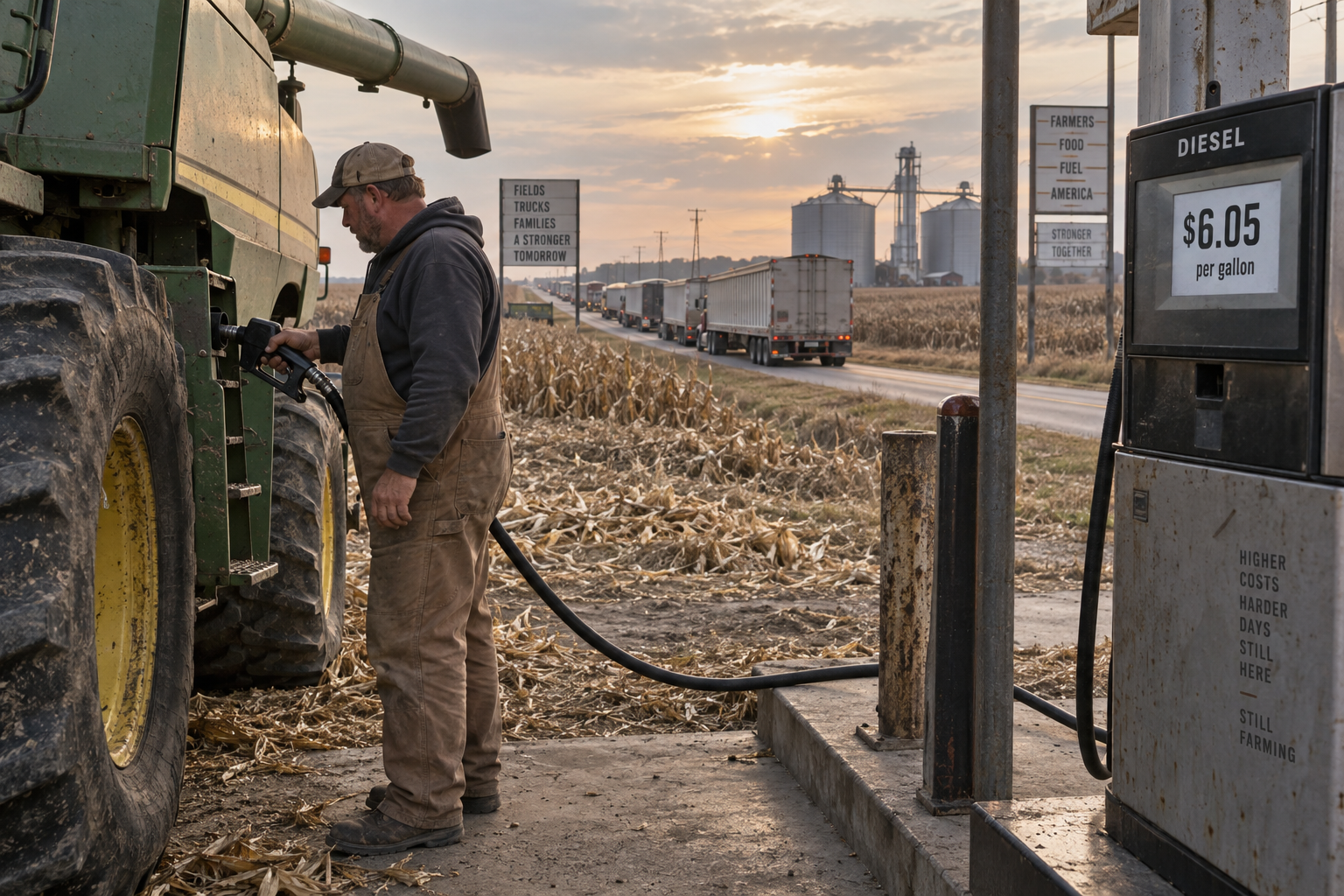
US diesel prices have climbed above $6 per gallon just as American farmers begin harvesting corn and soybeans, sharply increasing the cost of operating combines, tractors and trucks. According to AAA, the national average diesel price reached $5.85 per gallon on September 4 and rose to $6.05 by Friday, about 60% higher than the roughly $3.76 average recorded before the United States and Israel launched their war against Iran in late February. The increase has compounded an already difficult year for farmers, who are also paying more for fertilizer, seeds, equipment, chemicals and transportation.
The article emphasizes that diesel is essential throughout the agricultural supply chain, not only for harvesting crops but also for moving grain and silage from fields to farms and then to buyers. University of Wisconsin-Madison agricultural economist Paul Mitchell said the higher prices are particularly damaging to farms with limited cash reserves. Missouri farmer Jason Kurtz said his fuel bill had doubled. His combine uses approximately 200 gallons of diesel per day, and he expects to operate it for about 30 days, in addition to fueling tractors and trucks.
The diesel surge is linked to higher crude oil prices and disruptions to tanker traffic through the Strait of Hormuz during the conflict, since crude oil is the primary input for diesel and gasoline. With costs already elevated, farmers face difficult decisions about which work or purchases to delay. Kurtz said his finances were already tight and that he planned to postpone some farm work in hopes that diesel prices would later decline. The article portrays record fuel prices as an additional threat to farm profitability during a critical harvest period.
Entities: US diesel prices, American farmers, Corn and soybean harvest, AAA, Paul Mitchell • Tone: analytical • Sentiment: negative • Intent: inform
12-09-2026
US diesel prices reached a new national record on Friday, averaging nearly $6.06 per gallon, according to motor club AAA. The price increased from $5.85 a gallon the previous week and approximately $3.71 at the same time last year. The article attributes the surge to the disruption of global fuel flows caused by the escalating war between Washington and Iran.
The rise in diesel prices is expected to affect the broader economy because diesel powers many freight, trucking, delivery, and transportation networks. As fuel costs increase, businesses face higher operating expenses, and some have already transferred those costs to consumers through additional charges on online orders and mailed packages.
Regular gasoline prices also increased, reaching an average of nearly $4.30 per gallon in the United States. Both diesel and gasoline prices generally track crude oil prices, which have risen again amid the intensifying conflict. During the week covered by the report, Brent crude—the international benchmark—and US crude both moved above $100 per barrel for the first time in several months.
The article presents the price increases as a direct economic consequence of geopolitical instability and fighting in the Middle East. While it focuses primarily on fuel prices, it also highlights the potential for higher transportation costs to spread through supply chains and raise the prices of everyday goods. The report is attributed to the Associated Press and dated September 12, 2026.
Entities: United States, Iran, US diesel prices, Iran war, Associated Press (AP) • Tone: analytical • Sentiment: negative • Intent: inform
12-09-2026
U.S. crude oil prices rose above $100 per barrel this week for the first time since May as fighting in the Middle East intensified, including attacks that shut down Saudi Arabia’s East-West oil pipeline. The rally has lifted prices roughly 50% from a summer low of $68.55, although crude remains below its April wartime closing high of $112.95.
The article argues that China’s crude-buying decisions may determine whether oil prices continue rising. China had limited the impact of the Iran war by sharply reducing imports, cutting purchases from about 11.5 million barrels per day in February to roughly 6 million barrels per day in June. This “crash diet,” combined with China’s petroleum reserve of more than 1 billion barrels, helped prevent prices from rising even faster.
However, Chinese refiners are now returning to the market because diesel refining margins have surged after the Iran and Ukraine wars reduced global refining capacity. Imports increased to about 7 million barrels per day in July and August, and some analysts believe stronger demand could tighten the market further. Other experts caution that China is unlikely to restore imports to prewar levels and may rely on inventories while keeping refinery operations under control, particularly with oil prices above $100.
Additional upward pressure comes from dwindling global inventories, which have fallen by approximately 400 million barrels after more than six months of war. Emergency stockpile releases are also nearing an end, removing another buffer. Analysts say the market is becoming less responsive to efforts by the Trump administration to talk prices down by suggesting peace may be imminent. The outlook therefore depends on the balance between China’s renewed purchases, depleted inventories, refining demand, and the continuing Middle East conflict.
Entities: China, U.S. crude oil prices, Persian Gulf conflict, Saudi Arabia’s East-West oil pipeline, Iran • Tone: analytical • Sentiment: neutral • Intent: analyze