12-09-2026
United States-mediated talks between Israel and Lebanon have been postponed amid continued Israeli military operations in southern Lebanon. Lebanese President Joseph Aoun, speaking during a visit to the war-damaged city of Nabatieh, said there would be no new negotiations with Israel “at the moment.” He identified the withdrawal of Israeli forces, the return of prisoners and displaced people, and reconstruction as national priorities.
An unnamed US official told AFP that negotiations planned for this month in Rome would instead be delayed until October. In the meantime, the Lebanese and Israeli ambassadors are expected to meet at the US Department of State to discuss implementation of a framework agreement announced in June. That agreement calls for the Lebanese army to disarm Hezbollah in designated “pilot zones,” although Hezbollah has rejected direct negotiations with Israel.
The postponement follows a renewed Israeli campaign of strikes and demolitions across southern Lebanon. Israeli Prime Minister Benjamin Netanyahu and Defence Minister Israel Katz said Israeli forces would remain in the region to prevent Hezbollah from re-establishing its presence. Israeli forces also detonated an estimated 1,100 tonnes of explosives at a site they described as a Hezbollah command complex beneath the Ali al-Taher Ridge, causing tremors in nearby areas.
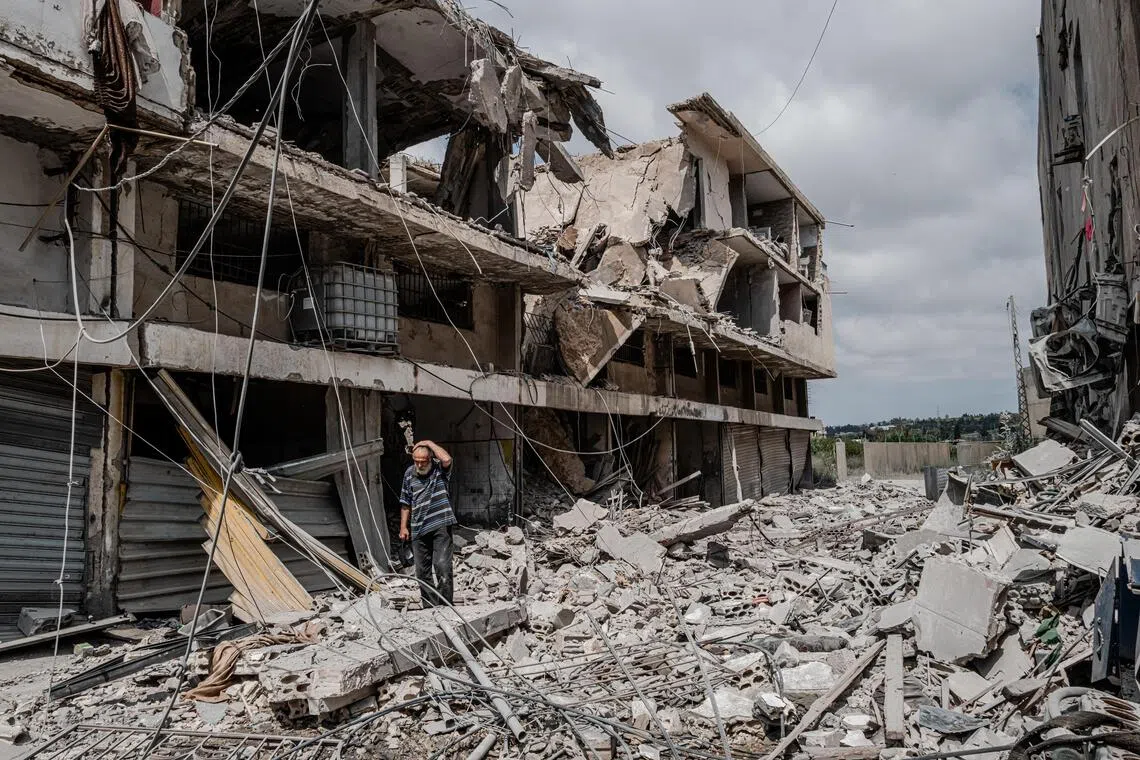
At least 29 people have been killed in Israeli attacks around Nabatieh over the previous two weeks, including 12 members of one family in Kfar Ramman. Further explosions were reported in al-Mansouri, while artillery struck several nearby areas. Israeli forces also damaged most of a public school in al-Mansouri, conducted air raids on Nabatieh al-Fawqa, and reportedly used drones to drop explosive barrels on homes during demolitions. The escalation has deepened uncertainty over both the ceasefire framework and the prospects for renewed negotiations.
Entities: Joseph Aoun, Benjamin Netanyahu, Israel Katz, Israel-Lebanon negotiations, United States-mediated talks • Tone: urgent • Sentiment: negative • Intent: inform
12-09-2026
The next round of Israel-Lebanon negotiations scheduled to take place in Rome has been postponed until October, according to a US official who spoke on September 11. The talks were originally expected to occur in early September, but scheduling conflicts involving the United Nations General Assembly, Jewish holidays and a Paris conference supporting the Lebanese Armed Forces made it impossible for key participants to attend.
Although the Rome meeting has been delayed, the Israeli and Lebanese ambassadors are expected to meet at the US State Department in Washington the following week. Their discussions will focus on recent developments and the continued implementation of a framework agreement reached in June.
Known as the Trilateral Framework, the agreement is intended to address the security and sovereignty concerns of both countries. Its provisions include the disarmament of Hezbollah, the gradual withdrawal of Israeli forces from southern Lebanon and the deployment of the Lebanese army in the area. The army’s deployment would initially begin in designated “pilot zones.” A US official described the framework as the only viable mechanism for restoring Lebanon’s sovereignty and safeguarding Israel’s security.
The postponement comes amid renewed violence along the Israel-Lebanon border. After the United States and Israel launched a war against Iran in late February, Hezbollah entered the conflict by firing missiles at Israel. Violence subsided temporarily after an understanding between Iran and the US in June and the subsequent Israel-Lebanon agreement, but strikes have intensified in recent days.
The delay was announced one day after Israel said it had destroyed Hezbollah tunnels in southern Lebanon. The resulting explosion was recorded by the US Geological Survey as equivalent to a 4.1-magnitude earthquake, underscoring the tense and unstable security situation surrounding the negotiations.
Entities: Israel-Lebanon negotiations, Rome, Washington, United States Department of State, Trilateral Framework • Tone: analytical • Sentiment: negative • Intent: inform
12-09-2026
Lebanese President Joseph Aoun made an unannounced visit to Nabatieh in southern Lebanon on Sept 12, near the strategic Ali al-Taher ridge, which Israeli forces recently seized and demolished. His visit came amid renewed Israeli military activity and growing concern that the latest US-supported arrangements between Israel and Lebanon could unravel.
Aoun, accompanied by security officials, met residents and visited Nabatieh Governmental Hospital. He expressed solidarity with local people and praised hospital staff for continuing to provide medical care despite the dangers and the mass departure of residents from the area.
Fighting between Israel and Hezbollah had eased from late June until early September under a US-sponsored framework agreement and a related US-Iran memorandum of understanding connected to the wider Middle East war. However, Israeli attacks intensified in recent days, particularly around Nabatieh. On Sept 10, Israeli forces demolished underground fortifications on the Ali al-Taher ridge after taking control of the site. The explosion was powerful enough to register as a 4.1-magnitude tremor with seismic monitoring agencies.
At least 29 people were killed in Israeli strikes in the area over several days, including 12 members of one family. The Lebanese army, which has deployed troops in Nabatieh, warned that Israel’s actions endangered the framework agreement. The agreement calls for Hezbollah’s disarmament, a phased Israeli withdrawal from southern Lebanon and the deployment of the Lebanese army in the region, initially through designated “pilot zones.”
The article also notes that US-brokered talks between Israel and Lebanon, originally expected to begin the following week, were postponed until October, adding to uncertainty over the agreement’s implementation and the prospects for de-escalation.
Entities: Joseph Aoun, Lebanon, Israel, Hezbollah, Nabatieh • Tone: analytical • Sentiment: negative • Intent: inform