10-09-2026
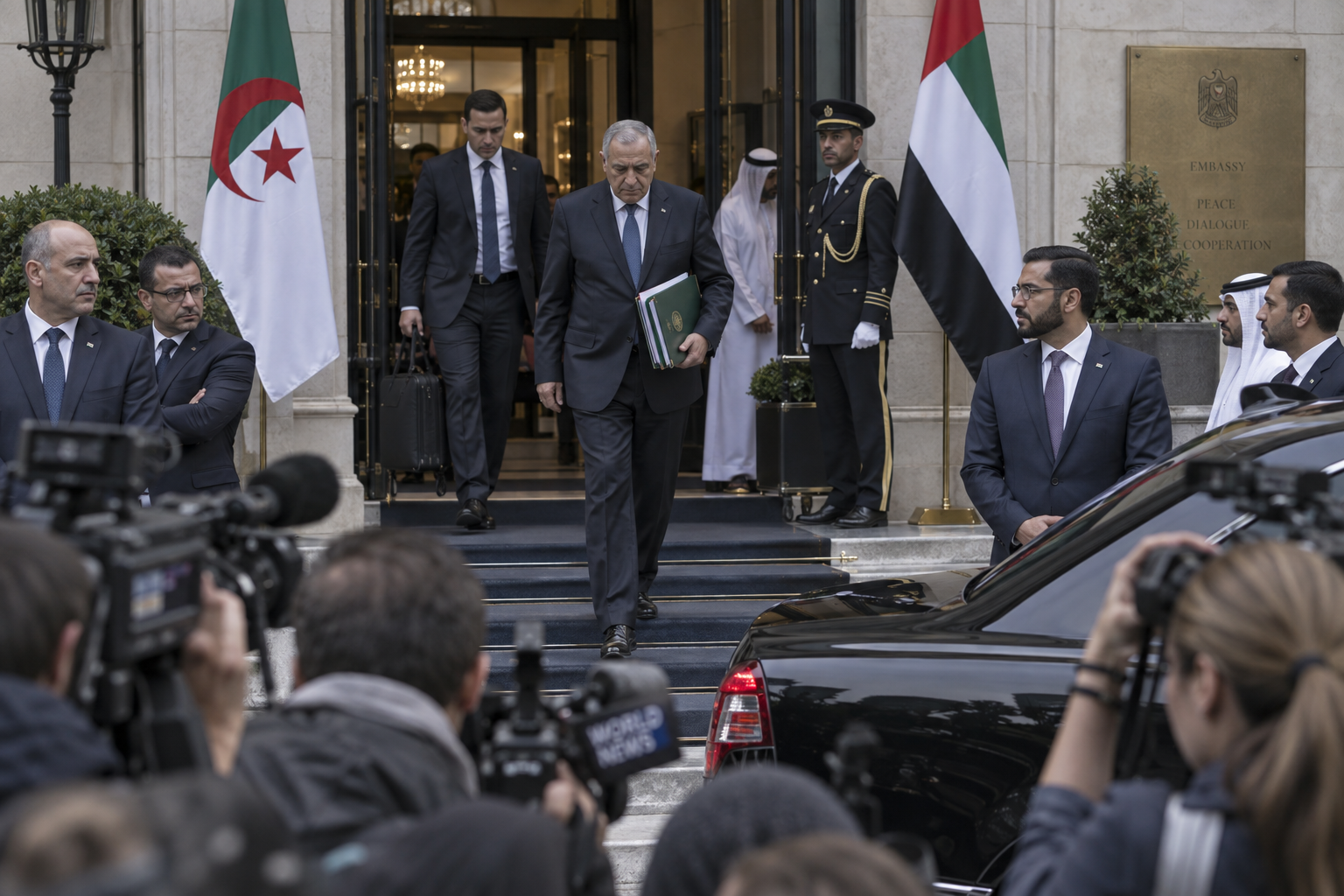
Algeria announced on Thursday that it was cutting diplomatic relations with the United Arab Emirates after years of deteriorating ties and months of escalating strain. Algiers accused Abu Dhabi of interfering in Algeria’s domestic affairs and in regional conflicts, saying that all efforts to preserve bilateral relations had been exhausted. Algeria’s state television said the UAE ambassador had been given 48 hours to comply with the decision and leave the country.
The diplomatic rupture follows increasingly hostile comments by Algerian President Abdelmadjid Tebboune, who has repeatedly criticized the UAE in public speeches. Tebboune has described the Gulf country as a “micro-state” or “statelet” allegedly seeking to destabilize multiple countries across the region. In a televised interview in July, he said that “wherever they set foot, blood flows” and accused the UAE of having a “very negative impact.” He also warned that Algeria wanted the UAE to stay away so that violence would not spread to Algeria itself.
Despite his criticism, Tebboune said in July that Algeria would previously have severed relations with the UAE if it had not been trying to prevent deeper divisions within the Arab world. The latest announcement indicates that those efforts have failed. The article does not provide a specific triggering incident, but presents the break as the result of prolonged bilateral tensions and Algeria’s broader concerns about Emirati influence in regional affairs. The report is attributed to Algeria’s state television, with additional sourcing from Agence France-Presse.
Entities: Algeria, United Arab Emirates (UAE), Abdelmadjid Tebboune, Algiers, Abu Dhabi • Tone: analytical • Sentiment: negative • Intent: inform
10-09-2026
Algeria has announced that it will sever diplomatic relations with the United Arab Emirates, citing a series of actions by Abu Dhabi that it characterized as “provocative or hostile.” Algeria’s Foreign Ministry said the UAE had ignored repeated warnings and that Algiers had exhausted all available means of preserving bilateral relations. The Emirati ambassador was summoned, informed of the decision, and given 48 hours to comply. The UAE had not immediately commented on the announcement.
The diplomatic rupture follows several years of worsening tensions between the two countries. Algeria and the UAE have adopted opposing positions on major regional issues, including relations with Israel and the Western Sahara dispute. Algeria rejects normalization with Israel, while the UAE and Morocco established diplomatic relations with Israel through the United States-brokered Abraham Accords in 2020. The UAE also supports Morocco’s claim to sovereignty over Western Sahara and maintains a consulate there, whereas Algeria supports the Polisario Front’s campaign for an independent state in the territory.
The article also links the deterioration to competing interests in the Sahel. The UAE has expanded relations with governments in the region, while Algeria’s ties with some southern neighbors have deteriorated after several military coups. Algerian President Abdelmadjid Tebboune has repeatedly accused the UAE of seeking to destabilize countries across the region, referring to it as a “micro-state” or “statelet.” In a July interview, he said that wherever the UAE became involved, “blood flows,” and warned that Algeria wanted Abu Dhabi to stay away so violence would not spread to Algeria. Tebboune added that a diplomatic break would have occurred earlier if Algeria had not tried to prevent deeper divisions in the Arab world.
Entities: Algeria, United Arab Emirates (UAE), Algerian President Abdelmadjid Tebboune, Algerian Foreign Ministry, Abu Dhabi • Tone: analytical • Sentiment: negative • Intent: inform
10-09-2026
Algeria has decided to sever diplomatic relations with the United Arab Emirates, according to Algerian state media and a statement from Algeria’s foreign ministry. Algiers said the decision followed the “exhaustion of all means” to preserve bilateral ties and accused the UAE of engaging in “provocative and hostile acts,” although it did not provide specific details. Algeria has given the UAE ambassador 48 hours to comply with the decision.
The announcement followed years of deteriorating relations and repeated accusations by Algerian President Abdelmadjid Tebboune that the UAE was attempting to interfere in Algeria’s internal affairs and destabilize countries across the region. Tebboune has previously described Algeria’s relations with Saudi Arabia, Kuwait, Oman and Qatar as “brotherly,” while indirectly identifying the UAE as the Gulf state causing difficulties.
The UAE responded through Anwar Gargash, diplomatic adviser to the UAE president, who said diplomatic relations should be based on “rationality, communication and clarity of interests,” rather than unclear messages or accusations requiring interpretation.
Tensions had escalated in February when Algeria began cancelling a 2013 air services agreement with the UAE. Tebboune has also accused the UAE of contributing to instability in Libya, Mali and Sudan, and said in July that “wherever they set foot, blood flows.” He stated that a diplomatic break would have occurred earlier if Algeria had not tried to prevent deeper divisions within the Arab world.
The dispute was further aggravated by an incident involving UAE-based broadcaster Sky News Arabia, which aired an interview with historian Mohamed Amine Belghit questioning the existence of Algeria’s indigenous Amazigh culture. Belghit was later jailed in Algeria and pardoned by Tebboune. The two countries have also pursued divergent regional policies, notably after the UAE normalized relations with Israel in 2020.
Entities: Algeria, United Arab Emirates (UAE), Abdelmadjid Tebboune, Anwar Gargash, Algiers • Tone: analytical • Sentiment: negative • Intent: inform
10-09-2026
Algeria abruptly severed diplomatic relations with the United Arab Emirates on September 10, citing a series of actions by Abu Dhabi that it described as “provocative or hostile.” The Algerian government did not provide a specific trigger, but said the UAE’s conduct had become unacceptable and that it had exhausted all efforts to preserve bilateral relations. Algeria summoned the UAE ambassador, formally notified him of the decision and gave him 48 hours to comply.
Anwar Gargash, diplomatic adviser to the UAE president, responded on X without explicitly naming Algeria. He said diplomacy should be based on rationality, communication and clarity of interests, rather than unexplained signals or “riddles.” The response suggested that Abu Dhabi rejected Algeria’s indirect explanation for the rupture.
Relations had deteriorated over several years, with Algerian media frequently accusing the UAE of attempting to create regional divisions. The countries also hold opposing positions on major regional issues. Algeria rejects normalisation with Israel, whereas the UAE established diplomatic relations with Israel through the US-brokered Abraham Accords in 2020. Algeria and the UAE are also aligned with opposing sides in the Western Sahara dispute: the UAE supports Morocco’s claim to the territory, while Algeria backs the Polisario Front’s demand for independence.
Their interests have increasingly overlapped in the Sahel, where the UAE has expanded relations with regional governments while Algeria’s ties with some southern neighbours have weakened after military coups. Algerian President Abdelmadjid previously said relations with Gulf states were warm except for one country, an apparent reference to the UAE, which he accused of meddling in Algeria’s internal affairs and seeking to destabilise the country. In February, Algeria also began cancelling a 2013 air services agreement with the UAE.
Entities: Algeria, United Arab Emirates (UAE), Anwar Gargash, Algerian President Abdelmadjid, Algerian foreign ministry • Tone: analytical • Sentiment: negative • Intent: inform