10-09-2026
During a visit to Quito, US Secretary of State Marco Rubio said the United States would seek $45 million in additional security funding for Ecuador and provide military equipment to support the country’s campaign against drug trafficking. Rubio met with Ecuadorian President Daniel Noboa as part of a three-country Latin American tour focused on governments aligned with President Donald Trump and Washington’s effort to strengthen its regional influence.
Rubio said the United States and Ecuador were expanding cooperation against drug-trafficking organizations, including joint strikes on boats suspected of carrying narcotics. He emphasized that the operations were intended to target traffickers rather than fishermen. Ecuador’s government has defended recent vessel interceptions and sinkings as the result of joint investigations.
The US also designated Los Tiguerones, an Ecuador-based gang, as a foreign terrorist organization. The State Department linked the group to narcotrafficking and other illicit activities, including the 2024 live takeover of an Ecuadorian television station. Rubio additionally announced sanctions against seven former Ecuadorian officials accused of involvement in bribery.
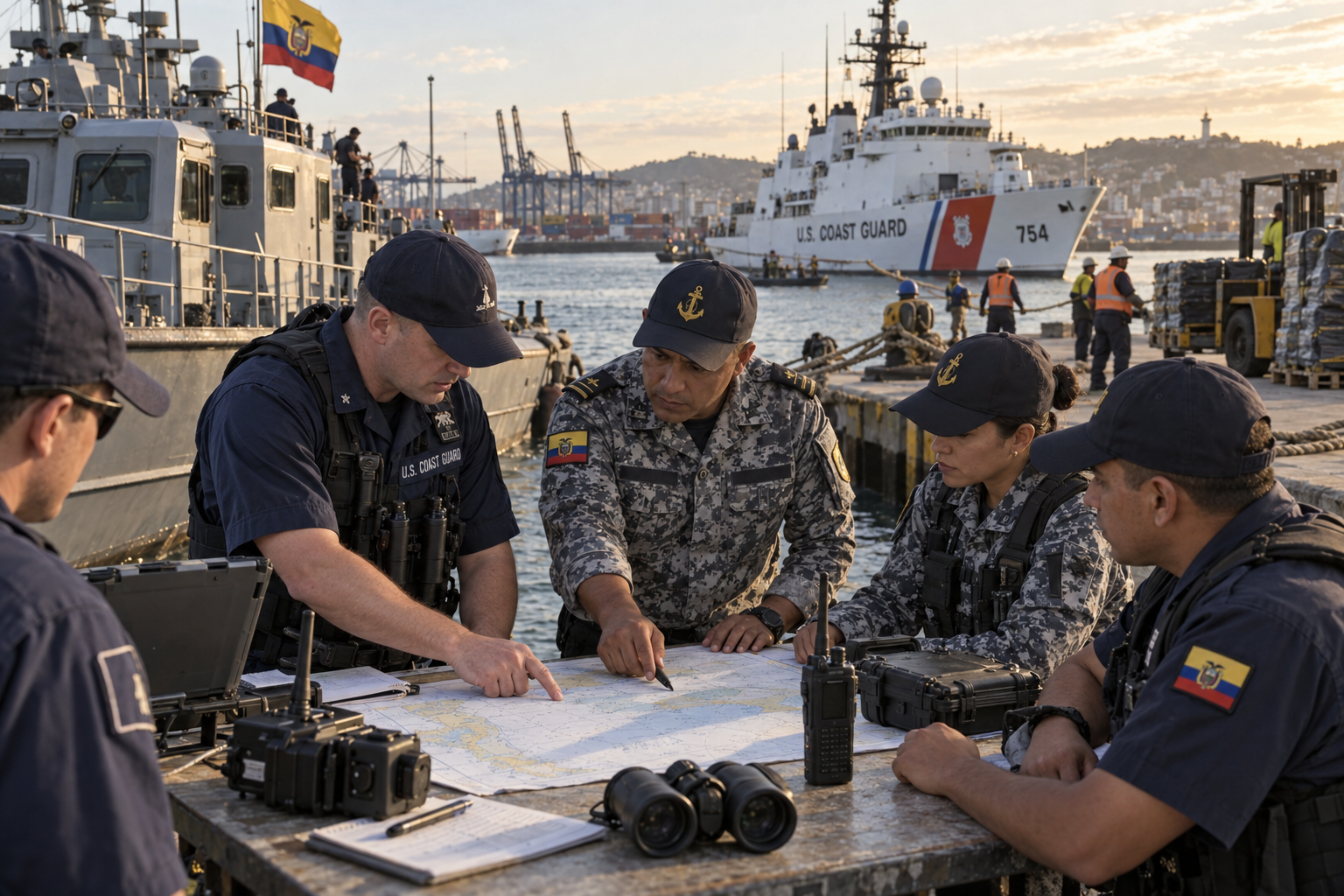
The proposed US funding would support new security commitments, alongside a separate $10 million initiative addressing illegal gold mining, gang recruitment and illicit finance. Washington will also provide Ecuador’s navy with a 110-foot Coast Guard cutter and five interceptor vessels, supplementing seven boats delivered earlier in 2026.
Noboa has pursued a forceful response to Ecuador’s escalating violence since taking office in 2023, but rights advocates argue that the approach has worsened instability. The boat operations form part of Operation Southern Spear, a broader US campaign that has reportedly destroyed about 70 vessels and killed more than 220 people over the past year. Human rights groups and some Latin American leaders have condemned the strikes as extrajudicial killings. The United States has not claimed responsibility for three additional incidents involving fishing boats from Ecuador’s Manabi province, despite accounts from crew members describing apparent strikes.
Entities: Marco Rubio, Daniel Noboa, Ecuador, Quito, United States • Tone: analytical • Sentiment: neutral • Intent: inform
10-09-2026
US Secretary of State Marco Rubio defended the Trump administration’s military strikes against suspected drug-trafficking boats during a visit to Ecuador. He argued that criminal cartels pose an existential threat to Latin American countries, saying they would “eat these countries alive” if governments failed to confront them. Rubio praised what he described as a new generation of conservative leaders in the region who are aligned with US President Donald Trump and willing to adopt an aggressive approach toward organized crime.
Since Trump returned to power, the United States has expanded the use of air strikes against vessels traveling along known drug-trafficking routes in the Caribbean and eastern Pacific. Pentagon figures indicate that the operations have killed more than 200 people. The campaign has generated significant controversy, however, with rights organizations, fishermen and relatives of those killed questioning whether the targeted vessels were attacked based on sufficient evidence of involvement in drug trafficking.
The article also highlights doubts about the effectiveness of the strikes. Experts have questioned whether military action against suspected trafficking boats can meaningfully reduce the flow of cocaine and other illegal drugs into the United States, which remains the world’s largest consumer of such substances. The report therefore presents a contrast between Rubio’s firm defense of continued military operations and the concerns of critics who challenge both the legality and practical value of the campaign. It also situates the policy within the Trump administration’s broader effort to deepen cooperation with conservative governments across Latin America.
Entities: Marco Rubio, Donald Trump, United States Department of State, United States government, Ecuador • Tone: analytical • Sentiment: negative • Intent: inform
10-09-2026
The United States has designated Los Tiguerones, one of Ecuador’s most notorious crime gangs, as a terrorist organization. The announcement was made by Secretary of State Marco Rubio in Quito during a meeting with Ecuadorian President Daniel Noboa, as the Trump administration expands its campaign against narcotics traffickers and seeks closer security cooperation with conservative governments in Latin America.
Rubio said Los Tiguerones is involved in narcotics trafficking and attacks on civilians, police officers, and journalists. He argued that the gang should be treated as a terrorist organization rather than an ordinary criminal group because of its military-style weapons and equipment. The gang became internationally known after armed members stormed the TC Televisión studio during a live broadcast in January 2024. The attack helped prompt Noboa to declare an “internal armed conflict” as Ecuador faced escalating drug-related violence and claims that foreign criminal groups were competing for cocaine trafficking routes from Colombia and Peru to the United States.
Rubio said he would request $45 million in additional congressional funding to help dismantle terrorist groups and claimed that elite US and Ecuadorian forces were cooperating daily. He also praised Ecuador as the Trump administration’s most aggressive partner in its military campaign against alleged drug traffickers, including controversial strikes on boats that have killed at least 227 people. The administration has not provided evidence substantiating all of those claims.
The designation and funding request are part of the administration’s broader “Shield of the Americas” security initiative, which seeks to strengthen ties with rightwing governments across the region. Rubio’s tour also included Colombia, where he met President Abelardo De La Espriella and discussed counternarcotics policy, critical minerals, and nuclear energy. He was expected to travel to Peru to meet President Keiko Fujimori, another conservative leader promising a hardline response to crime.
Entities: Los Tiguerones, Marco Rubio, Donald Trump and the Trump administration, Daniel Noboa, Ecuador • Tone: analytical • Sentiment: negative • Intent: inform
10-09-2026
US secretary of state Marco Rubio said the Trump administration is pursuing greater cooperation with Latin American allies to combat drug trafficking, while maintaining that the US military may continue striking vessels when necessary. Speaking during a visit to Quito, Ecuador, Rubio described agreements with countries such as Ecuador and Colombia as a significant development because joint operations could take place in territorial waters and comply with local laws.
His comments came shortly after US Southern Command announced another strike in the Caribbean Sea that killed three people. The latest incident brought the reported death toll from US military boat strikes to at least 230 people across 69 operations. Washington began the unilateral campaign in September 2025 against people it has labeled “narco-terrorists,” but has not provided evidence publicly to support those accusations.
The article describes the emerging approach as different from the administration’s initial operations. In recent interdictions, people aboard floating refueling stations allegedly supporting drug trafficking have been removed and transferred to Ecuadorian authorities, after which the US military destroys the vessels. Rubio said the decision to conduct a strike would be made on a case-by-case basis, depending on the perceived threat and the boat’s location.
The policy shift follows a year of deadly strikes and appears intended to build formal security partnerships with conservative governments in South America that have close relations with Donald Trump. Rubio was visiting Ecuador as part of a three-country tour focused on strengthening regional security cooperation. The article presents the administration’s expanded collaboration with allies alongside continuing concerns about unilateral military action, civilian deaths, legal authority, and the lack of publicly presented evidence behind the “narco-terrorist” designation.
Entities: Marco Rubio, Donald Trump, Trump administration, US Southern Command, United States military • Tone: analytical • Sentiment: negative • Intent: inform
10-09-2026
US Secretary of State Marco Rubio has indicated that the Trump administration is adjusting its approach to combating alleged drug trafficking in Latin American waters. During a visit to Quito, Ecuador, Rubio said Washington is prioritizing cooperation with regional allies, particularly Colombia and Ecuador, and seeking to conduct joint operations that comply with those countries’ laws within their territorial waters. He nevertheless emphasized that the US military could continue destroying suspected trafficking vessels when necessary.
The comments represent a clearer public acknowledgment of a possible shift from the administration’s earlier policy of conducting unilateral, deadly strikes against boats in international waters. That campaign began in September 2025 and targeted people whom the administration labeled “narco-terrorists,” although the article notes that Washington has not provided evidence supporting those accusations. The latest announced strike, carried out in the Caribbean Sea by US Southern Command, reportedly killed three people. The article says at least 230 people have now been killed in 69 US military boat strikes.
Under the newer model, US forces have reportedly intercepted people aboard floating refueling stations believed to support drug trafficking, transferred them to Ecuadorian authorities, and then destroyed the vessels. Rubio said decisions about whether to use force would be made on a strike-by-strike or operation-by-operation basis, taking into account the perceived threat and the boat’s location.
His remarks came during a three-country South American tour intended to strengthen security cooperation with conservative governments that have developed close ties with Donald Trump. The administration says its broader goal is to disrupt and ultimately end drug-trafficking routes while expanding cooperation with regional governments.
Entities: Marco Rubio, Donald Trump, Trump administration, US Southern Command, Ecuador • Tone: analytical • Sentiment: neutral • Intent: inform
10-09-2026
The U.S. military said it carried out a strike against a fast-moving vessel in the Caribbean Sea on Sept. 9, killing three people whom it described as “narco-terrorists.” U.S. Southern Command said the vessel was operating along established drug-trafficking routes and that the military had “confirmed intelligence” indicating its active involvement in narcotics trafficking. It did not provide further details about the intelligence, the vessel, or the identities of those killed.
The incident is part of a broader campaign by President Donald Trump’s administration against vessels it says are transporting narcotics. According to the article, U.S. strikes against such vessels in the Caribbean and the eastern Pacific since September 2025 have killed more than 220 people.
The military and administration have framed the operations as attacks on “narco-terrorists,” but the legality of the strikes has been widely questioned. Human Rights Watch, Amnesty International, and independent experts appointed by the United Nations have characterized the strikes as unlawful extrajudicial killings. The American Civil Liberties Union has also criticized the administration’s descriptions of its targets, calling them unsubstantiated and fear-mongering claims.
The report presents the U.S. military’s account alongside criticism from rights organizations and legal advocates. It does not independently verify the military’s intelligence or establish whether the people aboard the vessel were involved in drug trafficking. The central issue is therefore both the continuing U.S. campaign against alleged maritime narcotics trafficking and the dispute over whether lethal strikes without publicly disclosed evidence or judicial process are lawful.
Entities: U.S. military, U.S. Southern Command, Caribbean Sea, Eastern Pacific, President Donald Trump • Tone: analytical • Sentiment: negative • Intent: inform