10-07-2026
This CNBC Daily Open newsletter frames a day of rapidly shifting global developments across geopolitics, markets, and corporate news. The lead story says the U.S. will engage in "technical talks" with Iran despite recent airstrikes, underscoring how quickly the diplomatic tone has changed since President Donald Trump declared the ceasefire "over" at the NATO summit. The article emphasizes the extraordinary speed of reversals in global diplomacy, particularly Trump’s influence over the narrative at NATO. In markets, Asian equities are following Wall Street’s gains, though European futures are more subdued, reflecting mixed sentiment heading into the session.
The piece then highlights several market-moving corporate and policy developments. SK Hynix is set to begin trading on Nasdaq after raising $26.5 billion in its U.S. offering, with the listing seen as a test of whether it can escape the long-standing "Korea discount." On U.S. monetary policy, new Federal Reserve Chairman Kevin Warsh has appointed outside advisers to five task forces, including an AI-focused group whose members appear strongly supportive of artificial intelligence as a transformative technology. The article also notes a governance appointment at Anthropic, where former Fed chair Ben Bernanke joins the company’s Long-Term Benefit Trust.
In Europe, Volkswagen plans to cut its model lineup by as much as half as part of a major restructuring, driven by weak margins, Chinese competition, U.S. tariffs, and domestic regulation. The article closes with a broader defense and geopolitical note on Ukraine’s drone campaign against Russian energy and military assets, describing it as a major factor in shaping NATO’s strategic thinking and raising escalation risks. Overall, the newsletter combines fast-moving geopolitical analysis with market and corporate developments, presenting a world in which diplomacy, technology, and capital markets are all being reshaped at once.
Entities: Donald Trump, NATO, Iran, U.S., MS Now • Tone: analytical • Sentiment: neutral • Intent: inform
10-07-2026
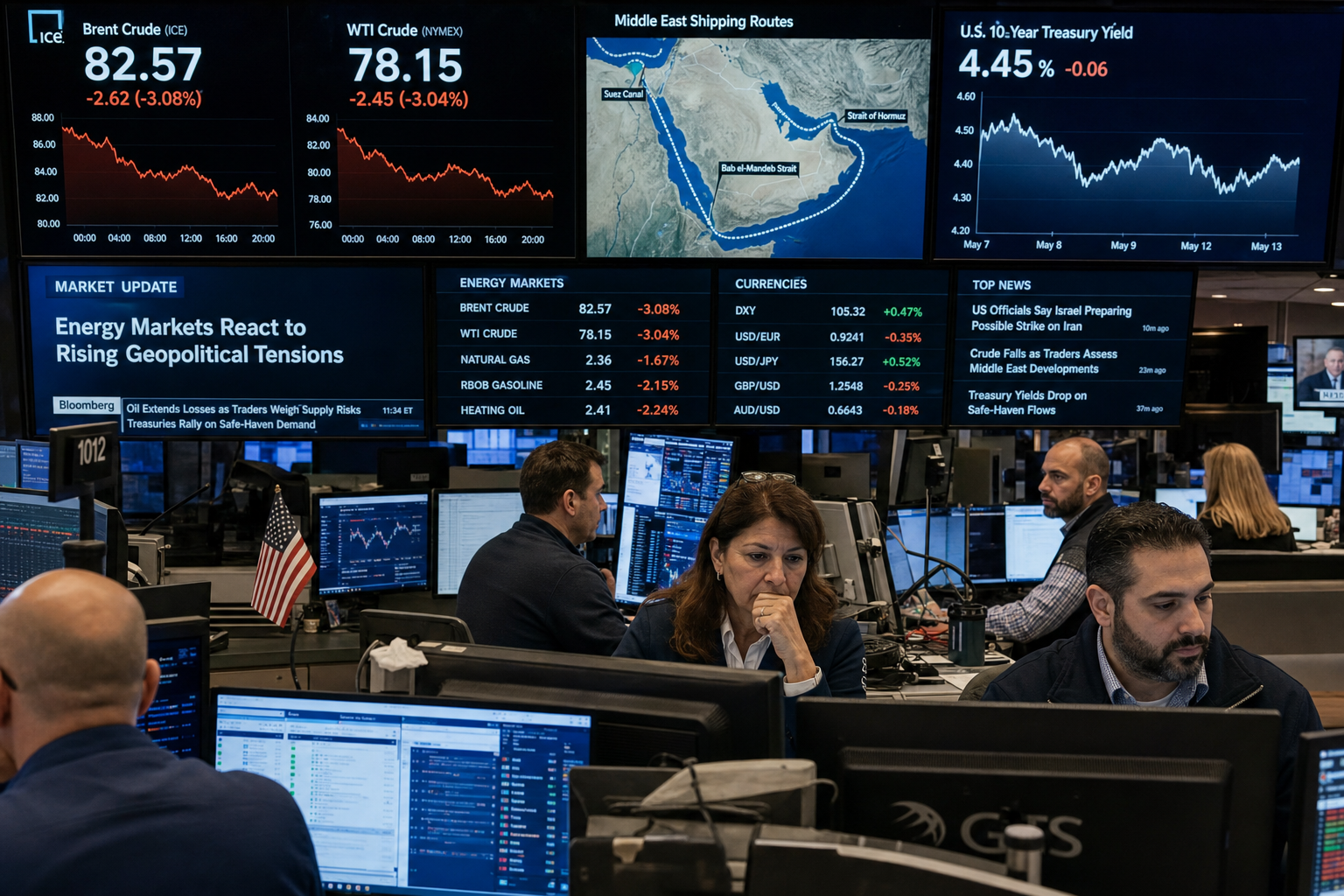
Treasury yields were largely unchanged on Friday as investors looked past a quiet domestic economic calendar and focused instead on geopolitical developments in the Middle East. The 10-year Treasury yield, which serves as a key benchmark for borrowing costs such as mortgages, auto loans, and credit cards, held near 4.533%, while the 2-year yield remained at 4.168% and the 30-year yield at 5.052%. With no major economic data scheduled for the day, market participants concentrated on the latest flare-up in hostilities between the U.S. and Iran, which has complicated an already fragile ceasefire agreement.
The article notes that renewed missile strikes this week added to market uncertainty, though oil prices eased in early trading after a U.S. official indicated Washington still wanted a negotiated resolution and would continue holding technical talks with Iran. West Texas Intermediate futures and Brent crude both slipped modestly. Treasury yields had risen earlier in the week after Trump told the NATO summit in Ankara, Turkey, that the ceasefire was "over," but they edged lower on Thursday and then remained stable on Friday. Overall, the piece frames bond-market movement as a reflection of investors’ close attention to geopolitical risk and its potential impact on energy markets and broader financial conditions.
Entities: Treasury yields, 10-year Treasury yield, 2-year Treasury note, 30-year Treasury yield, Middle East • Tone: analytical • Sentiment: neutral • Intent: inform
10-07-2026
The article reports that the International Energy Agency (IEA) now expects global oil demand to fall by 1 million barrels per day year-over-year in 2026, marking the first annual decline since the Covid-19 pandemic in 2020. The forecast is driven largely by the disruption caused by the Iran war, which temporarily closed or severely constrained traffic through the Strait of Hormuz, a critical route for oil and gas shipments from the Middle East. The IEA says the current decline is concentrated in certain regions and products because exports from the Persian Gulf were disrupted, but it also notes that a recovery is already under way as conditions slowly improve.
The agency’s outlook depends on a ceasefire and a gradual reopening of the Strait of Hormuz, though that scenario is becoming less certain amid renewed U.S.-Iran hostilities and attacks on commercial shipping. IEA oil markets head Toril Bosoni said the recovery would likely not be quick or smooth, but that rising output from other producers and weaker-than-expected demand could still push the market back into surplus by late 2026, helping rebuild inventories. The article also notes that oil prices eased slightly on Friday, with Brent crude and WTI trading in the mid-$70s. Separately, it reports that the United States remains engaged in technical talks with Iran despite recent airstrikes and escalating tensions, while President Donald Trump has described Iran’s attacks on commercial vessels as acts of terrorism.
Entities: International Energy Agency (IEA), world oil demand, Strait of Hormuz, Iran war, Middle East • Tone: analytical • Sentiment: negative • Intent: inform