10-07-2026
This South China Morning Post article highlights ten scientists and experts who left the United States or Britain for positions in China or Hong Kong in 2026, illustrating a broader trend of academic and scientific talent moving eastward. The piece frames these moves as driven by a combination of personal ambition, better research opportunities, stronger institutional support, and frustrations with shrinking funding and a difficult geopolitical climate in the West. The featured individuals span several fields, including cellular biology, energy science, chemistry, black hole research, semiconductor science, neurobiology, artificial intelligence, computer vision, memory chips, and electric motor engineering.
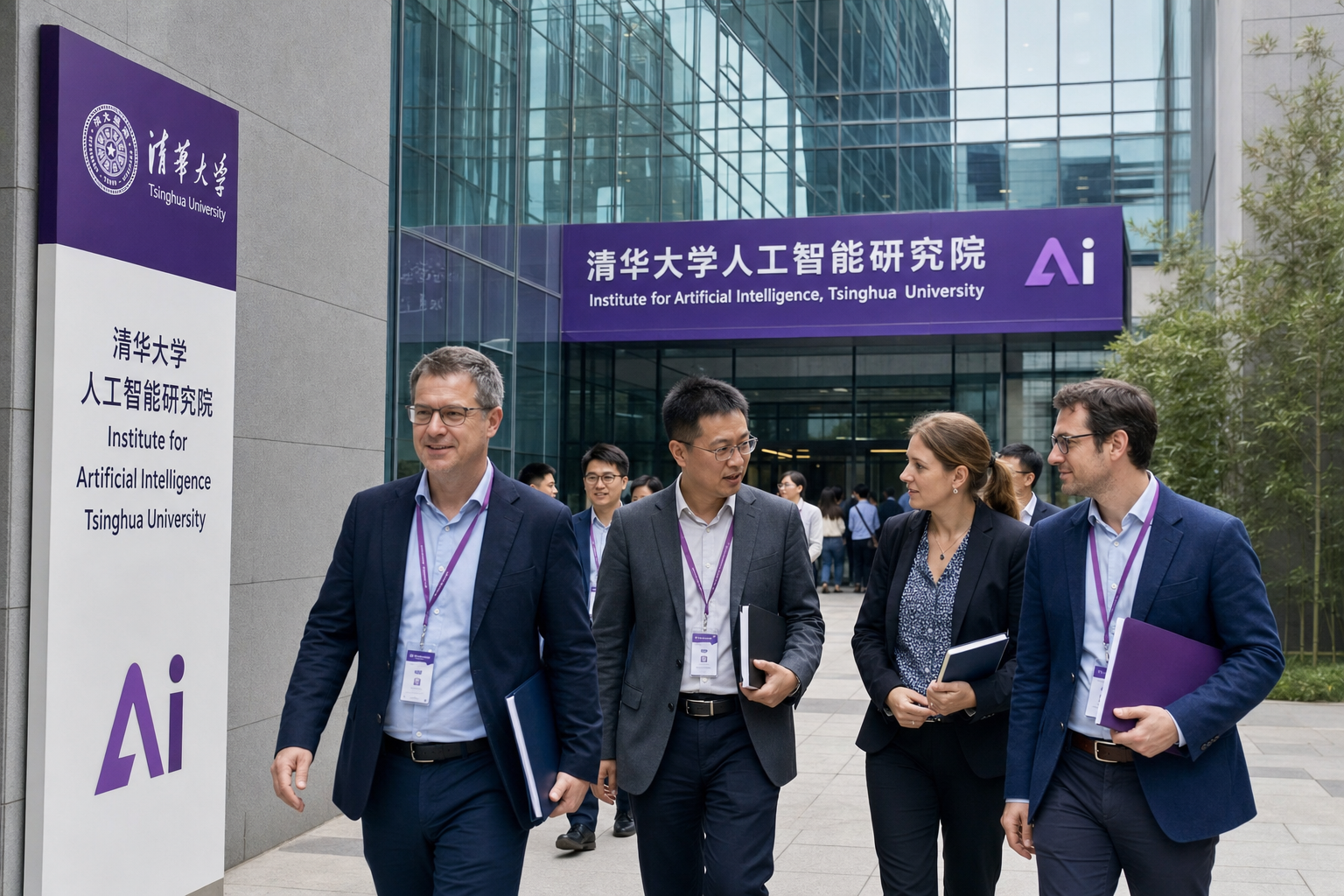
Among the notable names is Nobel Prize-winning chemist Omar Yaghi, who joined Tsinghua University to lead a new AI-driven research centre. Others include Yale scientist Zhang Kai, who returned to China to advance his work on ultra-large-scale cellular structure data banks; energy scientist Chen Peipei, who moved from Cambridge to Hong Kong to establish her own lab; and semiconductor scientist Jiang Jianfeng, who left MIT for Peking University. The article also mentions researchers moving from prestigious US institutions such as UC San Diego, Stony Brook, and UC Irvine, as well as from long careers in Britain.
Overall, the article presents these relocations as part of a significant pattern of scientific migration, emphasizing China’s growing pull for elite researchers and the challenges Western institutions face in retaining top international talent.
Entities: China, United States, Britain, Hong Kong, Tsinghua University • Tone: analytical • Sentiment: neutral • Intent: inform
10-07-2026
China’s top Communist Party theoretical journal, Qiushi, has published a series of commentaries urging the development of “patient capital” as Beijing tries to channel money into long-term innovation rather than short-term speculation. The article, attributed to Xu Siwei, chairman of China Reform Holdings, argues that capital willing to accept higher risk and longer payback periods is strategically important for China as it faces intensifying great-power competition, especially with the United States. The commentaries come at a moment when Beijing is trying to encourage financing for deep-tech research and development, where investment cycles are long and returns uncertain. The article also places this policy push in the context of a recent flood of investment into China’s artificial intelligence sector following the rise of DeepSeek. That surge has boosted domestic AI-related stocks but also raised concerns that speculative money may crowd out more durable, innovation-oriented funding. In effect, the journal’s message is that China needs a stronger ecosystem for long-horizon capital if it wants to sustain technological competitiveness and avoid overheating in AI-related investment.
Entities: Qiushi, Chinese Communist Party, Beijing, Xu Siwei, China Reform Holdings • Tone: analytical • Sentiment: neutral • Intent: inform
10-07-2026
Omar Yaghi, the Palestinian-born American chemist who shared the 2025 Nobel Prize in Chemistry, has left his faculty position at the University of California, Berkeley, to take up a new role in China. He will lead an artificial intelligence-focused institute at Tsinghua University, where the goal is to use advanced computing to speed up the discovery of new materials. The move is presented as part of a broader competition between the United States and China for scientific talent, funding, and leadership in cutting-edge research.
The article places Yaghi’s departure in the context of disruptions to US science funding under the Trump administration and China’s aggressive investment in research institutions and international recruitment. It notes that China has been strengthening its scientific output, including in chemistry publications, and is increasingly able to attract top researchers with substantial resources and ambitious projects. Yaghi’s career is used as an example of how diverse life experiences can contribute to major scientific advances.
The piece also revisits Yaghi’s scientific legacy, particularly his development of metal-organic frameworks, a class of materials with practical applications such as extracting water from desert air. Overall, the article frames the move as significant both for Yaghi personally and for the shifting global balance in science and technology.
Entities: Omar Yaghi, University of California, Berkeley, Tsinghua University, China, United States • Tone: analytical • Sentiment: neutral • Intent: inform