10-07-2026
Ukraine has escalated its campaign against Russian logistics by striking ships and tankers near Russian-annexed Crimea, widening attacks beyond land supply routes to include maritime fuel shipments in the Sea of Azov and the Black Sea. According to Ukraine’s military, at least 36 ships have been hit and set on fire over four days, though the exact total is unconfirmed and some vessels may have been struck more than once. Many of the targets appear to be part of Russia’s “shadow fleet” of commercial oil tankers used to move fuel to Crimea and other occupied areas.
The article says these strikes are part of a broader Ukrainian effort described as a “logistics lockdown” intended to choke off supply lines into and out of Crimea. Satellite imagery, drone footage, and statements from Ukrainian officials are used to support the claims, though not all incidents are independently verified. The attacks have reportedly disrupted fuel deliveries to Crimea, where Moscow had already been struggling to secure supplies.
The piece also places the attacks in the wider context of Ukraine’s ongoing campaign against Russian oil refineries and depots, which has contributed to fuel shortages across Russia. Ukrainian President Volodymyr Zelensky argues these strikes are a justified response to Russia’s war. The article notes that Russian fuel rationing and shortages are worsening, while pro-war Russian commentators describe the Sea of Azov tankers as vulnerable targets for Ukrainian drones. Overall, the report portrays a significant expansion in Ukraine’s drone war aimed at undermining Russia’s military and economic logistics.
Entities: Ukraine, Russia, Crimea, Sea of Azov, Black Sea • Tone: analytical • Sentiment: negative • Intent: inform
10-07-2026
The article reports on how Ukraine is using American-made reconnaissance technology, especially Shield AI’s V-BAT drone, to support increasingly aggressive strikes inside Russia and against Russian assets in the Black Sea. The drone’s long range, endurance, and communications capabilities allow Ukrainian operators to identify valuable targets, confirm Russian military presence, locate air defenses, and relay intelligence for attacks on infrastructure including oil rigs, tankers, air defenses, and logistics sites.
The piece opens with a striking example: a V-BAT spotted Russian soldiers and equipment on an oil rig in the Black Sea, enabling a Ukrainian sea-drone and aerial-drone attack that destroyed Russian equipment and a helicopter. It then expands into Ukraine’s broader campaign, describing President Volodymyr Zelenskyy’s 40-day “influence operation” aimed at pressuring Russia, as well as recent attacks that have hit Russia’s shadow fleet and disrupted gas sales in occupied Crimea.
The article also explains the shifting intelligence landscape. After the U.S. stopped providing certain intelligence for strikes inside Russia in March 2025, Ukraine sought more help from European partners, with France now reportedly supplying much of that intelligence. Ukrainian manufacturers have also adapted surveillance systems with Starlink, but operators say the V-BAT remains uniquely capable.
Experts note that Ukraine’s progress depends not only on advanced drones but on a long-term campaign that has weakened Russian air defenses, including S-400 systems. The article concludes by emphasizing the wartime feedback loop between Ukrainian operators and Shield AI engineers, who use battlefield data to update the aircraft, illustrating how combat conditions are accelerating military technology development.
Entities: Ukraine, Russia, Black Sea, Kyiv, Volodymyr Zelenskyy • Tone: analytical • Sentiment: neutral • Intent: inform
10-07-2026
Ukraine has intensified drone attacks on Russian fuel tankers in the Sea of Azov as part of a broader campaign to disrupt supply lines and transportation routes into occupied Crimea and to weaken Russia’s war economy. According to Ukrainian drone force commander Robert Brovdi, 14 Russian ships were hit in a single evening, bringing the reported total to 35 over 96 hours, though CNBC says it could not independently verify the claim. The attacks come amid a worsening Russian fuel crisis, with long queues at petrol stations and signs that Ukraine’s strikes on refineries and fuel infrastructure are affecting domestic gasoline availability.
The article places these attacks within a wider strategic context: Ukraine has increasingly targeted deep inside Russian territory, including refineries in major cities and, most recently, the Omsk oil refinery in Siberia. President Volodymyr Zelenskyy has framed these capabilities as evidence that even far-flung parts of Russia are now vulnerable. Defense experts quoted in the piece say the strikes are significant because they help slow Russian military momentum and increase pressure on Moscow, but they also raise escalation risks. Economically, analysts note that Russia’s growth has stalled and that the costs of war are mounting for the Kremlin, especially if energy revenues and fuel production continue to suffer. Russia, through Kremlin spokesman Dmitry Peskov, says it remains open to diplomatic negotiations, while accusing Ukraine of refusing to pursue peace. The article ends with the broader diplomatic stalemate between Zelenskyy and Putin, who has rejected a direct meeting for now.
Entities: Ukraine, Russia, Sea of Azov, Crimea, Robert Brovdi • Tone: analytical • Sentiment: negative • Intent: inform
10-07-2026
Ukraine has escalated its long-range drone campaign against Russia’s maritime and energy infrastructure, claiming strikes on 21 vessels in three days and hitting refineries, pipeline facilities, and a military airfield across multiple Russian regions. The article says the attacks are putting growing pressure on Moscow’s fuel supplies and revealing the expanding reach of Ukraine’s domestic drone industry. Ukrainian officials described the maritime campaign as being conducted on an “industrial scale,” targeting Russian-linked tankers and other vessels in the Sea of Azov that Kyiv says are part of Russia’s shadow fleet supplying Crimea.
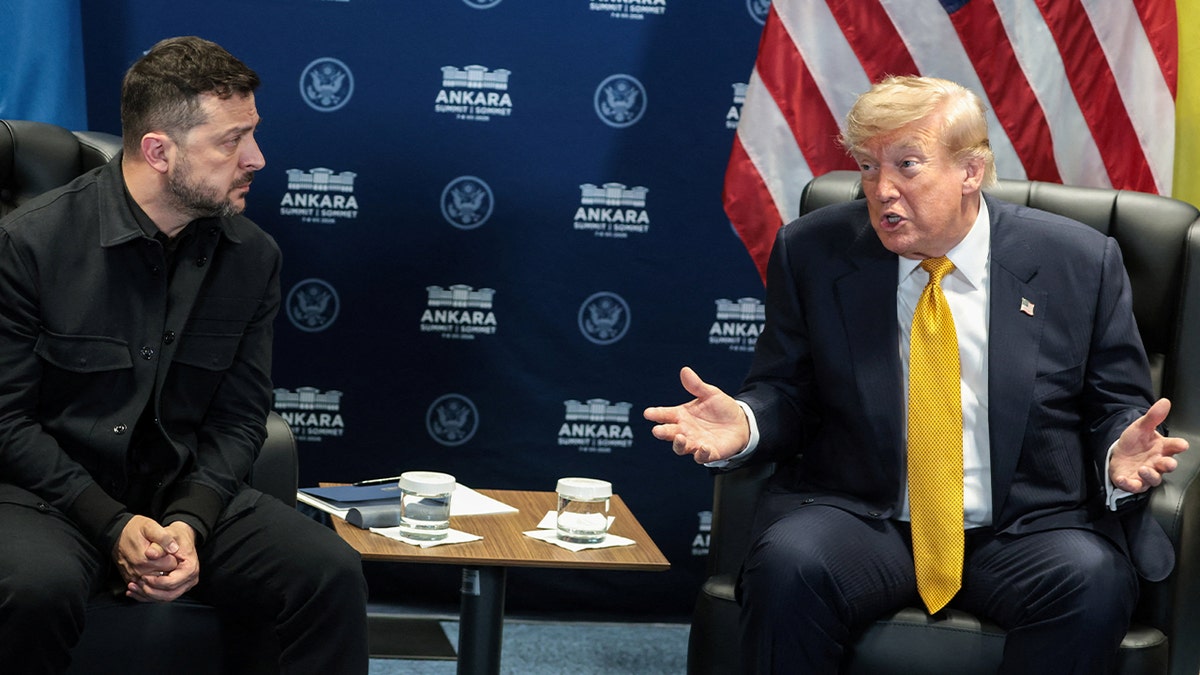
The article connects these strikes to high-level diplomacy at the NATO summit in Ankara, where Ukrainian President Volodymyr Zelenskyy met President Donald Trump. Trump said the United States would allow Ukraine to manufacture Patriot air-defense interceptors and discussed a possible drone agreement with Zelenskyy. Zelenskyy said air defense was his top priority and called the drone deal a promising beginning.
The story also emphasizes that while Ukraine has struggled to break through on the ground, its drone strikes are increasingly forcing Russia to defend assets deep behind the front lines. Reported targets included the Saratov refinery, energy facilities in Tatarstan and Bashkortostan, the Borisoglebsk military airfield, and the Omsk refinery, Russia’s largest oil refinery. Russian officials acknowledged damage, including a death in Saratov, while the article frames the overall effect as growing disruption to Russian fuel production and logistics.
Entities: Ukraine, Russia, Volodymyr Zelenskyy, Donald Trump, NATO summit • Tone: analytical • Sentiment: negative • Intent: inform