washingtonpost.com
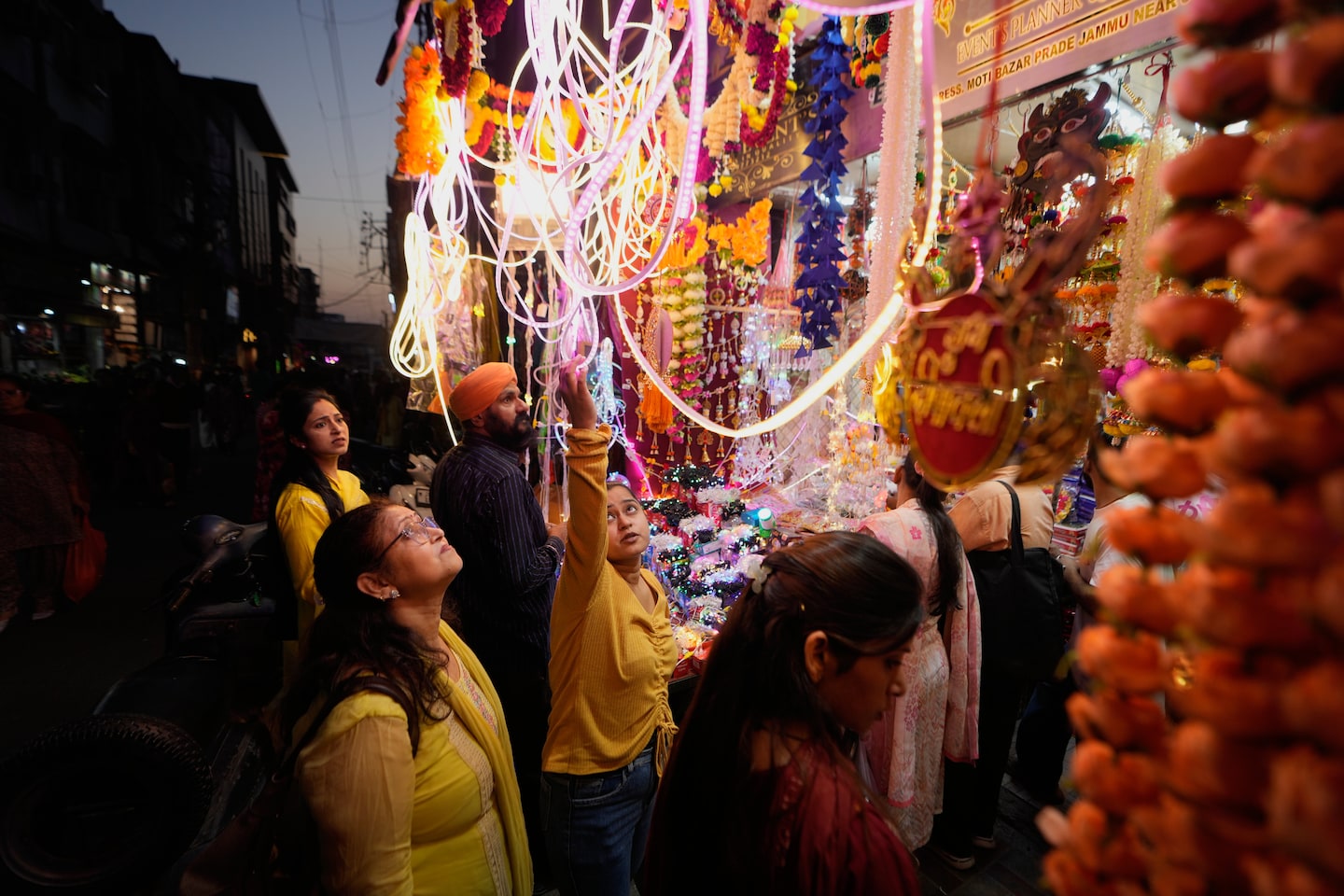
People browse a brightly lit market stall displaying colorful garlands, decorations, and looping strands of lights, while a woman in a yellow sweater reaches up toward the display. The crowded street market is shown at dusk, with shoppers, storefronts, and a sign reading “Event Planner” visible.
Summary
More than a billion people in India and around the world celebrate Diwali, the festival of lights, with traditions including lighting oil lamps and candles, prayers, family gatherings, sweets, colorful decorations and rangoli, and fireworks. Observed by Hindus as well as Sikhs, Jains and some Buddhists, the festival is commonly associated with the victory of light over darkness and good over evil. Celebrations vary among regions and communities. In Ayodhya, public events combined performances inspired by the Ramayana with music, fireworks, laser and light shows, and drone displays, blending religious and cultural traditions with contemporary spectacle.
Key Points
- Diwali is widely celebrated across India and by communities worldwide, with more than a billion people observing the festival.
- Common traditions include lighting lamps or candles, offering prayers, gathering with family, preparing sweets, making rangoli designs and setting off fireworks.
- The festival is associated with the triumph of light over darkness and good over evil, though practices and significance vary across communities.
- Ayodhya celebrations featured Ramayana-inspired performances alongside live music, light shows, fireworks and drone displays.