08-11-2026
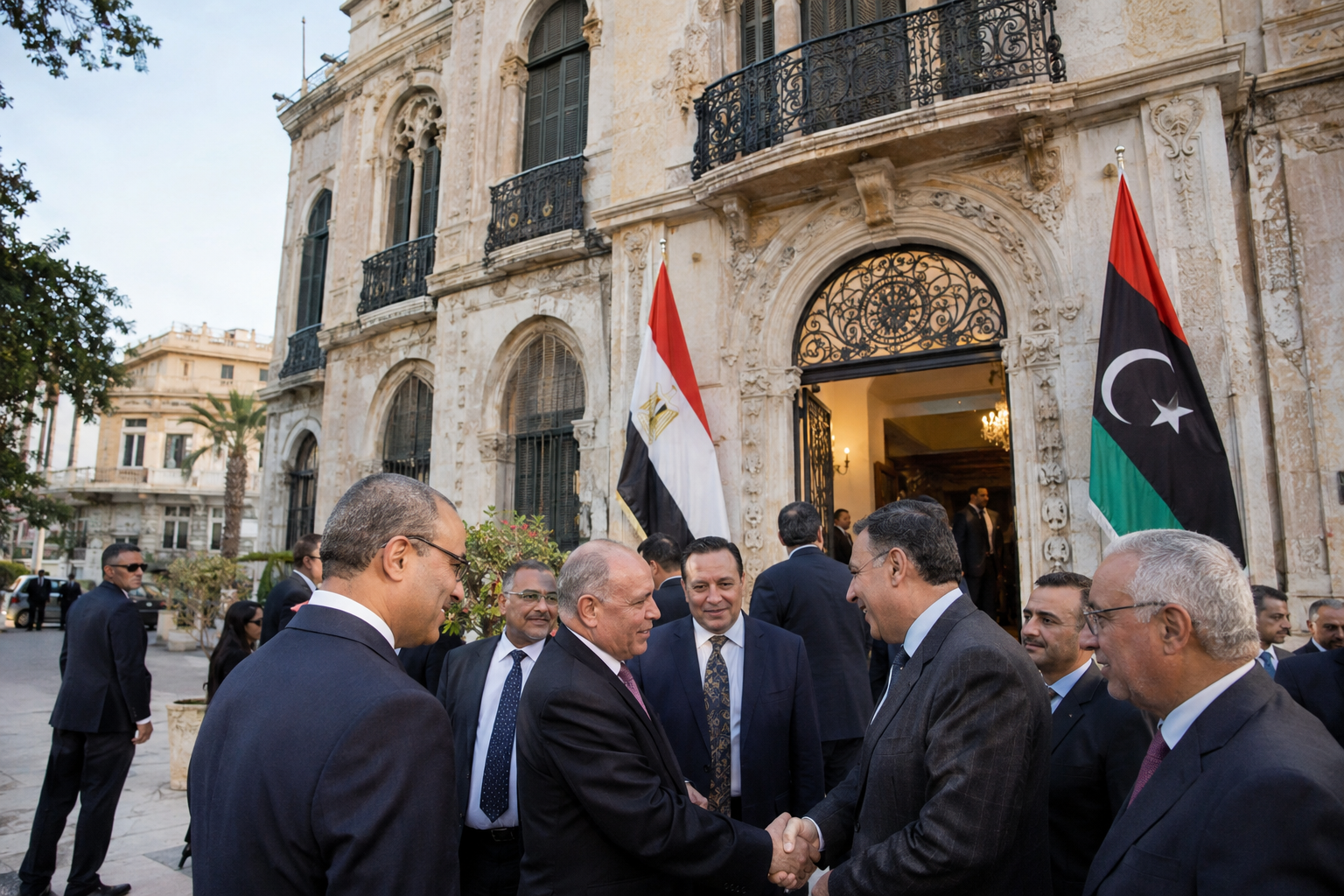
Egyptian Foreign Minister Badr Abdelatty visited Tripoli on Saturday to reopen Egypt’s embassy, which had been closed since 2012. The closure followed the turmoil in Libya after the ouster of longtime leader Muammar Gaddafi. Libya remains divided between rival governments competing for power in the oil-rich country. Egypt had previously supported military commander Khalifa Haftar’s administration in eastern Libya, but is now seeking to improve relations with Tripoli and expand energy cooperation.
At the embassy’s reopening ceremony, Abdelatty said the two countries should move toward implementing cooperation projects at a technical level. He highlighted a proposed gas pipeline connecting Libya and Egypt, noting that Egypt has facilities for liquefying natural gas. He also called for progress on a proposal to refine Libyan oil in Egypt for re-export, the restoration of Libya’s own refineries, and the reestablishment of electricity links between the countries.
The article presents the embassy reopening as part of a broader shift in Cairo’s approach to Libya and an effort to rebuild bilateral ties through practical energy projects. It links Egypt’s move away from its previous alignment with Haftar’s administration to its ratification of a disputed maritime agreement with Turkey. Egypt says that agreement infringes on its maritime zone. The article does not detail the status or timeline of the proposed energy projects, nor does it explain how the maritime dispute has affected Egypt’s policy beyond noting the connection.
Entities: Badr Abdelatty, Egypt, Libya, Tripoli, Muammar Gaddafi • Tone: analytical • Sentiment: neutral • Intent: inform
08-11-2026
Egypt’s reopening of its embassy in Tripoli after years of closure signals a shift in Cairo’s approach to Libya, according to analysts quoted by Al Jazeera. Egypt had been widely viewed as backing the eastern authorities and the Libyan National Army (LNA), led by Khalifa Haftar, while opposing the internationally recognised government in Tripoli. Analysts say Cairo is now seeking to engage more directly with Tripoli and balance its relationships rather than rely on one Libyan faction. They link the change to evolving regional dynamics, including increased coordination between Turkiye and the LNA, Saddam Haftar’s outreach to countries that have supported Tripoli, and a recent agreement among Libyan rivals that outlines a possible route to elections. Egypt is also concerned about instability to its south, especially the expansion of Sudan’s Rapid Support Forces, which has allegedly received support from Haftar. During Foreign Minister Badr Abdelatty’s visit, Egyptian and Libyan officials discussed the maritime agreement between Tripoli and Ankara. Egypt says maritime boundaries should be addressed in accordance with international law; analysts suggest Cairo wants to protect its interests in Eastern Mediterranean oil and gas while negotiating directly with the government that signed the agreement. Egypt may also see opportunities in Libya’s reconstruction and revived oil industry, including work for Egyptian labourers and companies. While analysts see a regional opening for a broader settlement, they caution that external coordination alone cannot resolve Libya’s deep disputes over political power, institutions, resources, the military, and elections. A durable settlement, one analyst argues, must be built around an independent Libyan national project rather than a deal that merely redistributes the country’s divisions.
Entities: Badr Abdelatty, Khalifa Haftar, Saddam Haftar, Hazem al-Rayes, Elias al-Barouni • Tone: analytical • Sentiment: neutral • Intent: analyze
08-11-2026
Egypt has reopened its historic embassy building in Tripoli, Libya, during a visit by Foreign Minister Badr Abdelatty, signaling an effort to strengthen ties with Libya’s western-based Government of National Unity after years of Cairo supporting eastern military commander Khalifa Haftar. The embassy closed in January 2014 after gunmen kidnapped five staff members, although Egypt’s diplomatic mission resumed operating in Tripoli in May 2021. Abdelatty met Libya’s acting foreign minister, Taher al-Baour, and Prime Minister Abdulhamid Dbeibah. Their discussions covered trade, energy cooperation and a disputed maritime boundary. Dbeibah praised Egyptian companies and workers for their role in Libya’s reconstruction. Abdelatty also met Libya’s acting oil minister and called for faster progress on proposed gas pipelines and plans to refine Libyan crude in Egypt for export. The Libyan minister said he would visit Cairo for further discussions.
A central issue was the 2019 maritime agreement between Turkey and Libya’s then Tripoli government. Abdelatty said Egypt’s concerns should be considered in any maritime boundary arrangements, while Dbeibah said officials would compare maps and claims at a future meeting. The agreement defines maritime zones between Turkey and Libya in the eastern Mediterranean, an area where countries assert rights to oil and gas exploration. Greece objects that the boundary disregards the rights of Greek islands, including Crete; Egypt and Cyprus also oppose the agreement. Libya’s eastern-based parliament ratified it on 20 October, despite having opposed it for years. The European Union said the deal infringes on other countries’ rights and cannot have legal effect on them. Turkey’s Foreign Minister Hakan Fidan defended the agreement as legitimate under both law and politics. The diplomatic reopening and talks therefore combine practical economic cooperation with unresolved regional disputes over maritime claims.
Entities: Badr Abdelatty, Taher al-Baour, Abdulhamid Dbeibah, Khalifa Haftar, Hakan Fidan • Tone: analytical • Sentiment: neutral • Intent: inform