07-11-2026
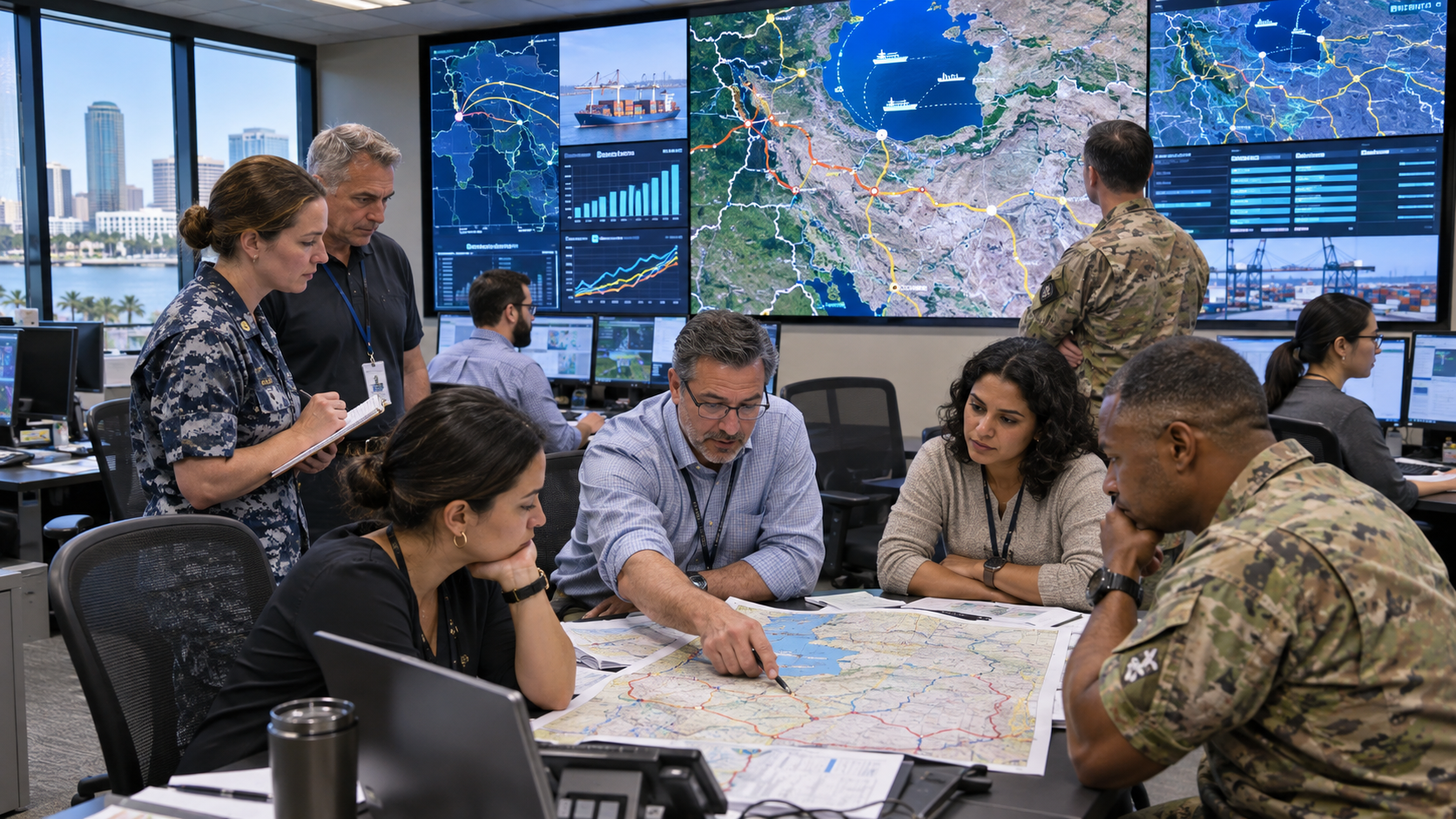
The live coverage reports several developments connected to the war involving the United States, Israel and Iran, as well as related regional conflicts. The U.S. military’s Central Command announced Task Force Iron Gate, a roughly 20-person civilian and military unit based in Florida, to extend the naval blockade by disrupting prohibited trade across Iran’s land borders and the Caspian Sea. Its stated targets include advanced weapons, dual-use technology, sanctioned materials and illegal revenue streams. The announcement did not explain whether military operations would be involved. The report says Iran’s overland trade with China and Russia has become more important amid restrictions on its ports, and that the U.S. estimates the blockade has prevented about $25 billion in Iranian crude oil sales.
President Donald Trump confirmed U.S. “minor strikes” on Iran, following reports of explosions and missile strikes on Qeshm Island near the Strait of Hormuz. Separately, Iran’s Revolutionary Guard said it had lifted a self-imposed 1,200-mile limit on ballistic missile range, though it did not confirm that Iran currently possesses missiles capable of exceeding that distance. Iranian officials also said the country’s armed forces had grown stronger and more motivated through experience in the conflict. Iran’s military reported that a tanker east of the Strait of Hormuz struck a naval mine and caught fire.
The coverage also describes violence in Yemen. Houthi media said Saudi strikes in Sanaa province killed 22 people, mostly women and children, and wounded 30. The Saudi-led coalition said it intercepted a Houthi missile aimed at Riyadh province. An earlier attack in Taiz province killed 30, with the parties blaming one another. Finally, the U.S. announced a reward of up to $20 million, with possible relocation, for information about Iran’s nuclear program. The supplied article cuts off during details of the reward announcement.
Entities: Task Force Iron Gate, U.S. Central Command (CENTCOM), Donald Trump, Iran, Iranian Revolutionary Guard • Tone: analytical • Sentiment: neutral • Intent: inform
07-11-2026
The US military is expanding its efforts to restrict Iran’s access to weapons, sanctioned materials and revenue beyond the existing naval blockade. US Central Command (CENTCOM) is preparing to announce Task Force Iron Gate, a new unit that will coordinate with other US government agencies to monitor and constrain the movement of advanced weapons systems and other restricted goods across Iran’s land borders and the Caspian Sea. The task force will be based in Tampa, Florida, and will also focus on dual-use goods and illegal revenue streams.
CENTCOM commander Admiral Brad Cooper said closer collaboration among US agencies would further limit Iran’s ability to finance terrorism, rebuild weapons factories and replenish its military. The announcement follows a months-long naval blockade. CENTCOM estimates that the blockade has prevented Iran from exporting more than US$25 billion in crude oil. The article describes the task force as an extension of Washington’s pressure campaign, shifting some attention from maritime enforcement to land routes and the Caspian Sea. The planned announcement had not yet been made at the time of the report; Reuters had reviewed a statement ahead of its release.
Entities: Task Force Iron Gate, Iran, United States, US Central Command (CENTCOM), Admiral Brad Cooper • Tone: analytical • Sentiment: neutral • Intent: inform
07-11-2026
The US Central Command (CENTCOM) has announced Task Force Iron Gate, a roughly 20-person civilian and military unit intended to restrict Iran’s ability to move advanced weapons, dual-use technologies, sanctioned materials and other restricted goods across its land borders and the Caspian Sea. The task force will operate from Tampa, Florida, and coordinate with other US government agencies to disrupt those movements as well as related illegal revenue streams.
CENTCOM commander Admiral Brad Cooper said the initiative would reinforce the US naval blockade targeting shipping connected to Iranian ports. He argued that closer cooperation across US agencies could further limit Iran’s ability to finance terrorism, rebuild weapons factories and replenish its military. CENTCOM says the blockade has prevented Iran from exporting more than $25 billion worth of crude oil in recent months, and that restrictions remain on vessels entering or leaving Iranian ports.
The announcement comes alongside claims from Iran’s Islamic Revolutionary Guard Corps (IRGC). Its spokesperson, Brigadier General Hossein Mohebbi, said Iran was exporting defence equipment—including Arman missiles, 358 loitering munitions and the Khordad-3 air defence system—while also meeting domestic needs. Mohebbi warned that if another war breaks out, the IRGC Aerospace Force would reveal new capabilities that would surprise its adversaries.
CENTCOM said Iron Gate would support existing US efforts to prevent Iran from using overland routes to transport weapons and other materials. The article presents the measure as an extension of the maritime blockade, while also reporting Iranian claims of defence-export capacity and military strength.
Entities: Task Force Iron Gate, US Central Command (CENTCOM), Admiral Brad Cooper, Brigadier General Hossein Mohebbi, Islamic Revolutionary Guard Corps (IRGC) • Tone: analytical • Sentiment: neutral • Intent: inform