07-11-2026
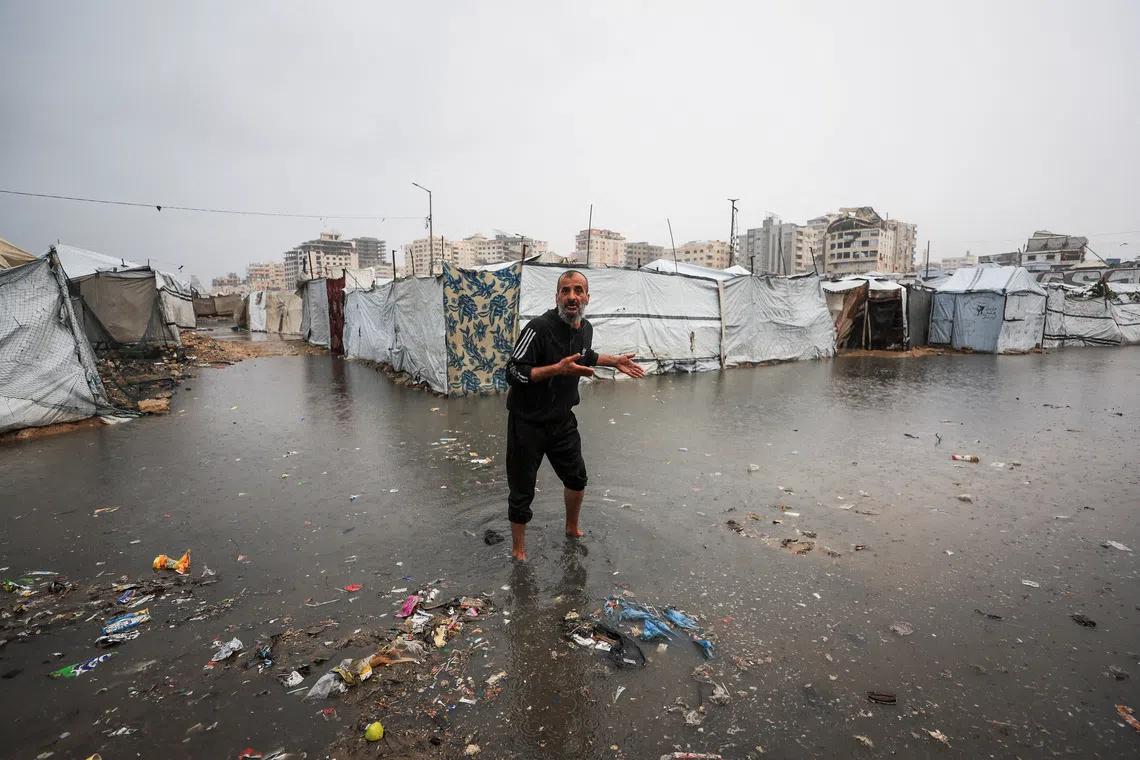
Heavy rain flooded tens of thousands of tents sheltering displaced Palestinians in Gaza, leaving many families without dry shelter, Palestinian authorities said. The Hamas-run government media office reported that about 70,000 tents were flooded on the first day of the rains. It also reported that cracked walls and roofs collapsed in several areas, causing injuries, some of them critical. Families fled inundated camps in Gaza City and central and northern parts of the Strip.
Civil defence spokesman Mahmoud Bassal said emergency teams received more than 1,500 calls overnight from residents seeking help. He said the agency had no equipment or operational capacity to respond adequately and appealed to the international community and humanitarian organisations for immediate assistance. Displaced residents described losing mattresses and clothing and said they feared for their children’s safety amid flooding, cold and disease. A coalition of Palestinian civil society organisations warned that the conditions threatened hundreds of thousands of lives and could lead to the spread of diseases and epidemics. It urged pressure on Israel to allow humanitarian aid into Gaza without restrictions.
The article situates the crisis amid a fragile ceasefire that took effect on October 10, 2025, following two years of war that began after Hamas’s October 7, 2023 attack on Israel. It says Israeli airstrikes and ground operations have continued nearly daily despite the truce, which was reached with Egyptian, Qatari and US mediation. Gaza city council member Mustafa Qazzaat said Israel had not permitted prefabricated homes to enter Gaza since the ceasefire began and had allowed only limited numbers of tents. He said Gaza urgently needs 200,000 prefabricated homes, heavy machinery to clear rubble and reopen main roads, and supplies of electricity and heating.
Entities: Gaza, Gaza City, Deir al-Balah, Mahmoud Bassal, Um Muhammad al-Hersh • Tone: urgent • Sentiment: negative • Intent: inform
07-11-2026
Heavy rain and strong winds have flooded displacement camps across Gaza, leaving families exposed to cold and threatening buildings already damaged by Israeli bombardments. In al-Mina camp in northern Gaza, Rana Adnan Hmeida and her family spent the night in a flooded tent. Their bedding, clothes and blankets were soaked, and her young children—including a two-month-old baby—were shivering. Another resident, Raed Abu Amsha, said his tent collapsed on his family and that the belongings of the nine children in his care were drenched. Residents urgently need tents, tarpaulins and other protection from the weather.
In Nuseirat, residents are also at risk from rain entering buildings weakened by air strikes. Nasser al-Hajj lives in a tower block hit in September 2025; a hole in his ceiling allows water in, and an engineer has warned that further rubble could fall. He says he has nowhere safer to go, as rent is expensive and tents are unsafe.
The scale of exposure is substantial. The UN Office for the Coordination of Humanitarian Affairs estimates that about 950,000 displaced people live in areas vulnerable to flooding, including more than 400,000 in places at high risk. Around 44,000 Palestinians are living in structurally unsafe buildings, while more than 4,000 buildings may need full or partial demolition. Nearly 294,250 families need winter shelter assistance, but available supplies meet only 18 percent of that need.
Gaza’s damaged drainage and sewage infrastructure compounds the danger. The municipality says 15 kilometres of rainwater drainage lines and 212 kilometres of sewage networks have been damaged; pumping stations and stormwater basins are out of service. The remaining system can manage at most 20 percent of rainwater under ideal conditions. Municipal workers are clearing drains and operating pumps, but shortages of fuel, equipment and spare parts limit their capacity. More than 2,000 buildings in Gaza City are at risk of collapse, and camp emergency committees say shelter supplies are insufficient for the number of families affected.
Entities: Gaza, Gaza City, al-Mina camp, Nuseirat refugee camp, Rana Adnan Hmeida • Tone: analytical • Sentiment: negative • Intent: inform
07-11-2026
The article reports that rainwater is inundating displacement camps across Gaza and causing makeshift shelters to collapse. Al Jazeera correspondent Nour Khaled reports on the conditions. The supplied text does not provide further details about the affected locations, the scale of the damage, injuries or deaths, or any response by aid groups or authorities, so those details cannot be established from this article excerpt. Its central focus is the vulnerability of displaced people living in temporary shelters during heavy rain: water is entering the camps, and some shelters are unable to withstand it. The report is presented as a short Al Jazeera video news item published on 7 November 2026. The article’s purpose is to inform viewers about the immediate impact of rainwater on Gaza’s displacement camps. It offers a brief description rather than broader context or analysis, and it does not include quotes from residents or officials, figures, forecasts, or recommendations. The reported collapse of makeshift shelters conveys a serious humanitarian situation, although the excerpt does not explain what assistance is available or what may happen next.
Entities: Gaza, Al Jazeera, Nour Khaled, displacement camps, rainwater inundation • Tone: neutral • Sentiment: negative • Intent: inform
07-11-2026
Al Jazeera reports that heavy rains and strong winds have flooded and damaged displacement tents across Gaza. The storm is adding to already severe living conditions for Palestinians who are facing a fourth winter while displaced. The article characterizes those conditions as “already dire” and links the worsening situation to Israel’s continuing genocide, as described in the report.
The brief item centers on the impact of the weather on people living in displacement camps: tents have been flooded and damaged, leaving already vulnerable residents confronting further hardship. It does not provide figures for the number of tents or camps affected, identify particular locations within Gaza, or describe casualties, aid responses, or forecasts. Nor does the supplied text offer individual accounts from residents. Its focus is therefore on conveying the immediate harm caused by the storm and the wider humanitarian context in which that harm is occurring.
The report’s central message is that severe weather is compounding the difficulties Palestinians face as another winter approaches. The published item is dated November 7, 2026, and is presented as a newsfeed video. The available text does not include details about the video itself beyond its headline and short description.
Entities: Gaza, Palestinians, Al Jazeera, displacement camps, displacement tents • Tone: urgent • Sentiment: negative • Intent: inform
07-11-2026
Heavy rain flooded at least 70,000 tents sheltering displaced Palestinians across the Gaza Strip, soaking bedding, damaging shelters and leaving people exposed to cold and standing water. The Hamas-run Gaza government media office reported injuries but no deaths, while the civil defence service said it received 1,500 distress calls. Three abandoned houses also collapsed without causing injuries. In Gaza City, residents attempted to keep water out of their tents and move children and belongings to safety. Resident Olfat Magdoub described flooded mattresses and having to sleep on blankets on the ground after previous rain, and feared conditions would worsen if the rain continued.
Municipal and civil defence officials said fuel shortages and damaged equipment hampered their response. They said Israeli military operations had destroyed hundreds of vehicles, including bulldozers and water-pumping equipment. Hamas accused Israel of preventing shelters and building materials from entering Gaza. COGAT, the Israeli military agency responsible for coordinating aid, said it had taken steps before the expected storm to improve sanitation in coordination with international organisations. It cited the entry of four additional vacuum trucks through the International Committee of the Red Cross, supplementing eight trucks delivered during the previous month for sewage pumping, waste removal and infrastructure repairs.
The storm highlights the precarious conditions facing a population largely displaced by the war, with most of Gaza’s more than two million residents living in tent camps and much of the territory in ruins. A US-brokered 2025 ceasefire envisaged reconstruction, but progress has been limited: negotiators have not agreed on Hamas disarmament or an Israeli troop withdrawal, and Israeli forces control about two-thirds of the territory. Another displaced resident, Rafiq Ghattas, said people lacked basic supplies and support. The article also reports Palestinian authorities’ estimate that more than 74,000 people have been killed in Gaza since Israel began its assault after Hamas-led fighters killed about 1,200 people in southern Israel on October 7, 2023.
Entities: Gaza Strip, Gaza City, Olfat Magdoub, Rafiq Ghattas, Hamas • Tone: neutral • Sentiment: negative • Intent: inform