07-11-2026
Jean-Luc Mélenchon, leader of France Unbowed (LFI), is emerging as the strongest candidate on the French left ahead of next year’s presidential election, but his rise has intensified debate over his policies, leadership and prospects. Supporters among student-led protesters see him as a champion of demands for higher wages, better public services and protection from austerity. His programme proposes lowering the retirement age to 60, raising the minimum wage, renationalising parts of the economy, and changing how France handles debt held by the European Central Bank. LFI says higher taxes on wealthy people, large inheritances and corporations would help pay for expanded public spending.
Critics argue that the proposals are unrealistic, particularly given France’s high deficit and debt. Some economists warn that they could unsettle investors and increase borrowing costs. Analysts describe Mélenchon’s interventionist economic ideas as radical relative to today’s political mainstream, though not necessarily in the broader history of social democracy.
Mélenchon’s campaign also faces divisions on the left. Polls put him ahead of other left-wing contenders, including Raphael Glucksmann, but parties have not agreed whether to support him in an alliance. His strong support for Palestine, refusal to call Hamas a terrorist organisation and accusation that Israel is committing genocide in Gaza have further divided left-wing politicians; opponents have also accused his rhetoric of fuelling antisemitism, which he denies.
Despite his lead within the left, Mélenchon trails far-right leader Marine Le Pen in the overall race. A poll cited in the article projects Le Pen winning a hypothetical runoff against him by 70 percent to 30 percent. Analysts point to his confrontational style and difficulty attracting voters beyond his core base as additional obstacles. Former allies have also criticised his leadership and the party’s internal culture, with the article ending mid-quotation after a former lawmaker says some on the left agree with LFI’s programme but not its leader’s “meth...”
Entities: Jean-Luc Mélenchon, France Unbowed (LFI), Marine Le Pen, National Rally (Rassemblement National), French presidential election • Tone: analytical • Sentiment: neutral • Intent: analyze
07-11-2026
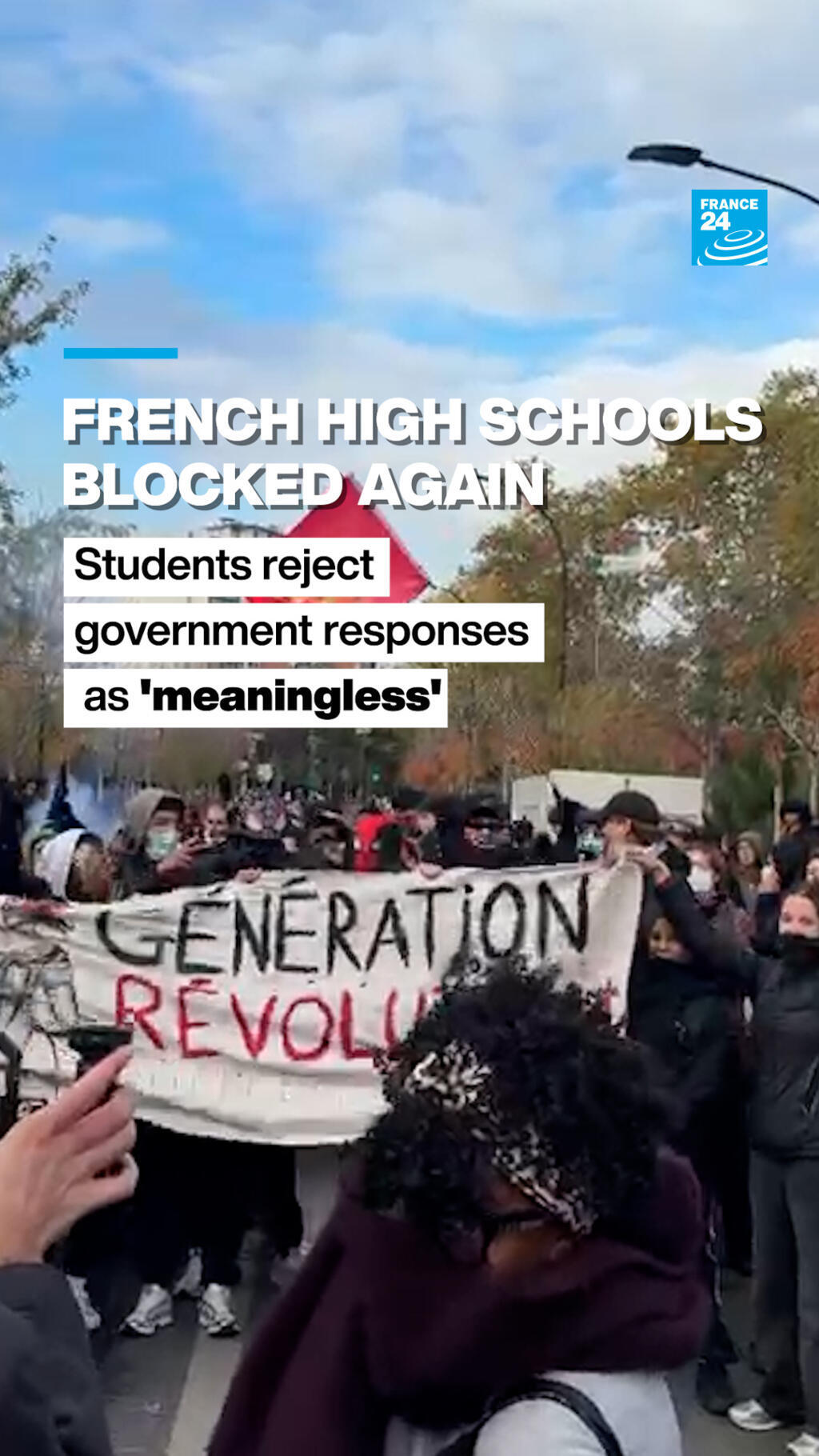
The article examines how Jean-Luc Mélenchon, the French far-left leader and 2027 presidential hopeful, has become popular among young voters despite being a polarising figure nationally. His visibility at recent youth-driven demonstrations, alongside polling that suggests he could reach the election’s second round, points to the strength of his support among younger people. The article attributes that appeal in part to his platform: fighting climate change, redistributing wealth and promoting a “citizen’s revolution” to increase public participation in government. Political scientist Thibault Muzergues says young people are frustrated and see Mélenchon as a revolutionary alternative on the left.
Livia Jampy, a 25-year-old co-chair of the France Unbowed youth group and a Montpellier city councillor, argues that young supporters understand the party’s politics and that LFI takes their concerns seriously. The party has sought to engage them through its Jeunes Insoumis.es youth group, online outreach and street activity, as well as an annual summer gathering for people under 26.
The article also sets out the objections to Mélenchon. Critics blame his encouragement of student protests, some of which have involved violence, and his confrontational rhetoric for contributing to unrest. President Emmanuel Macron has said young people are being exploited by political forces. Mélenchon has also faced accusations of anti-Semitism since the October 7, 2023 attacks in Israel, and criticism over his perceived leniency towards Russia and pledge to leave NATO if elected. Muzergues suggests young voters are less focused on these foreign-policy controversies than on domestic systemic change. He characterises their support not as a protest vote but as a demand for profound reform because the existing system has failed them.
Entities: Jean-Luc Mélenchon, Marine Le Pen, Thibault Muzergues, Livia Jampy, Emmanuel Macron • Tone: analytical • Sentiment: neutral • Intent: inform
07-11-2026
Jean-Luc Mélenchon, the veteran left-wing leader and head of France Unbowed (LFI), is set to launch his programme for the 2027 French presidential election. The platform, titled “L’Avenir en commun” (“A Shared Future”), is the fifth edition of LFI’s manifesto and largely renews policies that have featured in his earlier presidential campaigns. Opinion polls identify Mélenchon as the left’s strongest contender and suggest he could reach a second-round runoff against far-right candidate Marine Le Pen, although they indicate he would lose that contest.
The programme’s major domestic proposals include repealing President Emmanuel Macron’s pension reform and restoring retirement at 60 for people who have contributed to the system for 40 years. Macron’s reform gradually increased the minimum retirement age from 62 to 64. Mélenchon’s platform also proposes raising the net monthly minimum wage from about €1,480 to €1,700, capping prices for essential foods, abolishing the flat tax on capital income and increasing taxes on the wealthiest households.
On energy, LFI advocates gradually replacing nuclear power with a fully renewable electricity system. It would cancel the planned EPR2 reactor programme and oppose extending nuclear plants’ operating lives beyond 60 years. In foreign policy, the platform renews Mélenchon’s criticism of NATO and calls for France to withdraw gradually from the alliance, beginning with its integrated military command. France left that command in 1966 under Charles de Gaulle and rejoined it in 2009 under Nicolas Sarkozy.
The manifesto also criticizes Germany’s influence over EU economic policy, characterizing Berlin as a leading defender of ordoliberalism. It calls for stronger protection of French industry, including measures to relocate production to France, and for a more interventionist state role in the economy.
Entities: Jean-Luc Mélenchon, Marine Le Pen, Emmanuel Macron, France Unbowed (LFI), France • Tone: analytical • Sentiment: neutral • Intent: inform
07-11-2026
Jean-Luc Mélenchon, the 75-year-old hard-left French presidential hopeful, is set to unveil his programme for the 2027 election. The manifesto, titled “L’Avenir en commun” (“A Shared Future”), is the fifth version of France Unbowed’s platform and largely repeats policies central to his previous campaigns. Mélenchon is considered the strongest contender on the left. Recent polls suggest he could reach next April’s presidential runoff against far-right candidate Marine Le Pen, though the same polling indicates he would lose the second round.
The programme’s key domestic proposals include repealing President Emmanuel Macron’s pension reform and restoring retirement at age 60 for people who have contributed to the system for 40 years. Macron’s reform gradually raised the minimum retirement age from 62 to 64. Mélenchon’s platform also proposes increasing the net monthly minimum wage from about €1,480 to €1,700, abolishing the flat tax on capital income, raising taxes on the wealthiest households, and capping prices for essential foods.
On energy, France Unbowed advocates gradually phasing out nuclear power in favour of entirely renewable electricity. The plan would cancel the EPR2 reactor programme and prevent nuclear plants from operating beyond 60 years. In foreign policy, it renews Mélenchon’s criticism of NATO and proposes France gradually leave the alliance, beginning with withdrawal from its integrated military command. It also criticises Germany’s influence over EU economic policy and calls for more protection of French industry, relocation of production to France, and a stronger state role in the economy.
Entities: Jean-Luc Melenchon, Marine Le Pen, Emmanuel Macron, France, France Unbowed (LFI) • Tone: analytical • Sentiment: neutral • Intent: inform